
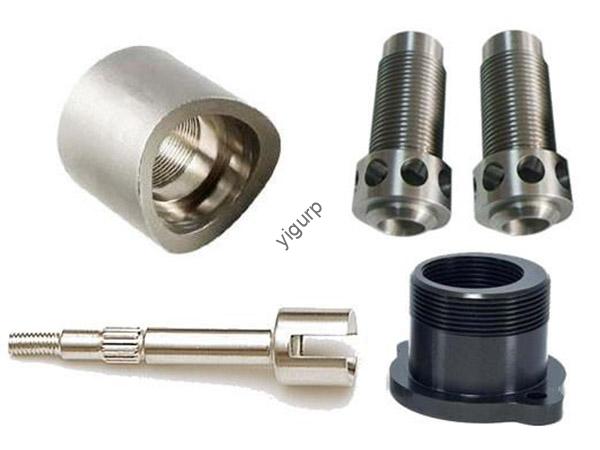
When your project involves heavy machinery parts, bridge components, or equipment that must withstand high stress and occasional impact—you need a steel that balances strength, toughness, and reliability. EN36 structural steel delivers exactly this combination. As a nickel-chromium-molybdenum alloy steel, it is engineered to perform in demanding environments where both strength and impact resistance are critical. In this guide, I will walk you through its properties, applications, and how to work with it based on real project experience.
Introduction
EN36 is a low-alloy steel defined by European standard EN 10083-3. Its composition includes carbon (0.36–0.44%) for strength, chromium (0.90–1.20%) for hardenability and wear resistance, and nickel (1.30–1.70%) for exceptional impact toughness—particularly at low temperatures. This combination makes EN36 a versatile material for components that must withstand heavy loads, repeated stress, and sudden impacts. Over the years at Yigu Rapid Prototyping, I have worked with machinery manufacturers, bridge engineers, and automotive suppliers who specify EN36 for parts that need to perform reliably under demanding conditions. Its balance of strength, toughness, and cost-effectiveness makes it a practical choice for medium-to-high-stress applications.
What Makes EN36 a Balanced Alloy Steel?
EN36 achieves its properties through a carefully controlled chemistry and a quenching and tempering heat treatment. The nickel content is the key to its exceptional low-temperature toughness.
The Chemistry Behind the Performance
The chemical composition of EN36 is specified in EN 10083-3. Each element contributes to the final balance of strength, toughness, and hardenability.
| Element | Content Range (%) | Why It Matters |
|---|---|---|
| Carbon (C) | 0.36 – 0.44 | Provides hardness and tensile strength. Moderate enough to maintain weldability. |
| Nickel (Ni) | 1.30 – 1.70 | The key element. Enhances impact toughness, especially at low temperatures. |
| Chromium (Cr) | 0.90 – 1.20 | Increases hardenability, wear resistance, and toughness. |
| Manganese (Mn) | 0.60 – 0.90 | Improves ductility and weldability. |
| Silicon (Si) | 0.10 – 0.40 | Acts as a deoxidizer and improves heat resistance. |
| Phosphorus (P) / Sulfur (S) | ≤ 0.050 | Kept low to prevent brittleness and cracking. |
Key Insight: The nickel content of 1.30–1.70% distinguishes EN36 from lower-alloy steels like EN19 or EN24. This nickel addition provides impact toughness of ≥ 45 J at -40°C, making EN36 suitable for cold-climate applications where lower-strength steels might become brittle.
Mechanical Properties That Matter
EN36’s mechanical properties are achieved through quenching and tempering. The final properties depend on the heat treatment parameters.
| Property | Typical Value | Significance |
|---|---|---|
| Tensile Strength | 750 – 950 MPa | Handles heavy loads in machinery parts, axles, and structural components. |
| Yield Strength | ≥ 550 MPa | Resists permanent deformation under load. |
| Elongation | ≥ 14% | Provides enough ductility for forming and to absorb energy in dynamic loads. |
| Impact Toughness (-40°C) | ≥ 45 J | Ensures reliability in cold climates and under sudden impact. |
| Hardness (Brinell) | 220 – 280 HB | Provides good wear resistance while maintaining machinability in the annealed condition. |
| Fatigue Strength | ~380 MPa | Resists failure from repeated stress cycles. Critical for rotating components such as shafts. |
Case Study: A Chinese forklift manufacturer was using EN19 alloy steel for 5-ton forklift axles. The axles failed after 2,000 hours of operation due to fatigue cracking. They switched to EN36 axles with a quenching and tempering heat treatment. The EN36 axles now last over 3,500 hours—a 75% improvement—cutting replacement costs by 35%. The higher nickel content provided better toughness, and the balanced strength prevented deformation under heavy loads.
Where Does EN36 Deliver the Most Value?
This material is specified for applications that require a combination of strength, toughness, and wear resistance.
Mechanical Engineering and Machinery
EN36 is widely used for components in industrial machinery that face heavy loads and repeated stress.
- Gears: Gear teeth for industrial pumps, compressors, and heavy machinery. The material’s hardness (220–280 HB) provides wear resistance, while its fatigue strength (~380 MPa) handles repeated stress cycles.
- Shafts: Axles for forklifts, excavators, and construction equipment. The yield strength of ≥ 550 MPa prevents bending under heavy loads.
- Couplings: Components that connect rotating shafts. Good toughness ensures reliability under misalignment and shock loads.
Case Study: A Dutch manufacturer uses EN36 for water pump gears. Compared to carbon steel gears, the EN36 gears last 40% longer due to better wear resistance and fatigue strength. The gears have operated continuously for over five years without failure.
Construction and Infrastructure
EN36 is used for structural components that must carry heavy loads and withstand impacts.
- Beams and columns: Load-bearing parts in bridges and industrial buildings.
- Heavy-duty supports: Frames for warehouses storing heavy machinery and palletized goods.
- Bridge components: Support beams for highway overpasses and rural bridges.
Case Study: An Italian transportation authority used EN36 for a 50-meter highway overpass. The overpass needed to handle over 1,000 vehicles daily, including heavy trucks. EN36’s tensile strength (750–950 MPa) supported the load, and its impact toughness of 45 J at -40°C withstood winter cold. After eight years of service, inspection showed no signs of wear or cracking.
Automotive and Heavy Vehicles
EN36 is used in heavy-duty automotive applications where strength and impact resistance are required.
- Chassis components: Frame rails for heavy-duty trucks that must withstand rough terrain.
- Suspension parts: Shock absorber mounts and control arms that handle potholes and bumps.
- Axles: Drive axles for commercial vehicles.
Case Study: A U.S. truck brand uses EN36 for the chassis rails of its 18-wheeler trucks. The material’s high yield strength prevents frame bending under heavy loads, while its impact toughness ensures reliability when driving over rough roads. The chassis have demonstrated reliable performance over millions of miles of operation.
Railway and Marine Applications
EN36 is used in railway and marine components that face repeated stress and potential impact.
- Rail clips and fasteners: Components that hold railway tracks to sleepers.
- Gearbox parts: Transmission components for freight trains.
- Ship hull frames: Internal structures for small cargo ships that must resist wave impacts.
How Is EN36 Manufactured and Processed?
Working with EN36 requires attention to its alloy content, particularly for welding and heat treatment.
Steelmaking and Rolling
EN36 is typically produced in an electric arc furnace (EAF) or basic oxygen furnace (BOF) . After melting, the steel is:
- Hot rolled at 1,150–1,250°C into bars, plates, and forgings.
- Cold rolled for thin sheets requiring smooth surfaces.
Heat Treatment
Heat treatment is critical for achieving EN36’s balance of strength and toughness.
- Annealing: Heat to 820–850°C, cool slowly. Softens the steel for machining.
- Normalizing: Heat to 850–900°C, cool in air. Improves uniformity in large components such as beams.
- Quenching and tempering: Heat to 830–860°C, quench in oil, then temper at 500–600°C. This creates the optimal balance of strength and toughness for high-stress applications.
Fabrication
EN36 requires more careful fabrication than low-carbon steel.
- Welding: Fair weldability. Preheat to 180–250°C to prevent cracking. Use low-hydrogen electrodes. Post-weld heat treatment is recommended to relieve residual stress.
- Machining: Good machinability in the annealed condition. Use carbide tools for volume production.
- Forming: Can be bent into simple shapes such as brackets. Complex forming should be done in the annealed condition.
How Does EN36 Compare to Other Materials?
Understanding the trade-offs between EN36 and alternative materials helps in making an informed selection.
| Material | Tensile Strength (MPa) | Impact Toughness (-40°C) | Relative Cost | Best For |
|---|---|---|---|---|
| EN36 | 750 – 950 | ≥ 45 J | 100% | Medium-to-high-stress parts requiring toughness |
| A36 Carbon Steel | 400 – 550 | ≤ 20 J | 50% | Low-stress structural applications |
| EN19 | 800 – 1000 | ≥ 40 J | 110% | High-strength parts, higher cost |
| EN24 | 800 – 1000 | ≥ 50 J | 115% | Extreme loads, highest strength |
| Stainless Steel (304) | 515 – 620 | ≥ 100 J | 300% | Corrosive environments |
Key Insights:
- Compared to carbon steel A36, EN36 offers approximately 50% higher tensile strength and significantly better low-temperature toughness for a 100% cost premium. For demanding applications, this premium is justified.
- Compared to EN19, EN36 offers better toughness and lower cost, though EN19 has slightly higher strength. For applications requiring impact resistance, EN36 is often the better choice.
- Compared to stainless steel, EN36 offers higher strength at approximately one-third the cost, though stainless steel provides superior corrosion resistance.
What About Corrosion Protection?
EN36 has moderate corrosion resistance. For outdoor applications, surface treatment is required.
- Galvanizing: Hot-dip galvanizing provides corrosion protection for structural components and outdoor equipment.
- Epoxy coatings: Protect machinery parts exposed to moisture and chemicals.
- Painting: Standard industrial paints protect against atmospheric corrosion.
Conclusion
EN36 structural steel offers a practical balance of strength, toughness, and cost-effectiveness for medium-to-high-stress applications. Its nickel content provides exceptional low-temperature impact toughness (≥ 45 J at -40°C), while its chromium and carbon content deliver good hardenability and wear resistance. For machinery gears and shafts, heavy vehicle axles, bridge components, and railway fasteners, EN36 delivers reliable performance at a price point that fits project budgets. When you need a steel that combines strength with toughness—particularly in cold climates—EN36 is a proven, versatile choice.
FAQ About EN36 Structural Steel
Do I need to preheat EN36 before welding?
Yes. EN36’s alloy content makes it prone to cracking if welded cold. Preheat to 180–250°C before welding. Use low-hydrogen electrodes. Post-weld heat treatment such as annealing is also recommended to relieve internal stress and restore toughness in the heat-affected zone.
Can EN36 be used in cold environments?
Absolutely. Its impact toughness of at least 45 J at -40°C makes it suitable for cold-weather applications such as northern bridges, arctic machinery, and outdoor equipment. The nickel content provides the low-temperature toughness that carbon steels lack.
How does EN36 compare to EN24?
EN24 has slightly higher tensile strength (800–1000 MPa vs. 750–950 MPa) and higher impact toughness (≥ 50 J vs. ≥ 45 J), but it is approximately 15% more expensive. EN36 offers better value for medium-stress parts such as forklift axles and industrial gears, while EN24 is better suited for extreme loads such as turbine shafts and high-performance components.
What heat treatment is recommended for EN36 components?
For most applications, quenching and tempering is recommended. Heat to 830–860°C, quench in oil, then temper at 500–600°C. This achieves the optimal balance of strength and toughness. For components requiring maximum machinability, anneal at 820–850°C and cool slowly.
Discuss Your Projects with Yigu Rapid Prototyping
Selecting the right alloy steel for medium-to-high-stress applications requires balancing strength, toughness, weldability, and cost. At Yigu Rapid Prototyping, we help machinery manufacturers, bridge engineers, and automotive suppliers navigate these decisions with practical, experience-based guidance. Whether you need EN36 for gears, axles, or structural components, we can provide material sourcing, heat treatment, and fabrication support. Contact us to discuss your project requirements and find the right solution.