
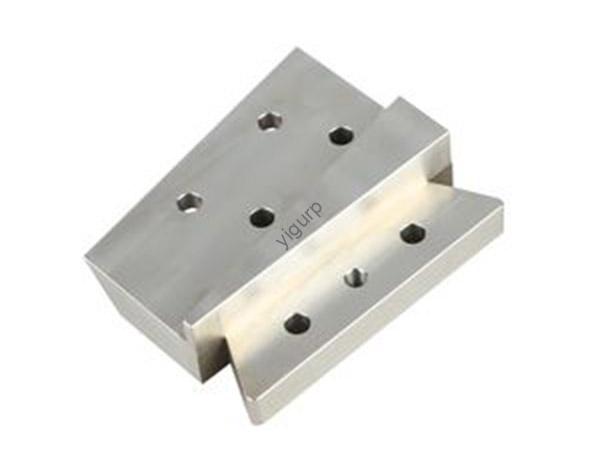
When your application involves the most severe conditions—strong acids, high temperatures, and extreme pressure—you need a material that can withstand them all without compromise. UNS N06625, commonly known as Inconel 625, is the gold standard for these environments. This nickel-chromium-molybdenum alloy with niobium additions delivers exceptional corrosion resistance, high-temperature strength, and outstanding toughness. In this guide, I will walk you through its properties, applications, and how to work with it based on real project experience.
Introduction
UNS N06625 is a nickel-based superalloy that stands apart from stainless steels and even other nickel alloys. Its defining characteristics come from a carefully balanced chemistry: nickel provides the base matrix with exceptional toughness; chromium forms a protective oxide layer for corrosion and oxidation resistance; molybdenum adds resistance to pitting and crevice attack; and niobium provides high-temperature strength through the formation of strengthening precipitates. This combination makes UNS N06625 one of the most versatile superalloys available. Over the years at Yigu Rapid Prototyping, I have worked with aerospace manufacturers, oil and gas companies, and chemical processors who specify this alloy for components where failure is not an option. Its higher cost is justified by its ability to perform reliably in conditions that would destroy most other materials.
What Makes UNS N06625 a Superalloy?
UNS N06625 achieves its exceptional properties through its unique chemistry and microstructure. Unlike conventional stainless steels, which rely primarily on chromium for corrosion resistance, UNS N06625 uses multiple alloying elements to address different failure mechanisms.
The Chemistry Behind the Performance
The chemical composition of UNS N06625 is defined by ASTM B443 and other standards. Each element plays a specific role in the alloy’s performance.
| Element | Content Range (%) | Why It Matters |
|---|---|---|
| Nickel (Ni) | ≥ 58.0 | The base element. Provides toughness, high-temperature stability, and resistance to chloride stress corrosion cracking. |
| Chromium (Cr) | 20.0 – 23.0 | Forms a protective Cr₂O₃ layer. Provides resistance to oxidation and general corrosion in acids and seawater. |
| Molybdenum (Mo) | 8.0 – 10.0 | Enhances resistance to pitting and crevice corrosion. Critical for saltwater and acidic environments. |
| Niobium (Nb) + Tantalum (Ta) | 3.15 – 4.15 | The strength booster. Forms Ni₃Nb precipitates that enhance high-temperature creep resistance and tensile strength. |
| Iron (Fe) | ≤ 5.0 | Improves workability without reducing corrosion or heat performance. |
| Carbon (C) | ≤ 0.10 | Kept low to prevent carbide precipitation that can cause brittleness at high temperatures. |
| Manganese (Mn) | ≤ 0.50 | Enhances weldability and formability. |
| Silicon (Si) | ≤ 0.50 | Controls melting characteristics and boosts oxidation resistance. |
| Sulfur (S) | ≤ 0.015 | Ultra-low to prevent welding defects and reduce corrosion susceptibility. |
Key Insight: The combination of molybdenum (8–10%) and niobium (3.15–4.15%) is what distinguishes UNS N06625 from other nickel alloys. Molybdenum provides exceptional pitting resistance, while niobium enables the alloy to maintain strength at temperatures up to 1095°C.
Mechanical Properties That Matter
UNS N06625’s mechanical properties are achieved in the solution-annealed condition, which provides the best balance of strength, ductility, and corrosion resistance.
| Property | Typical Value | Significance |
|---|---|---|
| Tensile Strength | ≥ 827 MPa | Handles extreme pressure in oil wells, chemical reactors, and pressure vessels. |
| Yield Strength | ≥ 414 MPa | Resists permanent deformation at high temperatures. |
| Elongation | ≥ 30% | High ductility allows forming into complex shapes such as aerospace ducts and heat exchanger tubes. |
| Hardness | 90 – 100 HRB | High hardness for wear resistance while maintaining toughness. |
| Impact Toughness | ≥ 110 J at 20°C | Excellent toughness prevents brittle failure in cold marine or cryogenic applications. |
| Creep Resistance | 100 MPa at 700°C for 10⁵ hours | Maintains strength under long-term high-temperature stress. Critical for turbine components. |
| Fatigue Strength | ~345 MPa at 10⁷ cycles | Resists failure from repeated thermal or mechanical stress. |
Case Study: A Norwegian oil company was using stainless steel downhole tools in 15,000-foot deep wells with temperatures of 175°C and high salinity. The stainless steel tools failed after two years due to corrosion and creep. They switched to UNS N06625 downhole tools. After eight years of service, the tools showed no corrosion or creep deformation. Well maintenance costs dropped by $1.2 million annually due to fewer tool replacements and no unplanned well shutdowns.
Where Does UNS N06625 Deliver the Most Value?
This material is specified for applications where the combination of corrosion resistance, high-temperature strength, and toughness is required. It is used across aerospace, oil and gas, chemical processing, marine, and nuclear industries.
Aerospace and Defense
Aerospace components face extreme temperatures, corrosive fuels, and high mechanical loads.
- Gas turbine engine components: Combustion chambers, turbine blades, and exhaust systems.
- Aircraft exhaust systems: Components that handle hot exhaust gases.
- Rocket motor casings: Structures that must contain high-pressure combustion gases.
Case Study: A U.S. aerospace manufacturer used Inconel 600 for turbine blades. The blades had limited life due to high-temperature creep. They switched to UNS N06625. The niobium-strengthened alloy increased blade life by 400%, reducing maintenance frequency and improving engine reliability.
Oil and Gas Industry
Offshore platforms, subsea equipment, and downhole tools face corrosive seawater, hydrogen sulfide, and high pressures.
- Offshore platform piping: Pipelines that transport oil and gas from wells to processing facilities.
- Subsea wellheads: Components that control pressure at the seabed.
- Downhole tools: Equipment that operates in high-temperature, high-pressure reservoirs.
Case Study: A Brazilian oil company faced corrosion and creep failures in downhole tools operating in high-salinity wells at 175°C. Stainless steel tools failed every two years. UNS N06625 tools lasted eight years—a 300% improvement—with no degradation in pressure ratings or dimensional accuracy.
Chemical Processing
Chemical plants handle aggressive acids, solvents, and high temperatures that destroy standard stainless steels.
- Heat exchangers: Equipment that transfers heat between corrosive fluids.
- Reaction vessels: Containers for chemical reactions involving strong acids.
- Piping systems: Pipelines for chlorinated solvents, sulfuric acid, and pharmaceutical intermediates.
Case Study: A German chemical plant was experiencing corrosion-related leaks in stainless steel heat exchangers handling chlorinated solvents. They replaced them with UNS N06625 heat exchangers. Corrosion-related leaks dropped to zero, and the equipment has operated reliably for over ten years.
Marine Applications
Seawater is highly corrosive, particularly in splash zones and under insulation.
- Seawater cooling systems: Pumps, piping, and heat exchangers using seawater as a coolant.
- Propeller shafts: Components that transmit power through seawater.
- Offshore wind turbine components: Fasteners, structural elements, and electrical components.
Case Study: A Danish wind energy firm used standard stainless steel fasteners for offshore wind turbines. After five years, the fasteners showed significant corrosion. They switched to UNS N06625 fasteners. After ten years of service, the fasteners showed no rust or degradation.
Nuclear Industry
Nuclear applications require materials that resist radiation damage and corrosion from reactor coolants.
- Reactor coolant pipes: Piping that circulates coolant through the reactor core.
- Control rod housings: Structures that contain nuclear control rods.
- Fuel handling components: Equipment that moves nuclear fuel.
Case Study: A French nuclear operator used UNS N06625 for coolant pipes. The material’s resistance to radiation-induced embrittlement and corrosion from reactor coolants has resulted in no maintenance issues after 15 years of service.
How Is UNS N06625 Manufactured and Processed?
Producing UNS N06625 requires precise control to preserve its superalloy properties. Mistakes in processing can reduce corrosion or heat resistance.
Melting and Refining
UNS N06625 is typically melted in a vacuum induction furnace (VIF) or by electron beam melting (EBM) . Vacuum melting ensures low impurity levels, which are critical for maintaining corrosion resistance. After melting, the alloy is cast into ingots or continuously cast into slabs and billets.
Forging and Rolling
- Hot forging: Ingots are hot-forged at 980–1150°C to form bars, tubes, and sheets. Forging aligns the grain structure and eliminates internal voids, which is key for creep resistance.
- Hot rolling: At 950–1100°C, hot rolling produces thick plates and tubes.
- Cold rolling: For thin sheets with tight tolerances, cold rolling is used. Intermediate annealing at 900–1000°C reduces work hardening during cold forming.
Heat Treatment
The primary heat treatment for UNS N06625 is solution annealing.
- Solution annealing: Heat to 980–1040°C, hold for 30–60 minutes, then water quench. This dissolves excess carbides, restores ductility, and maximizes corrosion resistance.
- Stress relieving: For components that have been welded or heavily formed, stress relieving at 650–750°C reduces residual stresses and prevents cracking in corrosive environments.
Machining
UNS N06625 is work-hardening, so machining requires care.
- Use sharp carbide tools with negative rake angles.
- Cutting speeds: 8–12 m/min for turning, 4–8 m/min for milling.
- Feed rates: 0.08–0.15 mm/rev.
- Use high-pressure, sulfurized cutting fluids to cool the tool and flush away chips.
Welding
UNS N06625 has very good weldability.
- Recommended processes: TIG (best for precision joints), MIG (for high-volume work).
- Filler metal: ERNiCrMo-3, which matches the base metal’s composition to maintain corrosion resistance.
- Post-weld treatment: Solution anneal if the joint will face severe corrosion; stress relieve for structural joints.
How Does UNS N06625 Compare to Other Materials?
Understanding the trade-offs between UNS N06625 and alternative materials helps in making an informed selection.
| Material | Corrosion Resistance | Max Service Temp (°C) | Tensile Strength (MPa) | Relative Cost | Best For |
|---|---|---|---|---|---|
| UNS N06625 | Superior | 1095 | ≥ 827 | 100% | Severe corrosion + high heat |
| UNS N06600 | Excellent | 1095 | ≥ 550 | 60% | General heat/corrosion, no strong acids |
| Hastelloy C276 | Superior | 1010 | ≥ 690 | 150% | Extreme chemicals, chlorides, strong acids |
| Inconel 718 | Very Good | 1204 | ≥ 1240 | 120% | High-strength aerospace, turbines |
| 316 Stainless Steel | Good | 870 | ≥ 515 | 25% | Mild corrosion/heat, not severe |
Key Insights:
- Compared to UNS N06600, UNS N06625 offers better corrosion resistance and higher high-temperature strength for a 40% cost premium. For severe environments, this premium is essential.
- Compared to Hastelloy C276, UNS N06625 is 33% less expensive while offering similar corrosion resistance and better high-temperature strength. For most severe environments, UNS N06625 is the better value.
- Compared to 316 stainless steel, UNS N06625 offers far superior corrosion resistance and high-temperature strength for a 300% cost premium. For critical applications, this premium is justified by extended service life and reliability.
What About Cryogenic Applications?
UNS N06625 retains excellent toughness at cryogenic temperatures. Impact toughness remains ≥ 90 J at -196°C, making it suitable for liquid natural gas (LNG) storage tanks and cryogenic piping where other materials become brittle.
Conclusion
UNS N06625 (Inconel 625) is a superalloy that delivers exceptional performance in the most demanding environments. Its unique combination of corrosion resistance, high-temperature strength, and toughness makes it the material of choice for aerospace, oil and gas, chemical processing, marine, and nuclear applications. While its cost is significantly higher than conventional stainless steels, its reliability in conditions where other materials fail makes it a cost-effective investment over the lifecycle of critical components. For applications where failure is not an option, UNS N06625 is a proven, trusted solution.
FAQ About UNS N06625 (Inconel 625) Nickel Alloy
Can UNS N06625 be used in cryogenic environments such as liquid natural gas at -162°C?
Yes. UNS N06625 retains excellent toughness at cryogenic temperatures, with impact toughness remaining at or above 90 J at -196°C. It is commonly used in LNG storage tanks and cryogenic piping systems where other materials become brittle.
Is UNS N06625 difficult to machine, and how can I improve machining efficiency?
UNS N06625 is work-hardening, so machining is slower than steel. To improve efficiency: (1) use sharp carbide tools with negative rake angles; (2) keep cutting speeds low (8–12 m/min for turning, 4–8 m/min for milling) to avoid work hardening; (3) use high-pressure, sulfurized cutting fluids to cool the tool and flush chips away quickly.
What welding filler metal should be used for UNS N06625?
Use ERNiCrMo-3 filler metal, which matches the base metal’s composition. This ensures that the weld zone maintains the same corrosion resistance and high-temperature strength as the base material. For most applications, post-weld heat treatment is not required unless the joint will face severe corrosive service.
How does UNS N06625 compare to Inconel 718?
Inconel 718 offers higher tensile strength (≥ 1240 MPa vs. ≥ 827 MPa) and a higher maximum service temperature (1204°C vs. 1095°C), making it better suited for high-strength aerospace applications such as turbine discs. However, UNS N06625 offers superior corrosion resistance and is more versatile for applications involving both corrosion and heat. The choice depends on whether strength or corrosion resistance is the primary requirement.
Discuss Your Projects with Yigu Rapid Prototyping
Selecting the right superalloy for severe environments requires balancing corrosion resistance, high-temperature strength, fabricability, and cost. At Yigu Rapid Prototyping, we help aerospace engineers, oil and gas operators, and chemical processors navigate these decisions with practical, experience-based guidance. Whether you need UNS N06625 for downhole tools, heat exchangers, or turbine components, we can provide material sourcing, custom fabrication, and processing support. Contact us to discuss your project requirements and find the right solution.