
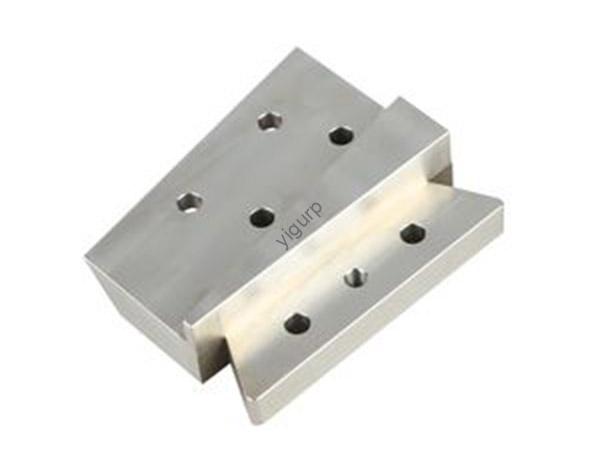
If you work in petrochemical, power generation, or industrial equipment manufacturing—needing a reliable carbon steel for pressure vessels, boilers, or storage tanks that handles high temperatures and pressure—SA516 Grade 70 is the industry’s go-to solution. As a standard carbon steel grade in the ASME Boiler and Pressure Vessel Code, its minimum yield strength of 70 ksi (483 MPa) balances strength, weldability, and cost-effectiveness. This guide covers its properties, applications, and manufacturing process.
What are the key properties of SA516 Grade 70?
SA516 Grade 70’s performance comes from its optimized carbon-manganese composition. It provides enough strength for high-pressure service while controlled impurities ensure toughness and compatibility with common welding processes.
Chemical composition
SA516 Grade 70 adheres to strict ASME BPVC standards. The composition is tailored for pressure vessel safety and high-temperature stability.
| Element | Content Range (%) | Key Role |
|---|---|---|
| Carbon (C) | ≤ 0.30 | Enhances strength, kept moderate for weldability |
| Manganese (Mn) | 0.79 – 1.30 | Primary strengthener, boosts tensile strength and ductility |
| Silicon (Si) | 0.13 – 0.45 | Aids deoxidation, supports high-temperature integrity |
| Phosphorus (P) | ≤ 0.035 | Minimized to prevent brittle fracture |
| Sulfur (S) | ≤ 0.035 | Controlled to avoid weld defects |
| Chromium (Cr) | ≤ 0.25 | Trace element, no significant impact on standard performance |
| Nickel (Ni) | ≤ 0.25 | Trace element, enhances low-temperature impact toughness |
Physical properties
These properties determine how SA516 Grade 70 performs in high-temperature and pressure environments.
- Density: 7.85 g/cm³ – standard for carbon steels, simplifying weight calculations
- Melting point: 1,420–1,460°C – compatible with standard welding processes
- Thermal conductivity: 45.0 W/(m·K) at 20°C – ensures even heat distribution in boilers
- Thermal expansion: 11.7 × 10⁻⁶/°C (20–100°C) – minimizes expansion in temperature cycles
- Magnetic properties: Ferromagnetic – enables non-destructive testing like magnetic particle inspection
Mechanical properties
SA516 Grade 70’s mechanical performance meets ASME BPVC requirements for pressure-containing equipment.
| Property | Typical Value | ASME Minimum |
|---|---|---|
| Tensile strength | 515–655 MPa | 515 MPa |
| Yield strength | 483–550 MPa | 483 MPa |
| Elongation | 22–28% | 20% |
| Impact toughness at -30°C | ≥ 40 J | ≥ 27 J |
| Hardness | 75–90 HRB | N/A |
| Fatigue limit | 190–230 MPa | N/A |
A U.S. petrochemical company needed a 12-meter diameter reactor vessel for high-pressure ethylene at 8,000 psi. They chose SA516 Grade 70 plates (50 mm thick, normalized) for weldability and strength. After 8 years of operation, the vessel shows no corrosion or pressure leaks—even with cyclic temperature shifts from 200–400°C. The project saved 25% on material costs compared to stainless steel.
Other key properties
- Weldability: Excellent. Moderate carbon and low sulfur allow welding into large vessels without cracking.
- Formability: Good. Can be bent and rolled into curved vessel walls without losing structural integrity.
- Corrosion resistance: Moderate. For harsh environments like sour gas, add coatings or cladding.
- Ductility: High. Absorbs pressure spikes without fracturing, critical for safety.
- Toughness: Reliable. Maintains strength down to -30°C for cold-climate applications.
Where is SA516 Grade 70 used?
SA516 Grade 70’s balance of strength and versatility makes it a staple in pressure-containing equipment globally.
Pressure vessels
Used for petrochemical reactors, chemical storage vessels, and high-pressure gas cylinders. Handles pressures up to 10,000 psi and complies with ASME BPVC safety standards.
Storage tanks
Used for large-scale oil, gas, and chemical storage tanks. Formability allows seamless curved walls, while toughness resists environmental stress.
Boilers
Used in industrial and power plant boilers. High-temperature stability up to 450°C and creep resistance from trace molybdenum make it suitable for steam generation.
Petrochemical plants
Used for process equipment like distillation columns and heat exchangers. Resists cyclic temperature changes and mild chemical corrosion.
Industrial equipment
Used for compressor housings, hydraulic reservoirs, and pressure piping. Provides reliable pressure containment in manufacturing and heavy industry.
Construction and infrastructure
Used for municipal water pressure tanks and wastewater treatment reactors. Cost-effective for public infrastructure projects.
How is SA516 Grade 70 manufactured?
Producing SA516 Grade 70 requires strict compliance with ASME BPVC to ensure pressure vessel safety.
Steelmaking and rolling
- Steelmaking: Electric arc furnace (EAF) for scrap-based steel or basic oxygen furnace (BOF) for iron ore-based steel. Precise control of carbon and manganese meets ASME standards.
- Rolling: Hot rolled at 1,100–1,200°C into plates from 6 mm to over 200 mm thick. Hot rolling refines grain structure, enhancing toughness.
Heat treatment
Heat treatment optimizes properties for pressure vessel service.
| Process | Temperature | Result |
|---|---|---|
| Normalization | 815–900°C, air cool | Uniformizes microstructure, boosts impact toughness |
| Tempering | 550–650°C | Reduces brittleness, enhances weldability (optional for thick plates) |
Machining and surface treatment
- Machining: Plates cut to size using plasma or laser cutting. Drilled and tapped for vessel fittings like nozzles and manholes.
- Surface treatment: Options include epoxy liners for chemical storage, zinc plating for outdoor equipment, and CRA cladding for sour gas applications.
Quality control
ASME BPVC mandates rigorous testing.
- Chemical analysis: Verify alloy content via spectrometry
- Mechanical testing: Tensile, impact, and hardness tests confirm strength and toughness
- Non-destructive testing: Ultrasonic testing for internal defects, radiographic testing for weld integrity
- Hydrostatic testing: Finished vessels tested at 1.5 times design pressure for 30–60 minutes
How does SA516 Grade 70 compare to other materials?
Understanding how SA516 Grade 70 stacks up helps with material selection for pressure equipment.
| Material | Similarities | Key Differences | Best For |
|---|---|---|---|
| SA516 Grade 60 | ASME carbon steel | Lower yield strength at 414 MPa, cheaper, less high-temperature resistance | Low-pressure vessels under 5,000 psi |
| 316L Stainless | Pressure vessel use | Excellent corrosion resistance, 3× more expensive, lower strength | Sour gas, chemical, high-corrosion vessels |
| SA387 Grade 11 | Pressure vessel alloy | Higher high-temperature resistance to 593°C, 2× more expensive | High-temperature boilers, refinery heaters |
| Carbon fiber | Pressure containment | Lightweight at 1/5 the weight, 5× more expensive, lower impact resistance | Aerospace, portable pressure vessels |
| HDPE plastic | Low-pressure storage | Corrosion-proof, very low strength, cheap | Low-pressure chemical storage under 100 psi |
Key takeaways:
- SA516 Grade 70 offers higher strength than Grade 60 for high-pressure service
- It costs less than stainless steel or alloy steel for most pressure vessel applications
- It handles higher temperatures than plastic and better impact resistance than composites
Conclusion
SA516 Grade 70 delivers reliable performance for pressure vessels, boilers, and storage tanks. Its compliance with ASME BPVC ensures global safety standards, while its balance of strength, weldability, and cost makes it accessible for both industrial and infrastructure projects. For applications requiring high-pressure containment with moderate corrosion resistance, it’s a proven, cost-effective choice.
FAQ
Can SA516 Grade 70 be used for sour gas pressure vessels?
Yes, with proper corrosion protection. Pair it with CRA cladding like 316L stainless steel or epoxy liners to resist sulfide stress cracking. Ensure the material meets ASME BPVC sour service requirements with sulfur content ≤ 0.015%.
What’s the maximum temperature SA516 Grade 70 can handle?
SA516 Grade 70 safely operates at temperatures up to 450°C for long-term service. For temperatures above 450°C, choose SA387 alloy steel, which offers better creep resistance.
Is SA516 Grade 70 compatible with welding to stainless steel components?
Yes. Use a nickel-based filler metal like ERNiCrMo-3 to avoid galvanic corrosion between the carbon steel and stainless steel. Follow ASME BPVC welding procedures with preheating to 150–200°C for strong, crack-free joints.
Does SA516 Grade 70 require heat treatment after welding?
For plates under 25 mm, no post-weld heat treatment is required. For thicker plates or critical service, stress relief at 600–650°C is recommended to ensure long-term integrity.
What thicknesses are available for SA516 Grade 70 plates?
SA516 Grade 70 is available from 6 mm to over 200 mm thick. Normalization is typically required for plates over 25 mm to ensure uniform mechanical properties through the thickness.
Discuss Your Projects with Yigu Rapid Prototyping
At Yigu Rapid Prototyping, we supply SA516 Grade 70 plates for pressure vessels, boilers, and storage tanks. Our material meets ASME BPVC standards, and we offer custom thicknesses from 6 mm to 200 mm with optional normalization, epoxy coating, and CRA cladding. Contact us to discuss your next pressure equipment project.