
If your project involves constant exposure to saltwater, industrial chemicals, or high temperatures—and you need structural support that won’t corrode or fail at the welds—316L stainless steel angle offers a reliable solution. This austenitic alloy combines molybdenum-enhanced corrosion resistance with low-carbon weldability, making it the preferred choice for marine construction, chemical processing, and food-grade equipment. This guide covers its material properties, real-world applications, fabrication considerations, and how it compares to alternative materials, helping you make an informed decision for your demanding environment.
Introduction
Structural angles are fundamental components in frames, supports, and brackets. When these components face corrosive conditions, the choice of material directly impacts service life and maintenance costs. Standard carbon steel angles rust quickly in wet or chemical environments. Even standard 316 stainless steel can suffer from weld decay—corrosion along the heat-affected zone—when welded without proper post-treatment. 316L stainless steel angle addresses these issues through a carefully controlled composition: lower carbon content prevents sensitization during welding, while molybdenum provides exceptional resistance to chlorides and acids.
What Is 316L Stainless Steel Angle?
To understand why 316L angle performs so well in demanding environments, it helps to look at its composition and how it differs from common alternatives.
Chemical Composition and the “L” Designation
The “L” in 316L stands for low carbon—specifically, carbon content of 0.03% or less. This reduction from standard 316 (which allows up to 0.08% carbon) has a significant effect on weldability and corrosion resistance.
| Element | 316L Content | Role in Performance |
|---|---|---|
| Carbon (C) | ≤ 0.03% | Prevents chromium carbide formation during welding |
| Chromium (Cr) | 16.0–18.0% | Forms passive oxide layer for corrosion resistance |
| Nickel (Ni) | 10.0–14.0% | Stabilizes austenitic structure; improves ductility |
| Molybdenum (Mo) | 2.0–3.0% | Provides resistance to chlorides and pitting |
| Manganese (Mn) | ≤ 2.0% | Improves workability during forming |
The molybdenum content (2.0–3.0%) is what sets 316L apart from 304 stainless steel. It creates a more stable passive film that resists attack from chlorides, making it suitable for marine and chemical environments.
Comparison with Common Alternatives
Understanding the trade-offs helps in selecting the right material for your application.
| Material | Carbon Content | Molybdenum | Weldability | Chloride Resistance | Relative Cost |
|---|---|---|---|---|---|
| 316L stainless steel | ≤ 0.03% | 2.0–3.0% | Excellent (no PWHT needed) | Superior | Moderate |
| 316 stainless steel | ≤ 0.08% | 2.0–3.0% | Good (PWHT recommended for heavy sections) | Very good | Slightly lower |
| 304 stainless steel | ≤ 0.08% | None | Good | Moderate | Lower |
| Carbon steel | ≥ 0.12% | None | Fair | Poor | Low |
What Core Properties Make 316L Angle Ideal?
The combination of corrosion resistance, weldability, and mechanical strength makes 316L angle suitable for the most demanding applications.
Superior Chloride and Localized Corrosion Resistance
The molybdenum in 316L enhances the passive chromium oxide layer, making it resistant to pitting and crevice corrosion—two common failure modes in saltwater and chemical environments.
- Pitting resistance equivalent number (PREN): 316L typically scores 24–26, compared to 18–20 for 304 stainless steel. A higher PREN indicates better resistance to pitting in chloride environments.
- Crevice corrosion: In tight spaces like bolted joints or overlapping angles, 316L resists the localized attack that often causes premature failure in lower-grade stainless steels.
A marine dock constructed with 316L angle supports shows no signs of corrosion after 10 years of salt spray exposure. Carbon steel supports in the same location would require repainting every 2–3 years and replacement within 8–10 years.
Excellent Weldability
The low carbon content of 316L eliminates the need for post-weld heat treatment (PWHT) in most applications. This is critical for structural fabrication where welding is extensive.
- No sensitization: During welding, carbon in standard 316 can combine with chromium to form chromium carbides at grain boundaries. This depletes the adjacent areas of chromium, leading to intergranular corrosion. 316L’s low carbon content prevents this.
- Filler metal: Use AWS ER316L filler for TIG or MIG welding to maintain corrosion resistance in the weld zone.
A chemical plant fabricator welding 316L angle supports for reactor frames can complete the work without PWHT, saving days of production time and avoiding the risk of distortion from heat treatment.
Balanced Strength and Ductility
316L offers mechanical properties that suit structural applications where both load-bearing capacity and impact resistance matter.
| Property | Typical Value | Practical Implication |
|---|---|---|
| Tensile strength | 515–620 MPa | Withstands heavy loads in structural frames |
| Yield strength (0.2% offset) | 205–275 MPa | Resists permanent deformation under load |
| Elongation | ≥ 40% | Ductile enough to bend or form without cracking |
| Hardness (Brinell) | ≤ 210 HB | Machinable with standard carbide tools |
The elongation of 40% or more is particularly valuable. It means 316L angle can be bent to form corners, brackets, or custom supports without risk of fracture.
Hygienic and Easy to Sanitize
The smooth, non-porous surface of 316L resists bacterial adhesion and cleans easily—critical for food, beverage, and pharmaceutical applications.
- Surface finish: Mill finish is adequate for most structural uses; electropolished finishes (Ra < 0.5 µm) are available for applications requiring maximum cleanability.
- Cleaning agents: 316L withstands frequent cleaning with harsh sanitizers, including chlorine-based compounds, without surface degradation.
A dairy processing plant uses 316L angle for conveyor frames. The frames are hosed down daily with hot water and sanitizers, and after five years of operation, the material shows no signs of corrosion or surface pitting.
Heat Resistance
316L retains its corrosion resistance and mechanical properties at elevated temperatures.
- Continuous service: Up to 870°C (1,600°F) in oxidizing environments.
- Intermittent service: Up to 925°C (1,700°F) for short periods.
This makes 316L angle suitable for industrial ovens, exhaust system supports, and heat exchanger frames where temperatures exceed the limits of standard stainless grades.
Where Is 316L Stainless Steel Angle Used?
The versatility of 316L angle means it appears across multiple industries. Here are the most common applications, organized by sector.
Marine Construction
- Boat hull supports: Frames that support vessel structures during construction or storage.
- Dock pilings: Brackets and bracing for floating docks and fixed piers.
- Offshore platform frames: Structural supports for oil rigs and wind turbine platforms.
Why 316L: Saltwater corrosion resistance. Carbon steel would require frequent coating and replacement; 304 stainless would pit in chloride-rich environments.
Chemical Processing
- Tank brackets: Supports for storage tanks holding acids or alkalis.
- Piping supports: Frames that hold chemical transfer lines.
- Reactor frames: Structural supports for pressure vessels in chemical plants.
A chemical facility in Texas uses 316L angle for all pipe supports in a hydrochloric acid transfer area. After 7 years, the supports remain free of corrosion.
Food and Beverage
- Conveyor rails: Guide rails for food packaging lines.
- Storage tank legs: Supports for ingredient tanks.
- Mixing equipment frames: Structures that hold blenders and mixers.
Why 316L: Hygienic surface, easy to clean, and resistant to acidic food products and sanitizing agents.
Pharmaceutical and Medical
- Cleanroom wall supports: Frames for modular cleanroom panels.
- Process equipment frames: Supports for bioreactors and mixing vessels.
- Instrument frames: Structures for analytical equipment.
Why 316L: Non-toxic, biocompatible, and resistant to sterilizing agents. Meets FDA and USP Class VI requirements for contact with pharmaceutical products.
Architecture and Construction
- Railing posts: Handrails in coastal buildings.
- Decorative trims: Exterior architectural accents.
- Building facades: Structural supports for curtain walls in saltwater-exposed locations.
Why 316L: Aesthetic appeal with durability. The material can be polished to a high luster and maintains its appearance in outdoor settings.
Wastewater Treatment
- Pump supports: Frames for pumps handling raw sewage.
- Clarifier frames: Structural components in settling tanks.
- Chemical feed system supports: Brackets for chlorine and other treatment chemicals.
Why 316L: Resists hydrogen sulfide and chlorine compounds common in wastewater environments.
How Do You Fabricate 316L Stainless Steel Angle?
Proper fabrication ensures that 316L angle delivers its full service life. The material’s low carbon content simplifies welding, but other processes require attention.
Cutting
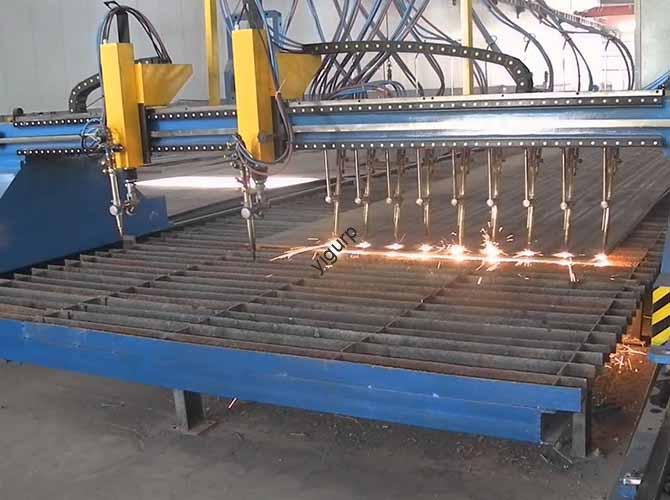
- Plasma cutting: Efficient for thick sections. Use clean, dry air or nitrogen to prevent oxidation.
- Laser cutting: Provides precise, clean edges with minimal heat-affected zone. Preferred for thin sections and decorative applications.
- Shearing: Suitable for thinner gauges (up to 6 mm). Ensure blades are sharp to avoid work hardening the edge.
Forming and Bending
316L angle can be bent using press brakes or roll forming equipment.
- Minimum bend radius: For angle legs, use a radius of at least 2–3× material thickness to avoid cracking.
- Springback: 316L exhibits more springback than carbon steel. Overbend by 2–5% to compensate.
Welding
TIG and MIG welding are the most common methods for joining 316L angle.
- Filler metal: Use AWS ER316L for both TIG and MIG processes. This matches the low carbon and molybdenum content of the base metal.
- Shielding gas: Argon with 2% CO₂ for MIG; 100% argon for TIG.
- No preheating required: For sections up to 20 mm thick, preheating is not necessary.
- No post-weld heat treatment: The low carbon content eliminates the need for PWHT, even for thick sections.
A fabricator welding 316L angle for a pharmaceutical cleanroom uses ER316L filler and argon shielding. Welds are visually inspected and pass dye penetrant testing without any heat treatment.
Machining
316L work hardens more quickly than carbon steel, so machining requires attention to tooling and speeds.
- Cutting tools: Use carbide inserts with sharp edges. Avoid high-speed steel tools.
- Speeds: Use moderate cutting speeds (150–250 SFM for turning; 80–120 SFM for milling).
- Coolant: Apply generous flood coolant to prevent work hardening and extend tool life.
Why Choose 316L Angle Over Cheaper Alternatives?
While 316L stainless steel angle has a higher upfront cost than carbon steel or even standard 316, the long-term economics favor it in demanding environments.
Longer Service Life
- Carbon steel: In marine or chemical environments, carbon steel angles typically require replacement every 5–10 years due to corrosion.
- 316L stainless steel: Service life of 20+ years with minimal maintenance in the same environments.
A marine dock using 316L angle for pilings and railings can expect 25–30 years of service. The same structure built with carbon steel would need major refurbishment every 8–10 years.
Lower Maintenance Costs
- No coating required: 316L’s passive oxide layer provides corrosion protection without paint, galvanizing, or other coatings.
- No regular inspection for rust: Carbon steel structures require regular inspection and spot painting of corroded areas.
A food processing plant that switched from painted carbon steel to 316L angle eliminated annual repainting costs of $15,000 per production line.
Reliability in Critical Applications
In pharmaceutical and chemical processing, equipment failure carries risks beyond replacement cost: production downtime, product loss, and safety hazards. 316L’s consistent performance minimizes these risks.
Total Cost of Ownership Example
| Cost Factor | Carbon Steel Angle | 316L Stainless Angle |
|---|---|---|
| Initial material cost | $1,000 | $3,500 |
| Installation (fabrication + welding) | $2,000 | $2,500 (slightly higher due to slower machining) |
| Maintenance over 20 years | $8,000 (repainting, spot repairs, one replacement) | $500 (occasional cleaning) |
| Total 20-year cost | $11,000 | $6,500 |
Over two decades, 316L angle costs less than carbon steel when maintenance and replacement are factored in.
Conclusion
316L stainless steel angle delivers the combination of corrosion resistance, weldability, and mechanical strength required for the most demanding environments. Its low carbon content eliminates weld decay, while molybdenum provides exceptional resistance to chlorides and chemicals. From marine docks and chemical plants to food processing lines and pharmaceutical cleanrooms, it performs reliably where standard materials fail. While the upfront cost is higher than carbon steel or standard 316, the extended service life and reduced maintenance make it the more economical choice over the life of the project.
FAQ About 316L Stainless Steel Angle
Can 316L stainless steel angle be used in freshwater environments?
Yes. While 316L is best known for its saltwater resistance, it performs well in freshwater applications as well. It is a better choice than carbon steel for water treatment plants, pond structures, and irrigation systems where moisture and chemical additives are present.
Does 316L stainless steel angle require special coating or painting?
No. 316L’s natural chromium oxide layer provides corrosion protection without any coating. Painting is not required and is generally not recommended, as it can trap contaminants against the surface. The material can be left bare in most environments.
What sizes of 316L stainless steel angle are available?
Most suppliers offer 316L angle in leg sizes from 10 mm × 10 mm up to 200 mm × 200 mm. Thicknesses range from 1.5 mm to 20 mm. Custom lengths and drilled holes can be specified for project requirements.
Is 316L stainless steel angle magnetic?
In the annealed condition, 316L is non-magnetic or weakly magnetic. Cold working (such as bending or forming) can induce some magnetism, but it remains significantly less magnetic than ferritic or martensitic stainless steels or carbon steel.
What is the difference between 316L and 304 stainless steel angle?
The key difference is molybdenum content. 316L contains 2–3% molybdenum, which provides superior resistance to chlorides and pitting. 304 contains no molybdenum and is not recommended for saltwater or chemical environments. 316L also has lower carbon content (≤0.03% vs. ≤0.08% for 304), offering better weldability without sensitization risk.
Can 316L stainless steel angle be welded to carbon steel?
Yes, but with caution. Use a filler metal that matches the stainless steel (ER316L) to maintain corrosion resistance on the stainless side. The carbon steel side will require coating to prevent rust, and the welded joint may be susceptible to galvanic corrosion if exposed to electrolytes. For corrosive environments, it is better to use stainless steel for both components.
Discuss Your Projects with Yigu Rapid Prototyping
Selecting the right structural material for corrosive environments requires balancing initial cost against long-term performance. At Yigu Rapid Prototyping, we help engineers and project teams specify 316L stainless steel angle for marine, chemical, and food-grade applications. We provide guidance on material selection, fabrication methods, and welding procedures to ensure your structures meet performance targets and service life expectations. Contact us to discuss your project requirements.