
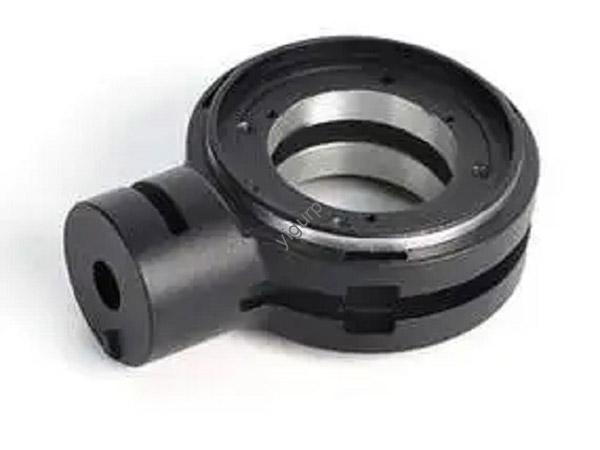
When your application involves medium-stress cutting tools, forming dies, or plastic injection mold cores—and you need a material that balances toughness, wear resistance, and shock resistance—S2 tool steel is a proven solution. This low-alloy cold-work steel offers a distinct upgrade over S1, thanks to the addition of vanadium, which refines grain structure and enhances durability. It delivers reliable performance in applications where tools face occasional shock loads and moderate wear, without the higher cost of high-alloy steels like A2 or D2. In this guide, I will walk you through its properties, applications, and how to work with it based on real manufacturing experience.
Introduction
S2 tool steel belongs to the family of low-alloy cold-work steels. It is defined by its moderate carbon content (0.45–0.55%) and the addition of chromium and vanadium. The vanadium content (0.10–0.20%) is what sets S2 apart from S1. Vanadium refines the grain structure, which improves shock resistance and wear resistance without sacrificing toughness. Over the years at Yigu Rapid Prototyping, I have worked with small-to-medium manufacturers who need tool steel that can handle the rigors of semi-automatic stamping, plastic molding, and machining of mild materials. S2 offers a practical balance of performance and cost for these applications.
What Makes S2 Tool Steel Unique?
S2 achieves its combination of properties through a carefully balanced chemistry and a specific heat treatment. The key is the addition of vanadium, which provides grain refinement and improved wear resistance compared to S1.
The Chemistry Behind the Performance
The chemical composition of S2 is optimized for toughness, shock resistance, and machinability.
| Element | Content Range (%) | Why It Matters |
|---|---|---|
| Carbon (C) | 0.45 – 0.55 | Provides hardness and forms carbides for wear resistance. Higher than S1. |
| Vanadium (V) | 0.10 – 0.20 | The defining addition. Refines grain size, enhances shock resistance, and improves wear resistance. |
| Chromium (Cr) | 0.60 – 0.90 | Enhances hardenability and provides mild corrosion resistance. |
| Manganese (Mn) | 0.60 – 0.90 | Boosts tensile strength and hardenability. |
| Silicon (Si) | 0.15 – 0.35 | Aids deoxidation and stabilizes mechanical properties. |
| Phosphorus (P) / Sulfur (S) | ≤ 0.03 | Kept low to maintain toughness and machinability. |
Key Insight: The vanadium addition in S2 provides grain refinement that S1 lacks. This results in a finer, more uniform microstructure that can absorb shock loads without cracking, while also providing better resistance to abrasive wear.
Mechanical Properties That Matter
S2’s mechanical properties are achieved through annealing, quenching, and tempering. The table below shows typical values.
| Property | Typical Value | Significance |
|---|---|---|
| Hardness | 52 – 56 HRC | After heat treatment. Provides good wear resistance while maintaining toughness. |
| Tensile Strength | 1200 – 1400 MPa | Higher than S1 by 200–300 MPa. Suitable for medium-load applications. |
| Yield Strength | 800 – 1000 MPa | Ensures tools resist permanent deformation under load. |
| Elongation | 15 – 20% | Provides ductility for machining complex shapes. |
| Impact Toughness | 55 – 65 J/cm² | Higher than S1, A2, and D2. Critical for tools that face sudden shock. |
| Fatigue Strength | 550 – 650 MPa | 50–100 MPa higher than S1. Important for high-cycle tools. |
Case Study: A small automotive parts shop was using S1 for aluminum turning tools. They faced a 15% tool breakage rate due to occasional shock from workpiece misalignment. They switched to S2. Tool breakage dropped to 3%, saving $6,000 annually in replacement costs. Tool life also increased from 500 to 800 parts per sharpening.
Where Does S2 Tool Steel Deliver the Most Value?
This material is best suited for applications that require a balance of toughness, wear resistance, and shock resistance. It is widely used in cutting tools, forming dies, and plastic injection molding.
Cutting Tools for Mild Materials
S2 is used for cutting tools that machine mild steel, aluminum, and brass. Its combination of wear resistance and shock resistance makes it suitable for tools that may encounter occasional misalignment or vibration.
- Milling cutters: End mills for machining mild steel or aluminum. S2 maintains sharpness for 800+ parts, compared to 500+ for S1.
- Turning tools: Semi-automatic lathe tools for small-batch metalworking. Shock resistance prevents breakage from accidental collisions.
- Broaches: Internal broaches for shaping soft steel or plastic parts. Wear resistance handles 15,000+ parts.
- Reamers: Medium-tolerance reamers (±0.008 mm) for engine component holes.
Forming Dies and Punches
S2 is used in cold-forming tools that face moderate wear and occasional shock.
- Punches: Medium cold-punching tools for sheet metal. Shock resistance withstands manual or semi-automatic punching. Wear resistance handles 120,000+ punches, compared to 80,000+ for S1.
- Stamping dies: Dies for thin steel sheets such as appliance panels. Toughness prevents cracking during die assembly. Wear resistance ensures clean edges over 100,000 stampings.
- Small-batch stamping tools: Affordable for medium-production needs.
Plastic Injection Molding
S2 is used for mold components that require good wear resistance and toughness at a reasonable cost.
- Mold cores and cavities: Cores for small plastic components such as electrical connectors. Wear resistance handles 200,000+ cycles. Toughness withstands mold clamping pressure up to 7,000 kN.
- Precision components: Mold parts for smartphone charging ports and similar small components. Dimensional stability ensures part consistency.
Case Study: A plastic parts manufacturer was using S1 for mold cores for electrical connectors. They produced 150,000 parts per year. The S1 cores wore out after 120,000 cycles, and breakage from mold clamping shock caused an 8% failure rate. They switched to S2 cores. Core life increased to 200,000 cycles—a 67% improvement. The failure rate dropped to 2%. Despite a 15% higher material cost, the manufacturer saved $10,000 annually in replacement costs and reduced downtime.
Mechanical Components
S2 is used for small mechanical components that require strength and shock resistance.
- Gears: Small gear teeth for medium-load machinery such as industrial conveyors.
- Shafts: Small shafts for applications with occasional shock loads.
- Fasteners: Load-bearing fasteners for aerospace cabin components that must withstand vibration.
How Is S2 Tool Steel Manufactured and Processed?
Achieving S2’s properties requires precise control over chemistry, rolling, and heat treatment.
Steelmaking and Rolling
S2 is typically produced in an electric arc furnace (EAF) for precise composition control. After steelmaking, the material is:
- Hot rolled at 1,050–1,150°C into bars, plates, and wire. This breaks down large carbides and shapes the material into tool blanks.
- Cold rolled for thin components such as punch tips or mold inserts.
Heat Treatment
Heat treatment is critical for achieving the balance of hardness and toughness.
- Annealing: Heat to 750–800°C for 2–3 hours, cool slowly to about 600°C. Softens the steel to 190–230 Brinell for machining.
- Quenching: Heat to 830–870°C for 20–30 minutes, quench in oil. Hardens to 58–60 HRC.
- Tempering: Reheat to 270–320°C for 1–2 hours, air cool. Reduces hardness to 52–56 HRC. This balances wear resistance and shock resistance. For applications requiring extra ductility, temper at 350–400°C.
- Stress relief annealing (optional): After machining, heat to 550–600°C for 1 hour to reduce cutting stress.
Fabrication
S2 is designed to be machinable in the annealed condition.
- Machining: CNC mills and lathes can machine annealed S2 with high-speed steel (HSS) or carbide tools. This keeps fabrication costs reasonable.
- Grinding: After heat treatment, aluminum oxide wheels can refine edges to Ra 0.1 μm roughness.
- Welding: Requires caution. Preheat to 250–300°C and use low-hydrogen electrodes. Post-weld tempering is required to avoid cracking.
Surface Treatment
Optional surface treatments can extend tool life.
- Nitriding: Heat to 480–520°C in a nitrogen atmosphere. Forms a 3–5 μm nitride layer that boosts wear resistance by about 25%. Ideal for high-volume stamping dies or mold cores.
- PVD coating: Titanium nitride coatings reduce friction, extending cutting tool life by 1.8 times for mild steel machining.
How Does S2 Tool Steel Compare to Other Materials?
Understanding the trade-offs between S2 and alternative tool steels helps in making an informed selection.
| Material | Relative Cost | Hardness (HRC) | Wear Resistance | Shock Resistance | Machinability |
|---|---|---|---|---|---|
| S2 | 100% | 52 – 56 | Good | High | Good |
| S1 | 85% | 50 – 55 | Fair | Moderate | Good |
| A2 | 125% | 52 – 60 | Very Good | Moderate | Good |
| D2 | 155% | 60 – 62 | Excellent | Low | Difficult |
| 420 Stainless | 135% | 50 – 55 | Good | Moderate | Good |
Key Insights:
- Compared to S1, S2 offers better wear resistance (15–20%) and significantly higher shock resistance for a 15% cost premium. For applications with occasional shock loads, this upgrade pays for itself through reduced breakage.
- Compared to A2, S2 is 25% less expensive and offers better shock resistance, though A2 provides higher wear resistance. For shock-prone applications, S2 is often the better choice.
- Compared to D2, S2 is 55% less expensive and far more shock-resistant, though D2 offers superior wear resistance for high-volume, no-impact applications.
What Are the Cost Benefits of S2?
S2 occupies a practical position in the tool steel market. It costs more than S1 but significantly less than high-alloy grades like A2 or D2. For medium-volume applications with occasional shock loads, it often provides the best value.
Example: The plastic parts manufacturer mentioned earlier saved $10,000 annually by switching from S1 to S2 for mold cores. The 15% higher material cost was offset by longer core life and reduced breakage. For a small manufacturer, this represents a significant improvement in profitability.
Conclusion
S2 tool steel offers a practical balance of toughness, wear resistance, and shock resistance for medium-stress applications. Its vanadium-enhanced composition provides a step up from S1 in performance without the higher cost of high-alloy steels like A2 or D2. For cutting tools that machine mild materials, forming dies that face occasional shock, and plastic injection mold cores that require good cycle life, S2 is a reliable, cost-effective choice. When your application demands durability without the complexity and expense of high-alloy tool steels, S2 is a proven solution.
FAQ About S2 Tool Steel
Is S2 tool steel better than S1 for shock-prone applications?
Yes. The vanadium addition in S2 refines the grain structure, making it approximately 2–3 times more resistant to sudden impacts than S1. If your tools face occasional shock loads—such as misaligned stamping or accidental drops—S2 is the better choice.
Can S2 be used for high-volume stamping dies?
For moderate volumes (up to 120,000 strokes), S2 performs well. For very high volumes exceeding 500,000 strokes, consider a higher-alloy steel like A2 or D2, which offer superior wear resistance. S2’s strength is in applications where both wear resistance and shock resistance are required.
What heat treatment is recommended for S2 tools?
The standard cycle is annealing at 750–800°C, quenching from 830–870°C in oil, and tempering at 270–320°C to achieve 52–56 HRC. For applications requiring maximum toughness with slightly lower hardness, temper at 350–400°C. Always temper immediately after quenching to prevent cracking.
How does S2 compare to A2 for plastic injection molds?
S2 offers better shock resistance and is approximately 25% less expensive than A2. For medium-volume molds (up to 200,000 cycles) where the mold may face occasional clamping shock, S2 is often the better choice. For very high-volume molds exceeding 500,000 cycles, A2’s superior wear resistance may justify its higher cost.
Discuss Your Projects with Yigu Rapid Prototyping
Selecting the right tool steel for your application requires balancing wear resistance, shock resistance, toughness, and cost. At Yigu Rapid Prototyping, we help small-to-medium manufacturers navigate these decisions with practical, experience-based guidance. Whether you need S2 for cutting tools, forming dies, or plastic injection molds, we can provide material sourcing, heat treatment support, and fabrication assistance. Contact us to discuss your project requirements and find the right solution.