
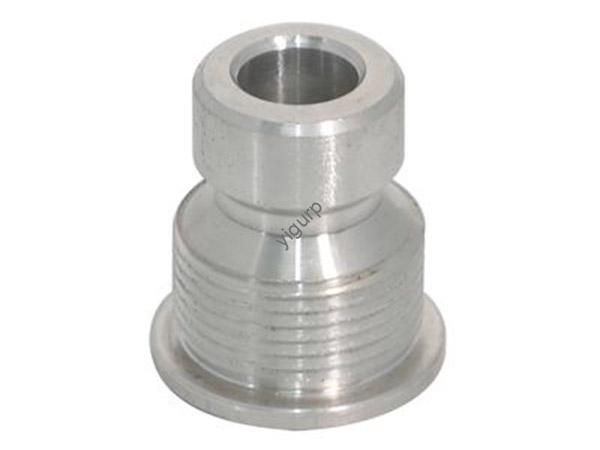
When your project involves cutting tools, springs, or bearings—components that require exceptional hardness, strength, and wear resistance—high carbon steel is a reliable, cost-effective choice. Defined by its carbon content of 0.60–1.70%, this material unlocks unique mechanical properties that make it indispensable across industries from automotive to manufacturing. In this guide, I will walk you through its properties, applications, and how to work with it based on real manufacturing experience.
Introduction
High carbon steel is a category of steel with carbon content ranging from 0.60% to 1.70%. This high carbon content is the primary driver of its exceptional hardness and wear resistance. Unlike low-carbon steels that prioritize formability and weldability, high carbon steel is designed for applications where strength, hardness, and edge retention are paramount. The carbon combines with iron to form iron carbide, a hard, brittle phase that provides wear resistance. Through heat treatment—quenching and tempering—high carbon steel can achieve hardness levels of 55–65 HRC. Over the years at Yigu Rapid Prototyping, I have worked with tool manufacturers, spring makers, and bearing producers who choose high carbon steel for components that must withstand wear, maintain sharp edges, and resist deformation under load. Its combination of properties and cost-effectiveness makes it a go-to material for demanding applications.
What Makes High Carbon Steel Hard and Wear-Resistant?
High carbon steel achieves its properties through its high carbon content and the heat treatment processes that transform its microstructure.
The Chemistry Behind the Performance
The chemical composition of high carbon steel is defined by its carbon content and controlled impurities.
| Element | Content Range (%) | Why It Matters |
|---|---|---|
| Carbon (C) | 0.60 – 1.70 | The primary driver of hardness and wear resistance. Higher carbon (1.00–1.70%) suits cutting tools; lower carbon (0.60–0.99%) works for springs. |
| Manganese (Mn) | 0.30 – 1.00 | Improves hardenability. Helps the steel harden evenly during heat treatment. |
| Silicon (Si) | 0.10 – 0.30 | Enhances strength and heat resistance. Protects against deformation in high-friction applications. |
| Chromium (Cr) | 0.10 – 0.50 (in alloyed variants) | Boosts wear resistance and corrosion resistance. Used in bearing steel. |
| Nickel (Ni) | 0.10 – 0.50 (in alloyed variants) | Enhances toughness for parts that endure repeated stress such as springs. |
| Phosphorus (P) / Sulfur (S) | ≤ 0.040 / ≤ 0.050 | Kept low to maintain toughness. Small sulfur additions improve machinability in free-machining grades. |
Key Insight: The carbon content of 0.60–1.70% allows high carbon steel to achieve hardness of 55–65 HRC after heat treatment. The carbon forms iron carbides that provide exceptional wear resistance, but this comes at the cost of reduced ductility and toughness.
Mechanical Properties That Matter
High carbon steel’s mechanical properties are achieved through heat treatment. The final properties depend on the carbon content and the tempering temperature.
| Property | Typical Value | Significance |
|---|---|---|
| Hardness | 55 – 65 HRC | Provides wear resistance for cutting tools, bearings, and springs. |
| Tensile Strength | 1,800 – 2,800 MPa | Resists breaking under tension. Critical for springs and wire. |
| Yield Strength | 1,500 – 2,500 MPa | Prevents permanent deformation. Ensures springs retain their elasticity. |
| Elongation | 5 – 10% | Limited ductility is the trade-off for high strength and hardness. |
| Impact Toughness | 10 – 30 J/cm² | Brittle compared to alloy steels. Not ideal for parts that take heavy impacts. |
| Wear Resistance | Excellent | Hard carbides resist abrasion. Essential for cutting tools and bearings. |
Case Study: An automotive plant used low-carbon steel drill bits for drilling aluminum engine blocks. The bits lasted only 100 holes before dulling, causing downtime. They switched to high carbon steel (0.80% C) drill bits with a TiN coating. Bit life increased to 450 holes—a 350% improvement—reducing downtime by 75% and saving $12,000 annually.
Where Does High Carbon Steel Deliver the Most Value?
This material is specified for applications that require high hardness, wear resistance, and strength, where ductility and toughness are secondary.
Cutting Tools
High carbon steel’s hardness and wear resistance make it ideal for tools that cut or shape materials.
- Drill bits: Bits that drill holes in metal and wood. Stay sharp longer than low-carbon alternatives.
- Milling cutters: Tools that shape metal parts such as automotive components.
- Chisels and saws: Handheld cutting tools. Hardness keeps edges sharp through repeated use.
- Blades: Knives, scissors, and industrial blades.
Springs and Elastic Parts
High carbon steel’s high yield strength and elasticity make it a top choice for parts that flex without breaking.
- Compression springs: Springs in car suspensions and machinery.
- Tension springs: Springs in garage doors and mechanical systems.
- Piano wire: High carbon, high tensile strength wire used in pianos, guitars, and mechanical watches.
- Guitar strings: Produce bright tones and retain tension well.
Case Study: A piano maker had issues with piano wire breaking during tuning. Low-carbon wire lacked tensile strength. They switched to high carbon steel piano wire (1.05% C) with cold drawing. Wire breakage dropped from 8% to 0.5%, tuning stability improved, and customer satisfaction rose by 90%.
Bearings
High carbon steel alloyed with chromium is used for bearings that need to resist wear and handle high loads.
- Bearing races and balls: Found in car engines, industrial motors, and skateboards. Wear resistance ensures smooth rotation.
Case Study: A motor manufacturer had bearings failing after six months. Standard carbon steel bearings wore out quickly under high loads. They switched to high carbon steel bearings (1.00% C + 1.50% Cr) with nitriding. Bearing life extended to 24 months—a 300% improvement—reducing maintenance costs by 67%.
High-Strength Fasteners
High carbon steel’s tensile strength makes it suitable for fasteners that hold heavy loads.
- Bolts, nuts, and screws: Used in construction, automotive, and machinery. Withstand high torque without breaking.
Cold Work and Hot Work Tools
Alloyed variants of high carbon steel handle shaping metal at room or high temperatures.
- Cold work tools: Punches, dies, and stamping tools. Resist wear from cold metal shaping.
- Hot work tools: Small forging dies alloyed with molybdenum. Retain strength at high temperatures.
How Is High Carbon Steel Manufactured and Processed?
Producing high carbon steel parts requires careful control—especially heat treatment—to balance hardness and toughness.
Steelmaking and Forming
High carbon steel is produced in an electric arc furnace (EAF) or basic oxygen furnace (BOF) . Carbon is added to achieve the target content. The steel is cast into ingots or billets.
- Forging: Heated to 1,100–1,200°C and hammered into rough shapes. Aligns grain structure, boosting strength.
- Hot rolling: For flat parts and wire, rolled to reduce thickness or create uniform shapes.
- Cold drawing: For wire such as piano wire, drawn through a die at room temperature to increase tensile strength.
Heat Treatment
Heat treatment is the most critical step. Poor heat treatment can make the steel too brittle or too soft.
- Annealing: Heat to 800–900°C, hold for 2–4 hours, then cool slowly. Softens to 20–30 HRC for machining. Reduces internal stress.
- Hardening: Heat to 750–850°C, hold until uniform, then quench in water or oil. Hardens to 60–65 HRC but makes the steel brittle.
- Tempering: Reheat to 150–500°C, hold for 1–2 hours, then cool. Reduces brittleness while retaining 55–60 HRC. Critical for tools and springs.
Machining
High carbon steel is machined in the annealed condition.
- Pre-heat treatment: Soft enough to machine with HSS or carbide tools.
- Post-heat treatment: After hardening, requires carbide or diamond tools. Grinding is the main method for finishing.
Surface Treatment
Optional treatments enhance performance.
- Coating: PVD coatings such as TiN add a hard, low-friction layer to cutting tools, extending tool life by 50%.
- Nitriding: Creates a hard surface layer, boosting wear resistance for bearings.
- Carburizing: Increases surface carbon content for low-alloy high carbon steel, hardening the surface while keeping the core tough.
How Does High Carbon Steel Compare to Other Materials?
Understanding the trade-offs between high carbon steel and alternative materials helps in making an informed selection.
| Material | Hardness (HRC) | Tensile Strength (MPa) | Wear Resistance | Relative Cost | Best For |
|---|---|---|---|---|---|
| High Carbon Steel | 55 – 65 | 1,800 – 2,800 | Good | 100% | Cutting tools, springs, bearings |
| Low Carbon Steel | 15 – 25 | 400 – 600 | Poor | 60% | Structural parts, forming |
| Medium Carbon Steel | 30 – 40 | 800 – 1,200 | Fair | 80% | Gears, shafts |
| W2 Tool Steel | 58 – 62 | 1,800 – 2,200 | Good | 120% | Cold work tools |
| D2 Tool Steel | 58 – 62 | 1,800 – 2,200 | Excellent | 150% | Corrosion-resistant tools |
| Carbide | 85 – 90 | 2,500 – 3,500 | Excellent | 800% | High-speed cutting of hard metals |
Key Insights:
- Compared to low-carbon steel, high carbon steel offers significantly higher hardness and wear resistance at a 40% cost premium. For cutting tools and springs, this upgrade is essential.
- Compared to tool steels like W2 and D2, high carbon steel offers similar hardness at lower cost, though tool steels have better toughness or corrosion resistance. For basic tools and springs, high carbon steel is the more cost-effective choice.
- Compared to carbide, high carbon steel is significantly less expensive and tougher, though carbide has higher wear resistance. For low-speed cutting and applications requiring toughness, high carbon steel is preferred.
What About Corrosion Resistance?
High carbon steel has poor corrosion resistance. To prevent rust:
- Coatings: Paint, oil, or galvanization protect against moisture.
- Dry storage: Store parts in dry environments.
- Alloyed variants: Chromium additions such as in bearing steel improve corrosion resistance.
Conclusion
High carbon steel is a practical, cost-effective material for applications requiring exceptional hardness, strength, and wear resistance. Its carbon content of 0.60–1.70% allows it to achieve 55–65 HRC through heat treatment, making it ideal for cutting tools, springs, bearings, and high-strength fasteners. When you need a material that can be hardened, resists wear, and fits production budgets, high carbon steel is a proven, reliable choice.
FAQ About High Carbon Steel
Can high carbon steel be welded?
Welding high carbon steel is possible but requires caution. Its high carbon content makes it prone to cracking. To weld safely: preheat to 200–300°C, use low-hydrogen electrodes such as E7018, and post-weld anneal at 600°C to relieve stress. For critical parts such as springs, machining from a single piece is more reliable than welding.
How do I prevent high carbon steel from rusting?
High carbon steel has poor corrosion resistance. To prevent rust: apply a protective coating such as paint, oil, or galvanization; store parts in a dry environment; or use alloyed variants with chromium such as bearing steel. For outdoor use, a rust-inhibiting primer is recommended.
What is the difference between free-machining and standard high carbon steel?
Free-machining high carbon steel contains small amounts of sulfur (0.04–0.05%), which creates small particles that break off during machining, making it easier to drill and mill. Standard high carbon steel has lower sulfur (≤ 0.03%) for better toughness. Choose free-machining variants for parts requiring extensive machining; choose standard variants for parts requiring wear resistance such as drill bits.
What heat treatment is recommended for high carbon steel springs?
For springs, heat to 800–850°C, quench in oil, then temper at 300–500°C. This achieves 45–55 HRC, providing the balance of strength and elasticity required for spring applications. Tempering at higher temperatures (400–500°C) produces a tougher, more elastic spring; lower tempering temperatures (300–400°C) produce a harder, stiffer spring.
Discuss Your Projects with Yigu Rapid Prototyping
Selecting the right high carbon steel for cutting tools, springs, and bearings requires balancing hardness, wear resistance, toughness, and cost. At Yigu Rapid Prototyping, we help tool manufacturers, spring makers, and bearing producers navigate these decisions with practical, experience-based guidance. Whether you need high carbon steel for drill bits, piano wire, or bearing races, we can provide material sourcing, heat treatment, and precision finishing services. Contact us to discuss your project requirements and find the right solution.