
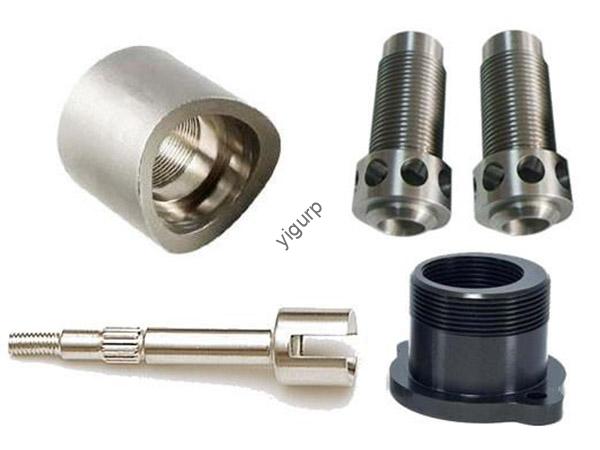
AISI 321 stainless steel is a titanium-stabilized alloy designed to solve two major industrial problems: weld decay and high-temperature creep. Its unique chemistry allows it to resist corrosion after welding and maintain strength under extreme heat. This guide covers its core properties, real-world performance, and practical fabrication tips. By the end, you will know exactly when and how to use this material for your next project.
Introduction
Selecting the right stainless steel for high-temperature or welded applications can be challenging. Standard grades like 304 are prone to a problem called intergranular corrosion after welding. AISI 321 was developed to fix this. It uses titanium to prevent corrosion and to maintain stability in hot environments. This makes it a preferred choice for industries ranging from aerospace to chemical processing. Understanding its capabilities helps you avoid premature failures and long-term maintenance headaches.
What Makes AISI 321 Chemically Unique?
The alloy’s performance starts with its carefully balanced composition. The key element is titanium, which sets it apart from more common stainless steels.
How Does Titanium Stabilization Work?
AISI 321 contains 17-19% chromium and 9-12% nickel, similar to 304 stainless steel. However, it also includes a small but critical amount of titanium (0.10-0.50%) . During welding or high-temperature exposure, carbon in the steel can form harmful chromium carbides at the grain boundaries. This process, known as sensitization, leaves the areas around the grain boundaries depleted of chromium and vulnerable to corrosion. The titanium acts as a scavenger. It has a higher affinity for carbon than chromium does. It forms titanium carbides (TiC) instead. This prevents chromium depletion, ensuring the alloy remains corrosion-resistant even after welding.
What Are Its Key Mechanical Specifications?
Knowing the standard mechanical properties helps you determine if AISI 321 is strong enough for your application. It meets stringent global standards.
What Do the Numbers Tell Us?
The material’s strength and hardness are clearly defined. Here are the minimum requirements for annealed AISI 321:
| Property | Value | Importance for Design |
|---|---|---|
| Tensile Strength | 515 MPa (75 ksi) | Maximum stress it can withstand under tension |
| Yield Strength (0.2% offset) | 205 MPa (30 ksi) | Stress level where permanent deformation begins |
| Elongation | 40% | Measure of ductility; good for forming operations |
| Hardness (Brinell) | 217 HB (max) | Indicates resistance to wear and indentation |
A real-world example: a U.S. aerospace manufacturer chose AISI 321 for engine mounting brackets. They relied on the 205 MPa yield strength to maintain structural integrity under constant vibration and thermal expansion during flight. A standard 304 bracket might have deformed over time under the same conditions.
How Does It Perform Under High Heat?
This is where AISI 321 truly shines. Its ability to resist oxidation and creep at elevated temperatures is a primary reason for its selection.
What Are Its Temperature Limits?
AISI 321 offers excellent resistance to scaling and oxidation up to a point. Its performance changes based on whether the heat is constant or intermittent.
- Oxidation Resistance: It provides reliable protection against scaling up to 900 °C. This makes it suitable for furnace parts and exhaust systems.
- Continuous Service Limit: For constant heat exposure, the recommended maximum is 870 °C. The material maintains its structural integrity at this temperature.
- Intermittent Service Limit: For applications with fluctuating temperatures, it can withstand short bursts up to 980 °C.
- Creep Strength: At 600 °C, it has a 1000-hour creep strength of approximately 150 MPa. This means it can handle sustained loads for long periods without deforming.
Consider a European refinery that installed AISI 321 flare stacks. These stacks operated continuously at 850 °C. After eight years of service, inspections revealed no significant oxidation or creep deformation. This longevity saved the refinery from a costly shutdown and replacement project.
Does It Resist Corrosion Effectively?
Corrosion resistance is a critical factor, especially for welded structures and equipment exposed to harsh chemicals.
How Does It Prevent Weld Decay?
The primary benefit is its immunity to intergranular corrosion. Because the titanium stabilizes the carbon, the heat-affected zone (HAZ) of a weld does not become sensitized. A case study from a food processing plant in Asia illustrates this. They used standard 304L for acid storage tanks. After a short time, leaks appeared along the weld seams due to intergranular corrosion. After switching to AISI 321, the leaks stopped entirely. This change cut their maintenance costs by 50%.
How Does It Compare in Other Environments?
Its performance extends beyond just weld areas.
- Pitting Resistance: It is better than 304 at resisting pitting in salty or mild acidic environments.
- Stress Corrosion Cracking: It offers moderate resistance to chloride stress corrosion cracking.
- Chemical Resistance: It performs well with dilute sulfuric acid (up to 60 °C). In seawater, its corrosion rate is very low, measured at ≤0.01 mm/year in standardized tests.
How to Heat Treat and Weld It Properly?
Proper processing is key to unlocking AISI 321’s full potential. Incorrect heat treatment can negate its benefits.
What Are the Critical Heat Treatment Steps?
The goal of heat treatment is to create a uniform, corrosion-resistant structure.
- Solution Annealing: This is the primary heat treatment. Heat the material to 950-1100 °C, hold it for a sufficient time, and then water quench. This dissolves any unwanted carbides and puts the titanium back into a solution.
- Stabilizing Anneal: For critical applications, an additional step is used. Heat to 870-900 °C. This ensures all carbon is permanently tied up as titanium carbide, guaranteeing long-term stability.
- Stress Relief: After welding or heavy forming, a low-temperature stress relief at 450-600 °C can reduce residual stresses without affecting corrosion resistance.
What Are the Best Welding Practices?
Welding AISI 321 is straightforward if you follow a few guidelines.
- Filler Metal: Always use a matching filler, such as ER321. This ensures the weld metal also has the same titanium-stabilized properties.
- Preheat: For most thicknesses, no preheat is required. This simplifies the welding process.
- Post-Weld Heat Treatment: A post-weld stabilizing anneal is optional but recommended for very thick sections or for components that will operate in the most severe corrosive environments.
- Process: Using TIG welding with parameters around 120-160 amps and argon shielding gas produces a clean, strong weld with a sensitization-free HAZ.
What Forms Are Available for Manufacturing?
AISI 321 is available in a wide variety of product forms to suit different manufacturing needs. This makes it a versatile material for many industries.
| Product Form | Common Specifications | Typical Uses |
|---|---|---|
| Plates & Sheets | ASTM A240 | Pressure vessels, furnace liners, chemical tanks |
| Seamless Pipe | ASTM A312 | High-temperature fluid lines, power plant piping |
| Round Bar | ASTM A479 | Shafts, fasteners, fittings, and machined components |
| Structural Shapes | ASTM A276 | Angles, channels, and beams for high-temp structures |
| Fittings & Flanges | ASTM A403 | Welded connections for piping systems |
For instance, a power plant replaced their 304 pipes with AISI 321 seamless pipe per ASTM A312. The new pipes lasted 15 years in a high-temperature steam environment, whereas the previous 304 pipes failed after only 5 years. This resulted in a 70% reduction in unplanned downtime.
Where Is It Used in the Real World?
The unique combination of heat resistance and corrosion resistance makes AISI 321 a go-to material for several demanding industries.
- Aerospace: Used for aircraft exhaust systems, engine gaskets, and manifold systems that must endure extreme temperature cycles.
- Automotive: Found in turbocharger housings and exhaust manifolds for high-performance vehicles.
- Chemical Processing: Ideal for reactors, heat exchangers, and storage tanks handling aggressive chemicals at elevated temperatures.
- Power Generation: Used in superheater tubes, boiler components, and nuclear reactor internals where reliability under heat and pressure is paramount.
Conclusion
AISI 321 stainless steel is a specialized material that solves the specific problems of weld decay and high-temperature creep. Its titanium-stabilized chemistry ensures it remains corrosion-resistant even after welding, a critical advantage over standard 304. Its ability to withstand continuous heat up to 870 °C and intermittent heat up to 980 °C makes it indispensable for aerospace, automotive, and power generation applications. While it costs more than non-stabilized grades, its longer service life and reduced maintenance in demanding environments often make it the more economical choice in the long run. For any project involving welded structures, high heat, or a combination of both, AISI 321 is a reliable and high-performance solution.
FAQ
What is the difference between AISI 321 and AISI 304?
AISI 321 contains titanium (0.10-0.50%), while 304 does not. This titanium stabilizes the alloy, preventing intergranular corrosion after welding and providing better high-temperature strength. 304 is cheaper but is susceptible to weld decay and has lower creep strength at elevated temperatures.
Can I use AISI 321 in a marine environment?
Yes, it has a very low seawater corrosion rate (≤0.01 mm/year). However, for continuous immersion in seawater, alloys like 316Ti or 317L, which contain molybdenum, offer better resistance to pitting. AISI 321 is a better choice for marine components that also face high temperatures, such as exhaust elbows on boats.
What filler metal should I use for welding AISI 321?
You should use ER321 filler metal. This filler contains titanium, matching the base metal’s composition. Using a non-matching filler like ER308 could create a weld that is not stabilized and could be susceptible to corrosion in the heat-affected zone.
Discuss Your Projects with Yigu Rapid Prototyping
Selecting the right material is the first step to a successful project. At Yigu Rapid Prototyping, we help engineers and designers make informed choices. We offer AISI 321 in various forms, including ASTM A240 plates and seamless pipes, and can provide expert advice on fabrication and heat treatment. Contact us to discuss your project requirements and ensure you get a durable, high-performance solution.