
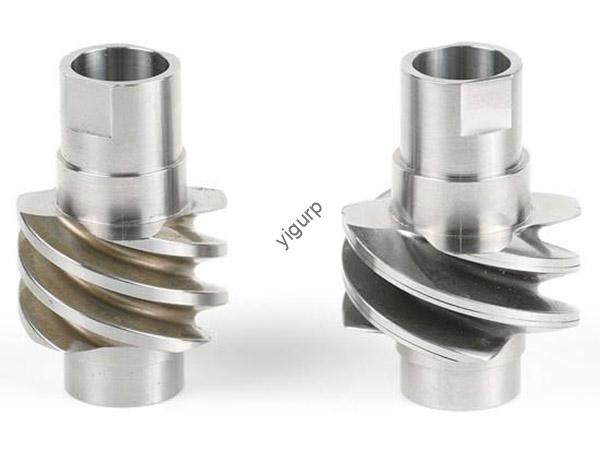
This guide explores S5 tool steel, a cold-work alloy prized for its unique combination of high toughness, good wear resistance, and excellent shock load resistance. You’ll learn about its key properties, real-world applications across aerospace and automotive industries, manufacturing processes, and how it compares to other materials. Whether you’re selecting materials for cutting tools, forming dies, or plastic molds, this article helps you determine if S5 is the right choice for your project.
Introduction
When your tools face sudden impacts, repeated stress, and the need for reliable performance, material choice becomes critical. Many standard cold-work steels offer either hardness or toughness, but rarely both. S5 tool steel fills this gap. Its carefully balanced chemistry—with moderate carbon and strategic additions of chromium and vanadium—creates an alloy that absorbs shock without cracking while maintaining enough wear resistance for medium-to-high stress tasks.
Unlike basic carbon steels or lower-grade S1 and S2 alloys, S5 delivers superior durability. Manufacturers in aerospace, automotive, and plastic injection molding rely on it for components that must withstand unpredictable loads. This guide walks you through everything you need to know, from material properties to practical selection advice.
What Makes S5 Tool Steel Unique?
A Chemical Formula Built for Balance
S5’s performance starts with its precise composition. Each element plays a specific role:
| Element | Percentage Range | Role in Performance |
|---|---|---|
| Carbon | 0.50-0.60% | Forms carbides for wear resistance; maintains ductility to avoid brittleness |
| Chromium | 0.50-0.80% | Improves hardenability and adds mild corrosion resistance |
| Manganese | 0.60-0.90% | Boosts tensile strength and supports heavy machining loads |
| Silicon | 0.15-0.35% | Aids deoxidation during manufacturing; stabilizes high-temperature performance |
| Vanadium | 0.10-0.20% | Key differentiator—refines grain size, enhances wear resistance, improves shock load resistance |
| Phosphorus | ≤0.03% | Tightly controlled to prevent cold brittleness |
| Sulfur | ≤0.03% | Ultra-low levels maintain toughness and prevent cracking |
The vanadium content sets S5 apart from S1 and S2. By refining the grain structure, vanadium creates a material that can absorb sudden impacts without fracturing—a critical advantage in real-world shop floor conditions.
Physical Properties You Can Rely On
S5 behaves predictably across operating conditions, which matters when designing precision components:
| Property | Typical Value | Why It Matters |
|---|---|---|
| Density | ~7.85 g/cm³ | Compatible with standard tool and component designs |
| Thermal Conductivity | ~35 W/(m·K) at 20°C | Dissipates heat efficiently during cutting, reducing tool overheating |
| Specific Heat Capacity | ~0.48 kJ/(kg·K) | Supports stable thermal behavior during processing |
| Coefficient of Thermal Expansion | ~11 x 10⁻⁶/°C (20-500°C) | Minimizes dimensional changes in precision tools |
| Magnetic Properties | Ferromagnetic | Retains magnetism in all heat-treated states |
These physical characteristics make S5 suitable for tools that must maintain tight tolerances despite temperature fluctuations during operation.
Mechanical Strength That Delivers
After proper heat treatment, S5 achieves mechanical properties ideal for medium-to-high stress applications:
- Tensile Strength: 1200-1400 MPa — Handles cutting of hard plastics, mild steel, and thin metal sheet forming without failure
- Yield Strength: 800-1000 MPa — Resists permanent deformation under cold forming pressure
- Elongation: 15-20% (in 50 mm) — High ductility allows machining complex shapes like mold cavities without cracking
- Hardness: 52-56 HRC — Adjustable through tempering; lower range for tough dies, higher range for wear-resistant cutting tools
- Fatigue Strength: 550-650 MPa (10⁷ cycles) — Supports high-volume production applications like stamping dies
- Impact Toughness: 50-60 J/cm² at room temperature — Higher than S2 or A2, providing resistance to sudden impacts
Beyond the Basics: Other Critical Traits
S5 offers several additional advantages:
Good Wear Resistance — Vanadium and carbon carbides provide 15-20% better abrasion resistance than S2 tool steel. In practical terms, stamping dies can achieve 180,000+ cycles before requiring maintenance.
High Toughness — The low-alloy composition retains ductility, so S5 withstands cold forming pressure up to 7,000 kN for medium dies without chipping.
Excellent Shock Load Resistance — Vanadium-refined grains absorb sudden impacts from accidental tool drops or workpiece misalignment. This represents a key advantage over brittle steels like D2.
Machinability — Before heat treatment, annealed S5 (190-230 Brinell) machines well with carbide or high-speed steel tools. Post-treatment grinding achieves precision edges without difficulty.
Weldability (with Caution) — Moderate carbon content requires preheating to 250-300°C and post-weld tempering at 450-500°C to avoid cracking. This makes repairs and modifications possible when done correctly.
Where Is S5 Tool Steel Used?
S5’s balanced properties make it valuable across multiple industries. Here’s how different sectors put it to work:
Cutting Tools
The combination of wear resistance and shock absorption makes S5 ideal for tools that experience intermittent cutting forces:
- Milling cutters — Small-to-medium end mills for machining mild steel or hard plastics maintain sharpness for 900+ parts, compared to 600+ with S2
- Turning tools — Semi-automatic lathe tools for brass or aluminum components resist accidental collisions, lowering failure rates by 30%
- Broaches — Internal broaches for shaping soft steel parts handle 18,000+ parts while maintaining precision
- Reamers — Medium-tolerance reamers (±0.008 mm) for metalworking deliver consistent hole quality over 15,000+ operations
Real-world example: A small machining shop using S2 for aluminum turning tools experienced 12% tool breakage from shock loads. After switching to S5, breakage dropped to 3%, saving $5,000 annually in replacement costs while extending tool life from 600 to 900 parts.
Forming Tools
Forming applications demand materials that withstand repeated stress without deformation:
- Punches — Medium cold-punching tools for sheet metal achieve 180,000+ punches, versus 120,000+ with S2
- Dies — Stamping dies for thin steel sheets maintain clean edges over 150,000 stampings
- Stamping tools — Small-batch tools for automotive interior trim resist misalignment during operation
Plastic Injection Molding
The mold environment requires materials that handle both wear and clamping pressure:
- Molds for plastic parts — Achieve 250,000+ cycles for components like toy wheels or electrical connectors
- Core and cavity components — Precision mold cores for laptop charger housings maintain dimensional stability while allowing intricate shapes
Aerospace, Automotive & Mechanical Engineering
Aerospace: Small non-load-bearing components like cabin fasteners and sensor brackets benefit from S5’s tensile strength and shock resistance during vibration events.
Automotive: Medium-stress components such as plastic trim mold inserts and small gear teeth for windshield wipers leverage S5’s cost-effectiveness for high-volume production.
Mechanical Engineering: Gears and shafts for medium-load machinery (conveyor systems, packaging lines) use S5’s fatigue strength and shock resistance to handle sudden jolts.
How Is S5 Tool Steel Manufactured?
Producing S5 requires precision to maintain its vanadium-enhanced composition. Here’s the complete manufacturing process:
1. Metallurgical Processes
Electric Arc Furnace (EAF) — The primary method involves melting scrap steel, carbon, chromium, and vanadium at 1,600-1,700°C. Sensors continuously monitor composition to maintain vanadium within the 0.10-0.20% range.
Basic Oxygen Furnace (BOF) — For large-scale production, molten iron mixes with scrap steel while oxygen adjusts carbon content. Vanadium and chromium are added post-blowing to prevent oxidation.
2. Rolling Processes
Hot rolling — Molten alloy casts into ingots, heated to 1,050-1,150°C, then rolled into bars, plates, or wire. This process breaks down large carbides and shapes material into tool blanks like 300×300 mm blocks for dies.
Cold rolling — Used for thin components like punch tips or mold inserts. Post-rolling annealing at 650-700°C softens the steel for subsequent machining.
3. Heat Treatment
Heat treatment tailors S5’s properties for specific applications:
| Stage | Temperature/Process | Purpose |
|---|---|---|
| Annealing | 750-800°C for 2-3 hours, slow cool to ~600°C | Reduces hardness to 190-230 Brinell; relieves internal stress |
| Quenching | 840-880°C for 20-30 minutes, oil quench | Hardens to 58-60 HRC; slower quenching retains vanadium-refined grains |
| Tempering | 280-330°C for 1-2 hours, air cool | Reduces hardness to 52-56 HRC; balances wear and shock resistance |
| Stress Relief Annealing | 550-600°C for 1 hour (after machining) | Prevents tool warping during final heat treatment |
Higher tempering temperatures (350-400°C) can increase ductility for forming dies where extra flexibility matters.
4. Forming and Surface Treatment
Forming methods:
- Press forming — Medium hydraulic presses (3,000-6,000 tons) shape S5 blanks before heat treatment
- Machining — CNC mills and semi-automatic lathes cut tool shapes using HSS tools, reducing costs compared to carbide-only steels
- Grinding — After heat treatment, aluminum oxide wheels achieve Ra 0.1 μm roughness, sufficient for medium-tolerance applications
Surface treatment options:
- Nitriding — Heating to 480-520°C in nitrogen creates a 3-5 μm nitride layer, boosting wear resistance by 25% for high-volume stamping dies
- PVD/CVD coating — Thin titanium nitride coatings reduce friction, extending tool life by 1.8x for mild steel machining
5. Quality Control
Manufacturers verify S5 performance through multiple tests:
- Hardness testing — Rockwell C confirms 52-56 HRC range
- Microstructure analysis — Microscopic examination verifies vanadium grain refinement and uniform carbide distribution
- Dimensional inspection — Coordinate Measuring Machines (CMMs) check tolerances to ±0.005 mm
- Shock testing — Simulated impacts from 1-meter drops verify breakage resistance
- Tensile testing — Confirms 1200-1400 MPa tensile strength and 800-1000 MPa yield strength
S5 Tool Steel vs. Other Materials
Choosing the right material requires understanding trade-offs. Here’s how S5 compares:
| Material | Relative Cost | Hardness (HRC) | Wear Resistance | Shock Resistance | Toughness | Machinability |
|---|---|---|---|---|---|---|
| S5 | Base (100%) | 52-56 | Good | High | High | Good |
| S2 | 80% | 52-56 | Fair | Moderate | High | Good |
| A2 | 120% | 52-60 | Very Good | Moderate | Moderate | Good |
| D2 | 150% | 60-62 | Excellent | Low | Low | Difficult |
| 420 Stainless | 130% | 50-55 | Good | Moderate | Moderate | Good |
Application-Based Recommendations
Medium-stress cutting tools: S5 outperforms S2 with longer life and fewer breaks, while offering better value than A2 for small-to-medium machining shops.
Shock-prone forming dies: S5’s high shock resistance makes it superior to A2 or D2 for manual or semi-automatic stamping operations where die breakage carries high costs.
Plastic injection mold cores: S5 balances wear resistance and toughness better than S2 (longer cycle life) and costs less than 420 stainless steel for medium-volume production.
Mechanical components: S5 delivers tensile strength and fatigue resistance comparable to 420 stainless at 20% lower cost—ideal for medium-load gears and shafts.
Case Study: S5 in Plastic Injection Mold Cores
A plastic parts manufacturer producing electrical connectors (200,000 parts annually) faced persistent issues with S2 mold cores. After 150,000 cycles, wear became unacceptable, and 10% of cores failed from mold clamping shock.
The switch to S5 delivered measurable improvements:
| Metric | S2 Performance | S5 Performance | Improvement |
|---|---|---|---|
| Core life | 150,000 cycles | 250,000 cycles | +67% |
| Failure rate | 10% | 2% | -80% |
| Annual core replacement cost | $8,000 | $0 | $8,000 saved |
| Annual downtime cost | $5,000 | $1,000 | $4,000 saved |
| Material cost increase | — | +20% | $2,000 added |
Despite higher upfront material costs, the manufacturer saved $12,000 annually while improving profit margins on medium-volume production. The extended tool life also reduced changeover time and inventory requirements.
Conclusion
S5 tool steel offers a practical solution for applications requiring both toughness and wear resistance. Its vanadium-enhanced composition provides superior shock absorption compared to lower-grade S steels, while maintaining good machinability and cost-effectiveness relative to high-alloy alternatives like A2 and D2.
For small-to-medium manufacturers, S5 represents a reliable upgrade path. It delivers extended tool life in cutting applications, withstands the rigors of shock-prone forming operations, and provides balanced performance for plastic injection mold cores. While it lacks the extreme wear resistance of D2 or the corrosion resistance of stainless grades, its versatility and predictable performance make it a solid choice for medium-stress applications where durability matters.
When selecting S5, pay attention to proper heat treatment—tempering temperature significantly affects the hardness-toughness balance. For maximum shock resistance, target the lower end of the hardness range (52-53 HRC). For wear-critical applications, aim higher (55-56 HRC) while accepting slightly reduced impact toughness.
FAQ
1. Is S5 tool steel better than S2 for shock-prone applications?
Yes. S5’s vanadium addition refines grain size, making it 2-3 times more resistant to sudden impacts than S2. Choose S5 when your application involves occasional shock loads like tool drops or misaligned stamping to avoid breakage.
2. Can S5 tool steel be welded?
Yes, but with caution. Moderate carbon content requires preheating to 250-300°C and post-weld tempering at 450-500°C to prevent cracking. When done correctly, S5 can be repaired or modified successfully.
3. What hardness range should I specify for S5?
For maximum toughness and shock resistance, target 52-53 HRC. For better wear resistance in cutting applications, aim for 55-56 HRC. Your heat treater can adjust tempering temperature to achieve the desired balance.
4. How does S5 compare to A2 for stamping dies?
S5 offers superior shock resistance and toughness, making it better for dies that experience sudden impacts or uneven loading. A2 provides higher wear resistance but lower toughness. Choose based on whether shock or abrasion is your primary concern.
5. Is S5 suitable for high-volume production?
Yes, for medium-stress applications. S5 achieves 180,000+ cycles in stamping dies and 250,000+ cycles in plastic injection molds. For extreme high-volume or highly abrasive applications, consider higher-alloy grades like A2 or D2.
Discuss Your Projects with Yigu Rapid Prototyping
Selecting the right material for your tooling or components requires balancing performance, cost, and manufacturability. At Yigu Rapid Prototyping, we work with S5 tool steel daily—from mold cores to custom cutting tools. Our engineers can help you evaluate whether S5 fits your application, recommend appropriate heat treatment specifications, and provide manufacturing guidance.
Whether you’re prototyping a new design or scaling to production, we offer CNC machining, injection molding, and toolmaking services tailored to your requirements. Contact our team to discuss your project specifications, and let us help you achieve reliable, cost-effective results with the right material choice.