
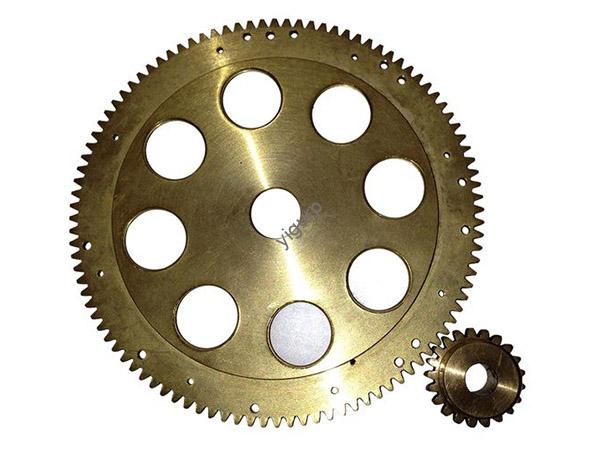
NS111 is a nickel-copper alloy that serves as a reliable and cost-effective alternative to Monel 400. It is designed to deliver the same exceptional resistance to seawater corrosion and similar mechanical strength. For industries like marine engineering, chemical processing, and food production, this material offers a way to get high performance without the premium price tag. This guide will explore its properties, real-world applications, and how it compares to other materials.
Introduction
Monel 400 has long been the standard for applications that demand outstanding corrosion resistance, especially in saltwater environments. However, its cost can be a significant barrier for many projects. NS111 was developed to solve this problem. It matches the chemical composition and performance of Monel 400, but it is often available at a 15-20% lower cost. Understanding this material allows engineers and manufacturers to make smart, value-driven choices without compromising on reliability.
What Are the Key Properties of NS111?
The performance of NS111 is rooted in its carefully controlled chemistry and its resulting physical and mechanical traits. It is designed to be a near-perfect substitute for Monel 400.
Chemical Composition
The high nickel and copper content is the key to its corrosion resistance. The table below shows the typical composition.
| Element | Content Range (%) | Its Role in Performance |
|---|---|---|
| Nickel (Ni) | 63 – 67 | The base metal. It provides ductility and protects against stress cracking. |
| Copper (Cu) | 28 – 34 | The key to seawater resistance. It withstands sulfuric and organic acids. |
| Iron (Fe) | ≤ 2.5 | Adds structural strength without making the alloy brittle. |
| Manganese (Mn) | ≤ 2.0 | Aids in manufacturing processes like welding and casting. |
| Carbon (C) | ≤ 0.3 | Enhances hardness while keeping the alloy workable. |
Mechanical and Physical Properties
NS111 balances strength with excellent formability. The values below are for the annealed (softened) condition.
| Property | Typical Value | Why It Matters |
|---|---|---|
| Tensile Strength | ≥ 550 MPa | Strong enough for pumps, valves, and shafts. |
| Yield Strength | ≥ 240 MPa | Resists permanent deformation under load. |
| Elongation | ≥ 35% | Highly ductile. Easy to form, bend, or roll into shape. |
| Density | 8.80 g/cm³ | Heavier than aluminum but lighter than many superalloys. |
| Melting Point | 1300 – 1350°C | Handles high-heat processes like welding. |
- Corrosion Resistance: This is its standout feature. It offers exceptional resistance to seawater, including pitting and crevice corrosion. It also resists stress corrosion cracking, a common problem for stainless steel in chloride-rich environments.
- Fabrication: It can be hot forged at 980-1150°C and cold formed easily. It is also weldable using standard methods with matching filler metals.
Where Is NS111 Used in the Real World?
NS111 is used in industries where corrosion is a constant threat and reliability is critical. Its lower cost compared to Monel 400 makes it an attractive option for large-scale projects.
Marine Applications
This is the primary field for NS111. It is used for components constantly exposed to saltwater.
- Case Study: A shipyard in South Korea used NS111 for propeller shafts on a cargo ship. After 12 years of service, the shafts showed no signs of corrosion. This matched the lifespan of Monel 400 but at a 15% lower material cost.
- Other common uses include seawater pumps, valve bodies, and hull fasteners.
Chemical Processing Equipment
The alloy’s resistance to acids makes it ideal for handling corrosive chemicals.
- Case Study: A chemical plant in France switched from Monel 400 to NS111 for their sulfuric acid storage tanks. The tanks have operated without leaks for 8 years. The plant saved 20% on material costs for the tanks.
- It is also used for acid mixers, heat exchangers, and piping for organic acids.
Oil and Gas Industry
Offshore platforms face a combination of saltwater, high pressure, and corrosive gases.
- Case Study: An offshore oil rig in the Gulf of Mexico used NS111 for wellhead valves. The alloy’s resistance to saltwater and natural gas byproducts cut maintenance costs by 35% compared to the stainless steel valves they previously used.
Food Processing Equipment
NS111 is non-toxic and easy to clean, meeting FDA standards for food contact.
- Case Study: A dairy factory in the Netherlands uses NS111 for milk processing tanks. The alloy’s smooth surface resists bacterial buildup and is easy to sanitize.
How Is NS111 Manufactured and Fabricated?
Working with NS111 requires techniques similar to those used for Monel 400. Proper methods ensure the material’s corrosion resistance is preserved.
Forming and Machining
- Hot Forging: The alloy is heated to 980-1150°C and shaped into parts like pump impellers. This refines the grain structure.
- Cold Forming: It can be bent, stamped, or rolled at room temperature. Its high ductility (≥35% elongation) makes it easy to work with.
- Machining: It work-hardens quickly. Use sharp carbide or high-speed steel tools and plenty of coolant to prevent the material from hardening as you cut it.
Welding
Welding is straightforward if you follow the right procedures.
- Use Gas Tungsten Arc Welding (GTAW) or Shielded Metal Arc Welding (SMAW) .
- Always use matching filler metals, such as ERNiCu-7, which is the same as used for Monel 400. This ensures the weld is as corrosion-resistant as the base metal.
- Clean the metal thoroughly before welding to remove any oils or contaminants.
Heat Treatment and Surface Finishing
- Annealing: Heat the material to 700-870°C and then cool it slowly. This softens the alloy after cold working and restores its ductility.
- Passivation: A citric acid treatment can be used to enhance its natural pitting resistance. No painting is needed for most environments, as the alloy’s own surface is highly protective.
NS111 vs. Other Common Materials
Comparing NS111 to other materials helps clarify where it excels.
| Material | Corrosion Resistance (Seawater) | Tensile Strength | Relative Cost | Best For |
|---|---|---|---|---|
| NS111 (Monel 400 Equivalent) | Excellent | 550 MPa | Medium | Marine, chemical, food equipment |
| Monel 400 | Excellent | 550 MPa | Medium-High | Same applications, higher cost |
| Stainless Steel 316 | Good | 515 MPa | Low | Mild corrosive environments |
| Titanium (Ti-6Al-4V) | Excellent | 860 MPa | Very High | High-strength, critical marine parts |
| Carbon Steel | Poor | 400 MPa | Very Low | Non-corrosive, structural use |
- Case Study: A coastal power plant in Australia replaced 316 stainless steel heat exchangers that failed after 4 years due to pitting. They switched to NS111. The new heat exchangers have operated for 9 years with no corrosion. Material costs were 18% lower than Monel 400, and maintenance costs dropped by 50%.
Conclusion
NS111 is a proven, cost-effective alternative to Monel 400. It provides the same outstanding resistance to seawater corrosion and similar mechanical properties, making it a direct substitute for demanding applications in marine, chemical, and food industries. Its lower cost and reliable performance make it a smart choice for projects that require high durability without the highest price tag. For any application where Monel 400 would be the standard, NS111 deserves strong consideration.
FAQ About NS111 Monel 400 Equivalent
Is NS111 a true equivalent to Monel 400?
Yes. Its chemical composition, mechanical properties, and corrosion resistance are nearly identical to Monel 400. It is tested to perform the same in seawater and acidic environments, offering the same reliability at a lower cost.
Can NS111 be used in food processing applications?
Absolutely. It is non-toxic, easy to clean, and meets FDA standards for food contact equipment. It is ideal for tanks, mixers, and conveyors that handle acidic or high-moisture food products.
What is the expected lifespan of NS111 in marine environments?
In seawater applications such as propeller shafts or heat exchangers, NS111 parts typically last 10-15 years, matching the lifespan of Monel 400. Regular maintenance and passivation can extend this further.
Discuss Your Projects with Yigu Rapid Prototyping
At Yigu Rapid Prototyping, we understand that material selection is critical to your project’s success and cost-efficiency. We have extensive experience working with NS111 and other high-performance alloys. Our team can provide custom-machined components, assist with material selection, and offer guidance on welding and fabrication techniques to ensure your project meets its performance goals. Whether you are building marine equipment, chemical processing systems, or food-grade machinery, we are here to help. Contact us today to discuss your specific requirements.