
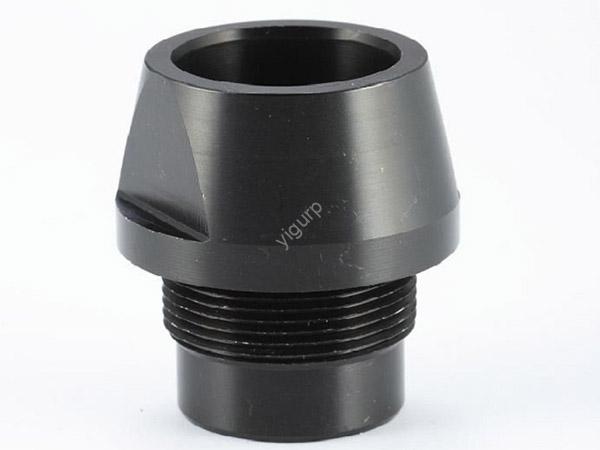
GH3030 nickel alloy is a high-performance, solid-solution strengthened alloy designed for exceptional high-temperature oxidation resistance and reliable mechanical properties. With a nickel content of over 70% and chromium content of 19-22% , it is specifically engineered to resist scaling and corrosion in oxidizing environments at temperatures up to 1000°C. Its balanced chemistry, with controlled additions of carbon, silicon, and trace elements, provides a stable austenitic structure that maintains good strength and ductility even after prolonged exposure to high heat. This combination of properties makes GH3030 a trusted material for critical applications in aerospace, heat treatment, chemical processing, and power generation where components must operate reliably under sustained high temperatures.
Introduction
In many industrial processes, equipment is subjected to punishing combinations of high heat and corrosive atmospheres. Standard stainless steels, while adequate at moderate temperatures, begin to scale and lose strength rapidly above 800°C. High-alloy superalloys like Inconel offer superior performance but are often cost-prohibitive. GH3030 was developed to provide a practical balance. Its high chromium content forms a stable, protective oxide layer that resists scaling even at temperatures approaching 1000°C. Its nickel base provides a tough, stable matrix that retains strength and ductility under prolonged thermal stress. For engineers designing components for jet engines, industrial furnaces, and high-temperature chemical processing, GH3030 offers a proven, reliable, and cost-effective solution.
What Are the Key Properties of GH3030?
The performance of GH3030 is defined by its chemical composition and the mechanical properties that result from its stable austenitic structure.
Chemical Composition
The high nickel and chromium content are key to its high-temperature oxidation resistance and strength.
| Element | Content Range (%) | Its Role in Performance |
|---|---|---|
| Nickel (Ni) | ≥ 70 | Provides the base matrix, offering high-temperature stability and ductility. |
| Chromium (Cr) | 19 – 22 | Forms a protective oxide layer, providing excellent oxidation resistance at high temperatures. |
| Iron (Fe) | ≤ 1.5 | Adds minor structural strength without affecting heat resistance. |
| Cobalt (Co) | ≤ 1.0 | Improves high-temperature creep resistance. |
| Molybdenum (Mo) | ≤ 0.5 | Boosts corrosion resistance in mild acidic environments. |
| Tungsten (W) | ≤ 0.5 | Enhances high-temperature hardness and wear resistance. |
| Aluminum (Al) | ≤ 0.15 | Enhances oxidation resistance, working with chromium. |
| Titanium (Ti) | ≤ 0.15 | Stabilizes the alloy and prevents intergranular corrosion. |
Mechanical and Physical Properties
After proper heat treatment (annealing), GH3030 achieves a good balance of strength and ductility at both room and elevated temperatures.
| Property | Room Temperature | At 800°C | Why It Matters |
|---|---|---|---|
| Tensile Strength | ≥ 650 MPa | 380 MPa | Maintains significant strength at high temperatures. |
| Yield Strength | ≥ 270 MPa | 240 MPa | Resists permanent deformation under load at high heat. |
| Elongation | ≥ 35% | 40% | Retains excellent ductility, allowing for forming and fabrication. |
| Creep Resistance | – | Excellent up to 1000°C | Withstands long-term stress without slowly deforming. |
| Fatigue Strength | 250 MPa (10⁷ cycles) | 190 MPa (10⁷ cycles) | Resists failure from repeated stress cycles. |
| Density | 8.4 g/cm³ | – | Heavier than aluminum, lighter than many superalloys. |
| Melting Point | 1370 – 1420°C | – | Handles extreme heat in furnaces and aerospace components. |
- Oxidation Resistance: This is the standout feature. GH3030 resists scaling and oxidation in air up to 1000°C, making it suitable for long-term service in high-temperature oxidizing environments.
- Corrosion Resistance: It offers excellent resistance to oxidizing environments and good resistance to mild acids, outperforming stainless steel at high temperatures.
- Magnetic Properties: It is non-magnetic, which is important for applications where magnetic interference must be avoided.
Where Is GH3030 Used in the Real World?
GH3030 is used in applications where components must withstand sustained high temperatures and oxidizing atmospheres.
Aerospace and Gas Turbines
GH3030 is used for jet engine exhaust casings, combustion chamber liners, and high-temperature fasteners.
- Case Study: An aerospace manufacturer was using Inconel 600 for combustion liners in a military jet engine. The liners were failing after 3,000 flight hours due to oxidation at 980°C.
- They switched to GH3030 liners .
- The new liners lasted 6,000 flight hours , a 100% increase .
- Replacement costs dropped by 45% .
- The engine was able to run 50°C hotter , improving thrust by 7% and fuel efficiency by 4% .
Heat Treatment and Industrial Furnaces
GH3030 is used for furnace heating elements, annealing trays, and heat exchanger tubes.
- Case Study: A metal processing plant in Japan was using stainless steel for furnace heating elements operating at 900°C. The elements failed after 2 years .
- They switched to GH3030 heating elements .
- The new elements lasted 5 years , a 150% increase in service life.
Chemical Processing and Power Generation
GH3030 is used for high-temperature acid storage tanks, reactor components, and nuclear coolant systems.
- Case Study: A chemical plant in Germany used carbon steel for a high-temperature sulfuric acid tank (200°C). The tank failed after 3 years due to corrosion.
- They switched to GH3030 tanks .
- The new tanks lasted 6 years , doubling the service life.
How Is GH3030 Manufactured?
The manufacturing process for GH3030 is designed to produce a clean, uniform alloy with stable high-temperature properties.
Steelmaking and Forming
- Steelmaking: It is made in an Electric Arc Furnace (EAF) with precise control of the high nickel and chromium content.
- Forging: It is hot forged at 1150-1200°C to shape components like furnace baskets and engine casings.
- Hot Rolling: It is hot rolled into plates, bars, and sheets.
Heat Treatment and Fabrication
- Annealing: The alloy is annealed (heated to 980-1050°C and rapidly cooled) to soften it for forming and to restore ductility.
- Welding: Gas Tungsten Arc Welding (GTAW) is recommended. Matching filler metal (e.g., ERNiCr-3) must be used to maintain corrosion resistance.
- Machining: It is machined using carbide tools with coolants. The material can work-harden, so proper cutting speeds are important.
GH3030 vs. Other High-Temperature Materials
Comparing GH3030 to other materials helps clarify its position as a cost-effective, high-performance alloy.
| Material | Max Service Temp | Tensile Strength (RT) | Oxidation Resistance | Relative Cost | Best For |
|---|---|---|---|---|---|
| GH3030 | 1000°C | ≥ 650 MPa | Excellent | Medium-High | Aerospace, heat treatment, high-temp processing |
| Stainless Steel 316 | 870°C | 515 MPa | Good | Low | Moderate temperature, corrosive environments |
| Inconel 625 | 980°C | 930 MPa | Excellent | High | High-strength, high-temperature applications |
| Hastelloy X | 1090°C | 700 MPa | Excellent | High | Ultra-high-temperature, extreme environments |
| Titanium (Ti-6Al-4V) | 400°C | 860 MPa | Good | Very High | High-strength, low-temperature applications |
Key Takeaway: GH3030 offers an excellent balance of high-temperature oxidation resistance, good mechanical properties, and cost. It outperforms stainless steel at temperatures above 870°C and provides a more cost-effective alternative to Inconel and Hastelloy for applications up to 1000°C. For components that must withstand sustained high heat in oxidizing environments, GH3030 is a proven and reliable choice.
Conclusion
GH3030 nickel alloy is a high-performance material engineered for applications requiring exceptional high-temperature oxidation resistance and reliable mechanical properties. Its high nickel and chromium content provides a stable, protective oxide layer that resists scaling up to 1000°C, while its balanced chemistry ensures good strength and ductility. For critical components in aerospace, heat treatment, and chemical processing, GH3030 offers a proven, reliable, and cost-effective solution that bridges the gap between standard stainless steels and high-cost superalloys.
FAQ About GH3030 Nickel Alloy
Can GH3030 handle temperatures above 1000°C?
It can withstand short bursts up to 1050°C , but it is designed for long-term continuous service at 1000°C. For sustained operation above 1050°C, a higher-performance alloy like Hastelloy X would be a better choice.
Is GH3030 suitable for marine heat exchangers?
Yes. Its good resistance to pitting and saltwater corrosion makes it suitable for marine heat exchangers. It outperforms standard stainless steel and even Monel 400 in long-term coastal applications.
What is the typical lifespan of GH3030 parts in heat treatment furnaces?
In furnace components such as heating elements and baskets operating at 900-1000°C, GH3030 parts typically last 5-8 years . This is 2-3 times longer than stainless steel parts in the same service. Regular maintenance and proper annealing can extend this lifespan even further.
Discuss Your Projects with Yigu Rapid Prototyping
At Yigu Rapid Prototyping, we have extensive experience working with GH3030 and other high-performance nickel alloys. We understand that for high-temperature applications, material selection and proper processing are critical to long-term reliability. We supply GH3030 in bars, plates, and custom-machined components, with full heat treatment services to achieve the optimal balance of strength and ductility. Our team can provide guidance on welding, machining, and finishing techniques. Whether you are manufacturing aerospace components, furnace parts, or high-temperature chemical processing equipment, we are here to help. Contact us today to discuss your project requirements.