
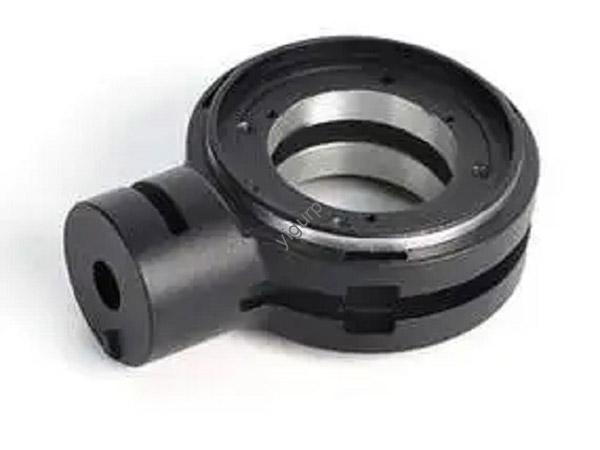
UNS N08800 Incoloy 800 is a nickel-iron-chromium alloy specifically engineered for applications requiring exceptional high-temperature strength and oxidation resistance. With a balanced composition of 30-35% nickel, 19-23% chromium, and a significant iron content, it provides a stable austenitic structure that maintains its mechanical properties over a wide temperature range. Its oxidation resistance is outstanding, with the ability to resist scaling in air up to 980°C. This combination of properties, along with good corrosion resistance and fabricability, makes Incoloy 800 a trusted material for critical components in heat treatment, chemical processing, nuclear power, and other demanding industries where reliable performance at elevated temperatures is essential.
Introduction
In industries such as chemical processing, power generation, and heat treatment, equipment is often subjected to punishing combinations of high heat, corrosive atmospheres, and mechanical stress. Standard stainless steels can lose strength and oxidize rapidly at temperatures above 800°C. High-nickel superalloys can withstand these conditions but are often cost-prohibitive for large-scale applications. Incoloy 800 was developed to provide a practical balance. Its high nickel content provides a stable, tough matrix for high-temperature service. Its chromium content forms a protective oxide layer that resists scaling and corrosion. And its significant iron content keeps the alloy more affordable than many nickel-based superalloys. For engineers designing components for high-temperature service, Incoloy 800 offers a proven, reliable, and cost-effective solution.
What Are the Key Properties of Incoloy 800?
The performance of Incoloy 800 is defined by its chemical composition and the mechanical properties that result from its stable austenitic structure.
Chemical Composition
The balanced nickel, iron, and chromium content is key to its high-temperature strength and oxidation resistance.
| Element | Content Range (%) | Its Role in Performance |
|---|---|---|
| Nickel (Ni) | 30 – 35 | Provides the base matrix, offering high-temperature stability and resistance to stress cracking. |
| Iron (Fe) | 39.5 – 46.5 | Adds structural strength and helps maintain cost-effectiveness. |
| Chromium (Cr) | 19 – 23 | Forms a protective oxide layer, providing excellent oxidation resistance at high temperatures. |
| Titanium (Ti) | 0.15 – 0.60 | Prevents intergranular corrosion by forming stable carbides. |
| Aluminum (Al) | 0.15 – 0.60 | Works with titanium to enhance oxidation resistance. |
| Carbon (C) | ≤ 0.10 | Provides strength while maintaining workability. |
| Manganese (Mn) | ≤ 1.5 | Aids in manufacturing. |
| Silicon (Si) | ≤ 1.0 | Reduces oxidation at extreme temperatures. |
Mechanical and Physical Properties
After proper heat treatment (annealing), Incoloy 800 achieves a good balance of strength and ductility at both room and elevated temperatures.
| Property | Room Temperature | At 600°C | Why It Matters |
|---|---|---|---|
| Tensile Strength | ≥ 550 MPa | 380 MPa | Maintains significant strength at high temperatures. |
| Yield Strength | ≥ 240 MPa | 220 MPa | Resists permanent deformation under load at high heat. |
| Elongation | ≥ 35% | 40% | Retains excellent ductility, allowing for fabrication. |
| Creep Resistance | – | Excellent up to 870°C | Withstands long-term stress without slowly deforming. |
| Fatigue Strength | 220 MPa (10⁷ cycles) | 180 MPa (10⁷ cycles) | Resists failure from repeated stress cycles. |
| Density | 7.95 g/cm³ | – | Lighter than many superalloys, heavier than stainless steel. |
| Melting Point | 1400 – 1450°C | – | Handles extreme heat in furnaces and reactors. |
- Oxidation Resistance: This is a standout feature. Incoloy 800 resists scaling in air up to 980°C, making it suitable for long-term service in high-temperature oxidizing environments.
- Corrosion Resistance: It offers excellent resistance to oxidizing environments and good resistance to mild acids, outperforming carbon steel and many stainless steels at high temperatures.
- Stress Corrosion Cracking: It resists chloride stress corrosion cracking, a common issue for 304 stainless steel.
Where Is Incoloy 800 Used in the Real World?
Incoloy 800 is used in applications where components must withstand sustained high temperatures and oxidizing atmospheres.
Heat Treatment and Industrial Furnaces
Incoloy 800 is used for furnace heating elements, liners, annealing baskets, and heat exchanger tubes.
- Case Study: A metal processing plant in Germany was using stainless steel for furnace heating elements operating at 850°C. The elements failed after 2 years due to oxidation.
- They switched to Incoloy 800 heating elements .
- The new elements lasted 5 years , a 150% increase in service life.
Chemical Processing and Power Generation
Incoloy 800 is used for reactor vessels, steam generator tubes, and catalytic cracker components.
- Case Study: A chemical plant in the U.S. used carbon steel for a sulfuric acid reactor vessel operating at 400°C. The vessel failed after 3 years due to corrosion.
- They switched to an Incoloy 800 vessel .
- The new vessel has operated for 6 years with no corrosion.
- Case Study: A nuclear power plant in France uses Incoloy 800 for steam generator tubes. The alloy resists corrosion from high-pressure steam and radioactive coolants, ensuring safety and reliability.
Aerospace and Oil & Gas
Incoloy 800 is used for aircraft engine exhaust parts and catalytic cracker components in refineries.
- Case Study: An oil refinery in Saudi Arabia used Incoloy 800 for catalytic cracker components operating at 700°C. The alloy’s high-temperature resistance and corrosion protection cut maintenance costs by 35% .
How Is Incoloy 800 Manufactured?
The manufacturing process for Incoloy 800 is designed to produce a clean, uniform alloy with stable high-temperature properties.
Steelmaking and Forming
- Steelmaking: It is made in an Electric Arc Furnace (EAF) with precise control of the nickel, chromium, and iron content.
- Forging: It is hot forged at 1100-1200°C to shape components like pump impellers and valve bodies.
- Hot Rolling: It is hot rolled into plates, bars, and sheets.
Heat Treatment and Fabrication
- Annealing: The alloy is annealed (heated to 980-1050°C and rapidly cooled) to soften it for forming and to restore ductility.
- Welding: Gas Tungsten Arc Welding (GTAW) is recommended. Matching filler metal (e.g., ERNiFeCr-2) must be used to maintain corrosion resistance.
- Machining: It is machined using carbide tools with coolants. The material can work-harden, so proper cutting speeds are important.
Incoloy 800 vs. Other High-Temperature Materials
Comparing Incoloy 800 to other materials helps clarify its position as a cost-effective, high-performance alloy.
| Material | Max Service Temp | Oxidation Resistance | Relative Cost | Best For |
|---|---|---|---|---|
| Incoloy 800 | 980°C | Excellent | Medium-High | Heat treatment, chemical, nuclear |
| Stainless Steel 310S | 980°C | Good | Low | Moderate heat, general service |
| Inconel 625 | 980°C | Excellent | High | High-strength, high-temperature applications |
| Hastelloy C22 | 650°C | Good | High | Corrosive environments, moderate heat |
| Titanium (Ti-6Al-4V) | 400°C | Very Good | Very High | High-strength, low-temperature applications |
Key Takeaway: Incoloy 800 offers an excellent balance of high-temperature oxidation resistance, good mechanical properties, and cost. It provides comparable oxidation resistance to more expensive alloys like Inconel 625 at a lower cost, and it significantly outperforms standard stainless steels in high-temperature service. For applications requiring reliable performance up to 980°C, Incoloy 800 is a proven and cost-effective solution.
Conclusion
UNS N08800 Incoloy 800 is a high-performance nickel-iron-chromium alloy engineered for applications requiring exceptional high-temperature oxidation resistance and reliable mechanical properties. Its stable austenitic structure provides good strength and ductility up to 980°C, while its high chromium content ensures excellent resistance to scaling and corrosion. For critical components in heat treatment, chemical processing, nuclear power, and other demanding industries, Incoloy 800 offers a proven, reliable, and cost-effective solution.
FAQ About UNS N08800 Incoloy 800
Can Incoloy 800 be used in nuclear applications?
Yes. It is commonly used for nuclear steam generator tubes and reactor components. Its resistance to high-pressure steam and radioactive coolants meets strict nuclear safety standards, making it a trusted choice for these critical applications.
Is Incoloy 800 suitable for marine environments?
Yes. Its good pitting resistance and corrosion protection in saltwater make it suitable for marine parts such as heat exchangers and offshore equipment, outperforming carbon steel and brass.
What is the typical lifespan of Incoloy 800 parts in high-temperature applications?
In high-temperature service, such as furnace components and steam generators, Incoloy 800 parts typically last 5-10 years . This is 2-3 times longer than stainless steel parts in the same service. Proper maintenance and regular annealing can extend this lifespan even further.
Discuss Your Projects with Yigu Rapid Prototyping
At Yigu Rapid Prototyping, we have extensive experience working with Incoloy 800 and other high-performance alloys. We understand that for high-temperature applications, material selection and proper processing are critical to long-term reliability. We supply Incoloy 800 in bars, plates, and custom-machined components, with full heat treatment services to achieve the optimal balance of strength and ductility. Our team can provide guidance on welding, machining, and finishing techniques. Whether you are manufacturing furnace components, chemical reactors, or nuclear steam generator parts, we are here to help. Contact us today to discuss your project requirements.