
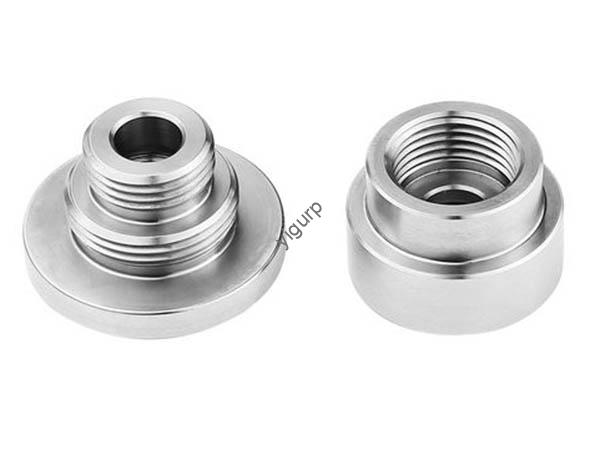
If you are working in construction, automotive, or mechanical engineering, S450 structural steel offers a high-strength option worth serious consideration. Designed for heavy-load projects where reliability is critical, it delivers a clear performance upgrade over standard grades while remaining cost-effective for demanding applications. This guide breaks down its key properties, real-world uses, manufacturing processes, and how it compares to other materials, helping you make confident decisions for your next project.
What Defines S450 Structural Steel?
S450 is a high-strength, low-alloy structural steel defined by European standard EN 10025-6. The “S” stands for structural steel, and the “450” indicates its minimum yield strength of 450 MPa. This makes it significantly stronger than common grades like S235 or S355, while maintaining good weldability and toughness. It is often used in the as-rolled or normalized condition, though higher grades may receive quenching and tempering.
The Chemistry Behind the Strength
The composition of S450 is carefully controlled to achieve its high strength without sacrificing the workability needed for fabrication.
| Element | Maximum/Typical Content (%) | Key Role |
|---|---|---|
| Carbon (C) | 0.20 | Boosts strength without sacrificing ductility. Kept low for weldability. |
| Manganese (Mn) | 1.80 | Enhances tensile strength and workability. A key strengthener. |
| Silicon (Si) | 0.50 | Improves heat resistance during processing and strengthens the steel matrix. |
| Nickel (Ni) | 0.80 | Boosts low-temperature toughness, making it reliable in cold climates. |
| Chromium (Cr) | 0.50 | Enhances mild corrosion resistance and adds hardness. |
| Molybdenum (Mo) | 0.20 | Increases high-temperature strength and fatigue resistance. |
| Vanadium (V) | 0.10 | Refines grain structure for better durability and impact resistance. |
| Sulfur & Phosphorus | 0.030 each | Strictly controlled to prevent brittleness and ensure toughness. |
Key Mechanical Properties
S450’s mechanical properties make it suitable for high-stress applications where standard steels would be insufficient.
| Property | Typical Value | Why It Matters |
|---|---|---|
| Yield Strength | ≥ 450 MPa | Resists permanent deformation. This is the steel’s safe working limit for structural design. |
| Tensile Strength | 550 – 700 MPa | Withstands intense pulling forces in bridges, machinery, and heavy equipment. |
| Elongation | ≥ 18% | Flexible enough to be formed into beams, curved components, and complex shapes. |
| Impact Toughness | ≥ 34 J at -40°C | Remains tough in freezing weather. Ideal for projects in Canada, Scandinavia, or northern China. |
| Fatigue Strength | ~280 MPa | Endures repeated stress, essential for moving parts like shafts and gears. |
| Hardness | 170 – 210 HB | Balances strength with machinability for efficient fabrication. |
A real-world example: The Fehmarn Belt Fixed Link, a major bridge and tunnel project connecting Germany and Denmark, uses S450 for its main support girders. The steel’s ≥450 MPa yield strength handles heavy truck traffic and strong Baltic Sea winds, while its -40°C impact toughness ensures reliability in the region’s cold winters.
Where Is S450 Used?
S450’s combination of high strength, good toughness, and moderate cost makes it a versatile choice across industries. It is often selected for applications where S355 is not strong enough but the ultra-high strength of S690 is unnecessary.
Construction and Infrastructure
- Bridges: Used for main support girders, trusses, and deck structures in long-span bridges and highway overpasses. Its strength allows for lighter, more efficient designs.
- High-Rise Buildings: The “Edge” skyscraper in Amsterdam uses S450 in its steel core. The steel’s strength reduces the need for extra support members, maximizing interior floor space.
- Industrial Buildings: Heavy machinery factories, such as Caterpillar’s manufacturing plants, use S450 for crane rails and support structures where wear resistance and strength are critical.
Automotive and Heavy Vehicles
- Heavy-Duty Truck Chassis: Volvo’s FH16 trucks use S450 for their chassis frames. The 550-700 MPa tensile strength protects against impacts from rough terrain and supports heavy payloads.
- Suspension Components: BMW’s X7 SUV uses S450 for suspension control arms. The steel’s ≥18% elongation absorbs road shocks, improving ride comfort and durability.
- Transmission Components: Mercedes-Benz’s commercial vehicle transmissions use S450 gears. The material’s ~280 MPa fatigue strength endures years of constant rotation without failure.
Mechanical Engineering and Energy
- Industrial Press Frames: Heavy press frames use S450 where its high yield strength resists deformation under extreme pressing forces.
- Wind Turbine Shafts: Main shafts in wind turbines use S450. Its fatigue strength handles 20+ years of rotational stress in harsh outdoor conditions.
- Mining Equipment: Komatsu’s 980E mining trucks use S450 for bed plates. Its toughness resists impacts from large rocks and heavy loads.
How Is S450 Manufactured?
Producing S450 requires precise control of alloy content and processing to meet EN 10025-6 standards. The manufacturing process ensures consistent properties across all product forms.
| Stage | Common Method | Why It Matters |
|---|---|---|
| Steelmaking | Electric Arc Furnace (EAF) or Basic Oxygen Furnace (BOF) | Allows precise addition of manganese, nickel, and chromium to achieve the required alloy balance. |
| Continuous Casting | Pouring molten steel into molds | Creates uniform slabs, blooms, or billets for further processing. |
| Hot Rolling | Heating to 1100-1200°C, rolling into shapes | This process refines the grain structure and is critical to achieving the 450 MPa yield strength. |
| Heat Treatment | Annealing or normalizing (optional) | Annealing softens steel for complex machining. Normalizing improves strength uniformity for structural parts. |
| Surface Treatment | Galvanizing or painting | Protects against corrosion for outdoor use, especially in coastal or offshore environments. |
How Does S450 Compare to Other Materials?
Choosing S450 means balancing its high strength against cost and the specific demands of your project. This comparison helps clarify where it fits.
vs. Other Steels
| Material | Yield Strength (MPa) | Impact Toughness (J at -40°C) | Relative Cost | Best For |
|---|---|---|---|---|
| S450 | ≥ 450 | ≥ 34 | 100% | Heavy-load structures, wind turbines, heavy vehicles |
| S235JR | ≥ 235 | ≥ 27 (at -20°C) | ~70% | Low-load parts, small buildings, light structures |
| S355 | ≥ 355 | ≥ 27 (at -20°C) | ~85% | General construction, medium-load structures |
| S690QL | ≥ 690 | ≥ 34 | ~180% | Extreme-load parts, deep-sea platforms, ultra-heavy cranes |
| Stainless Steel (304) | ≥ 205 | ≥ 100 | ~300% | Corrosive environments, chemical plants |
Key takeaways:
- vs. S355: S450 offers 27% higher yield strength and better low-temperature toughness (tested at -40°C vs. -20°C). It costs about 15-20% more but allows for lighter, more efficient designs.
- vs. S690QL: S450 is significantly more affordable (about half the cost) and easier to fabricate. Choose it for applications where the extra strength of S690 is not required.
- vs. Carbon Steel (S235): S450 is almost twice as strong, making it the clear choice for any load-bearing application where weight or space is a constraint.
vs. Other Material Classes
- S450 vs. Aluminum (6061-T6): Aluminum is about 1/3 the weight but has only about 60% of the yield strength. For load-bearing structural parts, S450 is the stronger, more cost-effective choice.
- S450 vs. Carbon Fiber Composites: Carbon fiber is lighter and very strong but costs roughly 6 times more and is more difficult to fabricate. For large-scale industrial and construction projects, S450 remains the practical solution.
Conclusion
S450 structural steel occupies a valuable position in the high-strength steel family. Its ≥450 MPa yield strength, combined with ≥34 J impact toughness at -40°C, makes it a reliable choice for demanding applications where standard grades like S355 fall short, but the extreme strength of S690 is not needed. From the Fehmarn Belt bridge girders to Volvo truck chassis and wind turbine shafts, S450 has proven its value across industries. For projects that require a balance of high strength, good toughness, and reasonable cost, S450 offers a practical, high-performance solution.
FAQ About S450 Structural Steel
Can S450 be used in freezing temperatures?
Yes. Its impact toughness of ≥34 J at -40°C means it remains strong and resistant to brittle fracture in extreme cold. This makes it suitable for projects in Canada, Scandinavia, northern China, and other cold regions where winter temperatures drop significantly.
Is S450 difficult to weld?
No. S450 has good weldability when proper procedures are followed. Use MIG or TIG welding with low-hydrogen electrodes. For plates thicker than 20mm, preheating to 100-150°C is recommended to prevent cracking in the heat-affected zone.
How does S450 differ from S420?
S450 has a higher yield strength (450 MPa vs. 420 MPa) and better low-temperature toughness (≥34 J at -40°C vs. ≥27 J at -20°C). It typically costs about 12% more. Use S420 for medium-load projects where standard high-strength steel is sufficient. Use S450 for heavy-load or cold-environment work where the extra strength and toughness are required.
Does S450 require special machining tools?
No. Standard carbide tools work well for drilling, milling, and turning S450. Its hardness (170-210 HB) is moderate, so tool wear is not excessive. For complex shapes or very precise cuts, annealing the steel first can soften it for easier machining.
Discuss Your Projects with Yigu Rapid Prototyping
Selecting the right structural steel for demanding applications is a critical decision. At Yigu Rapid Prototyping, we have extensive experience supplying S450 for bridges, heavy vehicles, wind turbines, and industrial machinery. Our team can help you determine if S450 is the right fit for your specific load, temperature, and fabrication requirements—or if a different grade like S355 or S690 is more appropriate. We offer S450 in plates, beams, and custom-fabricated components with full material certification. Contact us today to discuss your project and build with confidence.