
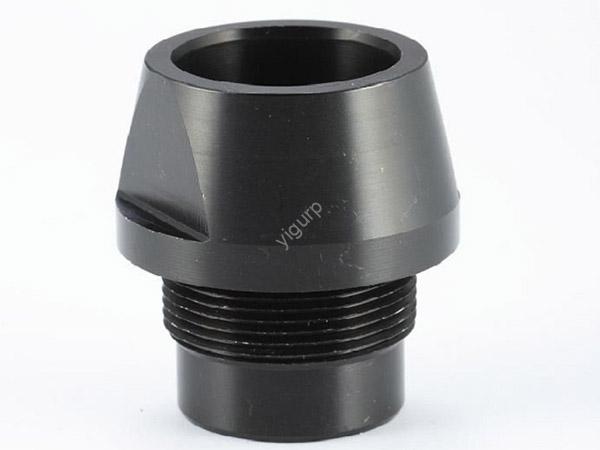
SPC 440 structural steel is a high-strength, low-alloy steel designed to provide an optimal balance of strength, ductility, and workability. It is a versatile material that fills the gap between standard low-carbon steels and high-alloy specialty steels. With a typical tensile strength of 500-650 MPa and a yield strength of 350-480 MPa, it offers significantly higher strength than basic structural steel while maintaining excellent weldability and formability. Its low carbon content (0.12-0.18%) ensures good weldability, while the addition of manganese provides the strength needed for medium-load structural and mechanical applications. For engineers and manufacturers seeking a reliable, cost-effective material that can be easily fabricated into complex shapes, SPC 440 offers a proven and versatile solution.
Introduction
For many structural and mechanical applications, the material requirements fall between the low strength of standard carbon steel and the high cost of specialty alloys. A36 is affordable and easy to work with, but it may lack the strength for heavier loads. Alloy steels like 4140 offer higher strength but are more expensive and can be more difficult to weld. SPC 440 was developed to provide a practical middle ground. Its carefully balanced chemistry provides a yield strength approximately 40% higher than A36, while its low carbon content ensures it retains the good weldability and formability that make fabrication efficient and cost-effective. For a vast range of mid-scale projects, SPC 440 offers an ideal balance of performance and practicality.
What Are the Key Properties of SPC 440?
The performance of SPC 440 is defined by its chemical composition and the mechanical properties that result from its manufacturing and heat treatment processes.
Chemical Composition
The low carbon and moderate manganese content are key to its balance of strength and workability.
| Element | Content Range (%) | Its Role in Performance |
|---|---|---|
| Carbon (C) | 0.12 – 0.18 | Provides strength while maintaining excellent weldability and ductility. |
| Manganese (Mn) | 0.60 – 0.90 | Enhances hardenability and tensile strength. |
| Silicon (Si) | 0.15 – 0.35 | Aids in deoxidation and stabilizes mechanical properties. |
| Sulfur (S) | ≤ 0.035 | Minimized to prevent brittleness and ensure good weldability. |
| Phosphorus (P) | ≤ 0.035 | Controlled to prevent cold brittleness. |
Mechanical and Physical Properties
After standard heat treatment (normalizing or quenching and tempering), SPC 440 achieves reliable mechanical properties.
| Property | Value Range | Why It Matters |
|---|---|---|
| Tensile Strength | 500 – 650 MPa | 30-40% higher than standard low-carbon steel. |
| Yield Strength | 350 – 480 MPa | Resists permanent deformation under heavy loads. |
| Elongation | 18 – 25% | Provides good ductility for forming and bending. |
| Hardness | 140 – 190 HB (220-250 HB Q&T) | Balances strength with good machinability. |
| Impact Toughness | 45 – 60 J at -20°C | Remains tough in mild cold conditions. |
| Fatigue Strength | 250 – 320 MPa | Withstands repeated stress, suitable for dynamic applications. |
| Density | 7.85 g/cm³ | Standard for steel. |
- Weldability: It has good weldability. For thin sections (under 12mm), no preheating is required, saving time and cost on fabrication.
- Formability: It has good formability and can be cold formed for thin sheets or hot formed for thicker sections.
- Machinability: In the annealed state, it has very good machinability, allowing for efficient cutting and shaping.
Where Is SPC 440 Used in the Real World?
SPC 440 is used in a wide range of medium-load structural and mechanical applications.
Construction and Infrastructure
SPC 440 is used for beams, columns, trusses, and bridge components in mid-scale projects.
- Case Study: A construction firm used low-carbon steel for a 75-meter warehouse roof beam, but it deflected under snow loads.
- They switched to SPC 440 beams .
- The higher strength eliminated deflection.
- Beam thickness was reduced by 12% , saving $25,000 in material costs.
Mechanical Engineering and Automotive
SPC 440 is used for machine frames, equipment supports, vehicle frames, axles, and suspension components.
- Case Study: An automotive supplier was using low-carbon steel for light truck rear axles. The axles were bending after 80,000 km , with a 15% failure rate .
- They switched to SPC 440 axles .
- The higher yield strength eliminated bending, extending axle life to 150,000 km .
- Warranty claims were reduced by $300,000 annually .
- Machining time was cut by 20% , saving an additional $60,000 monthly .
Shipbuilding, Railway, and Industrial Equipment
SPC 440 is used for small ship hull frames, train bogie frames, forklift frames, and storage tanks.
How Is SPC 440 Manufactured?
The manufacturing process for SPC 440 is designed to produce consistent, high-quality material that is easy to fabricate.
Steelmaking and Forming
- Steelmaking: It is typically made in a Basic Oxygen Furnace (BOF) for large-scale production or an Electric Arc Furnace (EAF) for smaller batches.
- Hot Rolling: This is the primary forming method. The steel is heated to 1100-1200°C and rolled into plates, beams, bars, and sheets.
- Cold Rolling: For thinner sheets and precision parts, cold rolling is used to achieve a smooth surface and tight tolerances.
- Annealing: After hot working, the steel is annealed to soften it (140-190 HB) for further cold working or machining.
Heat Treatment and Fabrication
- Normalizing: For improved strength and uniform properties, a normalizing heat treatment (850-900°C, air cool) is used.
- Quenching and Tempering: For higher strength applications, a quenching and tempering heat treatment is used to achieve tensile strength up to 650 MPa and hardness up to 250 HB.
- Welding: Standard arc, MIG, and TIG welding methods are used. For thin sections, no preheating is required.
- Cutting and Forming: It is easily cut using plasma, laser, or oxy-fuel cutting, and formed using standard press brakes and stamping equipment.
SPC 440 vs. Other Common Materials
Comparing SPC 440 to other materials helps clarify its value as a cost-effective, high-strength option.
| Material | Tensile Strength | Weldability | Relative Cost | Best For |
|---|---|---|---|---|
| SPC 440 | 500 – 650 MPa | Good | Medium | Medium-load structures, automotive frames, machinery |
| Low-Carbon Steel (A36) | 400 – 550 MPa | Excellent | Lower | General construction, low-stress parts |
| Alloy Steel (4140) | 1000 – 1200 MPa | Fair | Higher | High-strength shafts, gears, high-stress components |
| Stainless Steel (304) | 500 – 700 MPa | Good | 3x Higher | Corrosive environments, food equipment |
| Aluminum (6061) | 310 MPa | Good | 2.5x Higher | Lightweight, non-structural parts |
Key Takeaway: SPC 440 offers an excellent balance of higher strength, good weldability, and cost. It provides about 40% higher yield strength than standard low-carbon steel at a modest cost premium, and it is significantly more affordable and easier to weld than high-alloy steel. For applications requiring a step up in strength from A36 without the cost and complexity of alloy steel, SPC 440 is the ideal choice.
Conclusion
SPC 440 structural steel is a versatile, high-strength material that provides an excellent balance of strength, ductility, and workability. Its combination of higher tensile and yield strength, good weldability, and excellent machinability makes it a practical and cost-effective choice for a wide range of medium-load applications in construction, automotive, and mechanical engineering. For projects where standard carbon steel is insufficient but high-alloy steel is unnecessary, SPC 440 offers a proven and reliable solution.
FAQ About SPC 440 Structural Steel
Can SPC 440 be welded without preheating?
Yes, for sections under 12mm thick , standard welding methods can be used without preheating. This is a significant advantage over higher-strength alloy steels, saving time and labor on fabrication. For thicker sections, a preheat of 150-200°C is recommended to reduce thermal stress.
Is SPC 440 suitable for outdoor use?
Yes, but it requires a protective coating. SPC 440 has moderate corrosion resistance. For outdoor applications exposed to rain, humidity, or salt, a coating such as paint, powder coating, or hot-dip galvanizing is required to provide long-term corrosion protection. With proper coating, it can last 10-20 years outdoors.
What is the main difference between SPC 440 and standard low-carbon steel (A36)?
The main differences are strength and cost. SPC 440 has a yield strength of 350-480 MPa, which is about 40% higher than A36’s 250 MPa. It also has higher tensile strength and better fatigue resistance. SPC 440 typically costs 15-25% more than A36, but its higher strength allows for the use of thinner, lighter sections, often offsetting the material cost in structural applications.
Discuss Your Projects with Yigu Rapid Prototyping
At Yigu Rapid Prototyping, we have extensive experience supplying SPC 440 and other high-strength structural steels for a wide range of applications. We understand that for many projects, the right balance of strength, cost, and workability is critical. We supply SPC 440 in beams, plates, bars, and custom-cut shapes, with full mill test certificates. Our team can provide guidance on welding procedures, forming, and corrosion protection to ensure your project meets its performance and budget goals. Whether you are building a warehouse, manufacturing automotive components, or fabricating industrial machinery, we are here to help. Contact us today to discuss your project requirements.