
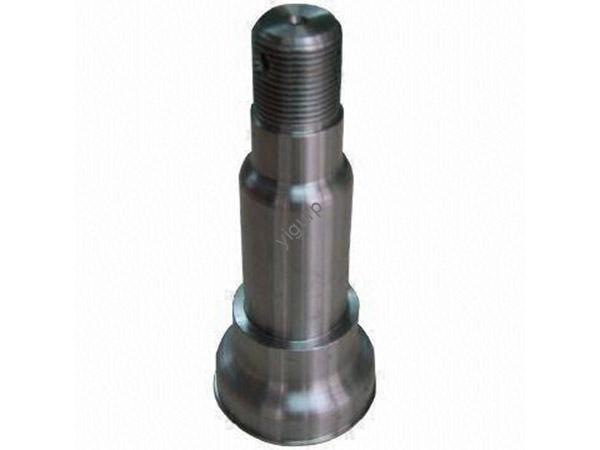
If your project involves high-stress components like drive shafts, gears, or heavy machinery parts—where strength, toughness, and reliability are non-negotiable—GB 42CrMo alloy steel offers a proven solution. This Chinese standard low-alloy steel (specified under GB/T 3077) combines excellent hardenability with good wear resistance and impact toughness. Its carefully balanced composition—with carbon, chromium, and molybdenum—allows it to achieve tensile strengths exceeding 1080 MPa after proper heat treatment, making it a preferred material for automotive drivetrains, industrial machinery, and structural components that must withstand repeated stress. This guide covers its material properties, real-world applications, manufacturing processes, and how it compares to alternative materials.
Introduction
Selecting steel for high-stress applications requires balancing several factors: strength to carry loads, toughness to resist impact, hardenability to ensure uniform properties through thick sections, and machinability to keep fabrication costs reasonable. GB 42CrMo addresses these requirements through its composition and heat treatment response. The addition of chromium (0.90–1.20%) and molybdenum (0.15–0.25%) provides deep hardenability, meaning thick sections achieve consistent mechanical properties throughout. The carbon content (0.38–0.45%) enables high hardness after quenching while maintaining sufficient ductility after tempering. This combination makes it a standard material for critical components in automotive, machinery, and infrastructure applications where failure is not an option.
What Material Properties Define GB 42CrMo?
GB 42CrMo’s performance is rooted in its chemical composition and the mechanical properties achieved through heat treatment.
Chemical Composition and Alloying Elements
The elements in GB 42CrMo work together to achieve the desired balance of strength, toughness, and hardenability.
| Element | Content Range (%) | Role in Performance |
|---|---|---|
| Carbon (C) | 0.38 – 0.45 | Provides strength and surface hardness; enables martensitic structure after quenching |
| Chromium (Cr) | 0.90 – 1.20 | Improves hardenability and corrosion resistance; forms carbides for wear resistance |
| Manganese (Mn) | 0.50 – 0.80 | Enhances machinability; refines grain structure; reduces brittleness |
| Silicon (Si) | 0.17 – 0.37 | Acts as deoxidizer; strengthens without losing ductility |
| Molybdenum (Mo) | 0.15 – 0.25 | Increases fatigue strength and high-temperature stability; prevents temper embrittlement |
| Sulfur (S) | ≤ 0.035 | Minimized to avoid cracking in high-stress applications |
| Phosphorus (P) | ≤ 0.035 | Limited to prevent cold brittleness |
The molybdenum content is a key differentiator. It improves hardenability, increases resistance to temper embrittlement, and provides higher fatigue strength compared to similar grades without molybdenum (such as 40Cr). This makes GB 42CrMo particularly suitable for parts that experience cyclic loading.
Physical Properties
These characteristics affect how GB 42CrMo behaves during fabrication and in service.
- Density: 7.85 g/cm³. Standard for ferrous alloys, simplifying replacement in existing designs.
- Melting point: 1430–1450°C. Suitable for high-temperature applications like engine components.
- Thermal conductivity: 44 W/(m·K) at 20°C. Retains heat well, appropriate for parts that operate continuously.
- Specific heat capacity: 470 J/(kg·K) at 20°C. Stable heat absorption prevents warping from temperature swings.
- Coefficient of thermal expansion: 12.2 μm/(m·K). Low expansion, critical for precision components like gears and shafts.
- Magnetic properties: Ferromagnetic. Useful for magnetic clamps and sensors during handling.
Mechanical Properties
The mechanical properties of GB 42CrMo are fully realized after quenching and tempering. The values below are typical for the alloy in its optimized heat-treated condition.
| Property | Typical Value | Practical Implication |
|---|---|---|
| Tensile strength | ≥ 1080 MPa | Handles high loads in drive shafts and gears |
| Yield strength (0.2% offset) | ≥ 930 MPa | Resists permanent deformation under stress |
| Elongation | ≥ 12% | Sufficient ductility for most applications |
| Reduction of area | ≥ 45% | Indicates good ductility; material stretches before failure |
| Hardness (Brinell) | 217 – 286 HB | Balances wear resistance and machinability |
| Hardness (Rockwell C) | 22 – 30 HRC | Equivalent range for reference |
| Impact toughness (Charpy) | ≥ 60 J | Good resistance to sudden loads |
| Fatigue strength | ~540 MPa | Withstands repeated stress in rotating components |
The yield strength of 930 MPa is particularly significant. This is approximately 50% higher than common structural steel (S355) and 30% higher than lower-alloy grades like 40Cr. For applications where weight reduction is important, this higher strength allows thinner sections.
Other Functional Properties
- Corrosion resistance: Moderate. Resists mild moisture and industrial oils. For outdoor or humid environments, apply zinc plating, powder coating, or paint.
- Wear resistance: Good. Chromium carbides and the hard martensitic structure provide resistance to abrasion in moving parts like bearings and rollers.
- Machinability: Fair in the annealed condition; poor in the hardened condition. Perform rough machining before heat treatment, then finish grind after hardening. Use carbide tools and cutting fluid to reduce tool wear.
- Weldability: Acceptable with proper procedures. Preheat to 250–300°C, use low-hydrogen electrodes, and perform post-weld heat treatment to avoid cracking in the heat-affected zone.
- Hardenability: Excellent. The combination of chromium and molybdenum allows uniform hardening in sections up to 100 mm thick. This is critical for large components like heavy machinery shafts.
Where Is GB 42CrMo Alloy Steel Used?
GB 42CrMo’s combination of strength, toughness, and hardenability makes it a versatile material across several industries.
Automotive Industry
Automotive components face constant torque, impact, and fatigue. GB 42CrMo is used for critical drivetrain and structural parts.
- Drive shafts: A Chinese heavy-duty truck manufacturer uses GB 42CrMo for drive shafts. The material’s yield strength (≥930 MPa) handles 30-ton loads without bending. Service life doubled from 150,000 km to 300,000 km compared to carbon steel.
- Gears: A domestic automaker uses GB 42CrMo for transmission gears. The alloy’s fatigue strength (~540 MPa) extends gear life by 35% compared to carbon steel.
- Bolts and fasteners: High-performance SUVs use GB 42CrMo bolts for engine mounts. Tensile strength (≥1080 MPa) resists loosening from engine vibration.
Mechanical and Heavy Machinery
Industrial machinery requires parts that withstand continuous operation and repeated stress.
- Bearings: A manufacturing plant uses GB 42CrMo for conveyor belt bearings. The material’s wear resistance reduced maintenance downtime by 25%.
- Springs: A construction equipment maker uses GB 42CrMo for excavator bucket springs. The alloy’s elasticity (from tempering) withstands 10,000+ compression cycles.
- Rollers: Steel mills use GB 42CrMo for rolling mill rollers. Hardness (217–286 HB) resists deformation from hot metal sheets.
Structural and Infrastructure Components
For heavy-duty structures, GB 42CrMo provides reliable strength under load.
- Crane shafts: Port cranes use GB 42CrMo for hoist shafts. Impact toughness (≥60 J) prevents fracture when lifting 50-ton containers.
- Bridge fasteners: Large-span bridges use GB 42CrMo bolts. With corrosion-resistant coatings, they provide long-term stability in outdoor conditions.
How Is GB 42CrMo Alloy Steel Manufactured?
Proper manufacturing processes are essential to achieve the full mechanical properties of GB 42CrMo.
Steelmaking
GB 42CrMo is produced using methods that ensure precise composition control.
- Electric arc furnace (EAF): Most common for medium batches. Scrap steel is melted, and chromium and molybdenum are added to reach the target composition. EAF allows flexibility for custom orders.
- Basic oxygen furnace (BOF): Used for large-scale production. Molten iron is refined with oxygen, then alloying elements are added. BOF is more cost-effective for mass-produced parts like bolts and fasteners.
Heat Treatment
Heat treatment is critical to unlocking GB 42CrMo’s full potential. The standard sequence for high-stress parts is:
- Annealing: Heat to 830–850°C and cool slowly. This softens the alloy for machining, reducing tool wear by approximately 40% compared to machining in the hardened condition.
- Quenching: Heat to 840–860°C and rapidly cool in oil. This transforms the microstructure to martensite, achieving tensile strength of 1080 MPa or higher.
- Tempering: Heat to 550–600°C and cool in air. This reduces brittleness while retaining high strength. Lower tempering temperatures (500–550°C) increase hardness and wear resistance; higher temperatures (580–600°C) improve toughness.
- Nitriding (optional): Heat to 500–550°C in a nitrogen-rich atmosphere to add a hard surface layer (0.1–0.3 mm thick) for increased wear resistance in bearings and gears.
Forming Processes
- Forging: Performed at 1100–1200°C. Forging aligns the grain structure, increasing tensile strength by approximately 15% compared to cast parts. Used for gears, shafts, and crane components.
- Rolling: Passed through rollers to create bars, sheets, and rods. Used for basic shapes like bolt blanks and spring stock.
- Extrusion: Pushed through a die to create complex shapes like hollow shafts. Suitable for parts requiring tight tolerances.
Machining and Finishing
After forming and heat treatment, parts are finished with precision machining.
- Turning: For cylindrical parts like shafts. Use cutting fluid (mineral oil) to prevent overheating and tool wear.
- Milling: For gear teeth and bearing races. Carbide tools are recommended for the hardness range (HRC 22–30).
- Drilling: For bolt holes and fastener holes. High-speed drills (1000–1500 RPM) work best to avoid cracking.
- Grinding: For surfaces requiring tight tolerances (±0.01 mm). Grinding improves wear resistance by reducing surface friction.
What Does a Real-World Application Show?
A leading Chinese truck manufacturer faced a critical issue: carbon steel drive shafts were failing after 150,000 km on heavy-duty trucks operating on rough rural roads. Each failure caused roadside repairs, downtime, and warranty costs.
The Challenge
The manufacturer’s 30-ton trucks subjected drive shafts to high torque and impact. Carbon steel shafts had impact toughness of only 35 J and fatigue strength of 400 MPa, leading to cracks and fractures.
The Solution
The manufacturer switched to GB 42CrMo drive shafts with the following process:
- Forging at 1150°C to align grain structure and increase strength
- Quenching at 850°C followed by tempering at 580°C to achieve 950 MPa yield strength and 70 J impact toughness
- Zinc plating to improve corrosion resistance for outdoor service
The Results
- Service life: Drive shafts now last 300,000 km—double the previous lifespan
- Cost savings: Maintenance costs reduced by ¥200,000 per year per factory
- Reliability: Failure rate dropped from 8% to 1%, improving customer satisfaction
How Does GB 42CrMo Compare to Other Materials?
Selecting the right material requires understanding trade-offs in strength, corrosion resistance, and cost.
| Material | Tensile Strength (MPa) | Yield Strength (MPa) | Corrosion Resistance | Relative Cost | Best Application |
|---|---|---|---|---|---|
| GB 42CrMo | ≥ 1080 | ≥ 930 | Moderate | 100% (baseline) | High-stress parts (shafts, gears) |
| 40Cr | 980 | 785 | Moderate | 80% | General machinery parts |
| 45# carbon steel | 600 | 355 | Low | 60% | Low-stress parts (brackets) |
| 304 stainless | 515 | 205 | Excellent | 180% | Food and chemical equipment |
| 6061 aluminum | 310 | 276 | Good | 120% | Lightweight parts (automotive frames) |
Key comparisons:
- GB 42CrMo vs. 40Cr: Molybdenum in GB 42CrMo provides approximately 10% higher tensile strength, better fatigue resistance, and improved high-temperature stability. Use GB 42CrMo for high-stress components like drive shafts; 40Cr is suitable for less demanding applications like general machinery gears.
- GB 42CrMo vs. carbon steel: GB 42CrMo offers nearly double the tensile strength and significantly higher impact toughness. While it costs more upfront, the extended service life in demanding applications makes it more cost-effective.
- GB 42CrMo vs. stainless steel: GB 42CrMo provides higher strength at lower cost. For applications where corrosion resistance is the primary concern, stainless steel may be preferred; for strength and wear resistance, GB 42CrMo is the better choice.
Conclusion
GB 42CrMo alloy steel delivers a combination of high strength, good toughness, and excellent hardenability that makes it a reliable choice for high-stress components across automotive, machinery, and infrastructure applications. Its chromium and molybdenum content enable deep hardening in thick sections, while proper heat treatment (quenching and tempering) unlocks tensile strengths exceeding 1080 MPa. In real-world applications—from heavy truck drive shafts to port crane hoists—it consistently outperforms carbon steel and lower-alloy alternatives, providing longer service life and reduced maintenance costs. While it requires proper welding procedures and corrosion protection for outdoor use, its balance of performance and cost makes it a preferred material for Chinese manufacturers and increasingly recognized in global applications.
FAQ About GB 42CrMo Alloy Steel
Can GB 42CrMo be used in cold environments?
Yes. Its impact toughness (≥60 J at room temperature) ensures it remains ductile down to approximately -20°C. For colder climates (below -30°C), adjust the tempering process—lower tempering temperatures (500–550°C) increase toughness at the expense of some strength, improving cold-weather performance.
What is the difference between GB 42CrMo and 40Cr alloy steel?
GB 42CrMo contains molybdenum (0.15–0.25%), while 40Cr does not. This gives GB 42CrMo approximately 10% higher tensile strength, better hardenability, improved fatigue resistance, and greater stability at elevated temperatures. Choose GB 42CrMo for high-stress components like drive shafts and gears; 40Cr is suitable for less demanding applications like general machinery parts.
How can I improve the corrosion resistance of GB 42CrMo?
For outdoor or humid environments, apply protective coatings. Zinc plating works well for bolts and fasteners. Powder coating is suitable for structural components. Chrome plating adds both corrosion and wear resistance for moving parts like bearings. With proper coating, service life can be extended by 5–10 years in outdoor conditions.
What heat treatment is required for GB 42CrMo?
The standard heat treatment sequence for high-stress parts is: anneal at 830–850°C for machinability; quench at 840–860°C in oil to achieve martensitic structure; temper at 550–600°C to balance strength and toughness. For increased wear resistance, nitriding at 500–550°C can add a hard surface layer.
Is GB 42CrMo difficult to weld?
GB 42CrMo has acceptable weldability with proper procedures. Preheat to 250–300°C to reduce thermal stress. Use low-hydrogen electrodes (such as E7018). For critical applications, perform post-weld heat treatment (tempering at 550–600°C) to restore toughness in the heat-affected zone.
What thickness sections can GB 42CrMo be used for?
GB 42CrMo exhibits excellent hardenability due to its chromium and molybdenum content. Sections up to 100 mm thick can achieve uniform mechanical properties after quenching and tempering. For thicker sections, alloying adjustments or modified quenching procedures may be required to maintain consistent properties through the core.
Discuss Your Projects with Yigu Rapid Prototyping
Selecting the right alloy steel for high-stress components requires balancing strength, toughness, and machinability. At Yigu Rapid Prototyping, we help engineers and product teams specify GB 42CrMo for automotive drivetrains, industrial machinery, and structural applications. We provide guidance on material selection, heat treatment parameters, and fabrication methods to ensure your components meet performance and reliability targets. Contact us to discuss your project specifications.