
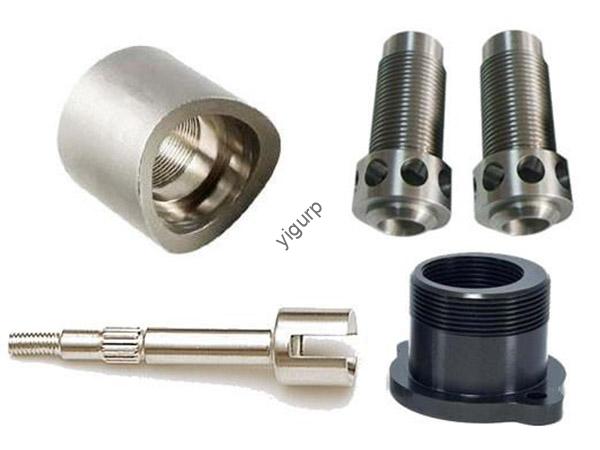
If you are searching for a versatile, cost-effective stainless steel for food processing, construction, or household appliances, GB 0Cr18Ni9 stainless steel is likely on your list. As one of the most widely used austenitic stainless steels in China, it offers an excellent balance of corrosion resistance, formability, and affordability. But what exactly makes it stand out? Is it the right choice for your specific project? This guide breaks down its key properties, real-world applications, manufacturing processes, and how it compares to other materials. By the end, you will have clear answers to help you make informed decisions.
What Defines GB 0Cr18Ni9 Stainless Steel?
GB 0Cr18Ni9 is an austenitic stainless steel—a family of steels known for their excellent ductility and corrosion resistance. Its performance starts with a carefully balanced composition that delivers reliability across a wide range of environments. The “0Cr18Ni9” designation indicates its key alloying elements: approximately 18% chromium and 9% nickel.
The Chemistry of Reliability
The table below shows the typical composition of GB 0Cr18Ni9 and the role each element plays in its performance.
| Element | Content Range (%) | Key Role |
|---|---|---|
| Chromium (Cr) | 17.0 – 19.0 | Forms a protective oxide layer on the surface, providing rust resistance. |
| Nickel (Ni) | 8.0 – 11.0 | Stabilizes the austenitic structure, boosting toughness and resistance to low temperatures. |
| Carbon (C) | ≤ 0.07 | Kept low to prevent carbide precipitation during welding, which can cause corrosion. |
| Manganese (Mn) | ≤ 2.00 | Improves workability and contributes to strength. |
| Silicon (Si) | ≤ 1.00 | Aids deoxidation during steelmaking and adds to strength. |
Key Mechanical Properties
GB 0Cr18Ni9’s mechanical properties make it suitable for forming into complex shapes while maintaining structural integrity.
| Property | Typical Value | Why It Matters |
|---|---|---|
| Yield Strength | ≥ 205 MPa | Provides adequate strength for structural and appliance applications. |
| Tensile Strength | ≥ 520 MPa | Can withstand significant pulling forces without breaking. |
| Elongation | ≥ 40% | Highly ductile. Can be pressed into thin, complex shapes without cracking. |
| Hardness (Brinell) | ≤ 187 HB | Soft enough for easy machining and polishing to a smooth, shiny finish. |
| Density | 7.93 g/cm³ | Standard density for stainless steels, allowing for straightforward weight calculations. |
A real-world example: A Chinese kitchenware manufacturer chose GB 0Cr18Ni9 for stainless steel pots. Its high elongation (≥40%) allowed the metal to be pressed into thin, smooth shapes without cracking, while its low hardness made it easy to polish to a shiny, attractive finish that resists rust.
Where Is GB 0Cr18Ni9 Used?
GB 0Cr18Ni9 is one of the most widely used stainless steels because it performs well in so many environments. Its combination of corrosion resistance, formability, and cost-effectiveness makes it a go-to material across industries.
Food Processing and Kitchenware
- Mixing Tanks and Storage Vessels: A Shanghai dairy plant uses GB 0Cr18Ni9 tanks to store milk. The non-toxic, easy-to-clean surface prevents bacterial growth and meets food safety standards.
- Cutting Tools and Conveyor Belts: Resists corrosion from food acids and frequent washdowns.
- Cookware and Utensils: Pots, pans, and kitchen sieves benefit from its formability and rust resistance.
Household Appliances
- Refrigerator Doors and Washing Machine Drums: A Guangdong appliance brand reports that GB 0Cr18Ni9 parts resist rust from water and cleaning sprays, lasting 10+ years in normal household use.
- Oven Interiors: Withstands moderate heat without losing corrosion resistance.
Construction and Architecture
- Handrails and Balustrades: Provides a bright, rust-free finish in indoor and outdoor environments.
- Curtain Walls and Decorative Panels: The exterior of a Shenzhen shopping mall uses GB 0Cr18Ni9 panels. They have withstood rain and urban pollution for 8 years with no visible corrosion.
- Faucets and Sinks: A Beijing hotel replaced old brass fittings with GB 0Cr18Ni9. The new parts stay shiny and rust-free, even in humid bathroom conditions.
Medical and Industrial
- Surgical Tools: A Wuhan hospital chose GB 0Cr18Ni9 for scalpels because it is easy to sterilize and does not react with bodily fluids.
- Hospital Bed Frames: Resists cleaning chemicals and provides a durable, easy-to-clean surface.
- Mild Chemical Processing: Suitable for pipes and tanks handling non-corrosive chemicals.
How Is GB 0Cr18Ni9 Manufactured?
Producing GB 0Cr18Ni9 requires standard but precisely controlled steps to maintain its properties. The manufacturing process ensures consistent quality across all product forms.
| Stage | Common Method | Why It Matters |
|---|---|---|
| Hot Rolling | Heat to 1100-1200°C, roll into plates or coils | Shapes the material and softens it for further processing. A Hebei steel mill uses hot rolling to make 10mm-thick plates for construction. |
| Cold Rolling | Room-temperature pressure to reduce thickness | Creates thin sheets (as low as 0.5mm) for appliance panels. Cold rolling hardens the metal, so annealing is needed next. |
| Annealing | Heat to 1010-1150°C, rapid cooling | Restores ductility and removes internal stress. A Jiangsu factory anneals sheets before making kitchenware to prevent cracking during pressing. |
| Pickling | Dip in nitric acid | Removes oxide scales from rolling, brightens the surface, and improves corrosion resistance. Critical for food-contact parts. |
| Machining | Drilling, turning, milling | Uses standard high-speed steel or carbide tools. The steel’s ductility allows for easy cutting without chipping. |
| Forging | Hammer at 900-1000°C into complex shapes | Used for valve bodies and other parts that require enhanced strength. |
How Does GB 0Cr18Ni9 Resist Corrosion?
GB 0Cr18Ni9 resists most everyday corrosion, but it has limitations. Understanding these helps you choose the right material for your environment.
| Type of Corrosion | Performance | Key Consideration |
|---|---|---|
| General Corrosion | Excellent | Resists water, air, and mild chemicals like vinegar. Will not rust in home kitchens or office buildings. |
| Pitting Resistance | Moderate | Can develop small holes in salty or acidic environments. Pitting Resistance Equivalent (PRE) of 18 is lower than SUS316 (PRE 25). |
| Intergranular Corrosion | Risk during welding | Heating to 450-850°C can cause chromium carbides to form at grain boundaries. Annealing after welding restores corrosion resistance. |
| Stress Corrosion Cracking | Risk in chlorides | Can crack under tension in chloride-rich environments like saltwater pools. A coastal hotel experienced cracking in handrails; switching to SUS316 solved the issue. |
To enhance protection:
- Use passivation (citric or nitric acid treatment) to strengthen the protective oxide layer.
- Avoid using in highly acidic or salty environments without testing.
- For welded parts that will face corrosive conditions, perform post-weld annealing.
How Does GB 0Cr18Ni9 Compare to Other Materials?
Choosing the right stainless steel means balancing corrosion resistance, strength, and cost. This comparison helps clarify where GB 0Cr18Ni9 fits.
| Material | Corrosion Resistance (PRE) | Yield Strength (MPa) | Cost (vs. GB 0Cr18Ni9) | Best For |
|---|---|---|---|---|
| GB 0Cr18Ni9 | 18 | 205 | 100% | Everyday uses: kitchens, appliances, interiors |
| SUS304 | 18 | 205 | 105% | Same as GB 0Cr18Ni9; global equivalent |
| SUS316 | 25 | 205 | 150% | Salty or acidic environments: coastal areas, chemical exposure |
| SUS430 (Ferritic) | 16 | 240 | 80% | Low-cost, non-corrosive parts like oven liners |
| Duplex Stainless | 35+ | 450 | 200% | High-strength, corrosive environments like oil pipes |
| Aluminum Alloys | 10 | 110 | 50% | Lightweight parts like bicycle frames |
Key takeaways:
- vs. SUS304: GB 0Cr18Ni9 is the Chinese equivalent of SUS304 (Japanese standard) and AISI 304 (U.S. standard). They are interchangeable in most applications.
- vs. SUS316: GB 0Cr18Ni9 costs about 30-40% less but has lower pitting resistance. Choose 316 for coastal or chemical environments.
- vs. SUS430: The ferritic 430 is cheaper but less ductile and less corrosion-resistant. Use 430 for non-structural parts like appliance trim; use 0Cr18Ni9 for parts that need forming or will face moisture.
Conclusion
GB 0Cr18Ni9 stainless steel is a workhorse material for a reason. Its combination of good corrosion resistance, high ductility (≥40% elongation), and affordability makes it suitable for an enormous range of applications—from kitchen pots to building facades to medical instruments. While it is not the best choice for seawater exposure or highly acidic conditions, it performs reliably in the vast majority of indoor and mild outdoor environments. For projects that demand a versatile, easy-to-fabricate stainless steel at a reasonable cost, GB 0Cr18Ni9 is a proven, dependable solution.
FAQ About GB 0Cr18Ni9 Stainless Steel
Can GB 0Cr18Ni9 be used in seawater?
No. Its low pitting resistance (PRE 18) means it will develop pitting corrosion in seawater or salt spray. For marine applications, use SUS316 or duplex stainless steel, which have higher molybdenum content for better chloride resistance.
Is GB 0Cr18Ni9 safe for food contact?
Yes. It meets global food safety standards, including China’s GB 4806.9 and FDA requirements. Its non-toxic composition and easy-to-clean surface make it ideal for food processing equipment, kitchenware, and storage tanks.
Do I need to paint or coat GB 0Cr18Ni9?
No. Its natural chromium oxide layer provides sufficient rust resistance for most environments. Painting is not recommended because it can trap moisture against the surface, potentially leading to crevice corrosion underneath the coating.
What is the difference between GB 0Cr18Ni9 and SUS304?
They are equivalent grades. GB 0Cr18Ni9 is the Chinese standard designation (GB/T 20878), while SUS304 is the Japanese standard (JIS). Their chemical composition and mechanical properties are nearly identical, and they can be used interchangeably in almost all applications.
Discuss Your Projects with Yigu Rapid Prototyping
Selecting the right stainless steel for your project is about balancing performance, cost, and fabrication requirements. At Yigu Rapid Prototyping, we have extensive experience supplying GB 0Cr18Ni9 for food processing, appliance, construction, and medical applications. Our team can help you determine whether this versatile grade is the right fit for your specific environment—or if a higher-performance grade like SUS316 is needed. We offer GB 0Cr18Ni9 in sheets, plates, bars, and custom-fabricated components with full material certification. Contact us today to discuss your project and find a cost-effective, reliable stainless steel solution.