
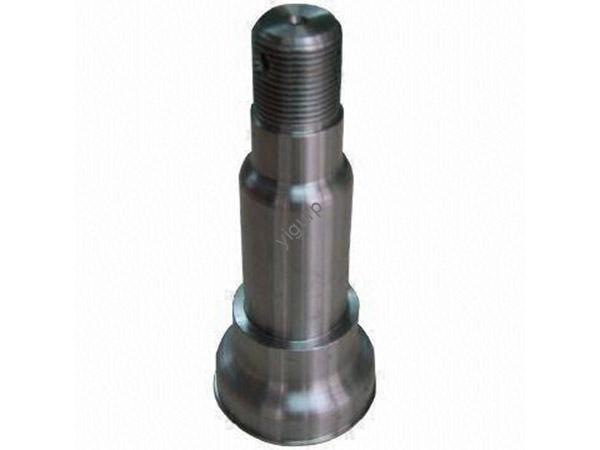
When your project demands high strength without adding excess weight, EN S700MC cold forming steel delivers a compelling solution. As a high-strength, low-alloy (HSLA) steel under the EN 10149-2 standard, it is engineered for applications requiring both structural integrity and the ability to be formed into complex shapes. This guide covers its key material properties, optimal forming processes, real-world applications, and how it compares to other materials—giving you the practical information needed to make informed decisions for your next project.
Introduction
Engineers and manufacturers across automotive, construction, and industrial equipment sectors face a common challenge: how to build structures that are strong enough to handle heavy loads but light enough to improve efficiency and reduce material costs. Traditional steel grades often force a compromise between strength and formability. EN S700MC was developed to bridge this gap. As a thermomechanically rolled steel, it achieves a minimum yield strength of 700 MPa while maintaining excellent ductility for cold forming. This combination allows for lighter, more efficient designs without sacrificing performance or safety.
What Makes EN S700MC Unique?
The performance of EN S700MC comes from its specific chemical composition and its thermomechanical rolling process. Unlike conventional steels that rely on added carbon for strength, this grade uses a refined grain structure and microalloying elements to achieve high strength while retaining formability.
Chemical Composition
The material achieves its properties through a carefully balanced chemistry. The table below outlines typical elements and their roles.
| Element | Typical Content | Functional Role |
|---|---|---|
| Carbon (C) | ≤ 0.12% | Low carbon content ensures weldability and formability while still providing base strength. |
| Manganese (Mn) | ≤ 1.80% | Improves strength and hardenability without significantly reducing ductility. |
| Silicon (Si) | ≤ 0.60% | Acts as a deoxidizer and contributes to strength through solid solution hardening. |
| Phosphorus (P) | ≤ 0.025% | Strictly limited to maintain toughness and formability. |
| Sulfur (S) | ≤ 0.010% | Kept low to ensure good formability and weldability. |
| Niobium (Nb) | ≤ 0.09% | Refines grain structure during rolling, significantly boosting yield strength without sacrificing ductility. |
| Vanadium (V) | ≤ 0.20% | Contributes to strength through precipitation hardening. |
| Titanium (Ti) | ≤ 0.15% | Forms fine carbides and nitrides that control grain growth during processing. |
Mechanical Properties
The mechanical characteristics of EN S700MC define its suitability for demanding structural applications.
| Property | Typical Value | Practical Significance |
|---|---|---|
| Yield Strength | ≥ 700 MPa | Components resist permanent deformation under heavy loads, allowing for thinner, lighter sections. |
| Tensile Strength | 740–900 MPa | Provides a safety margin against fracture under extreme tension. |
| Elongation | ≥ 12% (A80) | Enables cold forming operations like bending and stamping without cracking. |
| Bending Radius | 1.0–2.0 x thickness | Allows tight bends for complex geometries while maintaining structural integrity. |
| Hardness | ~260 HB | Offers good resistance to surface wear and abrasion. |
Why Is It Ideal for Cold Forming?
The term “cold forming steel” indicates that this material is specifically designed to be shaped at room temperature. This capability offers significant advantages in manufacturing efficiency and final product quality.
Key Formability Advantages
- High Ductility: Despite its high strength, EN S700MC maintains elongation values of at least 12%. This allows for complex bends and shapes without the need for hot forming, which adds energy costs and can introduce scale or distortion.
- Consistent Springback Control: The material exhibits predictable springback behavior, allowing tooling designers to compensate accurately. This is critical for achieving precise final dimensions in stamped or bent parts.
- Good Edge Formability: Laser-cut or sheared edges maintain sufficient ductility to be formed without cracking, a common failure point in lower-grade high-strength steels.
Effective Cold Forming Processes
| Process | Best Application | Performance Notes |
|---|---|---|
| Stamping | High-volume automotive body panels, door frames, structural brackets | The material’s ductility allows for complex die shapes. Production rates of 10,000+ units per day are achievable with proper tooling. |
| Bending | Construction brackets, L-shaped supports, custom profiles | Minimum bend radii of 1.0–2.0 times material thickness are typical. Cracking is rare when following recommended radii. |
| Roll Forming | Long, uniform profiles like roof rails, structural sections, desk frames | Continuous forming maintains consistent shape over long lengths. Minimal waste and high production speeds. |
| Punching | Holes, cutouts, and perforations for electrical enclosures, server racks | Material hardness ensures clean edges without excessive burr formation. Standard tooling works effectively. |
| Cold Forging | Complex, high-strength components like gear shafts, engine parts | The material’s fine grain structure allows for significant deformation under high pressure without cracking. |
Where Is EN S700MC Commonly Used?
The combination of high strength, light weight, and formability makes EN S700MC a versatile material across multiple industries.
- Automotive and Commercial Vehicles:
- Chassis components for trucks and electric vehicles, where weight reduction directly improves range and fuel economy.
- Suspension arms and control arms that must withstand repeated stress cycles without fatigue failure.
- Crash management systems like bumper beams and side impact beams, where high strength absorbs energy in collisions.
- Heavy truck frames that require high load capacity while minimizing overall vehicle weight.
- Construction and Infrastructure:
- Structural beams and columns for high-rise buildings, where thinner sections increase usable floor space.
- Modular building frames that need to be both strong and transportable.
- Bridge components requiring high strength-to-weight ratios for long spans.
- Agricultural equipment frames that must handle heavy loads and rough terrain.
- Industrial Equipment:
- Forklift masts and frames that lift heavy loads while maintaining stability.
- Conveyor system structures for mining and material handling.
- Crane components where weight reduction improves lifting capacity.
- Heavy machinery chassis for construction and earthmoving equipment.
- Specialized Applications:
- Aerospace ground support equipment requiring high strength with controlled weight.
- Wind turbine structural components that must withstand cyclic loading.
- Railway wagon frames where reduced weight allows for higher payload capacity.
How Is It Manufactured and Processed?
The unique properties of EN S700MC are developed during its production and can be enhanced through careful downstream processing.
Steelmaking and Rolling
The material is produced using a thermomechanical rolling process (TMCP). The steel is heated and rolled at carefully controlled temperatures to refine the grain structure. This process creates a fine, uniform grain size that delivers high strength without requiring additional alloying elements that would reduce weldability or formability. The result is a material that achieves its mechanical properties through microstructure rather than carbon content.
Fabrication Best Practices
- Laser Cutting: Provides clean, precise edges with minimal heat-affected zone. The fine grain structure of EN S700MC responds well to laser cutting, producing consistent results with less dross than many other high-strength steels. Some fabricators report up to 10% less waste compared to plasma cutting methods.
- CNC Machining: Standard carbide tooling works effectively. The material’s consistent hardness allows for tight tolerances of ±0.01mm in precision applications like engine components.
- Welding: The low carbon equivalent (CEV) of EN S700MC gives it good weldability with common methods like MIG and TIG welding. Preheating is generally not required for sections under 20mm. Use matching or slightly under-matching filler metals to maintain joint strength while avoiding cold cracking.
- Surface Treatment: For outdoor applications, galvanizing is the most common protective coating. Zinc coating extends service life from 10 years to 25 years or more in moderate environments. Powder coating and paint systems also adhere well to properly prepared surfaces.
How Does It Compare to Other Materials?
Understanding where EN S700MC fits relative to alternative materials helps clarify its value for specific applications.
| Material | Yield Strength (MPa) | Density (g/cm³) | Relative Cost | Formability | Best Applications |
|---|---|---|---|---|---|
| EN S700MC | ≥ 700 | 7.85 | $$ | Excellent | High-strength, lightweight structural parts |
| Standard Carbon Steel | 235–400 | 7.85 | $ | Good | Low-stress components, simple structures |
| Aluminum (6061-T6) | 276 | 2.70 | $$$ | Good | Ultra-lightweight applications, corrosion-critical parts |
| Stainless Steel (304) | 205 | 7.93 | $$$$ | Moderate | Corrosion-prone environments, food processing |
| EN S500MC | ≥ 500 | 7.85 | $$ | Very Good | Moderate-strength forming applications |
Key takeaway: EN S700MC offers approximately 75% higher yield strength than standard structural steel and more than double the strength of 6061 aluminum, at a fraction of the cost of aluminum or stainless steel. While aluminum is lighter, EN S700MC provides better strength-to-cost ratio for applications where weight savings alone do not justify the premium.
Case Studies: EN S700MC in Real-World Applications
Case Study 1: Lightweight Truck Chassis
A European commercial vehicle manufacturer was seeking to improve fuel efficiency across their medium-duty truck line. The existing chassis design used conventional carbon steel, which met strength requirements but added significant weight. By redesigning the chassis components using EN S700MC and taking advantage of its higher yield strength, they reduced material thickness in non-critical areas while maintaining overall structural integrity. The result was a 15% reduction in chassis weight, which translated to a 7% improvement in fuel economy. The material’s formability allowed for complex bend geometries that optimized load distribution. Production costs increased only 8%, while the fuel savings provided a payback period of less than two years for fleet customers.
Case Study 2: High-Rise Building Floor Beams
A UK construction company was developing a 30-story residential tower in London. Maximizing interior floor space was a key design priority, as every square meter added market value. The engineering team used EN S700MC for the main floor beams, taking advantage of its 700 MPa yield strength to reduce beam depth by 20% compared to standard structural steel. The thinner beams allowed for lower floor-to-floor heights, adding two extra floors within the same building envelope. The material’s weldability simplified on-site assembly, reducing erection time by 15%. The project realized an estimated £2 million in additional revenue from the extra floors, with material costs increasing only marginally.
Case Study 3: Forklift Mast Assembly
A German logistics equipment manufacturer was experiencing weld-related failures in their forklift mast assemblies. The existing material required preheating and post-weld heat treatment to prevent cracking, adding cost and slowing production. They transitioned to EN S700MC for mast components. The low carbon equivalent eliminated the need for preheating, and the material’s consistent properties reduced weld defect rates by 80%. The higher yield strength also allowed for thinner mast sections, improving operator visibility while maintaining lifting capacity. Assembly time decreased by 20%, and annual material costs dropped 12% due to reduced scrap rates.
Conclusion
EN S700MC cold forming steel offers a powerful combination of high strength, excellent formability, and cost-effectiveness that makes it a preferred choice for demanding structural applications. Its minimum yield strength of 700 MPa allows for lighter, more efficient designs without compromising performance. The material’s good weldability and compatibility with standard cold forming processes simplify fabrication, while its fine-grained microstructure ensures consistent mechanical properties. From automotive chassis and construction beams to industrial equipment and specialized components, EN S700MC delivers the strength-to-weight ratio needed for modern engineering challenges. When projects require both high performance and controlled costs, this grade provides a reliable, proven solution.
FAQ About EN S700MC Cold Forming Steel
What is the main advantage of EN S700MC over regular carbon steel?
EN S700MC offers significantly higher yield strength—at least 700 MPa compared to 235–400 MPa for standard carbon steel—while maintaining good ductility for forming. This allows designers to use thinner sections for the same load capacity, reducing overall weight and material costs.
Can EN S700MC be used in outdoor applications without coating?
The material has only moderate corrosion resistance and should be protected for outdoor use. For construction, bridge components, or exposed automotive parts, galvanizing or a painted coating is recommended. With proper surface treatment, EN S700MC components can achieve service lives of 25 years or more in moderate environments.
What cold forming process works best for small-batch EN S700MC parts?
For low-volume production, bending and punching are typically the most cost-effective options. These processes require minimal tooling investment and can be set up quickly for custom brackets, prototypes, or replacement parts. CNC press brakes and turret punches are well-suited for small-batch work with this material.
Is EN S700MC difficult to weld?
No, it has good weldability due to its low carbon content and low carbon equivalent value. Standard MIG and TIG welding methods work effectively without preheating for sections under 20mm. Use filler metals matched to the strength level, and avoid excessive heat input to maintain the material’s mechanical properties in the heat-affected zone.
Discuss Your Projects with Yigu Rapid Prototyping
Selecting and processing high-strength steels like EN S700MC requires expertise to fully realize their benefits while avoiding common fabrication pitfalls. At Yigu Rapid Prototyping, we combine deep material knowledge with advanced manufacturing capabilities to deliver components that meet the most demanding requirements. Whether you need laser-cut blanks for prototyping, precision-formed structural components, or fully fabricated assemblies, our team can guide you from material selection through final production.
We specialize in working with advanced high-strength steels and offer services including precision laser cutting, CNC bending, welding, and surface treatment. If your project demands lightweight, high-strength solutions without compromising on quality or cost, we are ready to help. Contact us today to discuss your requirements and discover how our engineering and fabrication expertise can bring your next project to life.