
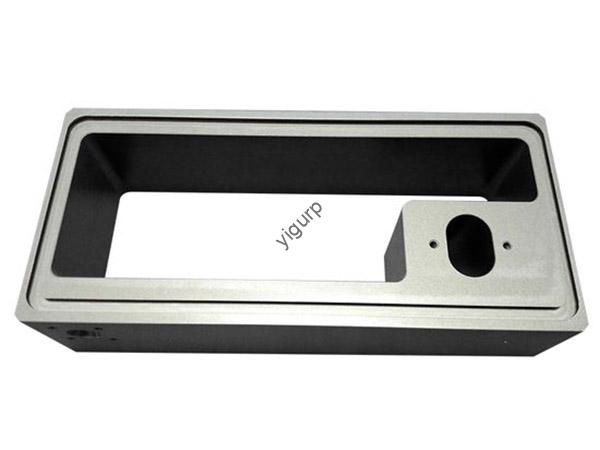
When your tooling application requires a balance of wear resistance, toughness, and dimensional stability—such as stamping dies, drill bits, or industrial gears—A2 tool steel is a versatile, reliable choice. As an air-hardening cold work tool steel, it offers excellent wear resistance and good toughness while simplifying heat treatment compared to water- or oil-hardening grades. Its unique chromium-rich composition allows air cooling during hardening, reducing distortion and making it suitable for complex tool geometries. In this guide, I will walk you through its properties, applications, and how to work with it based on real manufacturing experience.
Introduction
A2 is a medium-carbon, chromium-rich tool steel that belongs to the cold work tool steel family. Its composition includes 0.50–0.60% carbon for hardness, 4.75–5.50% chromium for wear resistance and air-hardening capability, and manganese and silicon for hardenability. Unlike high-carbon tool steels such as O1 or W1 that require rapid quenching in oil or water—which can cause distortion and cracking—A2 can be quenched in still air. This air-hardening property minimizes dimensional changes during heat treatment, making A2 ideal for tools with complex shapes, tight tolerances, or sharp corners. Over the years at Yigu Rapid Prototyping, I have worked with toolmakers, automotive suppliers, and medical device manufacturers who specify A2 for components that must maintain their geometry while providing good wear resistance and toughness. Its balance of properties makes it a go-to material for a wide range of cold work applications.
What Makes A2 a Versatile Cold Work Tool Steel?
A2 achieves its properties through its chromium-rich chemistry and air-hardening heat treatment. The chromium forms hard carbides that provide wear resistance, while the air-hardening characteristic allows for minimal distortion during heat treatment.
The Chemistry Behind the Performance
The chemical composition of A2 is defined by ASTM A681. The chromium content is the key to its air-hardening behavior.
| Element | Content Range (%) | Why It Matters |
|---|---|---|
| Carbon (C) | 0.50 – 0.60 | Provides hardness and forms carbides for wear resistance. |
| Chromium (Cr) | 4.75 – 5.50 | The key element. Enables air-hardening. Forms chromium carbides for wear resistance. |
| Manganese (Mn) | 0.80 – 1.20 | Boosts hardenability and tensile strength without sacrificing ductility. |
| Silicon (Si) | 0.15 – 0.30 | Aids deoxidation. Improves high-temperature stability. |
| Molybdenum (Mo) | 0.80 – 1.20 | Enhances hardenability and wear resistance. |
| Vanadium (V) | 0.15 – 0.30 | Refines grain structure. Improves toughness. |
| Sulfur (S) / Phosphorus (P) | ≤ 0.030 | Kept low to maintain toughness. |
Key Insight: The chromium content of 4.75–5.50% gives A2 its air-hardening capability. When heated to the austenitizing temperature and cooled in still air, A2 transforms to martensite without the need for rapid quenching. This minimizes distortion and reduces the risk of cracking—a significant advantage over water- or oil-hardening tool steels.
Mechanical Properties That Matter
A2’s mechanical properties are achieved through annealing, austenitizing, and tempering. The final properties can be tailored by selecting the appropriate tempering temperature.
| Property | Typical Value | Significance |
|---|---|---|
| Hardness | 52 – 60 HRC | Adjustable via tempering. 52–55 HRC for tough tools such as punches; 58–60 HRC for wear-resistant tools such as dies. |
| Tensile Strength | 1,300 – 1,600 MPa | Handles high loads in stamping dies and cutting tools. |
| Yield Strength | 1,000 – 1,200 MPa | Resists permanent deformation under load. |
| Elongation | 10 – 15% | Provides enough ductility to absorb impact. |
| Impact Toughness | 30 – 40 J/cm² | Superior to D2. Reduces the risk of sudden tool failure. |
| Fatigue Strength | 550 – 650 MPa | Resists failure from repeated stress cycles. |
Case Study: A tool manufacturer replaced high-carbon steel (1095) with A2 for metal drill bits. The A2 bits lasted 150 holes compared to 70 holes for 1095—a 114% improvement—and customer complaints about dulling dropped by 65%.
Where Does A2 Tool Steel Deliver the Most Value?
This material is specified for cold work applications requiring a balance of wear resistance, toughness, and dimensional stability.
Cutting Tools
A2 is widely used for cutting tools that must maintain sharp edges under repeated use.
- Drill bits: Bits for metalworking. Wear resistance prevents dulling when drilling steel and aluminum.
- Milling cutters: End mills and face mills. Wear resistance maintains sharp edges during repeated cutting.
- Turning tools: Lathe tools for shaping metal parts. Hardness (58–60 HRC) handles high cutting forces.
Forming Tools
A2’s combination of toughness and wear resistance makes it ideal for forming tools that face impact and abrasion.
- Stamping dies: Dies for sheet metal such as automotive body panels. Toughness resists chipping; wear resistance ensures consistent part quality over 100,000+ stampings.
- Punches: Hole punches for steel or plastic. Impact toughness (30–40 J/cm²) prevents breakage when punching thick materials.
- Blanking tools: Tools for creating flat parts such as washers. Hardness cuts cleanly without edge wear.
Case Study: An automotive parts manufacturer used D2 for stamping dies that create steel door panels. The D2 dies chipped after 50,000 stampings. They switched to A2. A2 dies lasted 150,000 stampings—three times longer—with no chipping. Regrinding frequency dropped from once per week to once per month, saving $7,500 monthly.
Industrial Machinery Components
A2 is used for components that require wear resistance and strength.
- Gears: Heavy-duty industrial gears for conveyor systems. Wear resistance handles metal-on-metal contact; fatigue strength resists repeated load cycles.
- Shafts: Drive shafts for small machinery. Tensile strength (1,300–1,600 MPa) withstands torque.
- Valves: Control valves for industrial fluids. Hardness prevents valve seat wear, ensuring tight seals.
Medical Instruments and Aerospace Components
A2 is used in medical and aerospace applications requiring precision and reliability.
- Surgical instruments: Scalpels and orthopedic bone punches. Sharpness retention and biocompatibility make it safe for medical use.
- Aerospace components: Small aircraft components such as fastener dies. Strength-to-weight ratio and vibration fatigue resistance meet aerospace standards.
How Is A2 Tool Steel Manufactured and Processed?
Producing A2 components requires precise control over chemistry, heat treatment, and fabrication to achieve its properties.
Steelmaking
A2 is typically produced in an electric arc furnace (EAF) for precise composition control. For high-precision applications such as medical instruments, vacuum arc remelting (VAR) is used to remove impurities and ensure uniform carbide distribution.
Rolling and Forming
- Hot rolling: Heated to 1,100–1,200°C and rolled into bars, plates, and sheets.
- Cold rolling: For thin sheets requiring smooth surfaces and tight tolerances.
- Annealing: Heat to 850–900°C, hold for 2–4 hours, then cool slowly. Softens to approximately 200 Brinell for machining.
Heat Treatment
Heat treatment is critical for achieving A2’s properties.
- Austenitizing: Heat to 950–1,000°C, hold for 30–60 minutes. This transforms the structure to austenite.
- Air quenching: Cool in still air. The air-hardening characteristic minimizes distortion.
- Tempering: Reheat to 150–500°C, hold for 1–2 hours, then air cool. Low tempering (150–200°C) retains 58–60 HRC for wear-resistant tools; high tempering (400–500°C) reduces to 52–55 HRC for tough tools such as punches.
Machining and Finishing
- Machining: Perform in the annealed condition with carbide or HSS tools.
- Grinding: After heat treatment, use diamond wheels for precision finishing.
- Surface treatment: Hard chrome plating or nitriding adds wear resistance. PVD coatings such as TiN extend tool life by 2–3 times.
How Does A2 Tool Steel Compare to Other Materials?
Understanding the trade-offs between A2 and alternative materials helps in making an informed selection.
| Material | Hardness (HRC) | Impact Toughness (J/cm²) | Wear Resistance | Relative Cost | Best For |
|---|---|---|---|---|---|
| A2 | 52 – 60 | 30 – 40 | Very Good | 100% | Cold work, stamping dies, cutting tools |
| A6 | 45 – 50 | 45 – 55 | Good | 80% | Low-stress tools requiring high toughness |
| D2 | 58 – 62 | 20 – 25 | Excellent | 120% | High-wear, low-impact applications |
| O1 | 57 – 62 | 15 – 20 | Good | 90% | Simple tool shapes, oil-hardening |
| M2 | 60 – 65 | 25 – 30 | Excellent | 200% | High-speed cutting, hot work |
Key Insights:
- Compared to D2, A2 offers significantly higher impact toughness (30–40 J/cm² vs. 20–25 J/cm²) with slightly lower wear resistance. For stamping dies and tools that face impact, A2 is the better choice.
- Compared to O1, A2 offers better dimensional stability during heat treatment due to air-hardening. For tools with complex shapes or tight tolerances, A2 is preferred.
- Compared to M2, A2 is less expensive and easier to machine, though M2 has better red hardness for high-speed applications. For cold work applications, A2 is the more cost-effective choice.
What About Corrosion Resistance?
A2 has moderate corrosion resistance due to its chromium content. For dry workshop environments, no additional protection is needed. For exposure to moisture or mild chemicals, a light oil coating or PVD coating is recommended.
Conclusion
A2 tool steel is a versatile, cost-effective material for cold work applications requiring a balance of wear resistance, toughness, and dimensional stability. Its chromium-rich composition provides good wear resistance, while its air-hardening characteristic minimizes distortion during heat treatment. For stamping dies, cutting tools, industrial gears, and medical instruments, A2 delivers reliable performance at a price that fits tooling budgets. When you need a tool steel that balances wear resistance, toughness, and ease of heat treatment, A2 is a proven, practical choice.
FAQ About A2 Tool Steel
Can A2 tool steel be used for high-temperature applications?
No. A2 has moderate red hardness, retaining hardness only up to approximately 300°C. For high-temperature applications such as hot forging dies, choose high-speed steel such as M2 (red hardness up to 600°C) or heat-resistant alloys. A2 is best suited for cold work applications at room temperature to 300°C.
Is A2 tool steel easy to machine?
Yes, in the annealed condition. Annealed A2 has a hardness of approximately 200 Brinell and machines well with standard HSS or carbide tools. Avoid machining after heat treatment when hardness reaches 52–60 HRC, as high hardness will damage tools. Machining in the annealed condition saves time and tool costs.
How does A2 tool steel compare to D2 for dies?
A2 is tougher (30–40 J/cm² vs. 20–25 J/cm² for D2) and less likely to chip, making it better for stamping dies that handle impact. D2 has better wear resistance but is more brittle. Choose A2 for high-impact dies such as heavy stamping; choose D2 for low-impact, high-wear dies such as blanking thin sheets.
What heat treatment is recommended for A2?
The standard cycle is: anneal at 850–900°C, austenitize at 950–1,000°C, air quench, and temper at 150–500°C depending on desired hardness. For wear-resistant tools such as dies, temper at 150–200°C to achieve 58–60 HRC. For tough tools such as punches, temper at 400–500°C to achieve 52–55 HRC.
Discuss Your Projects with Yigu Rapid Prototyping
Selecting the right tool steel for cold work applications requires balancing wear resistance, toughness, machinability, and heat treatment requirements. At Yigu Rapid Prototyping, we help toolmakers, automotive suppliers, and medical device manufacturers navigate these decisions with practical, experience-based guidance. Whether you need A2 for stamping dies, drill bits, or surgical instruments, we can provide material sourcing, heat treatment, and precision finishing services. Contact us to discuss your project requirements and find the right solution.