
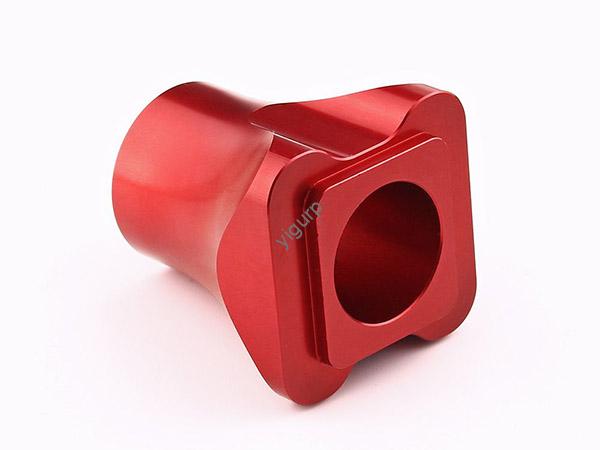
Vanadium structural steel is a high-performance low-alloy steel that uses small additions of vanadium (0.05-0.15%) to achieve a significant increase in strength without compromising weldability or formability. The vanadium refines the grain structure, resulting in a material with higher yield strength, better toughness, and improved fatigue resistance compared to standard carbon steels. This combination of properties makes it an ideal choice for load-bearing applications in construction, automotive, heavy machinery, and pipelines, where reducing weight while maintaining strength and durability is a critical design goal.
Introduction
For decades, engineers have sought materials that are stronger, tougher, and easier to work with. Standard carbon steels are affordable and weldable, but they often lack the strength needed for demanding applications, requiring thicker, heavier sections. High-alloy steels can provide exceptional strength but are expensive and difficult to fabricate. Vanadium structural steel was developed to offer a practical middle ground. By adding a tiny amount of vanadium—often less than 0.15%—to a low-alloy steel, manufacturers can achieve a refined grain structure that dramatically boosts strength and toughness. This allows for lighter, more efficient designs without the cost and complexity of high-alloy steels.
What Are the Key Properties of Vanadium Structural Steel?
The performance of vanadium structural steel is defined by its chemical composition and the mechanical properties achieved through its refined grain structure.
Chemical Composition
Vanadium is the key element, working with carbon and manganese to create a fine-grained, high-strength steel.
| Element | Content Range (%) | Its Role in Performance |
|---|---|---|
| Vanadium (V) | 0.05 – 0.15 | The key element. It refines the grain structure, boosting tensile strength, yield strength, and fatigue resistance. |
| Carbon (C) | 0.12 – 0.25 | Provides base strength while maintaining good weldability. |
| Manganese (Mn) | 0.80 – 1.50 | Improves hardenability and formability. |
| Silicon (Si) | 0.15 – 0.50 | Aids in deoxidation and adds minor strength. |
| Phosphorus (P) | ≤ 0.045 | Minimized to prevent cold brittleness. |
| Sulfur (S) | ≤ 0.035 | Kept low for better weldability and toughness. |
| Chromium (Cr) | 0.10 – 0.50 | Optional, enhances corrosion resistance for marine applications. |
| Molybdenum (Mo) | 0.05 – 0.20 | Optional, boosts high-temperature strength for pipelines. |
Mechanical Properties
The table below compares vanadium structural steel to plain carbon steel (A36), highlighting its performance advantages.
| Property | Vanadium Structural Steel | Plain Carbon Steel (A36) | Advantage |
|---|---|---|---|
| Yield Strength | 400 – 600 MPa | ≥ 250 MPa | 60-140% higher |
| Tensile Strength | 550 – 750 MPa | 400 – 550 MPa | Significantly higher |
| Hardness | 160 – 220 HB | 110 – 130 HB | More wear-resistant |
| Impact Toughness | 45 – 80 J at -40°C | 27 J at -20°C | Remains tough in colder climates |
| Fatigue Resistance | 280 – 380 MPa | 200 – 280 MPa | Better for repeated stress applications |
| Elongation | 18 – 25% | ≥ 20% | Maintains good ductility |
- Strength-to-Weight Ratio: The higher yield strength allows engineers to use 10-20% thinner sections for the same load, reducing material weight and cost.
- Weldability: It has excellent weldability. The low sulfur and controlled carbon content minimize cracking risk. For sections under 20mm, no preheating is required.
Where Is Vanadium Structural Steel Used in the Real World?
Vanadium structural steel is used in applications where high strength, good toughness, and ease of fabrication are all required.
Construction and Infrastructure
This is a primary application. The material’s high strength allows for lighter, more efficient structures.
- Case Study: A European construction firm used vanadium structural steel for a 600-meter-long highway bridge in a cold region.
- The steel’s high yield strength allowed them to use 15% thinner beams than plain carbon steel.
- This cut material costs by 12% .
- After 5 years of service, including -30°C winters, the bridge showed no signs of fatigue or cold brittleness.
- It is also used for I-beams, H-columns, trusses, and building frames for high-rise buildings and stadiums.
Automotive and Heavy Machinery
The automotive industry uses vanadium steel to reduce vehicle weight while maintaining or improving strength.
- Case Study: A heavy-duty truck manufacturer switched to vanadium structural steel for its chassis.
- The new chassis was 18% lighter than the previous carbon steel version.
- It could carry 25% more cargo.
- Fuel efficiency improved by 7% .
- It is also used for suspension components, transmission gears, and industrial machine frames.
Oil and Gas Pipelines
Vanadium steel, often with molybdenum additions, is used for high-pressure pipelines that must withstand both pressure and environmental stress.
- Case Study: An oil company used vanadium-molybdenum structural steel for a 300-kilometer pipeline in a hot, arid region.
- The steel’s high-temperature strength prevented deformation under 550°C crude oil.
- Its corrosion resistance meant no internal rust, outperforming plain carbon steel pipelines that needed repairs after 2 years.
How Is Vanadium Structural Steel Manufactured?
The manufacturing process for vanadium structural steel is designed to refine the grain structure and achieve the material’s high strength.
Steelmaking and Heat Treatment
- Steelmaking: It is typically made in a Basic Oxygen Furnace (BOF) for large-scale production, or an Electric Arc Furnace (EAF) for custom grades. Vanadium is added in precise amounts during the process.
- Normalizing: The steel is heated to 850-950°C and then air-cooled. This process refines the grain structure, improving uniformity and strength.
- Quenching and Tempering: For applications requiring even higher strength, the steel is quenched (hardened) and then tempered to balance strength and toughness.
Forming and Finishing
- Hot Rolling: The steel is hot rolled into beams, plates, and pipes. This is the most common forming method for structural components.
- Cold Rolling: For thinner, precision parts, cold rolling is used.
- Galvanizing: For outdoor applications like bridge beams, a hot-dip galvanized coating is applied to provide long-term corrosion protection (20+ years).
Vanadium Structural Steel vs. Other Materials
Comparing vanadium steel to other materials helps clarify its value as a high-strength, cost-effective option.
| Material | Yield Strength | Weldability | Relative Cost | Best For |
|---|---|---|---|---|
| Vanadium Structural Steel | 400 – 600 MPa | Excellent | Medium | High-strength, weight-sensitive structures |
| Carbon Steel (A36) | ≥ 250 MPa | Excellent | Low | General construction, low-stress parts |
| HSLA Steel (A572) | 290 – 450 MPa | Good | Medium | Medium-strength structures |
| Stainless Steel (316L) | ≥ 205 MPa | Good | 2-3x Higher | Corrosive environments, not load-critical |
| High-Alloy (Inconel) | 300 – 1000+ MPa | Fair | 5-10x Higher | Extreme temperatures, aerospace |
Key Takeaway: Vanadium structural steel offers a compelling balance. It provides 60-140% higher yield strength than plain carbon steel at a modest cost premium (about 15%). It is significantly stronger than standard HSLA grades and far more affordable than stainless steel or high-alloy materials. For applications requiring high strength and good weldability, it is often the most cost-effective solution.
Conclusion
Vanadium structural steel is a high-performance material that solves the classic trade-off between strength and workability. By using small additions of vanadium to refine the grain structure, it achieves a significant increase in yield strength and toughness while maintaining excellent weldability and formability. This allows engineers to design lighter, more efficient structures and components without the cost and complexity of high-alloy steels. For a wide range of applications—from long-span bridges and high-rise buildings to heavy-duty truck chassis and high-pressure pipelines—vanadium structural steel offers a proven and cost-effective path to improved performance.
FAQ About Vanadium Structural Steel
Can vanadium structural steel be used in cold climates?
Yes. Its excellent impact toughness, typically 45-80 J at -40°C, makes it well-suited for cold-weather applications. It is commonly used for bridges, building frames, and pipelines in regions with harsh winters, where it reliably resists brittle fracture.
Is vanadium structural steel difficult to weld on-site?
No. It has excellent weldability due to its low sulfur and controlled carbon content. For most on-site applications, such as bridge joints or pipeline connections, standard welding electrodes can be used without preheating. For thicker sections over 20mm, a preheat of 100-150°C is recommended to avoid cracking.
How does vanadium structural steel compare to HSLA steel in terms of cost?
Vanadium structural steel is typically about 10% more expensive than standard HSLA steel (e.g., A572). However, it offers 20-30% higher yield strength. For projects where weight savings or reduced material use are important—such as long-span bridges or truck chassis—the higher strength more than offsets the modest cost premium, resulting in a lighter, more efficient, and often more economical design.
Discuss Your Projects with Yigu Rapid Prototyping
At Yigu Rapid Prototyping, we have extensive experience supplying high-performance structural steels for demanding applications. We understand that material selection is a critical factor in achieving efficient, durable, and cost-effective designs. We supply vanadium structural steel in a variety of forms, including beams, plates, and custom-fabricated components. Our team can provide guidance on material selection, welding procedures, and surface finishing to ensure your project meets its performance targets. Whether you are designing a long-span bridge, a heavy-duty truck chassis, or a high-pressure pipeline, we are here to help. Contact us today to discuss your project requirements.