
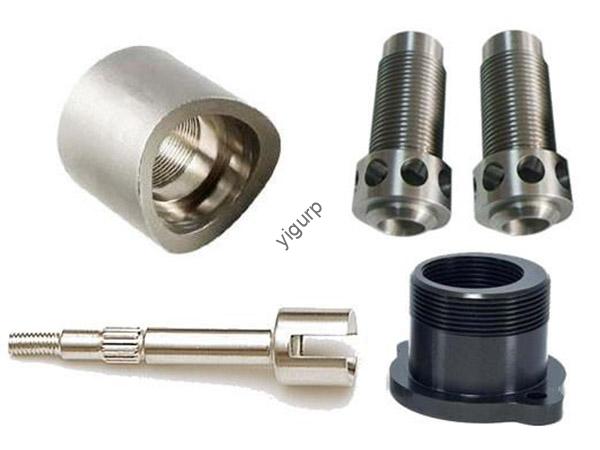
When your project demands a material that balances strength, toughness, and machinability, 4140 annealed cold rolled steel is a reliable choice. As a chromium-molybdenum alloy, it offers exceptional versatility—strong enough for high-stress components yet workable enough for precision machining. This guide covers its key properties, heat treatment response, fabrication characteristics, industrial applications, and sourcing strategies, helping you make informed decisions for projects ranging from automotive components to industrial machinery.
Introduction
In the world of engineering materials, few alloys achieve the balance of properties found in 4140 steel. Developed as a chromium-molybdenum medium-carbon alloy, it combines the strength needed for load-bearing components with the toughness required to withstand impact and fatigue. The annealed cold rolled condition further enhances its value, providing a consistent microstructure, improved surface finish, and dimensional accuracy that simplify fabrication. Whether you are manufacturing hydraulic cylinder rods, automotive gears, or precision machine components, 4140 annealed cold rolled steel delivers the performance that engineers have trusted for decades.
What Defines 4140 Annealed Cold Rolled Steel?
The performance of 4140 steel is defined by its chemical composition, the annealing process, and the cold rolling that shapes it into its final form. Understanding these fundamentals helps in selecting the right condition for your application.
Chemical Composition
4140 steel achieves its properties through a precise balance of carbon for strength, chromium for hardenability and wear resistance, and molybdenum for toughness and high-temperature stability.
| Element | Content Range (%) | Functional Role |
|---|---|---|
| Carbon (C) | 0.38–0.43 | Provides the strength and hardenability that distinguish this medium-carbon alloy from lower grades. |
| Chromium (Cr) | 0.80–1.10 | Enhances wear resistance, hardenability, and contributes to corrosion resistance. |
| Molybdenum (Mo) | 0.15–0.25 | Improves toughness, especially at elevated temperatures, and increases hardenability. |
| Manganese (Mn) | 0.75–1.00 | Adds strength and hardenability while improving processing characteristics. |
| Silicon (Si) | 0.15–0.35 | Aids deoxidation during steelmaking and contributes to strength. |
| Phosphorus (P) | ≤ 0.035 | Strictly controlled to prevent cold brittleness. |
| Sulfur (S) | ≤ 0.040 | Controlled to maintain machinability without compromising toughness. |
Mechanical Properties in the Annealed Condition
The annealed condition provides a soft, machinable state suitable for initial fabrication before final heat treatment.
| Property | Typical Value | Practical Significance |
|---|---|---|
| Tensile Strength | 600–800 MPa | Provides adequate strength for preliminary fabrication and handling. |
| Yield Strength | 380–550 MPa | Resists permanent deformation during machining and handling operations. |
| Elongation | 15–20% | Offers good ductility for forming and bending operations. |
| Reduction of Area | 40–50% | Indicates good toughness and resistance to sudden failure. |
| Hardness | 170–210 BHN | Soft enough for efficient machining with standard tooling. |
| Impact Toughness | Moderate to high | Suitable for applications requiring resistance to shock loading. |
| Density | 7.85 g/cm³ | Standard steel density, simplifying weight calculations. |
Why Is the Annealed Condition Important?
The annealed condition is the preferred starting point for components that will undergo final heat treatment after machining. Understanding the annealing process explains its advantages.
The Annealing Process
Annealing involves heating the steel to 840–870°C, holding at temperature to allow transformation, and then slowly cooling. This process:
- Softens the steel for efficient machining
- Refines the grain structure for improved uniformity
- Relieves internal stresses from previous processing
- Creates a consistent microstructure for predictable heat treatment response
Benefits of Cold Rolling
Cold rolling after annealing further enhances the material:
- Improves surface finish (Ra as low as 0.2–0.8 µm)
- Tightens dimensional tolerances
- Increases yield strength through work hardening
- Provides a scale-free surface ready for machining
How Does Heat Treatment Affect Performance?
4140 steel responds exceptionally well to heat treatment, allowing designers to tailor properties to specific application requirements.
Heat Treatment Methods
| Process | Temperature Range | Purpose |
|---|---|---|
| Annealing | 840–870°C, slow cool | Softens for maximum machinability; refines grain structure. |
| Normalizing | 840–870°C, air cool | Refines grain structure; improves uniformity of mechanical properties. |
| Quenching | 840–860°C, oil/water quench | Hardens to 40–50 HRC; develops high strength and wear resistance. |
| Tempering | 550–650°C | Reduces brittleness; balances hardness and toughness. |
Hardness Comparison
| Condition | Hardness | Typical Applications |
|---|---|---|
| Annealed | 170–210 BHN | Machining, forming, preliminary fabrication |
| Quenched & Tempered | 40–50 HRC (388–477 BHN) | High-strength shafts, gears, structural components |
Hardenability
4140 steel exhibits excellent hardenability, meaning it can develop consistent properties through significant section thicknesses. The hardenability curve shows that sections up to 100 mm can be effectively hardened with proper quenching, making it suitable for large components like heavy shafts and forging dies.
How Do You Machine and Fabricate 4140 Annealed?
The annealed condition makes 4140 steel highly workable with standard fabrication methods.
Machinability
4140 annealed has a machinability rating of approximately 60–70% compared to 1018 hot rolled (100%). This makes it readily machinable with proper techniques.
| Operation | Recommended Parameters |
|---|---|
| Turning (HSS tools) | Cutting speeds 60–90 m/min |
| Turning (Carbide tools) | Cutting speeds 150–250 m/min |
| Drilling | Use coolant; peck drilling for deeper holes |
| Chip Control | Positive rake tools help break chips effectively |
Forming and Bending
Cold forming is possible but requires more force than low-carbon steels:
- Minimum Bend Radius: Approximately 1.5× material thickness for 5 mm sheet
- Cold Forming Limits: Annealed condition provides sufficient ductility for moderate forming operations
- Warm Forming: Preheating to 150–250°C can improve formability for complex shapes
Welding
4140 steel has fair weldability with appropriate precautions:
| Consideration | Requirement |
|---|---|
| Preheating | 150–250°C required to prevent cracking |
| Filler Metal | ER80S-G or similar low-hydrogen options |
| Process | MIG or TIG welding recommended |
| Post-Weld | Tempering at 550–650°C relieves stresses |
Surface Finish
Cold rolling produces a smooth surface finish that can be further refined:
- As-rolled: Ra 0.8–1.6 µm
- Centerless Ground: Ra as low as 0.2–0.8 µm
- Polished: Mirror finishes achievable for precision applications
Where Is 4140 Annealed Cold Rolled Steel Used?
The combination of strength, toughness, and machinability makes 4140 steel suitable for a wide range of demanding applications.
- Automotive Industry:
- Crankshafts and connecting rods requiring fatigue resistance under cyclic loading.
- High-strength fasteners and bolts for engine and chassis assemblies.
- Axles and transmission components for heavy-duty vehicles.
- Aerospace:
- Landing gear components requiring high strength-to-weight ratios.
- Structural fittings and mounting brackets for airframes.
- Engine mounts and support structures.
- Oil and Gas:
- Drill collars that must withstand high torque and compressive forces.
- Valve components and pump shafts for downhole applications.
- Tooling for drilling and extraction equipment.
- Industrial Machinery:
- Gears and pinions for power transmission systems.
- Shafts and axles for conveyors, pumps, and compressors.
- Tool holders, fixtures, and die sets for manufacturing equipment.
- Hydraulic cylinder rods requiring strength and surface finish.
- General Engineering:
- Precision shafts for motors and rotating equipment.
- Jigs and fixtures requiring dimensional stability.
- Mold bases and die components for plastic injection and metal forming.
What Standards and Certifications Apply?
Ensuring material quality requires verification against established standards and appropriate certifications.
Key Standards
| Standard | Scope |
|---|---|
| ASTM A331 | Cold-finished alloy steel bars, including 4140 |
| SAE J404 | Chemical composition requirements for 4140 |
| AMS 6381 | Aerospace specification for 4140 annealed |
| EN 1.7225 | European equivalent (42CrMo4) |
| EN 10277 | Cold-finished steel bars for general engineering |
Equivalent Grades
| Region | Standard | Grade |
|---|---|---|
| USA | SAE/AISI | 4140 |
| Europe | EN | 1.7225 / 42CrMo4 |
| Germany | DIN | 1.7225 |
| Japan | JIS | SCM440 |
Quality Documentation
- Material Test Report (MTR): Documents chemical composition and mechanical properties for each heat.
- EN 10204 3.1: Mill certification confirming compliance.
- EN 10204 3.2: Third-party certification for critical applications.
Supplier Certifications
- ISO 9001: Quality management system certification.
- AS9100: Aerospace quality management certification.
- REACH/RoHS: Compliance with European substance restrictions.
How Do You Source 4140 Annealed Cold Rolled Steel?
Effective procurement requires understanding available forms, sizes, and supply chain considerations.
Available Forms and Sizes
| Form | Typical Size Range |
|---|---|
| Round Bar | 3–150 mm diameter |
| Flat Bar | 1–30 mm thickness, 10–200 mm width |
| Square Bar | 5–100 mm side length |
| Hex Bar | 6–80 mm across flats |
| Plate | 5–100 mm thickness |
Supply Chain Options
| Factor | Considerations |
|---|---|
| Precision Ground Rod | Available with tight tolerances (±0.025 mm) for precision applications |
| Cut-to-Length | Many suppliers offer custom lengths to reduce waste |
| Minimum Order Quantity (MOQ) | Mill MOQ typically 1–5 tons; suppliers may offer smaller quantities |
| Domestic vs. Import | Domestic: 1–2 week lead times; Import: 4–6 weeks, lower cost for large orders |
Pricing Factors
4140 annealed cold rolled steel pricing is influenced by:
- Base material cost (scrap, alloys)
- Processing requirements (cold rolling, annealing, grinding)
- Quantity ordered
- Surface finish requirements
- Certification requirements
Conclusion
4140 annealed cold rolled steel occupies a well-established position in the family of engineering alloys. Its chromium-molybdenum composition provides the strength, toughness, and hardenability that engineers require for demanding applications. The annealed condition offers excellent machinability and formability for initial fabrication, while the material’s response to heat treatment allows final properties to be tailored to specific requirements. From automotive crankshafts and aerospace landing gear to oilfield drill collars and precision industrial machinery, 4140 steel delivers the balance of performance and practicality that has made it a standard choice for generations. When combined with cold rolling for improved surface finish and dimensional accuracy, it becomes an even more versatile material for precision components.
FAQ About 4140 Annealed Cold Rolled Steel
Can 4140 annealed cold rolled steel be welded easily?
4140 steel has fair weldability, not easy weldability. Preheating to 150–250°C is required to prevent cracking in the heat-affected zone. Post-weld heat treatment (tempering at 550–650°C) is also recommended to relieve residual stresses. Using low-hydrogen welding processes like TIG or MIG with appropriate filler metals (ER80S-G or similar) helps ensure weld integrity.
What is the difference between 4140 annealed and 4140 quenched and tempered?
4140 annealed is soft (170–210 BHN) and is intended for machining and forming operations. It has good ductility and machinability. 4140 quenched and tempered is much harder (40–50 HRC, approximately 388–477 BHN) and is used for final components requiring high strength, wear resistance, and toughness. Most components are machined in the annealed condition and then heat treated to the quenched and tempered condition for service.
Where can I find a reliable supplier for 4140 annealed cold rolled steel?
Look for suppliers with ISO 9001 certification for general industrial applications, or AS9100 certification for aerospace requirements. Request Material Test Reports (MTRs) to verify chemical composition and mechanical properties. Consider lead time requirements—domestic suppliers typically offer 1–2 week delivery, while imported material may take 4–6 weeks but can be more cost-effective for large orders.
What is the maximum operating temperature for 4140 steel?
4140 steel maintains good mechanical properties up to approximately 400°C. Above this temperature, strength begins to decline more rapidly. For sustained high-temperature service above 500°C, consider materials specifically designed for elevated temperature applications. The tempering temperature used during heat treatment also affects the material’s performance at elevated temperatures.
Discuss Your Projects with Yigu Rapid Prototyping
Selecting and processing the right steel for your application requires balancing strength, machinability, and cost. At Yigu Rapid Prototyping, we combine deep expertise in materials like 4140 annealed cold rolled steel with advanced manufacturing capabilities to deliver components that meet your specifications. Whether you need precision shafts, gears, hydraulic components, or custom machined parts, our team can guide you from material selection through heat treatment and finishing.
We specialize in working with 4140 and other alloy steels, offering services including precision machining, custom heat treatment, and surface finishing. If your next project demands reliable performance with cost-effective material selection, we are ready to help. Contact us today to discuss your requirements and discover how our expertise can support your precision component needs.