
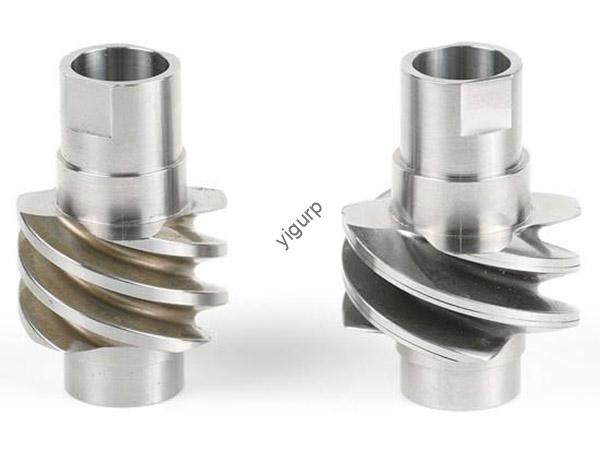
SK5 structural steel is a high-carbon, versatile alloy defined by its carbon content of 0.80-0.90% . This high carbon content, combined with controlled levels of manganese and low impurities, gives it a unique combination of high hardness, good tensile strength, and excellent wear resistance. After proper heat treatment, it achieves a hardness of 50-55 HRC and a tensile strength of 800-950 MPa, making it significantly stronger and harder than low-carbon structural steels. This balance of properties makes SK5 an ideal material for a wide range of medium-to-high stress applications, including mechanical components, automotive parts, and smaller structural elements where wear resistance and strength are critical.
Introduction
In the world of structural and mechanical steels, there is often a trade-off between strength and workability. Low-carbon steels are easy to form and weld but lack the hardness and wear resistance for demanding applications. High-alloy tool steels offer exceptional hardness but are expensive and difficult to machine. SK5 occupies a valuable middle ground. It is a high-carbon steel that can be heat-treated to achieve high hardness and strength, yet it remains machinable in its annealed state and is significantly more affordable than tool steels. For engineers and manufacturers looking for a material that provides good wear resistance and strength without the complexity and cost of high-alloy steels, SK5 offers a proven, practical solution.
What Are the Key Properties of SK5?
The performance of SK5 is defined by its chemical composition and the mechanical properties achieved through its manufacturing and heat treatment processes.
Chemical Composition
The high carbon content is the defining feature, with manganese and low impurities supporting its properties.
| Element | Content Range (%) | Its Role in Performance |
|---|---|---|
| Carbon (C) | 0.80 – 0.90 | The key element. Provides high hardness, tensile strength, and wear resistance after heat treatment. |
| Manganese (Mn) | 0.10 – 0.30 | Improves hardenability, ensuring uniform strength across thicker sections. |
| Silicon (Si) | ≤ 0.35 | Aids in deoxidation during steelmaking. |
| Sulfur (S) | ≤ 0.03 | Minimized to prevent brittleness. |
| Phosphorus (P) | ≤ 0.03 | Controlled to prevent cold cracking. |
Mechanical and Physical Properties
After proper heat treatment (quenching and tempering), SK5 achieves the properties required for demanding applications.
| Property | Typical Value | Why It Matters |
|---|---|---|
| Tensile Strength | 800 – 950 MPa | Provides high strength for load-bearing and high-stress components. |
| Yield Strength | 600 – 750 MPa | Resists permanent deformation under heavy loads. |
| Hardness | 50 – 55 HRC | Provides excellent wear resistance for sliding and rolling contact. |
| Elongation | 8 – 12% | Low but sufficient ductility for simple forming operations. |
| Impact Toughness | 20 – 30 J/cm² | Moderate toughness, suitable for static or low-impact applications. |
| Fatigue Strength | 350 – 400 MPa | Withstands repeated stress cycles, critical for moving parts. |
| Density | 7.85 g/cm³ | Standard for steel, simplifying design calculations. |
- Machinability: In the annealed state (hardness ~180-220 HB), SK5 has good machinability, allowing for efficient cutting, drilling, and milling.
- Weldability: It has fair weldability. Preheating to 200-300°C and the use of low-hydrogen electrodes are required to prevent cracking.
- Corrosion Resistance: It has moderate corrosion resistance. For outdoor use, a protective coating such as paint or galvanizing is required.
Where Is SK5 Used in the Real World?
SK5 is used in a wide range of applications where high strength and wear resistance are required.
Mechanical Engineering and Industrial Components
This is a primary application. SK5 is used for shafts, gears, bearings, and machine parts.
- Case Study: A European machinery maker was using low-carbon steel for conveyor shafts. The shafts were wearing out every 6 months , causing frequent downtime and replacement costs.
- They switched to SK5 shafts , heat-treated to 52 HRC.
- Shaft life extended to 18 months .
- Replacement costs were cut by $20,000 annually , and downtime was reduced by 40% .
Automotive Components
SK5 is used for timing gears, valve stems, transmission parts, and light truck axles.
- Case Study: A Japanese automotive supplier was using low-carbon steel for gears in small truck transmissions. The gears were failing after 80,000 miles , leading to warranty claims.
- They switched to SK5 gears , heat-treated to 53 HRC.
- Gear life extended to 150,000 miles , doubling the service life.
- Warranty costs were cut by $150,000 annually .
Construction and Structural Elements
While not as ductile as low-carbon structural steels, SK5 is used for smaller structural components.
- Short-span beams (5-10 meters) in industrial warehouses.
- Support columns in small factories.
- Small pedestrian bridge components, often with galvanizing for corrosion protection.
How Is SK5 Manufactured?
The manufacturing process for SK5 is designed to create a clean, uniform material that can be heat-treated to high hardness.
Steelmaking and Forming
- Steelmaking: It is typically made in an Electric Arc Furnace (EAF) , allowing for precise control of the carbon content (0.80-0.90%).
- Hot Rolling: The steel is hot rolled into bars, plates, and sheets.
- Annealing: The steel is annealed (heated to 700-750°C and slowly cooled) to soften it for machining. In this state, its hardness is around 180-220 HB.
Heat Treatment
Heat treatment is critical to achieving SK5’s high hardness and strength.
- Quenching: The steel is heated to 800-850°C and then rapidly cooled in water. This creates a hard, strong martensitic structure (60-62 HRC).
- Tempering: The quenched steel is then reheated to 200-300°C. This reduces brittleness while maintaining a high final hardness of 50-55 HRC.
- Normalizing: For structural applications, a normalizing heat treatment (heating to 850-900°C and air cooling) may be used to refine the grain structure.
Finishing
- Machining: Most machining is done in the annealed, soft state using standard tools.
- Grinding: After heat treatment, precision grinding is used to achieve final dimensions and surface finishes.
- Surface Treatment: For corrosion protection, parts can be painted, galvanized, or zinc-plated.
SK5 vs. Other Common Materials
Comparing SK5 to other materials helps clarify its position as a cost-effective, high-strength steel.
| Material | Tensile Strength | Hardness | Wear Resistance | Relative Cost | Best For |
|---|---|---|---|---|---|
| SK5 | 800 – 950 MPa | 50 – 55 HRC | Excellent | Medium | Gears, shafts, wear-resistant components |
| S355 | 355 – 510 MPa | 15 – 20 HRC | Fair | Lower | Large structural beams, columns, bridges |
| Stainless (304) | 515 MPa | 18 – 22 HRC | Good | 3x Higher | Corrosive environments, food equipment |
| Tool Steel (O1) | 1800 – 2000 MPa | 60 – 65 HRC | Excellent | 4x Higher | High-wear cutting tools, dies |
| Aluminum (6061) | 310 MPa | 90-95 HB | Poor | 2.5x Higher | Lightweight, non-structural parts |
Key Takeaway: SK5 offers an excellent balance of high strength, good wear resistance, and cost for a wide range of mechanical and structural applications. It is significantly stronger and harder than low-carbon structural steel like S355, making it ideal for wear-prone components. While it is not as hard or wear-resistant as premium tool steels, it is also much more affordable and easier to machine. For applications requiring good strength and wear resistance without the cost of specialty tool steels, SK5 is an optimal choice.
Conclusion
SK5 structural steel is a versatile, high-carbon material that provides an excellent balance of high strength, good wear resistance, and cost-effectiveness. Its ability to be heat-treated to high hardness makes it ideal for gears, shafts, and other wear-prone components. While it requires careful welding procedures and corrosion protection for outdoor use, its performance-to-cost ratio is outstanding. For a wide range of mechanical engineering and automotive applications, SK5 offers a proven, reliable, and practical solution.
FAQ About SK5 Structural Steel
Can SK5 be used for outdoor construction projects?
Yes, but it requires a protective coating. SK5 has moderate corrosion resistance and will rust when exposed to moisture. For outdoor applications such as beams, columns, or pedestrian bridge components, a coating of paint, galvanizing, or zinc plating is required. With proper coating, SK5 can last 15 years or more in outdoor environments.
Is SK5 easy to weld?
SK5 has fair weldability. It requires preheating to 200-300°C before welding to prevent cracking, and post-weld annealing is recommended to reduce residual stress. It is best suited for simple welds, such as attaching brackets or small components. It is not recommended for complex, high-load welded structures.
How does SK5’s hardness affect its use?
SK5’s high hardness (50-55 HRC after heat treatment) is a significant advantage for wear resistance. It allows parts like gears and shafts to resist abrasion and deformation over long service lives. However, this high hardness also reduces ductility, making SK5 unsuitable for applications requiring frequent bending or forming. For forming operations, the steel is worked in its annealed, soft state before heat treatment.
Discuss Your Projects with Yigu Rapid Prototyping
At Yigu Rapid Prototyping, we have extensive experience working with SK5 and other high-carbon steels for demanding applications. We understand that for wear-resistant components, material selection and precise heat treatment are critical. We supply SK5 in bars, plates, and custom-machined components, with full heat treatment services to achieve the optimal hardness for your application. Our team can provide guidance on machining parameters, welding procedures, and surface finishing to ensure your components achieve the longest possible service life. Whether you are manufacturing gears for transmissions, shafts for industrial machinery, or structural components for infrastructure, we are here to help. Contact us today to discuss your project requirements.