
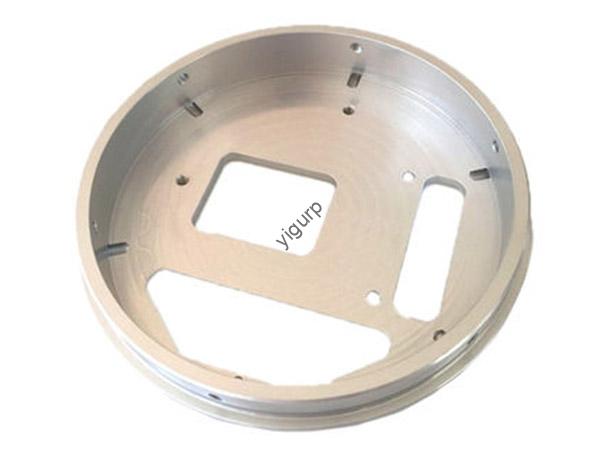
SCM440 alloy structural steel is a chromium-molybdenum (Cr-Mo) low-alloy steel defined by its precise chemical composition and excellent combination of strength, toughness, and hardenability. With a carbon content of 0.37-0.43% and the addition of chromium (0.80-1.10%) and molybdenum (0.15-0.30%) , it is designed to be heat-treated to achieve a wide range of mechanical properties. In its quenched and tempered condition, it can reach a tensile strength of 800-950 MPa and a yield strength of 550-700 MPa , significantly higher than standard structural steels. This combination of high strength, good ductility, and excellent hardenability makes SCM440 a versatile material for demanding applications in construction, automotive, mechanical engineering, and heavy equipment.
Introduction
For many engineering applications, the material must provide a specific combination of properties that standard carbon steels cannot achieve. They may lack the strength for heavy loads, the hardenability for thick sections, or the toughness for dynamic stress. High-alloy steels can meet these requirements but are often expensive and difficult to work with. SCM440 was developed to provide a balanced solution. It is a chromium-molybdenum steel that offers excellent hardenability, allowing it to be uniformly hardened in larger sections. It also provides high strength and good toughness after heat treatment. For engineers designing components that must withstand high stress, wear, and fatigue, SCM440 offers a proven, reliable, and cost-effective solution.
What Are the Key Properties of SCM440?
The performance of SCM440 is defined by its chemical composition and the mechanical properties achieved through its heat treatment.
Chemical Composition
The addition of chromium and molybdenum is key to its hardenability and strength.
| Element | Content Range (%) | Its Role in Performance |
|---|---|---|
| Carbon (C) | 0.37 – 0.43 | Provides high strength and hardness after heat treatment. |
| Chromium (Cr) | 0.80 – 1.10 | Improves hardenability, wear resistance, and provides mild corrosion resistance. |
| Manganese (Mn) | 0.80 – 1.10 | Enhances toughness and reduces brittleness. |
| Molybdenum (Mo) | 0.15 – 0.30 | Increases high-temperature strength and fatigue resistance. |
| Silicon (Si) | 0.15 – 0.35 | Aids in deoxidation and strengthens the steel matrix. |
| Sulfur (S) | ≤ 0.030 | Minimized to prevent brittleness. |
| Phosphorus (P) | ≤ 0.030 | Controlled to prevent cold cracking. |
Mechanical and Physical Properties
After proper heat treatment (quenching and tempering), SCM440 achieves a balance of high strength and good ductility.
| Property | Typical Value | Why It Matters |
|---|---|---|
| Tensile Strength | 800 – 950 MPa | Provides high strength for heavy-load components. |
| Yield Strength | 550 – 700 MPa | Resists permanent deformation under high stress. |
| Elongation | 15 – 20% | Provides good ductility for safety and forming. |
| Hardness | 180 – 230 HB | Balances strength with good machinability. |
| Fatigue Strength | 350 – 450 MPa | Withstands repeated stress, critical for rotating and moving parts. |
| Impact Toughness | High | Resists sudden impacts without fracturing. |
| Density | 7.85 g/cm³ | Standard for steel. |
- Hardenability: SCM440 has excellent hardenability due to its chromium and molybdenum content. This allows it to be uniformly hardened in sections up to 50mm or more, making it suitable for large components.
- Weldability: It has good weldability with proper procedures. Preheating is recommended for thicker sections.
- Formability: It has good formability, allowing it to be forged, rolled, and shaped.
Where Is SCM440 Used in the Real World?
SCM440 is used in a wide range of demanding applications across multiple industries.
Construction and Infrastructure
SCM440 is used for structural beams, columns, and bridge components that require higher strength than standard structural steel.
- Case Study: A construction company in South Korea used SCM440 beams for a 15-story apartment building.
- The steel’s high tensile strength (900 MPa) allowed them to use thinner beams .
- This cut material costs by 12% while maintaining safety.
Mechanical Engineering and Automotive
SCM440 is used for machine frames, gears, shafts, axles, and suspension components.
- Case Study: A factory using conveyor systems switched to SCM440 for gears and shafts.
- The steel’s fatigue strength (~400 MPa) prevented wear from constant movement.
- Gear and shaft life was extended significantly.
Heavy Equipment and Marine Applications
SCM440 is used for excavator arms, crane parts, mining tools, and ship hull supports (with coating for corrosion protection).
How Is SCM440 Manufactured?
The manufacturing process for SCM440 is designed to produce a clean, uniform material with consistent hardenability.
Steelmaking and Forming
- Steelmaking: It is typically made in an Electric Arc Furnace (EAF) or Basic Oxygen Furnace (BOF) , with precise control of the chromium and molybdenum content.
- Hot Rolling: The steel is hot rolled into bars, plates, and beams.
- Cold Rolling: For precision parts, cold rolling is used to achieve a smooth surface and tight tolerances.
Heat Treatment
Heat treatment is critical to achieving the desired properties.
- Normalizing: The steel is heated to 850-900°C and air-cooled to relieve stress and prepare the microstructure.
- Quenching and Tempering: This is the most common heat treatment for SCM440. The steel is heated to 820-860°C, rapidly cooled (quenched) in oil or water, and then reheated to 500-600°C (tempered). This process develops high strength and hardness while maintaining good toughness.
- Stress Relief Annealing: For welded components, a stress relief anneal at 550-650°C is used to prevent warping.
Finishing
- Machining: In its annealed or normalized state, SCM440 has good machinability.
- Quality Control: Hardness, tensile, and microstructure tests are performed to ensure the material meets specifications.
SCM440 vs. Other Structural Steels
Comparing SCM440 to other materials helps clarify its position as a high-strength, versatile alloy.
| Material | Tensile Strength | Hardenability | Relative Cost | Best For |
|---|---|---|---|---|
| SCM440 | 800 – 950 MPa | Excellent | Medium | Gears, shafts, high-strength structural components |
| S355 | 490 – 630 MPa | Fair | Lower | General structural applications, lower stress |
| S460 | 460 – 590 MPa | Good | Medium | Medium-load bridges, high-rise buildings |
| S690 | 690 – 820 MPa | Very Good | Higher | Heavy industrial use, ultra-high-strength applications |
| Aluminum (6061) | 276 MPa | N/A | 2.2x Higher | Lightweight, non-structural parts |
Key Takeaway: SCM440 offers a unique combination of high strength, excellent hardenability, and good toughness at a cost that is significantly lower than specialty ultra-high-strength steels like S690. It is significantly stronger than standard structural steel S355 and offers superior hardenability. For components requiring high strength, wear resistance, and the ability to be uniformly hardened in thick sections, SCM440 is the optimal choice.
Conclusion
SCM440 alloy structural steel is a versatile, high-performance material that provides an excellent balance of strength, hardenability, and toughness. Its chromium-molybdenum chemistry allows it to be heat-treated to achieve a wide range of properties, making it suitable for demanding applications in construction, automotive, mechanical engineering, and heavy equipment. For engineers seeking a reliable, cost-effective material that can be heat-treated to meet specific strength and toughness requirements, SCM440 offers a proven and versatile solution.
FAQ About SCM440 Alloy Structural Steel
Can SCM440 be used in saltwater environments?
Yes, but it requires a protective coating. SCM440 has moderate corrosion resistance. For saltwater or harsh marine environments, a coating such as hot-dip galvanizing or epoxy paint is required to prevent rust. For dry or mild indoor environments, no coating is necessary.
What heat treatment is best for SCM440 gears?
The best heat treatment for gears is quenching and tempering (Q&T) . The steel is heated to 820-860°C, quenched in oil, and then tempered at 500-600°C. This process achieves a hardness of 220-230 HB and a tensile strength of over 900 MPa, providing excellent wear resistance and fatigue strength for gear applications.
Is SCM440 more expensive than regular structural steel?
Yes, SCM440 is typically 15-25% more expensive than standard structural steel like S355. However, because it is significantly stronger, designers can often use thinner, lighter sections, reducing overall material weight. In many cases, this can result in comparable or even lower total project costs, especially when considering the extended service life and reduced maintenance of high-strength components.
Discuss Your Projects with Yigu Rapid Prototyping
At Yigu Rapid Prototyping, we have extensive experience working with SCM440 and other high-performance alloy steels. We understand that for demanding applications, the right material selection and heat treatment are critical. We supply SCM440 in bars, plates, and custom-machined components, with full heat treatment services to achieve the optimal balance of strength, hardness, and toughness. Our team can provide guidance on heat treatment cycles, welding procedures, and finishing techniques. Whether you are manufacturing gears, shafts, high-strength structural components, or heavy equipment parts, we are here to help. Contact us today to discuss your project requirements.