
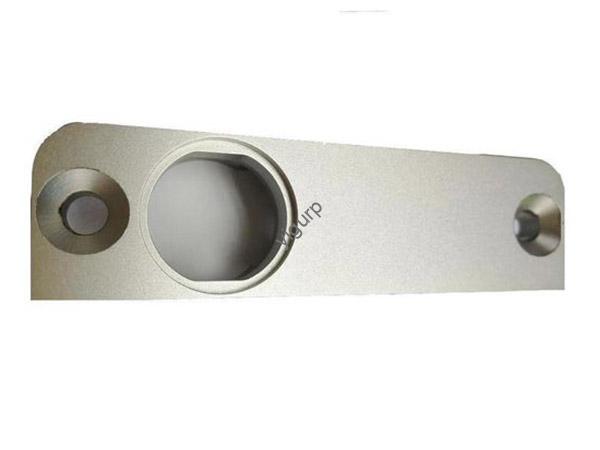
If you are designing a chemical reactor, an aircraft fuel line, or a surgical instrument, you need a material that offers a rare combination of properties. It must resist corrosion, handle stress, and be practical to manufacture. Standard stainless steels often excel in one area but fall short in another. High-alloy steels can be prohibitively expensive. Microalloyed stainless steel is engineered to bridge this gap. By adding tiny amounts of elements like titanium, niobium, or vanadium to a carefully balanced base composition, it achieves a superior blend of strength, toughness, and corrosion resistance without the high cost of specialized superalloys. This guide explains its properties, applications, and how it compares to other materials.
Introduction
For engineers across industries, material selection is a constant balancing act. You need a metal that is strong enough for structural integrity, corrosion-resistant enough for the operating environment, and workable enough for cost-effective fabrication. Microalloyed stainless steel was developed to meet these competing demands. It starts with a standard austenitic stainless steel base, rich in chromium and nickel. The innovation lies in the addition of microalloying elements—typically titanium, niobium, or vanadium—in quantities as small as 0.1% to 0.2%. These trace additions have a disproportionate effect on the material’s properties. They refine the grain structure, pin grain boundaries to prevent growth at high temperatures, and form stable carbides that enhance strength without sacrificing ductility. The result is a family of steels that offer a unique performance-to-cost ratio.
What Defines Microalloyed Stainless Steel?
The performance of microalloyed stainless steel is a direct result of its precise chemistry and the way it is processed. It is designed to be strong, stable, and versatile.
What Is in the Alloy?
The chemical composition of microalloyed stainless steel builds on a standard austenitic base but adds specific elements to fine-tune its properties.
| Element | Typical Range (%) | Its Role in the Steel |
|---|---|---|
| Chromium (Cr) | 16 – 20 | Forms the passive oxide layer, providing the foundation for corrosion resistance. |
| Nickel (Ni) | 4 – 10 | Stabilizes the austenitic structure, ensuring excellent formability and toughness. |
| Molybdenum (Mo) | 1 – 3 | Boosts resistance to pitting and crevice corrosion, especially in chloride environments. |
| Nitrogen (N) | 0.1 – 0.2 | A powerful solid-solution strengthener that increases tensile strength without reducing ductility. |
| Titanium (Ti) | Trace (0.1 – 0.5) | A key microalloy. It forms stable carbides, preventing intergranular corrosion and refining the grain structure. |
| Niobium (Nb) | Trace (0.05 – 0.2) | Similar to titanium, it strengthens the steel at high temperatures and improves weldability. |
| Vanadium (V) | Trace (0.05 – 0.15) | Refines the grain structure, enhancing strength and fatigue resistance. |
| Carbon (C) | < 0.08 | Kept low to prevent the formation of chromium carbides, which can deplete corrosion resistance. |
What Are Its Key Mechanical and Physical Properties?
Microalloyed stainless steel achieves a balance of strength, ductility, and toughness that is superior to many conventional grades.
| Property | Typical Value | Why This Matters |
|---|---|---|
| Tensile Strength | 500 – 700 MPa | 15-30% stronger than 304 stainless steel (515 MPa), allowing for lighter, thinner sections. |
| Yield Strength | 250 – 400 MPa | High enough to resist permanent deformation under significant loads. |
| Elongation | 25 – 35% | Excellent ductility, meaning it can be formed into complex shapes without cracking. |
| Impact Toughness | 40 – 80 J (at 20°C) | Tough enough to absorb impact and resist brittle fracture, even in cold conditions. |
| Fatigue Resistance | 200 – 300 MPa | Capable of withstanding millions of stress cycles, critical for moving parts like engine components. |
| Density | 7.8 – 7.9 g/cm³ | Standard density for stainless steels. |
| Hardness (Brinell) | 150 – 200 HB | Soft enough for standard machining with carbide tools. |
A major aerospace company demonstrated the value of this material when they used microalloyed stainless steel for aircraft fuel lines. In testing, the microalloyed lines showed 20% better resistance to jet fuel corrosion compared to standard 304 stainless steel. Furthermore, they lasted twice as long in high-altitude, high-vibration conditions, a testament to the enhanced fatigue resistance provided by the microalloying elements.
Where Is Microalloyed Stainless Steel Used?
The versatility of microalloyed stainless steel makes it a top choice across a wide range of demanding industries.
Aerospace
In aerospace, weight, strength, and reliability are paramount.
- Fuel Lines and Hydraulic Systems: The material’s excellent corrosion resistance to jet fuel and hydraulic fluids, combined with its high fatigue strength, makes it ideal for these critical systems.
- Engine Casings and Fasteners: It provides the necessary strength at high temperatures and resists oxidation, ensuring safety and longevity.
Automotive
The automotive industry uses this steel to improve the durability of components exposed to heat, moisture, and road salts.
- Exhaust Systems: A leading carmaker switched to microalloyed stainless steel for exhaust mufflers. In snowy regions where road salt is common, customers reported that the new mufflers lasted three years longer than those made from regular steel. This led to a 25% reduction in warranty claims.
- Engine Components: Water pumps and sensor housings benefit from its resistance to coolant corrosion and engine heat.
Chemical and Food Processing
In these industries, corrosion resistance and hygiene are critical.
- Chemical Reactors and Piping: The steel’s resistance to a wide range of acids and solvents makes it suitable for vessels and pipes that handle aggressive chemicals.
- Food Equipment: Mixers, conveyors, and storage tanks benefit from its easy-to-clean surface and resistance to food acids like those in tomatoes or citrus fruits.
Medical and Marine
- Medical Equipment: Its biocompatibility and ability to withstand repeated sterilization make it a standard material for surgical instruments like scalpels and forceps.
- Marine Components: For near-shore applications like boat handrails and hull fittings, it offers good saltwater resistance, though for full immersion, a higher-alloy grade like 316L is often recommended.
How Is Microalloyed Stainless Steel Manufactured?
To achieve its unique properties, microalloyed stainless steel requires precise control during manufacturing and heat treatment.
Steelmaking
The steel is typically made in an electric arc furnace (EAF) , which allows for precise control over the alloying elements. The critical step is the addition of the microalloying elements—titanium, niobium, or vanadium—in exact, trace amounts. This must be done with precision to achieve the desired grain refinement without creating undesirable phases.
Forming
Like other austenitic stainless steels, microalloyed grades are highly formable.
- Hot Rolling: Used to produce thicker plates, bars, and structural shapes.
- Cold Rolling: Used to create thin, smooth sheets with tight tolerances for applications like food equipment and medical tools.
- Forging and Stamping: The steel can be forged into complex shapes like valve bodies or stamped into high-volume parts like sensor housings.
Heat Treatment
Heat treatment is essential for unlocking the full potential of the microalloying elements.
- Annealing: The steel is heated to 1050-1150°C and then cooled slowly. This softens the metal for forming and restores its corrosion resistance after welding.
- Solution Treatment: A similar process to annealing, but with rapid cooling. It dissolves unwanted carbides and ensures the alloying elements are uniformly distributed.
- Precipitation Hardening: For certain microalloyed grades, a final heat treatment at 450-550°C is used. This causes the formation of extremely fine particles that dramatically increase the steel’s strength and hardness.
Surface Treatment
- Passivation: A chemical treatment (usually with nitric or citric acid) that removes free iron from the surface and strengthens the protective chromium oxide layer. This is a standard finishing step to maximize corrosion resistance.
- Polishing: Creates a smooth, reflective finish that is easy to clean, making it essential for food and medical equipment.
How Does Microalloyed Stainless Steel Compare to Other Materials?
Choosing the right material often means comparing microalloyed stainless steel to its alternatives.
| Material Category | Comparison to Microalloyed Stainless Steel |
|---|---|
| Conventional Stainless (e.g., 304) | Microalloyed steel is 15-30% stronger and offers better corrosion resistance in acidic environments, thanks to its molybdenum content and refined grain structure. It costs about 10% more but provides a longer service life. |
| Carbon Steels | Microalloyed steel has far superior corrosion resistance, eliminating the need for painting or coatings. While similar in strength, it is significantly tougher and more durable in harsh environments. |
| High-Alloy Steels (e.g., 316L) | High-alloy steels offer slightly better resistance to saltwater and strong acids. However, microalloyed steel is 30-40% less expensive and is more than adequate for moderate-corrosion environments. |
| Aluminum Alloys | Aluminum is much lighter, but microalloyed steel is 2-3 times stronger and has better resistance to chemicals and high temperatures. |
| Composites (e.g., Carbon Fiber) | Composites have a higher strength-to-weight ratio. However, microalloyed steel is 50-60% cheaper, much easier to form and weld, and does not require expensive molds or specialized manufacturing processes. |
Conclusion
Microalloyed stainless steel represents a significant advancement in materials engineering. It offers a compelling combination of properties that address the core needs of engineers across industries. By adding minute amounts of elements like titanium and niobium to a standard stainless steel base, it achieves higher strength, improved toughness, and better resistance to corrosion and fatigue than conventional grades. It bridges the gap between standard stainless steels, which may lack strength, and high-alloy superalloys, which can be prohibitively expensive. For demanding applications in aerospace, automotive, chemical processing, and medical equipment, microalloyed stainless steel provides a practical, cost-effective, and reliable solution that often delivers the best overall value.
FAQ
Can microalloyed stainless steel be used in saltwater environments?
It is suitable for near-shore applications such as boat handrails, deck fittings, and structural components not fully submerged. For full seawater immersion or deep-sea applications, a higher-alloy steel like 316L or a duplex stainless steel is generally recommended due to its superior pitting resistance. Adding a coating like titanium nitride can further enhance its performance.
Is microalloyed stainless steel difficult to weld?
No, it is generally easy to weld with excellent weldability. Use a compatible filler metal (such as an austenitic stainless steel filler) to match the base metal’s properties. To maintain optimal corrosion resistance, post-weld annealing is recommended to relieve stresses and restore the protective oxide layer in the heat-affected zone.
What is the typical lead time for custom microalloyed stainless steel parts?
Lead times vary by complexity. Standard shapes like sheets, bars, and pipes typically take 2-3 weeks. Custom-fabricated parts, such as a chemical reactor vessel or a set of surgical instruments, can take 4-6 weeks, depending on the requirements for forging, heat treatment, and surface finishing.
How does microalloyed stainless steel achieve its higher strength?
The higher strength comes from a combination of factors. Nitrogen acts as a solid-solution strengthener. The microalloying elements (titanium, niobium, vanadium) refine the grain structure, creating more grain boundaries which impede dislocation movement. In precipitation-hardening grades, a final heat treatment creates extremely fine, uniformly dispersed particles that further block dislocation motion, dramatically increasing strength.
Is microalloyed stainless steel more expensive than standard 304?
Yes, it typically costs about 10-15% more than standard 304 stainless steel. However, this modest upfront cost increase is often offset by its longer service life, higher strength (allowing for lighter sections), and reduced maintenance requirements, making it more cost-effective over the lifecycle of a project.
Discuss Your Projects with Yigu Rapid Prototyping
Selecting the right material for a demanding application is a critical decision. At Yigu Rapid Prototyping, we have extensive experience with microalloyed stainless steels and other advanced alloys. Whether you need a custom-fabricated chemical reactor, a high-strength automotive component, or a precision medical instrument, our team can help you navigate material selection and manufacturing processes. Contact us to discuss your next project.