
Our Phenolic Resin Bakelite injection molding Services
Elevate your industrial components with Yigu Technology’s Phenolic Resin Bakelite Injection Molding services—the trusted solution for high-performance, heat-resistant thermoset parts.
From UL-rated switchgear to food-safe cookware handles, we combine advanced multi-cavity tooling, clean-room production, and specialized phenolic formulations to deliver parts that excel in extreme conditions. Backed by ISO 9001/IATF 16949 certifications and 24/7 support, we turn your Bakelite molding challenges into reliable, cost-effective solutions.
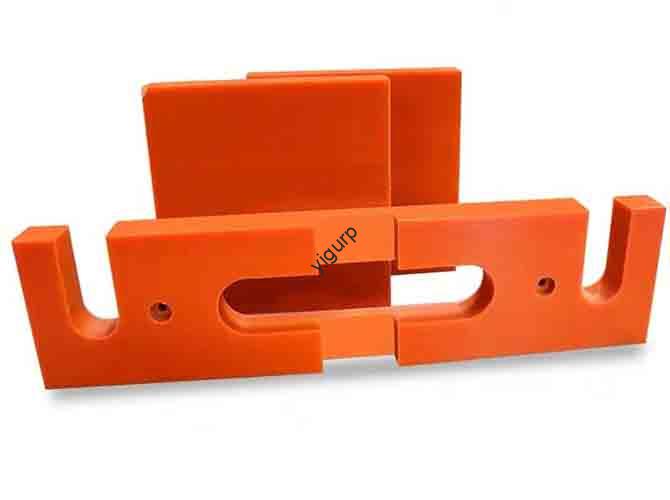
Our Phenolic Resin Bakelite Injection Molding Capabilities: Power Meets Precision
Yigu Technology’s Bakelite injection molding capacity is built to handle diverse industrial needs—from small-batch prototypes to high-volume production—while maintaining strict quality standards. Our facility specializes in thermoset challenges, with a focus on tight tolerances and versatile molding techniques.
Core Capabilities Breakdown
| Capability | Specification | Ideal Applications |
| Tolerance Control | ±0.02 mm for standard parts; ±0.01 mm for precision components | Electrical connector housings, RF terminals |
| Multi-Cavity Phenolic Tooling | Up to 64-cavity molds (for small parts like knobs) | High-volume cookware handles, appliance controls |
| High-Volume Production | 5–8 million parts/year (via automated lines) | Automotive commutators, brake-pad backings |
| Clean-Room Phenolic Service | Class 8 (100,000) certified rooms | Food-contact cookware, medical device components |
| Insert & Over-Molding Bakelite | Compatible with metals (brass, steel) and plastics | Motor end-caps, clutch cylinders with metal inserts |
| Post-Mold Machining & Tapping | CNC drilling, threading (up to M12 size) | Industrial bobbins, switchgear mounting brackets |
What Is Phenolic Resin Bakelite Injection Molding?
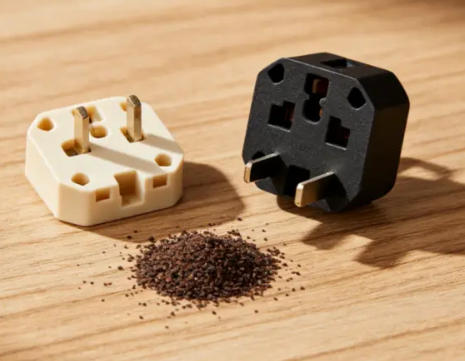
Phenolic Resin Bakelite Injection Molding is a specialized manufacturing process that shapes phenol-formaldehyde (PF) resin—commonly known as Bakelite—into durable parts via high-pressure injection into precision molds. Unlike thermoplastics that soften when heated, Bakelite is a thermoset phenolic; once cured, it retains its shape and properties even at extreme temperatures, making it ideal for applications needing long-term stability.
At its core, Bakelite plastic molding leverages the material’s unique cross-linked molecular structure. During molding, the phenolic resin cures (hardens permanently) under heat and pressure, creating parts with unbeatable heat resistance and electrical insulation. This is why PF (phenol-formaldehyde) molding is the go-to choice for industrial, automotive, and electrical components that face harsh conditions.
Key Traits of Phenolic Resin Molding
| Trait | Description | Relevance to Molding |
| Thermoset Behavior | Cures irreversibly; no re-melting after forming | Ensures parts retain shape in high-heat environments |
| Cross-Linked Structure | Molecular bonds form a rigid, 3D network during curing | Delivers exceptional dimensional stability and creep resistance |
| High Heat Tolerance | Typical continuous use temp: 150–200°C (up to 300°C short-term) | Ideal for cookware, automotive, and industrial heat-exposed parts |
| Electrical Insulation | Low dielectric constant (3.5–5.0) and high volume resistivity | Perfect for switchgear, connectors, and electrical housings |
The Phenolic Resin Bakelite Injection Molding Process: Step-by-Step Precision
Thermoset phenolic molding requires careful control of heat, pressure, and curing time—mistakes here can ruin parts. Our optimized process ensures consistent, high-quality Bakelite components every time.
Step 1: Resin Preparation
We start with dry phenolic resin pellets (moisture content <0.1% to avoid bubbles). For specialized parts, we blend additives: glass fibers (for strength), pigments (for color), or flame retardants. Glass-filled Bakelite compounds are mixed in a twin-screw extruder to ensure even distribution.
Step 2: Mold Setup & Temperature Control
The mold is preheated to the Bakelite cure temperature window (160–190°C) using cartridge heaters. We use cold-runner & hot-pot mold design—the hot pot keeps resin molten, while cold runners prevent premature curing, reducing waste by 25% vs. traditional designs.
Step 3: Injection & Curing
Resin is injected into the mold at 800–1,500 bar pressure. The key is thermoset cycle time optimization: we hold pressure for 30–90 seconds (depending on part thickness) to let the resin cure fully. Thicker parts (e.g., brake-pad backings) need longer hold times (60–90s) to avoid internal cracks.
Step 4: Demolding & Deflashing
After curing, parts are demolded gently (Bakelite is brittle when cool). We use automated degating & flash control—trim robots remove runners, and phenolic deflashing media (plastic pellets) smooth edges. For high-precision parts, we add Bakelite vibratory tumbling (10–15 minutes) to eliminate micro-flash.
Step 5: Post-Mold Finishing & Inspection
Parts go through post-mold machining & tapping if needed (e.g., threading for mounting holes). We then inspect 100% of parts: dimensional checks (via CMM), heat-resistance tests (200°C for 24 hours), and electrical insulation checks (per UL standards).
Phenolic Resin Bakelite Materials: Formulations for Every Need
The right phenolic formulation makes or breaks a part. We offer a range of phenolic resin grades tailored to industry-specific demands—from heat-resistant automotive parts to food-safe kitchen tools.
Popular Phenolic Formulations We Offer
| Formulation Type | Key Properties | Target Applications |
| General-Purpose Phenolic Resin | Good strength, cost-effective, temp resistance up to 150°C | Industrial bobbins, appliance knobs |
| Glass-Filled Bakelite Compounds | 30–50% higher tensile strength (50–70 MPa), impact resistance | Brake-pad backings, motor end-caps |
| Electrical-Grade Phenolic Molding | UL 94 V0 rated, low dielectric loss, high insulation resistance | Switchgear, electrical connector housings |
| Heat-Resistant Phenolic Resin | Continuous use temp up to 200°C, short-term up to 300°C | Toaster bases, steam-iron thermostats |
| Low-Emission PF Formulations | <0.1% formaldehyde emission, RoHS compliant | Indoor electrical components, consumer appliances |
| Food-Contact Approved Phenolic | FDA 21 CFR 177.2420 compliant, non-toxic | Cookware handles, food processor parts |
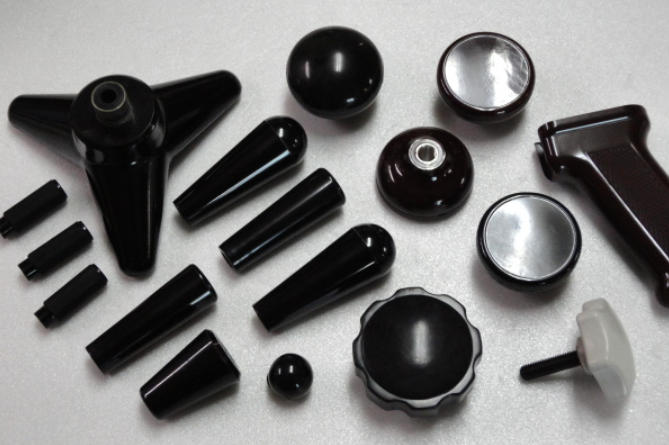
Advantages of Phenolic Resin Bakelite: Why It Outperforms Other Materials
Bakelite stands out among thermosets and thermoplastics for its unbeatable combination of durability, cost-effectiveness, and performance. Here’s why it’s the top choice for tough applications:
- Phenolic Heat Resistance Benefit: Handles 150–200°C continuous use (vs. 80–120°C for ABS plastic)—perfect for toasters, engine components, and industrial ovens.
- Bakelite Dimensional Stability: Shrinks only 0.5–1.5% during curing (vs. 2–5% for nylon), ensuring parts fit perfectly even after years of use.
- Phenolic Electrical Insulation: Acts as a reliable insulator in high-voltage environments (up to 10kV)—critical for switchgear and power connectors.
- Low-Smoke Bakelite Advantage: Emits minimal smoke when heated (per UL 94 standards), making it safe for enclosed spaces like aircraft cabins.
- Cost-Effective Thermoset Value: 20–30% cheaper than PEEK (a high-performance thermoplastic) while offering similar heat resistance.
- Phenolic Creep Resistance: Maintains shape under constant stress (e.g., brake-pad backings under pressure), outlasting rubber or plastic alternatives.
Bakelite Chemical Inertness: Resists oils, solvents, and most household chemicals—ideal for automotive and industrial settings.
Phenolic Resin Bakelite Applications: Across Key Industries
Bakelite’s versatility makes it indispensable in industries where reliability under stress is non-negotiable. Our clients trust our molding expertise to create parts that solve their toughest challenges.
Industry-by-Industry Applications & Solutions
| Industry | Key Applications | Our Molding Solution |
| Electrical | Phenolic molded switchgear, electrical connector housings, RF terminals | Electrical-grade resin, UL 94 V0 compliance, tight tolerances (±0.01 mm) |
| Appliances | Bakelite cookware handles, toaster bases, steam-iron thermostats | Food-contact approved resin, heat-resistant formulations (200°C) |
| Automotive | Phenolic automotive commutators, brake-pad backings, clutch cylinders | Glass-filled Bakelite, IATF 16949 certified production, insert molding |
| Industrial | Phenolic industrial bobbins, pump components, machine guards | High-strength formulations, post-mold machining, chemical-resistant sealants |
| Aerospace | Phenolic aerospace terminal blocks, avionics housings | Low-emission PF, flame-retardant grades, full traceability |
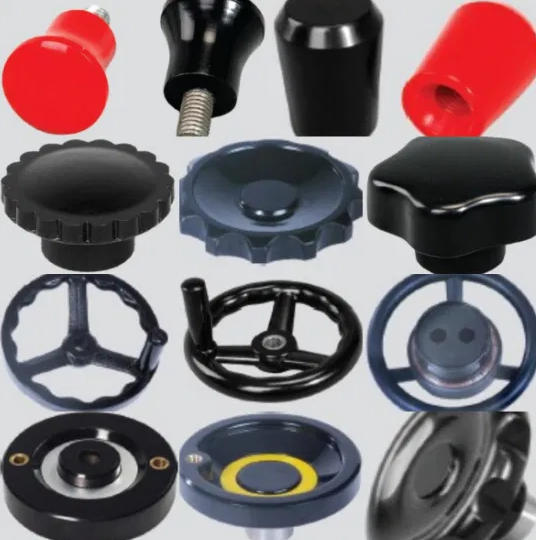
Case Study: UL-Rated Circuit-Breaker Case for an Electrical Manufacturer
A leading electrical supplier needed a UL-rated circuit-breaker case that could withstand high voltage (600V), resist heat (180°C), and meet strict dimensional standards. Their previous plastic case (ABS) failed UL testing due to poor heat resistance.
Our Solution:
- Material Selection: Chose electrical-grade phenolic molding resin with UL 94 V0 flame rating and high dielectric strength (20 kV/mm).
- Mold Design: Used a 16-cavity cold-runner mold to reduce waste and ensure uniform curing. Added precision pins to meet the ±0.01 mm tolerance for mounting holes.
- Process Optimization: Set mold temperature to 180°C, injection pressure to 1,200 bar, and cure time to 45 seconds. Added post-mold tapping for terminal connections.
Results:
- The case passed UL 489 testing (600V, 10kA short-circuit rating) with no failures.
- Dimensional accuracy stayed within ±0.008 mm (exceeding the client’s ±0.01 mm requirement).
- Production cost was 25% lower than using PEEK (the client’s initial alternative).
The client scaled up to 50,000 units/year with our high-volume lines.