
Our Precision Machining Services
Elevate your component production with our Precision Machining services—the gold standard for high precision and tight tolerances across aerospace, medical, and automotive industries.
Leveraging advanced CNC Machining technology, we craft complex geometries from metals (titanium, stainless steel), composites, and exotic materials—delivering consistent, repeatable results for prototypes to high-volume production. With optimized processes, custom solutions, and uncompromising quality, we turn your most demanding designs into reliable, high-performance parts.
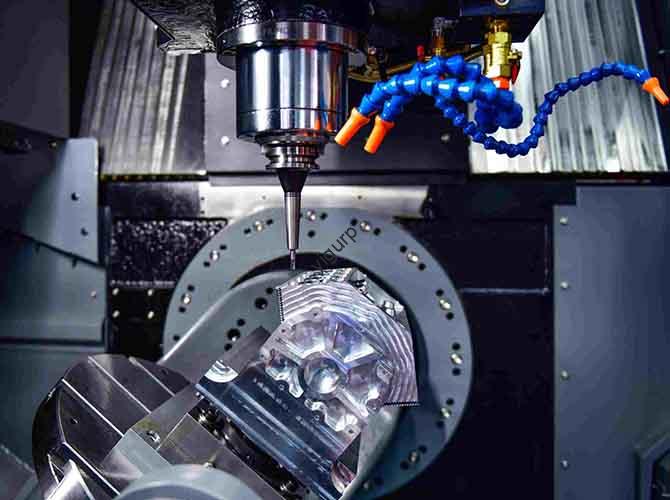
Our Precision Machining Capabilities
We offer comprehensive machining capabilities tailored to the demands of precision-focused industries, with a focus on precision levels, tolerance achievements, and flexibility. Below is a detailed breakdown of our key capacities:
| Capability | Specification |
| Precision Levels | – Positioning accuracy: ±0.001–0.01mm- Repeatability: ±0.0005–0.005mm |
| Tolerance Achievements | – Standard: ±0.005mm (metals), ±0.01mm (non-metals)- Critical parts: ±0.001mm (e.g., aerospace sensors)- Meets ISO 2768-1 (extra-fine grade) and ASME Y14.5 |
| Maximum Part Size | – Small parts: 0.5mm × 0.5mm × 0.5mm (micro-components)- Large parts: 2000mm × 1000mm × 800mm (structural components)- Weight: Up to 500kg |
| Material Thickness | – Metals: Up to 200mm (stainless steel), 150mm (titanium), 250mm (aluminum)- Non-Metals: Up to 300mm (plastics), 200mm (composites), 100mm (ceramics)- Exotic Metals: Up to 100mm (tantalum, inconel) |
| Custom Machining | – Features: Micro-holes (0.1mm diameter), complex 3D curves, threaded surfaces, undercuts- Compatibility: CAD/CAM files (DXF, DWG, STEP, STL, IGES)- Volume: Prototypes (1–50 units) to high-volume (100,000+ units/month) |
| Tooling Options | – Cutting tools: Carbide, diamond-coated, ceramic (for exotic metals)- Specialized tools: Micro-end mills (0.05mm diameter), precision reamers, thread taps- Tool changers: Automated (up to 60 tools) for high-volume runs |
| Quality Assurance | – In-line inspection systems (laser scanners, CMMs)- Statistical Process Control (SPC)- Compliance: ISO 9001, AS9100 (aerospace), ISO 13485 (medical) |
Whether you need a 0.1mm micro-hole in a titanium medical part or 10,000 aluminum automotive brackets with ±0.005mm tolerance, our capabilities scale to match your project’s complexity.
What Is Precision Machining?
Precision Machining is an advanced manufacturing technology that uses computer-controlled (or manual) tools to shape raw materials into components with extremely tight tolerances and exact specifications. Unlike conventional machining (which focuses on basic shape creation), it prioritizes high precision—often achieving tolerances as tight as ±0.001mm—to meet the strict requirements of industries like aerospace and medical devices.
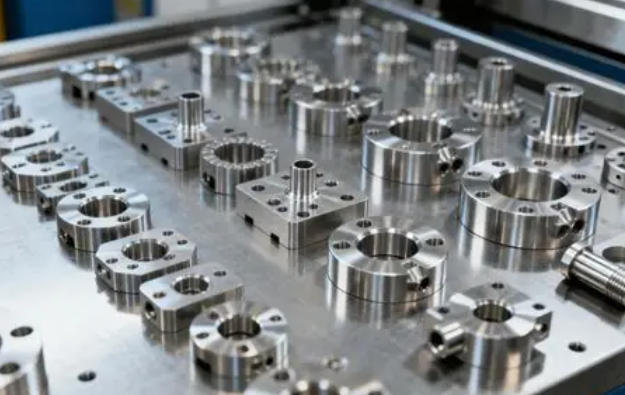
The process overview revolves around removing material with pinpoint accuracy: A design (CAD file) is translated into machine instructions, guiding cutting tools (mills, lathes, drills) to remove excess material layer by layer. The core of how it works lies in precision control—whether via CNC Machining (automated, computer-driven) or advanced manual tools (for ultra-specialized parts). Every step is calibrated to minimize error, from tool selection to final inspection.
In simple terms, think of precision machining as “micro-sculpting for industrial parts”: While conventional machining might create a bolt that fits a hole, precision machining creates a bolt that fits perfectly every time, even if the hole is smaller than a human hair. This focus on consistency and accuracy makes it indispensable for parts where even tiny deviations could cause failure (e.g., medical implants, aerospace sensors).
The Precision Machining Process (Step-by-Step)
Our step-by-step process is designed to prioritize accuracy at every stage—from design to finished part:
- Design and CAD Modeling: We start by reviewing your CAD model (or creating one from sketches/specifications). Our engineers optimize the design for precision machining—e.g., ensuring features like micro-holes are accessible to tools and tolerances are realistic for the chosen material. For complex parts, we use 3D simulation to test feasibility.
- CAM Programming: The CAD model is imported into CAM software (Mastercam, SolidWorks CAM) to generate optimized tool paths. We select tools, speeds, and feeds based on material (e.g., slow speeds for titanium, high speeds for aluminum) and program sequential operations (milling → drilling → turning) to minimize setup time.
- Setup and Calibration: The workpiece is secured in custom fixture design (e.g., vacuum chucks for thin parts, hydraulic clamps for heavy metals) to prevent movement. We calibrate tools and machines using laser interferometers and ball bars—ensuring CNC Programming aligns with CAD specifications to within ±0.001mm.
- Machining Execution: The machine runs the CAM program, with real-time monitoring via CNC software. For high-precision parts, we use coolant systems (flood for metals, mist for plastics) to reduce heat distortion. Operators oversee the process, adjusting parameters if needed (e.g., slowing feed rates for hard exotic metals).
- Post-Machining Inspection: Parts undergo rigorous quality control—100% inspection for critical components (e.g., medical implants) using CMMs (Coordinate Measuring Machines), optical comparators, and surface profilometers. We verify dimensions, tolerances, and surface finish against CAD data.
- Finishing (if required): Parts move to surface treatment (e.g., polishing, anodizing) before a final inspection to ensure finishes meet requirements.
Tolerances & Quality Assurance
Tolerances and accuracy standards are the foundation of precision machining—especially for parts used in safety-critical industries. Our precision levels and tolerance ranges are tailored to your material and application, backed by rigorous measurement techniques and quality control processes:
| Material | Tolerance Range | Accuracy Standard Used | Measurement Technique | Inspection Methods |
| Stainless Steel | ±0.001–0.005mm | ISO 2768-1 (extra-fine), ASME Y14.5 | CMM + Laser Scanner | 100% inspection for critical parts |
| Titanium | ±0.001–0.008mm | ISO 2768-1 (extra-fine), AMS 4928 | CMM + Optical Comparator | 100% inspection + stress testing |
| Aluminum | ±0.003–0.01mm | ISO 2768-1 (fine), AMS 2750 | CMM + Digital Calipers | Sampling (5%) for high-volume |
| ABS Plastic | ±0.005–0.02mm | ISO 2768-1 (fine), ASTM D638 | CMM + Micrometer | Sampling (10%) for prototypes |
| Exotic Metals (Inconel) | ±0.002–0.006mm | ISO 2768-1 (extra-fine), AS9100 | CMM + X-Ray Fluorescence | 100% inspection + material verification |
| Ceramics | ±0.003–0.01mm | ISO 2768-1 (fine), ASTM C242 | Optical Profilometer + CMM | 100% inspection (brittle material) |
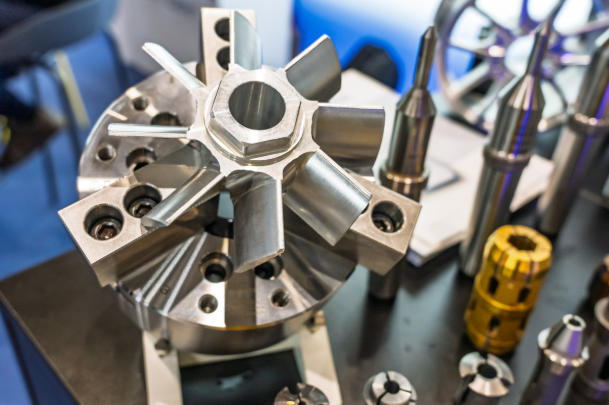
Our quality control processes include:
- Pre-machining: Inspecting raw materials for defects (e.g., cracks in titanium, impurities in exotic metals) and verifying material composition (via X-ray fluorescence).
- In-process: Real-time monitoring of tool paths, temperatures, and cutting forces; periodic checks with calipers/micrometers.
Post-machining: 100% inspection for critical parts (medical/aerospace); statistical sampling for high-volume orders. We also document every step (machining parameters, inspection results) for compliance.
Key Advantages of Precision Machining
Compared to conventional machining or additive manufacturing, Precision Machining offers unmatched benefits for high-performance parts:
- High Precision: Achieves tolerances as tight as ±0.001mm—critical for parts like medical implants (where fit directly impacts patient safety) or aerospace sensors (where accuracy affects flight performance).
- Consistency and Repeatability: CNC-driven processes ensure every part is identical—even for high-volume orders (e.g., 100,000 automotive brackets). This eliminates variation that causes assembly issues.
- Complex Geometries: Handles intricate features (micro-holes, undercuts, 3D curves) that are impossible with conventional tools. For example, we can machine a titanium turbine blade with 100+ precision-cooling holes.
- Reduced Setup Time: Automated tool changers and CAM programming cut setup time by 50–70% compared to conventional machining—speeding up production for both prototypes and high-volume runs.
- Increased Efficiency: Optimized tool paths and high-speed spindles reduce per-part machining time. For aluminum parts, we achieve speeds up to 15,000 RPM—3x faster than conventional methods.
- Versatility: Works with almost any material (metals, non-metals, exotics, ceramics)—making it a one-stop solution for diverse projects (e.g., a medical device with titanium components and plastic casings).
- Cost-Effectiveness: While upfront costs are higher than conventional machining, reduced waste (precision cutting minimizes material loss) and fewer defects lower long-term costs—especially for high-volume orders.
- Quality and Reliability: Rigorous quality control and compliance with industry standards (ISO 13485, AS9100) ensure parts meet strict performance requirements—reducing the risk of failures in the field.
Industry Applications
Precision Machining is used across industries that demand high-performance, reliable parts. Here are its most common applications:
| Industry | Common Uses | Key Benefit of Precision Machining |
| Aerospace | Turbine blades (titanium/inconel), sensor housings, structural brackets | High precision for flight safety |
| Automotive | Engine components (steel), transmission parts (brass), electronics enclosures (aluminum) | Consistency for mass production |
| Medical Devices | Orthopedic implants (titanium), surgical tools (stainless steel), device casings (plastic) | Biocompatibility + tight tolerances |
| Industrial Manufacturing | Machine tooling (steel), conveyor system parts (aluminum), hydraulic valves (brass) | Durability for heavy use |
| Electronics | Circuit board connectors (copper), heat sinks (aluminum), micro-components (plastics) | Precision for small, dense parts |
| Defense | Weapon components (steel), vehicle armor parts (titanium), communication equipment (composites) | Reliability in harsh environments |
| Tool and Die Making | Injection molds (steel), stamping dies (carbide), custom cutting tools | Complex geometry + long tool life |
| Prototyping | Rapid prototypes of new products (plastics/aluminum) | Fast turnaround + design flexibility |
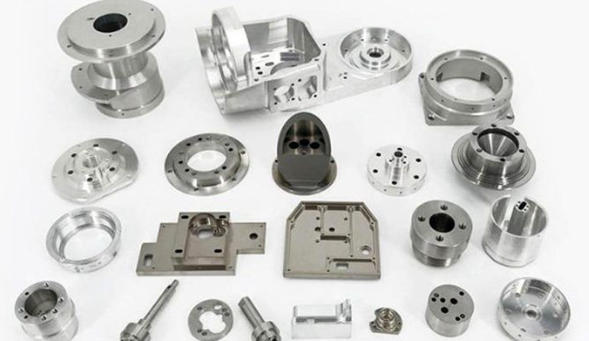
Case Studies: Precision Machining Success Stories
Our Precision Machining services have solved complex challenges for clients across aerospace, medical, and automotive industries. Below are two successful projects showcasing our expertise in tight tolerances and complex geometries:
Case Study 1: Aerospace Turbine Blade Manufacturer (Inconel Blades)
- Challenge: The client needed 500 inconel turbine blades for jet engines—each with 120 precision-cooling holes (0.8mm diameter), a curved airfoil, and a tolerance of ±0.002mm. Inconel (an exotic metal) is heat-resistant but difficult to machine; the client’s previous supplier failed to meet tolerances (holes were misaligned by 0.01mm) and had a 6-week lead time.
- Solution: We used 5-axis milling (A/B rotary axes) to machine each blade in one setup—eliminating alignment errors. For the cooling holes, we used micro-drills (diamond-coated) and peck drilling to avoid tool breakage. We optimized tool paths for inconel (slow feed rates: 10 mm/min, high spindle speed: 3,000 RPM) and used flood coolant (100 bar) to reduce heat. Our quality team inspected each blade with a CMM and laser scanner to verify hole position and airfoil shape.
- Results:
- 100% of blades met the ±0.002mm tolerance—hole misalignment dropped from 0.01mm to 0.001mm.
- Lead time shortened from 6 weeks to 2 weeks—helping the client meet their engine production schedule.
- The client’s engine efficiency improved by 5% (thanks to precise cooling hole placement, which optimized airflow).
- Client Testimonial: “The precision of these blades is unmatched. The cooling holes are perfectly aligned, and the lead time saved our production line. We’ve made them our exclusive supplier for inconel components.” — David L., Aerospace Engineering Manager.
- Before and After: Previous blades had uneven airfoils and misaligned holes; our blades featured smooth, consistent curves and holes that matched CAD specifications exactly.