
Our CNC Hobbing Services
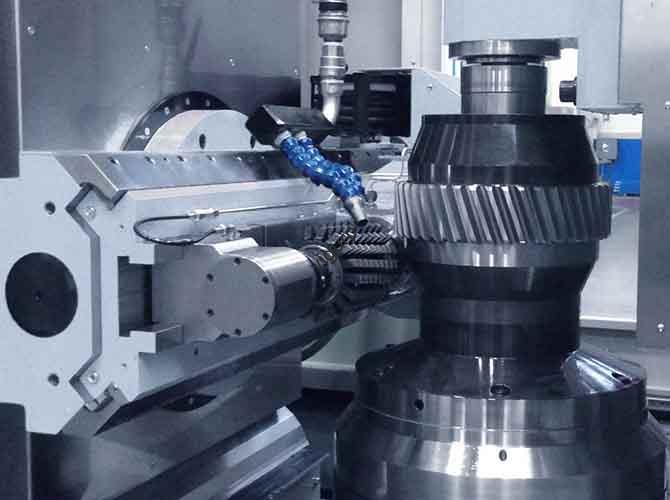
Our CNC Hobbing services set the standard for high-precision gear production—combining advanced CNC Technology with decades of expertise in the Hobbing Process.
Whether you need custom Gear Types, tight Gear Tolerances, or scalable production for critical transmission components, we transform raw materials into gears that drive reliability. Trust our proven Precision Gear Machining capabilities to meet your industry’s strictest performance standards, on time and within budget.
Our Capabilities: What We Can Do for You
We’ve invested in state-of-the-art CNC hobbing machines and trained our team to handle diverse gear manufacturing needs—from prototype development to mass production. Below is a detailed breakdown of our core capabilities:
| Capability Category | Details | Specifications |
| CNC Hobbing Services | Production of straight, helical, worm, and spline gears; supports external and internal gear cutting | Gear diameter range: 10mm – 1200mm; Number of teeth: 5 – 200 |
| Precision Gear Machining | Tight control over tooth profile accuracy, pitch, and backlash | Profile tolerance: ISO 5 (AGMA 10); Pitch error: ±0.005mm; Backlash: 0.01mm – 0.1mm |
| Machining Capacity | 24/7 production with quick hob changeovers (under 20 minutes) for different gear types | Up to 500 small gears (≤50mm diameter) or 100 large gears (≥500mm diameter) per 8-hour shift |
| Gear Types Expertise | Specialized setups for standard and custom gear designs | Straight gears, helical gears, worm gears, splines, bevel gear blanks, planetary gears |
| Custom Gear Support | In-house engineering team translates CAD models into hobbable gear designs | Accepts all major CAD formats (STEP, IGES, DWG, SolidWorks); offers design optimization for manufacturability |
Whether you need 50 prototype helical gears for a new electric vehicle or 10,000 worm gears for industrial conveyors, our capabilities scale to match your timeline and quality goals.
What Is CNC Hobbing?
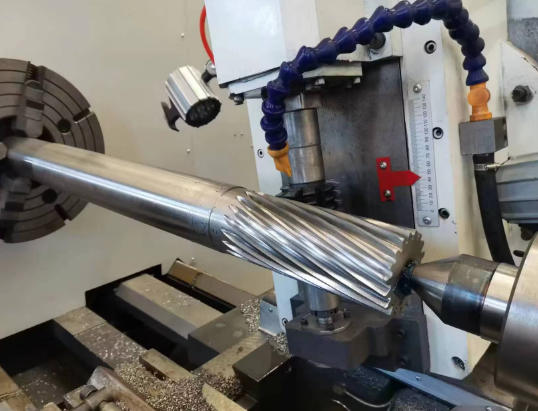
CNC Hobbing is a specialized subtractive manufacturing process designed exclusively for producing gears—one of the most critical components in mechanical transmission systems. Unlike manual gear cutting (which relies on operator skill and is prone to inconsistency), it uses CNC Technology (Computer Numerical Control) to automate the movement of a cutting tool called a “hob.”
At its core, the Hobbing Process works by rotating both the hob (a cylindrical tool with helical cutting teeth) and the workpiece (the gear blank) in a synchronized manner. As the hob feeds into the blank, its teeth progressively cut the gear’s teeth profile—whether it’s straight, helical, or worm gears. This synchronization ensures each tooth has identical spacing, shape, and depth—key for smooth gear operation.
In short, Gear Hobbing (powered by CNC) is the gold standard for high-volume, high-precision gear production. It eliminates human error, ensures consistency across batches, and delivers gears that fit and function seamlessly in everything from small motors to heavy industrial machinery.
The CNC Hobbing Process: Step-by-Step
Our CNC Process follows a structured, quality-focused workflow to ensure every gear meets your exact specifications. Each step is automated but monitored by our gear engineers to catch inconsistencies early:
- Design & Programming: Convert your gear’s CAD model (or technical drawing) into a CNC-compatible program. Our team optimizes the hob path, speed, and feed rate to minimize material waste and maximize tooth precision—critical for gear performance.
- Workpiece Preparation: Clean the gear blank (raw material) and secure it in a CNC chuck or fixture. We pre-measure the blank’s diameter, thickness, and hardness to confirm it meets production requirements.
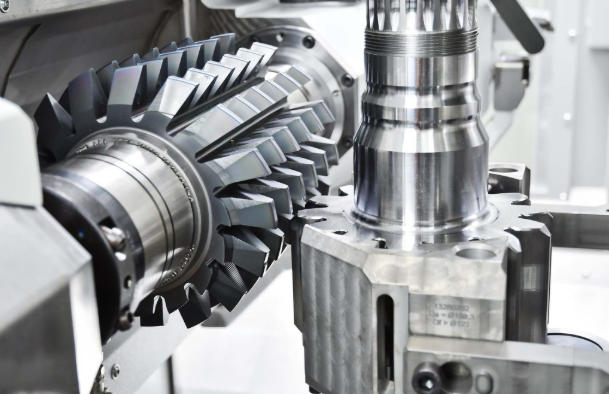
- Hob Setup: Select the appropriate hob (material: high-speed steel for soft metals, carbide for hard alloys) based on the gear’s material and tooth profile. The hob is mounted on the machine’s spindle and calibrated for correct alignment.
- Gear Cutting Process: The CNC machine executes the program: the hob and gear blank rotate in synchronized motion, while the hob feeds axially into the blank. This step cuts the gear’s teeth to the exact depth and profile specified.
- Deburring & Inspection: Remove any sharp edges (burrs) from the gear’s teeth using automated deburring tools. We then inspect the gear using a gear measuring machine (GMM) to verify tooth profile, pitch, and backlash. If it meets standards, it moves to Gear Surface Treatment (if needed).
Materials: What Works for CNC Hobbing?
Not all materials are suitable for gear manufacturing—we focus on options that balance machinability, strength, wear resistance, and cost. Below are the Common Gear Materials we process, along with their key Material Properties:
| Material Type | Examples | Material Properties (Why It Works) | Ideal Gear Applications |
| Ferrous Metals | Carbon Steel (1045), Alloy Steel (4140), Stainless Steel (304) | High tensile strength; good wear resistance; compatible with hobbing tools | Industrial gearboxes, automotive transmissions, heavy machinery |
| Non-Ferrous Metals | Aluminum (6061), Brass (C36000) | Lightweight; low friction; easy to hob (reduces cycle time) | Small motors, consumer electronics, precision instruments |
| Alloys | Titanium Alloy (Ti-6Al-4V), Nickel Alloy (Inconel 718) | High heat resistance; corrosion resistance; strength at extreme temperatures | Aerospace engines, marine propulsion systems, oil/gas pumps |
| Powder Metals | Sintered Steel (FC-0208) | Cost-effective for high-volume production; consistent density | Automotive starter gears, household appliance gears |
Our Material Selection experts help you choose the best option for your gear’s end-use—weighing factors like operating temperature, load capacity, and environmental conditions (e.g., moisture, chemicals).
Tolerances: How We Control Gear Precision
Gear Tolerances are the allowable deviations from a gear’s designed dimensions (e.g., tooth profile, pitch, backlash). For gears, tight tolerances are non-negotiable—even small deviations can cause noise, vibration, or premature failure in transmission systems.
Our Tolerance Control system uses three layers of precision to meet even the strictest industry standards (ISO/AGMA):
- Pre-Machining Calibration: We calibrate our CNC hobbing machines daily using certified master gears (accuracy: ISO 3) to ensure hob alignment and synchronization are precise.
- In-Process Monitoring: Sensors on the machine measure tooth pitch and depth in real time, adjusting hob speed or feed rate if deviations occur.
- Post-Machining Inspection: Our quality team uses a gear measuring machine (GMM) to scan every gear’s tooth profile, pitch circle diameter, and backlash. We reject any gear that falls outside your specified Tolerance Levels.
Below are our standard Gear Tolerances for common applications:
| Application | Profile Tolerance (ISO) | Pitch Error | Backlash | Surface Roughness (Ra) |
| General Industrial | ISO 7 (AGMA 8) | ±0.01mm | 0.05–0.1mm | 1.6–3.2 μm |
| Automotive | ISO 6 (AGMA 9) | ±0.007mm | 0.03–0.08mm | 0.8–1.6 μm |
| Aerospace/Medical | ISO 5 (AGMA 10) | ±0.005mm | 0.01–0.05mm | 0.4–0.8 μm |
Advantages of CNC Hobbing: Why It’s Better Than Other Gear Cutting Methods
Compared to alternative gear cutting processes (e.g., gear shaping, milling), CNC Hobbing offers unique benefits that save time, reduce costs, and improve gear quality. Here are the top Advantages of CNC Hobbing:
- Precision Advantages: CNC synchronization ensures every tooth on a gear (and every gear in a batch) has identical profile and spacing. This eliminates “tooth-to-tooth variation”—a common issue with manual methods that causes gear noise and wear. For high-precision applications (e.g., aerospace), this is non-negotiable.
- Cost Advantages: CNC hobbing is faster than most other gear cutting processes—one machine can produce up to 500 small gears per shift. It also uses fewer tools (a single hob can cut multiple gears) and generates less waste, cutting production costs by 20–30% for high-volume runs.
- Quality Advantages: The hobbing process creates a smooth, consistent tooth surface finish (Ra 0.8–3.2 μm) that requires minimal secondary finishing. This reduces lead times and ensures gears operate quietly and efficiently.
- Flexibility: CNC programs are easy to modify—we can switch between Gear Types (e.g., straight to helical) in under 30 minutes (no need for new fixtures). This is perfect for small-batch projects or rapid prototyping.
Applications Industry: Where CNC Hobbing Makes a Difference
CNC Hobbing Uses span nearly every industry that relies on mechanical transmission systems—gears are the “workhorses” that transfer power from motors to moving parts. Below are the top Industry Sectors we serve, with real-world examples:
| Industry | Application Fields | Specific Gears We Produce |
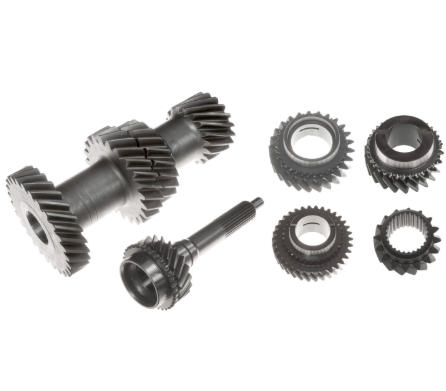
| Automotive | Transmissions, engines, steering systems, brakes | Helical transmission gears, planetary gears, differential gears |
| Aerospace | Jet engines, landing gear, flight control systems | High-temperature alloy gears, worm gears for actuation systems |
| Industrial | Conveyors, pumps, compressors, gearboxes | Large helical gears (≥500mm diameter), spline shafts, reduction gear sets |
| Medical | Surgical robots, diagnostic equipment, patient lifts | Small precision gears (≤20mm diameter), low-noise gears |
| Renewable Energy | Wind turbine gearboxes, solar tracking systems | Heavy-duty planetary gears, large worm gears for wind turbines |
In each sector, our hobbing services ensure gears perform under extreme conditions—from high speeds (aerospace engines) to heavy loads (wind turbines).
Case Studies: Real Success Stories
Our CNC Hobbing Services have solved complex gear manufacturing challenges for clients across industries. Below are two short Case Studies that highlight our impact:
Case Study 1: Automotive Transmission Manufacturer
A leading car maker struggled with noisy transmission gears produced via manual shaping. The gears (alloy steel 4140) had inconsistent tooth pitch (error: ±0.02mm), causing vibration and customer complaints. We switched them to our CNC hobbing process, delivering gears with ±0.007mm pitch error (ISO 6 tolerance). Results:
- 80% reduction in transmission noise
- 90% decrease in warranty claims related to gear failure
- 25% faster production (24/7 automation)
Case Study 2: Wind Turbine Gearbox Supplier
A client needed large helical gears (diameter: 1000mm; material: alloy steel 4340) for wind turbine gearboxes. Their previous supplier used milling, which took 10 hours per gear and had high waste (15%). Our CNC hobbing process cut production time to 3 hours per gear and reduced waste to 5%. Results:
- 67% faster lead times
- 66% lower material costs
Gears met ISO 5 tolerance (AGMA 10) for wind energy standards