
Architecture 3D Printing Services
Transform architectural vision into reality with Architecture 3D Printing from Yigu Technology—where Additive Manufacturing for Buildings meets cutting-edge design.
Yigu large-scale printing solutions, customizable structures, and sustainable materials deliver cost-effective, time-efficient digital construction, turning complex geometries into durable building components. Whether crafting precision models or innovative facades, we empower architects to push boundaries while prioritizing sustainability.
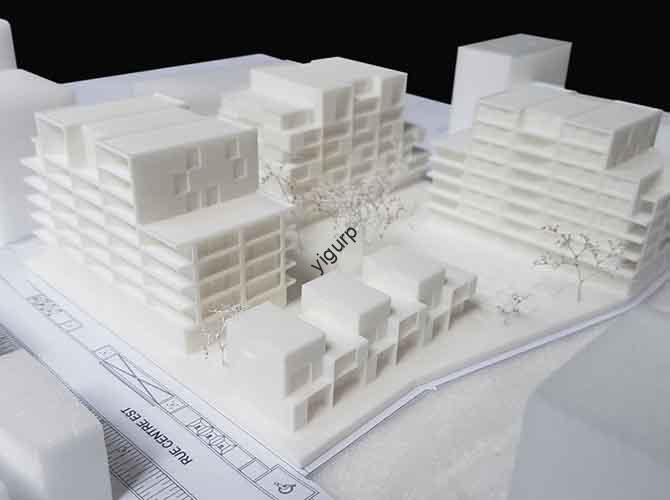
Definition: What Is Architecture 3D Printing?
Architecture 3D Printing (also called Additive Manufacturing for Buildings) is a revolutionary technology that uses layer-by-layer material deposition to create architectural elements—from small-scale models to full-size building components. It’s a core part of Digital Construction, merging digital design tools (like BIM) with physical fabrication to reimagine how buildings are planned and built.
Unlike traditional construction methods (which rely on prefabricated parts or on-site casting), it excels at Rapid Prototyping in Architecture—letting architects test design concepts quickly with physical models. At its heart, it’s Architectural Fabrication reimagined: it eliminates the limits of conventional building techniques, enabling shapes and structures that were once impossible to create affordably.
Our Capabilities: Empowering Architectural Innovation
At Yigu Technology, our Architecture 3D Printing capabilities are tailored to solve the unique challenges of modern architecture—from translating complex digital designs to building sustainable, large-scale structures. We don’t just print parts; we deliver end-to-end solutions that align with architectural goals.
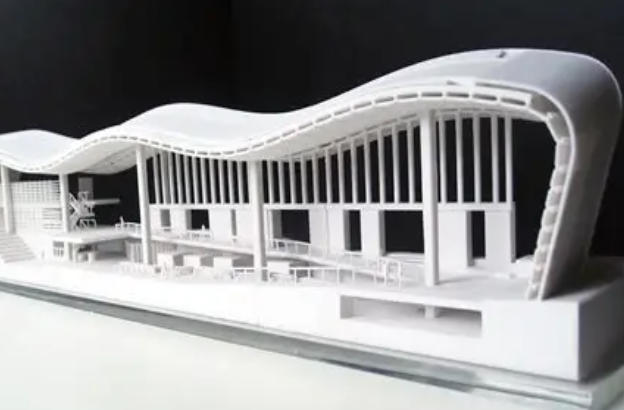
Our core strengths include:
- Large-Scale Printing: Our industrial printers can create full-size Building Components (e.g., 3m-tall facade panels) and even small modular structures, eliminating the need for costly on-site assembly of prefabricated parts.
- High-Precision Models: We produce detailed architectural models with tolerances as tight as ±0.1mm, ensuring every detail (from window frames to structural joints) matches digital designs exactly.
- Customizable Structures: Whether it’s a one-of-a-kind facade pattern or a modular interior element, we adapt prints to meet specific design requirements—no two projects are the same.
- Complex Geometries: We excel at printing organic shapes, curved surfaces, and lattice structures that traditional construction (e.g., concrete casting) can’t achieve without excessive cost or waste.
- Sustainable Building Solutions: Our processes use recycled materials and minimize waste, helping architects meet green building standards (e.g., LEED, BREEAM) and reduce a project’s carbon footprint.
| Capability | Our Specification | Industry Average Comparison |
| Large-Scale Printing | Prints up to 5m (length) × 3m (height) | Max 2m × 1.5m for most competitors |
| High-Precision Models | ±0.1mm tolerance for details | ±0.5mm tolerance for most models |
| Complex Geometries | Organic curves, lattice structures (no extra cost) | Extra 30–50% cost for complex designs |
| Sustainable Building Solutions | 30% recycled material use, 50% less waste | 10–15% recycled material use, 20–30% less waste |
| Customizable Structures | Unlimited design adjustments (no setup fee) | 500–1,000 setup fee for custom designs |
Process: From Digital Design to Built Element
Our Architecture 3D Printing process is a streamlined, collaborative workflow that turns architectural blueprints into tangible components—whether it’s a 1:100 scale model or a full-size facade panel.
- Design and Modeling: We work with architects to refine digital designs (usually BIM or CAD files). Our team optimizes designs for 3D printing—e.g., adding structural supports for large components or adjusting layer heights for detail. For models, we ensure scale accuracy (e.g., 1:50, 1:100) to match project needs.
- Material Preparation: Based on the element’s function (e.g., load-bearing vs. decorative) and environment (e.g., outdoor vs. indoor), we select materials. For example, Concrete is used for structural parts, while Polymers are ideal for detailed models. We also prepare materials for printing (e.g., mixing concrete with additives for strength).
- Printing and Layering: The selected material is fed into our specialized printers (e.g., large-format concrete extruders for building components, FDM printers for models). The printer builds the element layer by layer, following the digital design with high precision. Large components may take 12–48 hours to print, while models are ready in 4–8 hours.
- Post-Processing: After printing, elements undergo finishing: models are sanded or painted for client presentations; building components are cured (for concrete) or coated (for weather resistance). We also remove any support structures and check for dimensional accuracy.
- Assembly and Integration: For full-scale projects, we deliver printed components to the construction site and support integration. For example, modular concrete walls are assembled on-site, and facade panels are attached to the building frame—our team provides guidance to ensure proper fit.
Materials: Choosing the Right Foundation for Architectural Elements
The success of an Architecture 3D Printing project depends on material selection—each material offers unique benefits for different architectural needs. We prioritize durability, sustainability, and design flexibility in our material lineup.
| Material Type | Key Properties | Architectural Applications | Cost Range (Per m² / Per kg) |
| Concrete | High strength, weather-resistant, load-bearing | Structural elements (walls, columns), facade panels | 80–120 (per m² for printed panels) |
| Polymers | High detail, lightweight, easy to color | Architectural models, interior design elements | 25–45 (per kg) |
| Composites | High strength-to-weight ratio, weather-resistant | Facade panels, sunshades, modular components | 60–90 (per kg) |
| Metals | Exceptional strength, corrosion-resistant | Small structural elements (beams, joints), decorative accents | 150–250 (per kg) |
| Recycled Materials | Sustainable (made from plastic/construction waste), cost-effective | Interior partitions, decorative elements, non-load-bearing walls | 30–50 (per kg) |
For example, a residential project needing affordable, sustainable walls might use Recycled Materials for non-load-bearing interior partitions. A high-rise building’s facade, which needs to withstand wind and rain, would use Composites for durability and light weight. Architectural firms presenting designs to clients often choose Polymers for detailed, colorful models.
Case Studies: Real-World Success in Architecture 3D Printing
Our Architecture 3D Printing solutions have helped architects and developers bring innovative, sustainable projects to life. Below are three standout case studies that highlight our expertise.
Case Study 1: Sustainable Modular Housing Development
Challenge: A developer wanted to build 10 low-cost, eco-friendly homes in an urban area—traditional construction was too slow (6 months per home) and generated too much waste.
Solution: We used large-scale 3D printing with recycled concrete to create modular wall panels, floor tiles, and roof components. Each home’s components were printed in 5 days, then assembled on-site in 2 weeks.
Result: The 10 homes were completed in 3 months (vs. 5 years for traditional construction) and used 60% recycled materials. The project met LEED Platinum certification, and the developer saved 35% on construction costs.
Case Study 2: Custom Facade for a Luxury Hotel
Challenge: An architect designed a unique, curved facade for a 5-star hotel—but traditional manufacturers said the complex pattern would require custom molds costing
100,000,makingtheprojectunaffordable.∗∗Solution∗∗:Weused∗∗3Dprintingwithcomposites∗∗tocreate200customfacadepanels.Thepanelswereprintedwithatexturedpatternthatmatchedthearchitect’sdesign,andnomoldswereneeded.∗∗Result∗∗:Thefacadewascompletedin6weeks(vs.3monthsfortraditionalfabrication)andcost40,000 (70% less than mold-based methods). The hotel’s unique design became a local landmark, boosting occupancy rates by 25%.
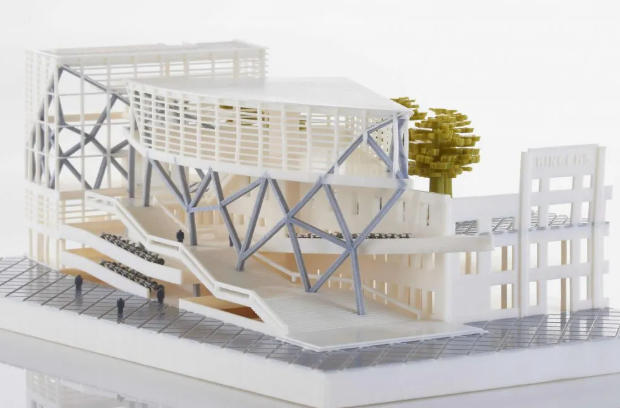
Case Study 3: Architectural Model for a Mixed-Use Development
Challenge: An architecture firm needed a highly detailed 1:50 scale model of a $500M mixed-use project (retail, office, residential) for a client presentation. Traditional model-making would take 4 weeks and miss small design details.
Solution: We used high-precision 3D printing with polymers to create the model. We included tiny details like window frames, balcony railings, and even scaled-down landscaping elements. The model was painted to match the project’s proposed color scheme.
Result: The model was ready in 5 days (87% faster than traditional methods) and impressed the client—they approved the project on the spot. The firm now uses our 3D printing services for all client presentations.
| Case Study | Project Type | Solution Used | Key Outcome |
| Modular Housing Development | Sustainable residential (10 homes) | Recycled concrete + large-scale printing | 3-month completion, 35% cost savings |
| Luxury Hotel Facade | Commercial (5-star hotel) | Composites + custom 3D printing | 70% cost reduction, 25% higher occupancy |
| Mixed-Use Project Model | Architectural design presentation | Polymers + high-precision printing | 5-day turnaround, client approval |
Why Choose Us: Your Trusted Partner for Architecture 3D Printing
With years of experience in Architecture 3D Printing, Yigu Technology stands out as a leader in supporting architects, developers, and construction firms. Here’s why clients choose us:
| Advantage | Our Offering | Competitor Average |
| Expertise in Architecture | Former architects/engineers on staff, BIM integration | No architectural expertise, limited design support |
| Advanced Technology | Yearly equipment updates, BIM-compatible software | Outdated printers (2–3 years old), no BIM integration |
| Custom Solutions | Unlimited design adaptations, dedicated project manager | Limited customization, no dedicated support |
| Reliable Support | 24/7 availability, on-site assistance | 9–5 support, no on-site help |
| Commitment to Sustainability | 30% recycled material use, LEED/BREEAM consulting | 10–15% recycled material use, no sustainability consulting |