
Prototyping 3D Printing Services
Supercharge your product development with Prototyping 3D Printing—where rapid prototyping meets precision and speed. At Yigu Technology, we turn design concepts into tangible, functional prototypes, from early-stage concept models to rigorous engineering prototypes.
Whether you’re a startup refining a new gadget or a large firm testing a component, our solutions deliver fast turnaround, custom prototype designs, and cost savings that cut your product development timeline by half.
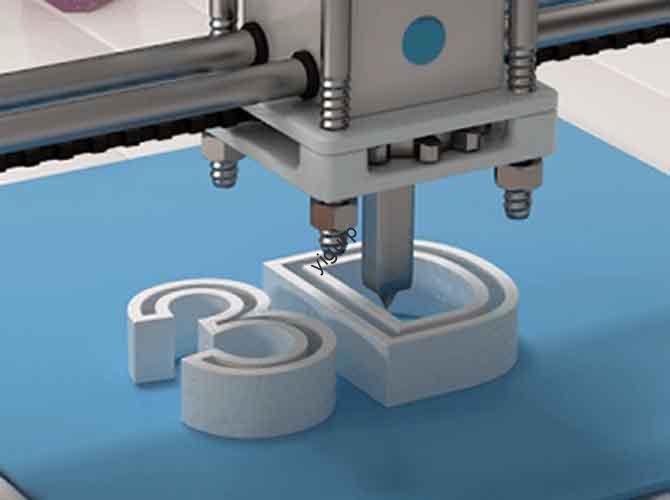
Definition: What Is Prototyping 3D Printing?
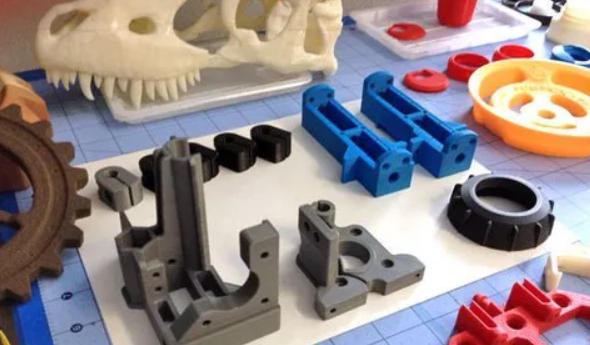
Prototyping 3D Printing (also called additive manufacturing prototypes) is a game-changing technology that builds physical prototypes layer by layer using digital designs. Unlike traditional prototyping methods—such as CNC machining or handcrafting, which are slow and limited in complexity—this process enables rapid prototyping by turning digital files into physical models in hours or days.
At its core, it relies on digital prototyping—using 3D modeling software to refine every detail of a product before physical production. This technology supports concept modeling (for early-stage design validation) and functional prototyping (for testing real-world performance), eliminating the guesswork from product development. From simple fit-check models to complex, moving parts, Prototyping 3D Printing turns “what if” into “what is” faster than ever.
Our Capabilities: Bringing Prototype Visions to Life
At Yigu Technology, we’ve tailored our Prototyping 3D Printing capabilities to meet the diverse needs of product developers, engineers, and designers. Our services balance precision, speed, and flexibility to keep your project on track.
| Capability | Key Features | Ideal Use Cases |
| High-Precision Printing | Layer resolution as low as 0.02mm; dimensional tolerance (±0.05mm) for critical features | Engineering prototypes (e.g., small mechanical parts), fit and finish models |
| Custom Prototype Designs | Fully personalized to your CAD files; support for iterative tweaks (e.g., adjusting a part’s size or shape) | Unique product concepts, industry-specific prototypes (e.g., medical devices, automotive parts) |
| Complex Geometries | Prints intricate shapes (e.g., hollow structures, interlocking parts, lattice designs) that traditional methods can’t achieve | Functional prototypes with moving components, lightweight aerospace parts |
| Rapid Turnaround | 24–48 hour delivery for simple prototypes; 3–5 days for complex, multi-part models | Emergency design tweaks, tight product launch deadlines |
| Quality Assurance | In-line dimensional scanning; material strength testing; visual inspection for surface finish | Critical prototypes (e.g., medical device components, safety-related parts) |
Process: From CAD File to Testable Prototype
Creating a 3D-printed prototype is a streamlined, collaborative process that keeps your team in control. At Yigu Technology, we follow these steps to ensure your prototype meets your goals:
- Design and Modeling: We start by reviewing your CAD file (or helping you create one if needed). Our team uses software like SolidWorks or Fusion 360 to refine the design—for example, adding support structures for complex geometries or adjusting dimensions for printability. We share a digital preview for your approval before printing.
- Material Selection: Based on your prototype’s purpose (e.g., testing strength, mimicking final appearance), we recommend the best material. For example, we use ABS for impact-resistant functional prototypes or resins for high-detail fit and finish models. We explain material properties (e.g., tensile strength, heat resistance) to help you decide.
- Printing and Layering: The 3D printer builds the prototype layer by layer, using processes like FDM (for polymers) or SLA (for resins). We monitor the print to ensure accuracy—especially for complex geometries or high-precision parts. For multi-part prototypes, we print components separately for easier assembly.
- Post-Processing (Finishing, Machining): After printing, we refine the prototype to match your needs. This may include sanding (for smooth surfaces), painting (to match final product color), or CNC machining (for tight tolerances). For metal prototypes, we may add a protective coating to prevent corrosion.
Testing and Validation: We help you test the prototype—whether it’s checking fit (e.g., if two parts assemble correctly), measuring strength (e.g., with a tensile test), or simulating real-world use (e.g., drop-testing a phone case). We share test results and help you iterate on the design if needed.
Materials: Choosing the Right Material for Your Prototype
The material you choose defines your prototype’s performance, appearance, and cost. At Yigu Technology, we offer a range of materials tailored to different prototyping needs:
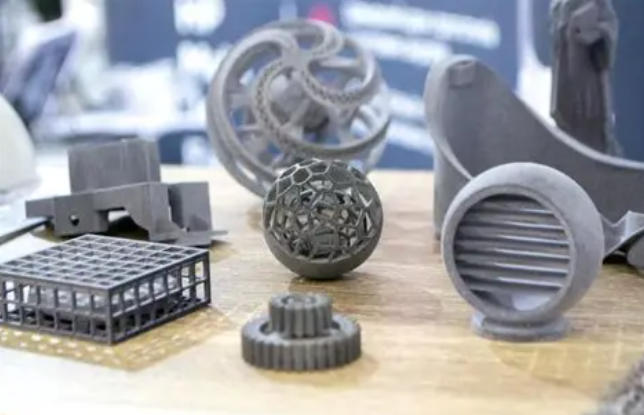
| Material Type | Examples | Key Benefits for Prototyping | Best For |
| PLA (Polylactic Acid) | Standard PLA, colored PLA, matte PLA | Low cost; easy to print; eco-friendly (biodegradable); smooth finish | Concept models, early-stage fit checks, low-stress user testing models |
| ABS (Acrylonitrile Butadiene Styrene) | Standard ABS, impact-resistant ABS | High impact strength; heat resistance (up to 90°C); durable for repeated testing | Functional prototypes (e.g., tool handles, toy parts), engineering prototypes for low-temperature testing |
| Resins | Standard resin, high-temp resin, flexible resin | Ultra-high detail (up to 0.02mm layer height); smooth surface; mimics plastic or rubber | Fit and finish prototypes (e.g., consumer electronics casings), small, detailed parts (e.g., jewelry components) |
| Metals (Aluminum, Stainless Steel) | 6061 Aluminum, 316 Stainless Steel | High strength; heat resistance (up to 300°C); corrosion-resistant | Engineering prototypes (e.g., automotive components, aerospace parts), prototypes for high-stress testing |
| Flexible Materials | TPU (Thermoplastic Polyurethane), TPE | Soft, bendable; mimics rubber or silicone; resistant to tearing | Prototypes of flexible parts (e.g., phone case edges, grip handles), user testing models for tactile feedback |
Data Insight: In 2024, 68% of our prototype clients chose PLA for concept models (due to cost and speed), while 72% of functional prototype projects used ABS or metals (for durability and testability).
Advantages: Why Prototyping 3D Printing Beats Traditional Methods
Prototyping 3D Printing solves the biggest pain points of traditional prototyping—slow speed, high cost, and limited design flexibility—giving your team a competitive edge:
- Rapid Iteration: Traditional prototyping can take weeks to produce a single model—3D printing lets you iterate in days. A startup developing a smartwatch tested 5 design versions of a strap in 2 weeks using 3D printing, compared to the 2 months it would have taken with CNC machining.
- Cost-Effective Production: 3D printing has no upfront tooling costs, making it 50–70% cheaper than traditional methods for small-batch prototypes. A medical device company saved $12,000 by using 3D-printed prototypes instead of machined ones for their new insulin pen design.
- Enhanced Design Flexibility: You can print shapes that traditional methods can’t—like hollow parts (to reduce weight), lattice structures (for strength without bulk), or interlocking components (to test assembly). An industrial designer used 3D printing to create a prototype of a foldable ladder with integrated hinges—something impossible to make with handcrafting.
- Reduced Development Time: By speeding up prototyping and iteration, 3D printing cuts overall product development time by 30–50%. A consumer goods brand launched their new water bottle 4 months earlier than planned, thanks to 3D-printed prototypes that let them validate designs fast.
- Improved Accuracy: 3D printing follows your CAD file exactly, ensuring every prototype matches your digital design. A robotics firm used 3D-printed prototypes of a gear system to achieve a 0.05mm tolerance—critical for the gears to work together smoothly—something hard to replicate with traditional machining.