
yigu Transparent Plastics CNC Machining Services
At Yigu Technology, we specialize in Transparent Plastics CNC Machining that delivers exceptional optical transparency and tight dimensional accuracy.
Whether you need custom prototypes or high-volume production of engineering plastics parts, our advanced CNC Milling and CNC Turning processes, paired with strict quality assurance, ensure your components meet the most demanding industry standards—on time and at competitive prices.
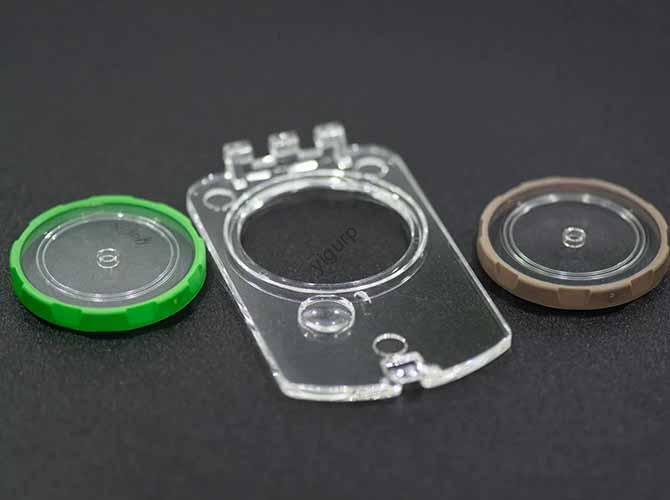
Our Capabilities: Delivering Precision for Every Project
At Yigu Technology, our Transparent Plastics CNC Machining capabilities are designed to meet the unique needs of both prototyping and full-scale production. We leverage state-of-the-art equipment and a team of skilled technicians to turn your designs into high-quality parts.
| Capability | Description | Typical Use Cases |
| Precision Machining | Achieves tight tolerances (down to ±0.005mm) for highly accurate parts. | Optical lenses, medical device components |
| Custom Machined Parts | Creates one-of-a-kind components tailored to your exact design specs. | Custom display enclosures, aerospace parts |
| High-Tolerance Machining | Ensures consistency across batches, critical for mass production. | Automotive light covers, electronic housings |
| Complex Part Production | Handles intricate geometries (e.g., undercuts, thin walls) with ease. | Industrial equipment dials, consumer goods |
| Rapid Prototyping | Delivers functional prototypes in days, accelerating your product development cycle. | Design validation, market testing |
| Production Machining | Scales to high-volume orders while maintaining quality. | Consumer electronics parts, medical tools |
| Quality Assurance | Uses advanced inspection tools (e.g., coordinate measuring machines) to verify every part meets standards. | All industries, especially medical/aerospace |
What Is Transparent Plastics CNC Machining?
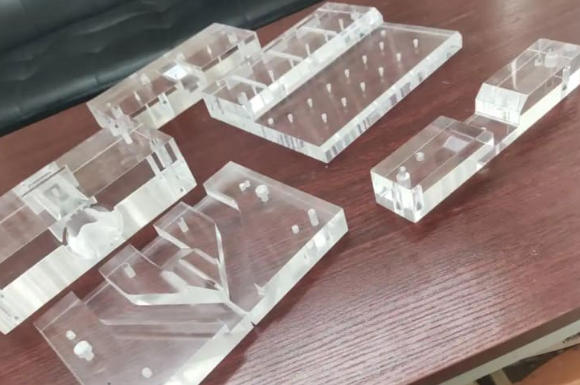
Transparent Plastics CNC Machining combines the versatility of transparent plastics (materials like acrylic (PMMA) and polycarbonate (PC)) with the precision of CNC Machining—a computer-controlled manufacturing method that uses pre-programmed software to guide cutting tools. Unlike traditional manual machining, CNC Machining eliminates human error, ensuring consistent results even for complex part geometries.
Key terms in this field include:
- Optical Polymers: Transparent plastics engineered for superior light transmission, critical for applications like lenses or display panels.
- Engineering Plastics: Durable, high-performance plastics (e.g., PETG, polystyrene (PS)) that withstand harsh conditions (heat, chemicals) while maintaining transparency.
- Material Properties: Characteristics like thermal stability, chemical resistance, and scratch resistance that define how a transparent plastic performs in machining and end-use.
Applications: The diverse industries (automotive, medical, electronics) that rely on machined transparent plastic parts.
Process: Step-by-Step Transparent Plastics CNC Machining
The Transparent Plastics CNC Machining process involves careful planning and execution to preserve the material’s clarity and structural integrity. Below is a breakdown of the key steps:
- Design & Programming: Engineers convert your 3D model into a CNC-compatible program, optimizing tool paths to minimize waste and ensure precision.
- Material Selection: Choose the right transparent plastic (e.g., PMMA for clarity, PC for impact resistance) based on your application.
- Machine Setup: Technicians mount the material onto the CNC machine, calibrate tools, and perform test runs to confirm accuracy.
- CNC Milling: Uses rotating cutting tools to remove material from the workpiece, ideal for creating flat surfaces, slots, or complex 3D shapes.
- CNC Turning: Spins the material while a cutting tool shapes it, perfect for cylindrical parts like tubes or rods.
- Drilling Operations: Creates holes in the part using specialized drill bits, with precision controls to avoid cracking the plastic.
- Cutting Techniques: Uses high-speed, low-force cutting to prevent melting or chipping—critical for maintaining transparency.
- Grinding Processes: Smooths rough edges or surfaces to enhance clarity and meet tolerance standards.
- Inspection: Every part undergoes rigorous testing (e.g., dimensional checks, visual inspections) to ensure it meets specifications.
Tool selection is a key part of the process: we use carbide tools for most transparent plastics, as they stay sharp longer and reduce heat buildup—protecting the material’s properties.
Materials: Choosing the Right Transparent Plastic for Your Project
Not all transparent plastics are the same. Each material has unique properties that make it suitable for specific applications. The table below compares the most common options used in CNC Machining:
| Material | Common Name | Transparency (Visible Light) | Impact Resistance | Thermal Resistance (Max Temp) | Key Advantages | Typical Applications |
| Polycarbonate (PC) | PC | 85-90% | Excellent | 120°C (248°F) | High impact resistance, shatterproof | Automotive light covers, safety goggles |
| Acrylic (PMMA) | Acrylic | 92-95% | Moderate | 80-90°C (176-194°F) | Superior clarity, easy to polish | Display cases, optical lenses, signage |
| PETG | PETG | 90-92% | Good | 70-80°C (158-176°F) | Chemical resistant, easy to machine | Medical devices, food packaging, electronic enclosures |
| Polystyrene (PS) | PS | 88-90% | Low | 60-70°C (140-158°F) | Low cost, lightweight | Disposable labware, consumer goods |
| Specialty Transparent Grades | N/A | 90-95% | Varies (High-Low) | 100-150°C (212-302°F) | Tailored properties (e.g., UV resistance, flame retardancy) | Aerospace components, high-performance medical tools |
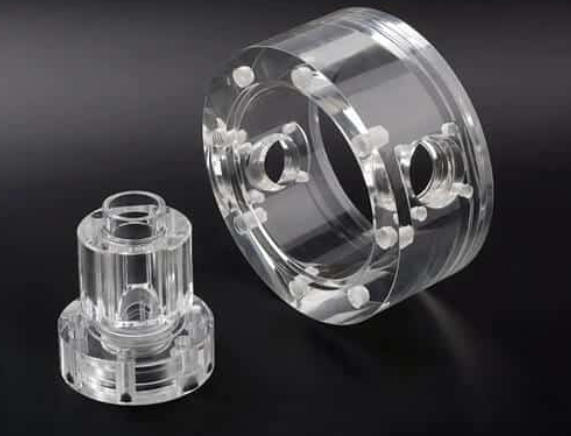
When selecting a material, consider factors like optical transparency (for lenses or displays), chemical resistance (for medical devices), and thermal stability (for automotive or industrial parts).
Advantages: Why Choose Transparent Plastics CNC Machining?
Transparent Plastics CNC Machining offers a range of benefits over other manufacturing methods (e.g., injection molding) or materials (e.g., glass). Here’s why it’s the preferred choice for many industries:
- High Clarity: Machined transparent plastics maintain their optical properties, making them ideal for applications where visibility is key (e.g., lenses, display panels).
- Optical Transparency: Materials like PMMA and PC transmit up to 95% of visible light—comparable to glass—while being lighter and more durable.
- High Strength-to-Weight Ratio: Transparent plastics are significantly lighter than glass or metal but offer comparable strength, reducing overall product weight (critical for automotive/aerospace).
- Chemical Resistance: Many transparent plastics (e.g., PETG) resist chemicals like acids or solvents, making them suitable for medical or lab applications.
- Thermal Stability: Materials like PC can withstand high temperatures (up to 120°C), making them ideal for outdoor or industrial use.
- Dimensional Stability: Proper machining and heat treatment ensure parts don’t warp or shrink over time, even in harsh conditions.
- Cost-Effective Production: For small-to-medium batches, CNC Machining avoids the high tooling costs of injection molding—saving you money on prototyping or custom orders.
- Design Flexibility: CNC Machining can create complex shapes (e.g., undercuts, thin walls) that are impossible with other methods, letting you bring innovative designs to life.
Applications Industry: Where Transparent Plastics CNC Machining Shines
The versatility of Transparent Plastics CNC Machining makes it valuable across a wide range of industries. Below are some of the key sectors we serve, along with common applications:
- Automotive: Machined parts like light covers, instrument panel lenses, and sensor housings—benefiting from PC’s impact resistance and PMMA’s clarity.
- Aerospace: Components like cockpit displays, window panels, and sensor enclosures—requiring tight tolerances and thermal stability.
- Electronics: Transparent enclosures for devices (e.g., smartwatches, IoT sensors), touchscreen panels, and LED light covers.
- Medical: Clear components like syringe barrels, surgical tool handles, and diagnostic equipment lenses—needing chemical resistance and sterility.
- Industrial Equipment: Transparent guards, control panel windows, and fluid level indicators—requiring durability and dimensional stability.
- Consumer Goods: Phone cases, cosmetic packaging, and toy parts—benefiting from design flexibility and low production costs.
- Optical Devices: Camera lenses, binocular components, and laser system parts—demanding high clarity and precision tolerances.
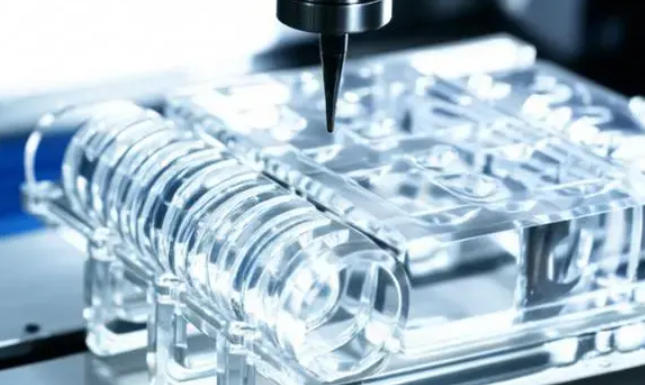
Case Studies: Real-World Success with Transparent Plastics CNC Machining
At Yigu Technology, we’ve helped clients across industries solve complex manufacturing challenges with Transparent Plastics CNC Machining. Here are three examples:
Case Study 1: Automotive Light Cover for a Leading OEM
- Challenge: The client needed a lightweight, shatterproof light cover with high clarity to replace glass. The part required tight tolerances (±0.05mm) to fit existing fixtures.
- Solution: We used polycarbonate (PC) for its impact resistance and CNC Milling to create the complex shape. Post-machining, we applied a scratch-resistant coating to enhance durability.
- Result: Delivered 10,000 parts in 4 weeks, with 100% inspection pass rate. The client reported a 30% weight reduction and 50% lower breakage rate compared to glass.
Case Study 2: Medical Diagnostic Lens for a Biotech Firm
- Challenge: The client needed a clear lens for a diagnostic device that could withstand repeated sterilization (autoclaving) and maintain optical transparency.
- Solution: We selected PMMA for its clarity and chemical resistance. Using CNC Turning, we machined the lens to precision tolerances (±0.005mm) and added an anti-reflective coating to improve light transmission.
- Result: The lens passed 500+ sterilization cycles without degradation. The client’s device achieved a 20% improvement in diagnostic accuracy due to the lens’s clarity.