
Our Polymer CNC Machining Services
At Yigu Technology, we specialize in top-tier Polymer CNC Machining—delivering custom, high-tolerance parts from premium Engineering Plastics and High-Performance Polymers.
Our blend of advanced CNC Milling/Turning processes, strict quality control, and fast turnaround times makes us the go-to partner for industries ranging from aerospace to medical. Whether you need rapid prototyping or large-scale production, we turn your designs into durable, precise components that drive success.
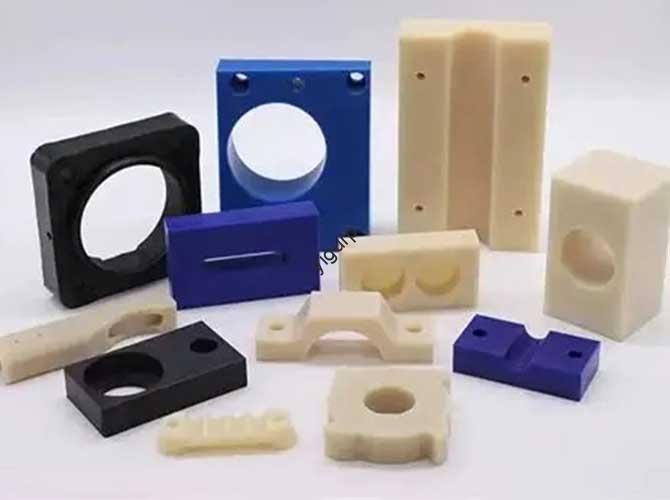
Our Polymer CNC Machining Capabilities
Yigu Technology’s Polymer CNC Machining services are built to solve complex manufacturing challenges. Our capabilities span from small, intricate parts to large-scale production runs, with a focus on quality and efficiency. Below is a breakdown of our core offerings:
| Capability | Key Features | Typical Applications |
| Precision Machining | Achieves tolerances as tight as ±0.005mm; ideal for high-accuracy parts | Medical device components, optical parts |
| Custom Machined Parts | Tailored to unique designs (2D/3D models); supports low-to-high volumes | Industrial equipment brackets, electronic enclosures |
| High-Tolerance Machining | Complies with ISO 9001 standards; verified via advanced inspection tools | Aerospace fasteners, automotive sensors |
| Complex Part Production | Handles undercuts, thin walls, and intricate geometries | Robotics components, consumer goods parts |
| Rapid Prototyping | Turns designs into physical parts in 1–3 days; reduces development time | Product testing, design validation |
| Production Machining | Scales to 10,000+ units/month; maintains consistency across batches | Mass-produced consumer electronics parts |
| Quality Assurance | In-line inspections (CMM, optical scanners); 99.8% defect-free rate | All industries, especially medical/aerospace |
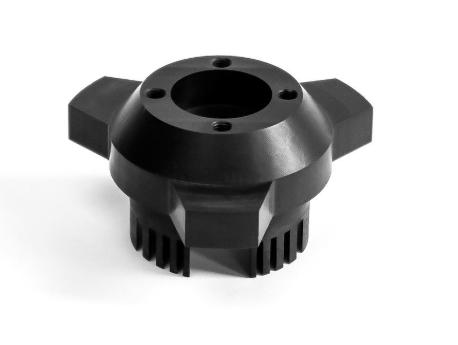
The Polymer CNC Machining Process
Our Polymer CNC Machining process is a structured, quality-driven workflow designed to deliver reliable results. Each step is optimized to minimize waste, reduce lead times, and ensure precision:
- Design & File Preparation: We convert customer CAD files (STEP, IGES) into machine-readable code (G-code), accounting for Material Properties (e.g., flexibility of PE vs. rigidity of PEEK).
- Machine Setup: Our technicians select the right tools (e.g., carbide endmills for cutting tough polymers) and secure the material to prevent warping during machining.
- CNC Milling/Turning: The primary shaping steps—CNC Milling creates complex 3D features (slots, holes), while CNC Turning produces cylindrical parts (rods, bushings).
- Drilling Operations: Precision Drilling Operations create holes with diameters as small as 0.5mm, using specialized drills to avoid cracking brittle polymers like acrylic.
- Cutting Techniques: We use high-speed cutting (HSC) for soft polymers (e.g., PP) and low-speed, high-torque cutting for High-Performance Polymers (e.g., PEEK) to prevent melting.
- Grinding Processes: Optional Grinding Processes refine surface finish, removing burrs and ensuring dimensional accuracy.
- Inspection: Every part undergoes checks using Measurement Techniques (CMM, calipers) to verify compliance with design specs.
The table below compares key process parameters for common polymers:
| Polymer | Optimal Cutting Speed (m/min) | Tool Material | Typical Coolant |
| PEEK | 50–80 | Carbide (WC-Co) | Compressed air |
| Acrylic (PMMA) | 100–150 | High-speed steel | Water-soluble |
| Polyamide (PA) | 80–120 | Carbide | Compressed air |
| Polycarbonate (PC) | 90–130 | Carbide | Water-soluble |
Materials Used in Polymer CNC Machining
Choosing the right polymer is critical to part performance. We work with a wide range of materials, from common thermoplastics to specialized grades, each selected for its unique properties. Below is a breakdown of our most popular materials:
| Material | Abbreviation | Key Properties | Typical Industry Applications |
| Polyether Ether Ketone | PEEK | High thermal stability (up to 260°C), chemical resistance | Aerospace parts, medical implants |
| Polyphenylene Sulfide | PPS | Flame retardant, low moisture absorption | Electronic connectors, automotive sensors |
| Polyether Sulfone | PES | Transparency, impact resistance | Optical devices, food processing equipment |
| Polysulfone | PSU | Heat resistance (up to 180°C), FDA compliance | Medical devices, beverage industry parts |
| Polyamide (Nylon) | PA | High strength, wear resistance | Industrial gears, consumer goods |
| Polycarbonate | PC | Transparency, high impact strength | Electronic enclosures, safety goggles |
| Acrylic | PMMA | Optical clarity, scratch resistance | Display cases, automotive lighting |
| Polyethylene | PE | Chemical resistance, low friction | Medical tubing, packaging components |
| Polypropylene | PP | Lightweight, moisture resistance | Automotive bumpers, consumer containers |
| Specialty Polymer Grades | N/A | Customized (e.g., glass-filled, conductive) | Robotics, high-tech electronics |
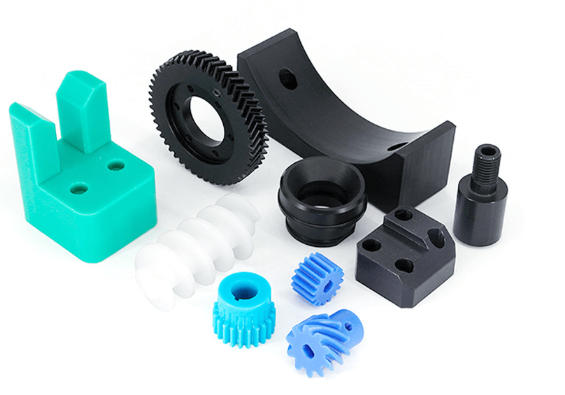
Advantages of Polymer CNC Machining
Polymer CNC Machining offers unique benefits over other manufacturing methods (e.g., injection molding, 3D printing) that make it ideal for diverse applications:
- High Strength-to-Weight Ratio: Polymers like PEEK have strength comparable to metals but weigh 50–70% less—critical for aerospace/automotive (reduces fuel consumption).
- Chemical Resistance: Most polymers (e.g., PE, PPS) resist acids, oils, and solvents—ideal for chemical processing or medical devices (sterilization-compatible).
- Thermal Stability: High-Performance Polymers (PEEK, PES) withstand temperatures up to 300°C—suitable for engine components or industrial ovens.
- Dimensional Stability: Polymers have low thermal expansion, ensuring parts maintain shape in extreme temperatures (e.g., outdoor electronics).
- Cost-Effective Production: No expensive molds (unlike injection molding) makes it cost-efficient for low-to-medium volumes (1–10,000 units).
- Design Flexibility: Handles complex geometries (undercuts, thin walls) that are hard to achieve with other methods—great for custom parts.
- Wide Range of Materials: Compatible with over 50 polymer grades, allowing customization for specific needs (e.g., FDA-compliant for medical, flame-retardant for electronics).
Industry Applications of Polymer CNC Machining
Our Polymer CNC Machined parts power critical operations across 8 major industries, each leveraging the process’s precision and material versatility:
| Industry | Key Applications | Materials Used | Why Polymer CNC? |
| Automotive | Sensor housings, battery components, interior parts | PA, PC, PPS | Lightweight, chemical resistance (oil/fluids) |
| Aerospace | Engine parts, cable insulation, structural brackets | PEEK, PES, PSU | High thermal stability, low weight |
| Electronics | PCB enclosures, connector housings, heat sinks | PC, PMMA, specialty conductive polymers | Dimensional accuracy, insulation |
| Medical | Implant components, surgical tools, device housings | PEEK (biocompatible), PE | FDA compliance, sterilization resistance |
| Industrial Equipment | Gears, valves, pump parts | PPS, PA (glass-filled) | Wear resistance, durability |
| Consumer Goods | Phone cases, appliance parts, sporting goods | PC, PMMA, PP | Aesthetics, impact resistance |
| Sporting Goods | Bicycle components, golf club parts, protective gear | PA, PC | Strength, lightweight |
| Optical Devices | Lens holders, display covers, light guides | PMMA, PC | Optical clarity, precision |
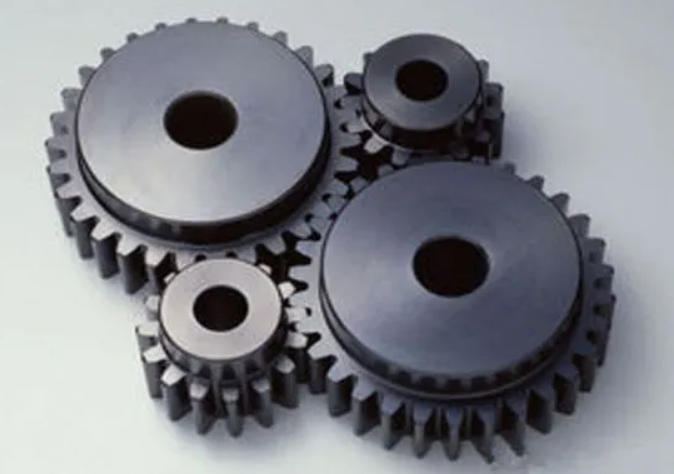
Case Studies: Success Stories with Polymer CNC Machining
Case Study 1: Aerospace Fuel System Components
- Challenge: A leading aerospace client needed lightweight, chemical-resistant parts for fuel systems (tolerances ±0.01mm).
- Solution: We used PEEK (high thermal/chemical resistance) and CNC Milling with in-line CMM inspections.
- Result: 100% compliance with aerospace standards; parts reduced weight by 40% vs. metal alternatives.
Case Study 2: Medical Surgical Instrument Housings
- Challenge: A medical device maker required FDA-compliant, sterilization-resistant housings for surgical tools.
- Solution: Polymer CNC Machining of biocompatible PEEK with polishing (for easy cleaning) and heat treatment (to reduce stress).
- Result: Parts passed 1,000+ autoclave cycles; delivered in 5 days (30% faster than competitors).