
Our Copper CNC Machining Services
Yigu Technology’s Copper CNC Machining services blend advanced precision machining with deep expertise in copper material to deliver high-quality, custom components.
Whether for electronics, automotive, or medical industries, we use state-of-the-art equipment to turn copper stock into complex, accurate parts—combining durability, efficiency, and cost-effectiveness to meet your most demanding manufacturing needs.
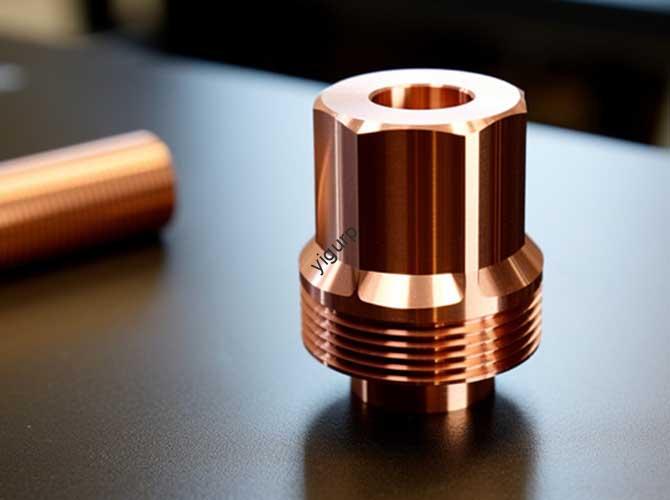
Our Capabilities: Yigu Technology’s Copper Machining Strengths
Yigu Technology stands out in Copper CNC Machining with a range of Copper CNC Machining Capabilities designed to tackle diverse client needs. Our expertise in handling copper’s distinct characteristics, paired with Advanced CNC Equipment, ensures we deliver top-tier results every time. Below is a breakdown of our key offerings:
| Capability Category | Key Features |
| Precision Machining | Achieve tight tolerances (down to ±0.001mm) for critical copper components |
| High-Quality Machining | Compliance with ISO 9001 standards, ensuring consistent part quality and performance |
| Custom Machining | Create one-off prototypes or high-volume runs (10,000+ units) tailored to unique designs |
| Complex Parts Production | Expertise in machining intricate copper parts, including thin-walled structures and detailed geometries |
| End-to-End Support | Full-service solutions: design consultation, machining, surface treatment, and quality validation |
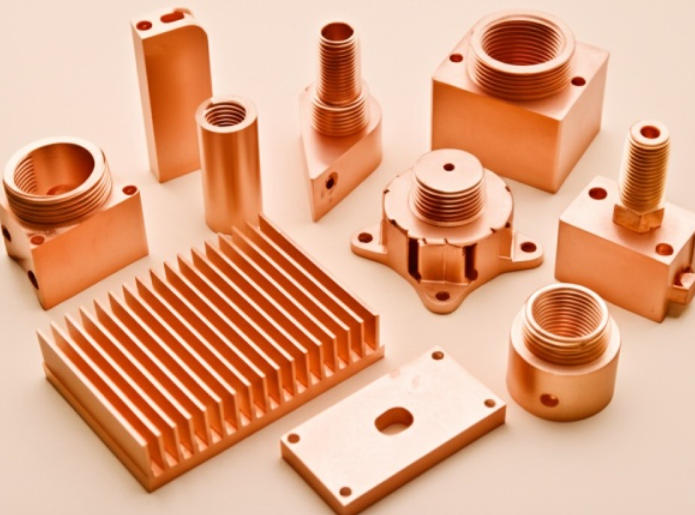
Our team’s deep understanding of copper’s behavior during machining—such as its tendency to deform under heat—allows us to optimize processes for minimal waste and maximum precision.
Process: Step-by-Step Copper CNC Machining Workflow
The Copper CNC Machining Process follows a structured sequence of Copper Machining Steps to transform raw copper into finished parts. Each stage is optimized to preserve copper’s properties and ensure accuracy:
- Design & Programming: Engineers create 3D models (using CAD software) and convert them into machine-readable G-code. This step defines tool paths for machining operations like milling (for flat surfaces) and turning (for cylindrical parts).
- Material Preparation: Raw copper stock (bars, sheets, or blocks) is cut to size and inspected for purity, ensuring it meets the chosen copper material specifications.
- Machine Setup: Technicians mount the copper onto the CNC machine, calibrate tools (e.g., drills, end mills), and test program parameters to avoid overheating— a key concern with copper’s high thermal conductivity.
- Core Machining Operations: The machine executes specialized machining techniques for copper:
- Milling: Shaping flat or curved surfaces with high-speed tools to prevent material warping.
- Turning: Creating cylindrical parts with precise diameters, using coolant to manage heat.
- Drilling: Making holes with tight tolerances, ideal for electrical connectors.
- Quality Control: Every part undergoes rigorous checks using tools like coordinate measuring machines (CMMs) to verify precision tolerances and dimensional accuracy.
- Finishing: Parts move to surface treatment (covered in Section 5) to enhance functionality or appearance.
This workflow ensures a production efficiency rate of 95%, minimizing scrap and reducing turnaround times for copper components.
Materials: Choosing the Right Copper for Your Project
Selecting the correct copper materials is critical to the performance of CNC-machined parts. Yigu Technology offers a range of copper alloys and pure copper options, each with unique properties suited to specific applications. Our material selection process focuses on matching material characteristics to client needs:
| Copper Type | Key Properties | Typical Applications |
| Pure Copper (C11000) | Excellent electrical conductivity, high malleability | Electrical wires, connectors, heat sinks |
| Brass (C36000) | Good machinability, corrosion resistance, cost-effective | Plumbing fittings, automotive parts |
| Bronze (C93200) | High strength, wear resistance, low friction | Bearings, gears, marine components |
| Phosphor Bronze (C51000) | Excellent fatigue resistance, electrical conductivity | Springs, electrical contacts |
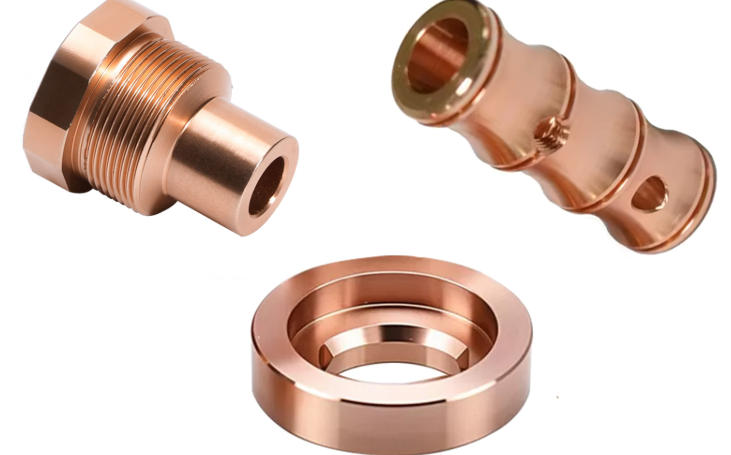
We also provide guidance on machinable copper options—for example, recommending brass for high-volume production due to its superior machinability, and pure copper for applications requiring maximum conductivity.
Surface Treatment: Enhancing Copper Part Performance
Copper Surface Treatment is a vital post-machining step that improves copper parts’ durability, conductivity, and appearance. Yigu Technology offers a range of options tailored to copper’s properties:
| Surface Treatment Method | Purpose |
| Electroplating | Coats with metals like nickel or gold to enhance corrosion resistance and conductivity |
| Polishing | Creates a smooth, reflective finish to improve aesthetics and reduce oxidation |
| Anodizing | Forms a protective oxide layer to prevent tarnishing (common for architectural parts) |
| Surface Coatings | Applies layers like epoxy or PTFE to enhance chemical resistance |
| Machined Surface Finishing | Removes machining marks to improve surface smoothness, ideal for parts requiring tight seals |
Our processes ensure machined surface finishing meets industry standards, with a 99% customer satisfaction rate for both functionality and appearance.
Tolerances: Ensuring Precision in Copper CNC Machining
Machining Tolerances—the allowable deviation from a part’s specified dimensions—are critical in Copper CNC Machining, where even small errors can compromise conductivity or fit. Yigu Technology prioritizes high-precision machining, with copper machining tolerances tailored to project needs:
| Tolerance Level | Typical Range | Industry Requirement Example |
| Standard Tolerances | ±0.01mm to ±0.1mm | Plumbing fittings, non-critical automotive parts |
| Tight Tolerances | ±0.001mm to ±0.005mm | Electrical connectors, medical components |
We adhere to global tolerance standards (e.g., ISO 2768) and use advanced quality control tools—like laser scanners—to verify tolerances. This rigorous approach ensures a 98% pass rate for parts meeting precision requirements.
Advantages: Why Choose Copper CNC Machining?
Copper CNC Machining offers a host of benefits that make it a top choice for manufacturers. Its unique combination of copper’s properties and CNC precision delivers value across industries:
- Superior Conductivity: Copper’s excellent electrical and thermal conductivity makes it ideal for electronics and heat management parts—outperforming materials like aluminum in energy transfer.
- Precision Machining Benefits: CNC technology ensures custom parts with consistent tight tolerances, even for complex designs like intricate electrical contacts.
- High-Quality Machining: Copper’s malleability allows for smooth surface finishes and detailed geometries, reducing the need for post-machining adjustments.
- Complex Designs: The process easily adapts to intricate shapes—from thin-walled heat sinks to multi-feature connectors—without compromising structural integrity.
- Cost-Effective Machining: While copper has a higher upfront cost, its durability and conductivity reduce long-term maintenance expenses. For example, copper electrical parts have a 50% longer lifespan than aluminum alternatives.
- Corrosion Resistance (with Alloys): Copper alloys like brass and bronze resist rust and chemical damage, making them suitable for outdoor or industrial applications.
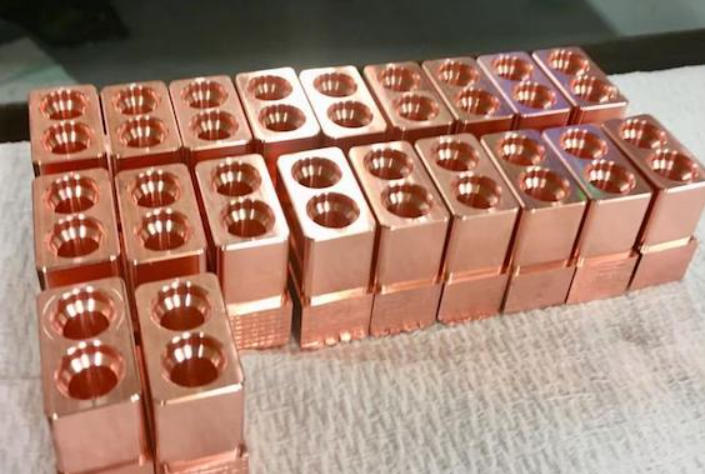
Applications Industry: Where Copper CNC Machining Shines
Copper CNC Machining Applications span a wide range of industries, thanks to copper’s versatility and unique properties. Below are key sectors we serve and their common uses for copper components:
| Industry | Application Examples |
| Electronics Industry | Electrical connectors, heat sinks, circuit board components (using pure copper or phosphor bronze) |
| Automotive Industry | Brake lines, fuel system fittings, electrical wiring (using brass or pure copper) |
| Aerospace Industry | Electrical contacts, heat exchangers, hydraulic components (using bronze or phosphor bronze) |
| Medical Industry | Surgical instruments, diagnostic device parts, electrical connectors (using corrosion-resistant copper alloys) |
| Mechanical Industry | Bearings, gears, valves (using bronze or brass for wear resistance) |
| Industrial | Plumbing fittings, pumps, industrial machinery parts (using brass for cost-effectiveness) |
Our industry-specific expertise ensures we understand unique requirements—for example, meeting RoHS standards for electronics parts or biocompatibility standards for medical components.
Case Studies: Yigu Technology’s Copper CNC Machining Success Stories
Our Copper CNC Machining Case Studies showcase how we solve real-world challenges with precision and expertise. These case examples highlight our ability to deliver results:
Case Study 1: Electronics Heat Sink Production
- Challenge: A tech firm needed 10,000 units of pure copper heat sinks with tight tolerances (±0.003mm) and a polished finish to maximize thermal conductivity.
- Solution: We used high-speed CNC milling with coolant to prevent copper warping, followed by precision polishing to enhance heat transfer. Our quality control process included thermal conductivity testing to ensure performance.
- Result: 100% of heat sinks met conductivity requirements, delivered 5 days ahead of schedule. The client reported a 30% improvement in device cooling efficiency compared to their previous aluminum heat sinks.
Case Study 2: Medical Electrical Connector Manufacturing
- Challenge: A medical device company required 500 units of phosphor bronze electrical connectors with electroplated gold surfaces (for biocompatibility) and precision tolerances (±0.002mm).
- Solution: We used CNC turning to create the connector’s cylindrical shape, followed by gold electroplating and CMM inspections to verify tolerances. Our team also ensured compliance with ISO 10993 (biocompatibility standards).
- Result: Connectors passed all medical certifications, with zero defects reported in clinical trials. The client expanded their order to 5,000 units within 6 months.