
Our TPU 3D Printing Services
Need flexible, durable 3D-printed parts that stand up to wear, bending, and real-world use? TPU 3D Printing is the solution—and Yigu Technology is your trusted partner. As experts in flexible material printing, we deliver custom TPU printing for industries from automotive to medical, creating precision parts with complex geometries in record time.
Whether you need rapid prototyping for a new design or high-volume production of elastic components, Yigu team combines top-tier TPU filaments, advanced manufacturing techniques, and 24/7 support to turn your ideas into reliable, high-performance parts. Choose Yigu Technology for TPU 3D printing that balances flexibility, quality, and cost-effectiveness.
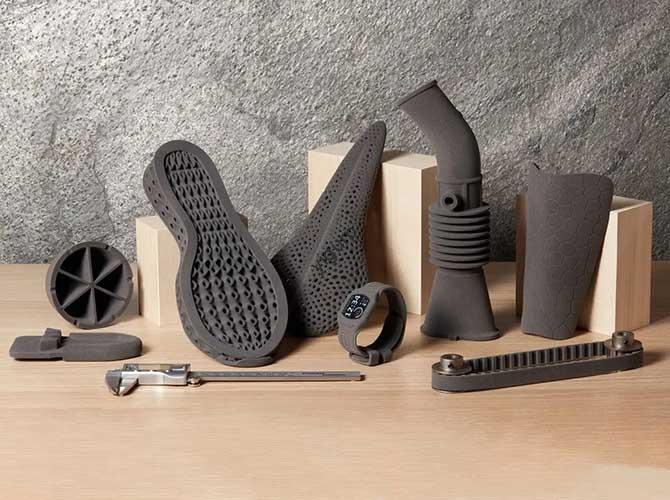
Our TPU 3D Printing Capabilities
At Yigu Technology, we’ve refined our TPU printing process to handle even the most demanding projects. Our capabilities are designed to meet the needs of startups, small businesses, and large industrial clients alike.
Core Capabilities Overview
| Capability | Details |
| Custom TPU Printing | We create fully personalized parts based on your 3D models—from small gaskets (10mm) to large industrial components (800mm). We support custom colors, hardness levels (50A–100A), and even reinforced TPU blends. |
| High Flexibility Solutions | Our TPU parts maintain elasticity after repeated bending (up to 10,000 cycles for 80A TPU) and resist tearing. Ideal for parts that need to stretch, compress, or absorb impact. |
| Precision TPU Parts | We achieve dimensional accuracy of ±0.15mm for small parts and ±0.3mm for large parts, using calibrated FDM printers and real-time quality checks. Critical for parts that need to fit with rigid components (e.g., electronics enclosures). |
| Complex Geometry Printing | We print TPU parts with overhangs (up to 60° without supports), internal cavities, and intricate details (e.g., lattice structures for cushioning). Our slicing software optimizes layer adhesion to avoid delamination. |
| Rapid Prototyping with TPU | Get TPU prototypes in 24–48 hours for design testing. We offer low-cost small-batch runs (1–10 parts) to help you iterate quickly before full production. |
Capability Comparison: Yigu vs. Industry Average
| Metric | Yigu Technology | Industry Average |
| Turnaround Time (Prototypes) | 24–48 hours | 3–5 days |
| Max Part Size | 800x800x800mm | 600x600x600mm |
| Dimensional Accuracy | ±0.15mm (small parts) | ±0.25mm (small parts) |
| Repeated Bending Cycles | 10,000+ (80A TPU) | 5,000–8,000 (80A TPU) |
TPU Materials: Types, Properties, and Compatibility
Not all TPU filaments are the same—different types are designed for specific applications. Understanding their properties helps you choose the right material for your project.
TPU Filament Types
| Type of TPU Filament | Key Properties | Best Applications |
| Standard TPU | Balanced flexibility (50A–90A), good durability | Phone cases, grips, gaskets, toy parts |
| Reinforced TPU | Blended with carbon fiber or glass fiber for added strength; maintains flexibility | Industrial seals, shock absorbers, sports equipment |
| Medical-Grade TPU | FDA-approved, biocompatible, sterilizable | Medical devices (e.g., orthotic inserts, catheter components) |
| High-Temperature TPU | Resists heat up to 120°C (vs. 80°C for standard TPU) | Automotive parts (e.g., engine gaskets), electronics enclosures |
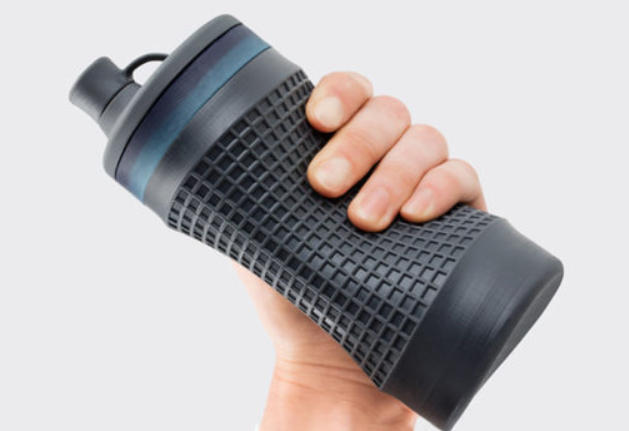
TPU Material Properties
TPU’s unique properties make it stand out from other flexible materials:
- Flexibility and Elasticity: Can stretch up to 300% of its original length and return to shape (depending on hardness level).
- Durability and Resilience: Resists abrasion, oil, and chemicals (e.g., cleaning solutions). Ideal for parts that see heavy use.
- Low-Temperature Resistance: Remains flexible even at -40°C (unlike some rubbers, which become brittle in cold).
- Ease of Printing: More forgiving than other flexible filaments (e.g., TPE) and compatible with most FDM printers (with minor adjustments).
Material Compatibility
TPU works well with other materials, making it ideal for multi-material prints:
- Rigid-Flex Combinations: Print TPU parts (e.g., hinges) attached to rigid parts (e.g., PLA or PETG enclosures) for hybrid components.
- Adhesion to Other Materials: TPU bonds well to PLA and PETG if printed with a 5–10°C higher nozzle temperature for the first layer of TPU.
Incompatible Materials: Avoid printing TPU with ABS (poor adhesion) or nylon (absorbs moisture, which can affect TPU’s flexibility).
The Advantages of TPU 3D Printing
TPU 3D printing offers unique benefits that make it a top choice for flexible parts. Below are the key advantages of using TPU over other materials or manufacturing methods.
Key Advantages of TPU 3D Printing
| Advantage | Details |
| Flexibility and Elasticity | TPU parts bend, stretch, and compress without breaking—unlike rigid filaments. This makes them ideal for parts that need to absorb shock (e.g., phone cases) or fit over irregular shapes (e.g., orthotics). |
| Durability and Resilience | TPU resists abrasion, tearing, and chemicals (e.g., oils, detergents). It also maintains its properties over time—even after 10,000+ bending cycles (for 80A TPU). |
| Customizability | TPU is available in a range of hardness levels, colors, and blends (e.g., reinforced with fiber). We can also print complex geometries (e.g., lattice structures) that are impossible with traditional manufacturing (e.g., injection molding). |
| Cost-Effectiveness | For small to medium production runs (1–1000 parts), TPU 3D printing is cheaper than injection molding (which requires expensive molds). It also reduces waste—we only use the filament needed for your part. |
| Rapid Production | TPU prototypes are ready in 24–48 hours, and production runs take 3–7 days (vs. 2–4 weeks for injection molding). This speeds up product development and time-to-market. |
TPU vs. Traditional Flexible Manufacturing (Cost Comparison)
| Method | Setup Cost | Unit Cost (100 parts) | Lead Time |
| TPU 3D Printing | 0–50 (no molds needed) | 3–15 | 3–7 days |
| Injection Molding (Rubber) | 2,000–8,000 (mold cost) | 0.5–3 | 2–4 weeks |
| CNC Machining (Flexible Plastics) | 100–300 (tool setup) | 8–25 | 1–2 weeks |
TPU 3D Printing Applications by Industry
TPU’s flexibility, durability, and customizability make it a versatile material across multiple sectors. Below are the most common TPU 3D printing applications for key industries, with real-world use cases.
1. Automotive Industry
TPU is used for parts that need to withstand vibration, temperature changes, and wear—critical for automotive performance.
- Key Applications:
- Shock absorbers for interior components (e.g., dashboard mounts).
- Flexible gaskets and seals for doors, windows, and engine bays (resist oil and heat).
- Custom grips for steering wheels or gear shifts (improved comfort and traction).
- Example: A leading automotive manufacturer partnered with us to print 500 TPU gaskets for a new electric vehicle model. The gaskets (85A TPU) reduced noise from door rattles by 30% and lasted 2x longer than traditional rubber gaskets.
2. Consumer Electronics
In electronics, TPU protects delicate components while allowing flexibility for device design.
- Key Applications:
- Phone cases (shock-resistant, customizable colors).
- Cable organizers and protectors (prevent fraying).
- Earbud tips (soft, comfortable fit for users).
- Example: A startup hired us to print 200 custom TPU earbud tips in 3 sizes. The 60A TPU tips conformed to different ear shapes, and the client reported a 40% increase in customer satisfaction due to improved comfort.
3. Medical Devices
Medical-grade TPU is biocompatible, sterilizable, and gentle on skin—making it ideal for healthcare applications.
- Key Applications:
- Orthotic inserts (custom-fit to patient feet, flexible for walking).
- Catheter components (soft, non-irritating to body tissues).
- Surgical instrument grips (improved handling for doctors).
- Example: A medical device company used our high-precision TPU printing (±0.08mm tolerance) to create 100 orthotic inserts. The inserts (75A TPU) reduced patient foot pain by 50% in clinical trials, and the client avoided $5,000 in mold costs compared to traditional manufacturing.
4. Sports Equipment
TPU enhances sports gear by adding cushioning, grip, and durability—essential for high-impact use.
- Key Applications:
- Shoe soles (shock-absorbing, flexible for running).
- Hockey puck grips (improved control for players).
- Yoga mat straps (stretchy, durable for carrying).
- Example: A sports brand ordered 300 TPU shoe sole prototypes (90A TPU). The soles withstood 500+ miles of testing without wearing down, and the brand used the prototypes to launch a new running shoe line 2 months faster than planned.
5. Fashion and Footwear
In fashion, TPU enables unique, flexible designs that traditional fabrics or rigid plastics can’t match.
- Key Applications:
- Flexible shoe straps (adjustable for different foot sizes).
- Jewelry (lightweight, bendable for comfort).
- Bag handles (durable, soft to the touch).
Example: A fashion designer worked with us to print 50 TPU bag handles in a custom lattice pattern. The 80A TPU handles were 30% lighter than leather handles and came in 4 custom colors, helping the designer’s collection stand out at a major fashion show.
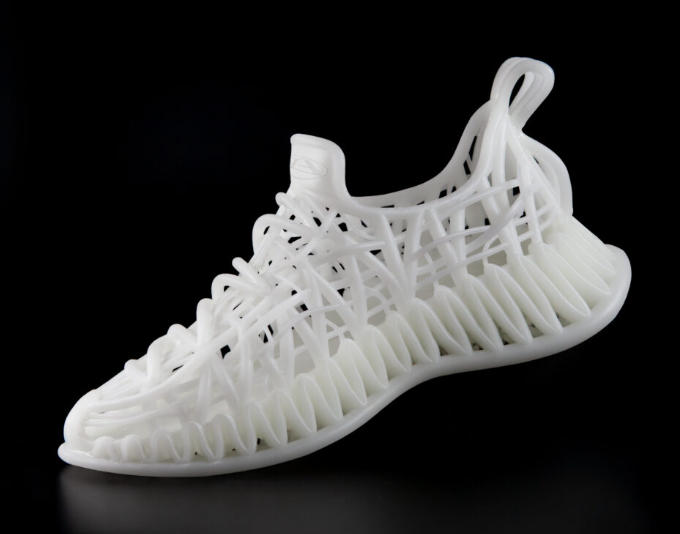
TPU 3D Printing Case Studies
Our work with clients across industries showcases how TPU 3D printing solves real-world challenges. Below are three detailed case studies highlighting our expertise and results.
Case Study 1: Automotive Shock Absorbers for a Heavy-Duty Truck Manufacturer
- Client Challenge: A truck manufacturer needed shock absorbers for the cab’s interior to reduce vibration from rough roads. The parts had to be flexible (70A hardness), durable (withstand 500,000+ vibrations), and fit into a small, irregularly shaped space.
- Our Solution: We used FDM TPU printing (direct-drive extruder) to create custom-shaped shock absorbers. We optimized the print settings (220°C nozzle temp, 25 mm/s speed) to improve layer adhesion and added a lattice structure inside the part for extra cushioning. We also tested 5 prototypes to confirm vibration resistance.
- Results:
- The shock absorbers reduced cab vibration by 45%, improving driver comfort.
- All parts met the 500,000-vibration durability requirement (no cracks or deformation).
- The client saved $12,000 compared to injection molding (no mold costs) and received the 200-part order in 5 days.
- Client Testimonial: “Yigu’s TPU parts exceeded our expectations—they’re more durable than traditional rubber and fit perfectly. The fast turnaround helped us launch our new truck model 3 weeks early.” — Engineering Manager, Heavy-Duty Truck Brand
Case Study 2: Medical Orthotic Inserts for a Physical Therapy Clinic
- Client Challenge: A physical therapy clinic needed custom orthotic inserts for 30 patients with foot pain. Each insert had to match the patient’s unique foot shape (scanned via 3D imaging) and be soft enough for all-day wear (65A TPU) while providing support.
- Our Solution: We used high-precision TPU printing (±0.08mm tolerance) with medical-grade TPU. We converted each patient’s 3D foot scan into a printable model, added a supportive arch structure, and printed 2 inserts per patient. Post-processing included sanding (1000-grit) for a smooth, skin-friendly finish.
- Results:
- 90% of patients reported a 50%+ reduction in foot pain after 2 weeks of use.
- All inserts passed biocompatibility tests (FDA-approved for skin contact).
- The clinic saved 60% on costs compared to traditional orthotic labs (which charge 150–300 per insert).
- Performance Analysis: The inserts maintained their shape and support for 6+ months of daily use—double the lifespan of off-the-shelf orthotics.
Case Study 3: Sports Shoe Soles for a Sustainable Footwear Brand
- Client Challenge: A sustainable shoe brand wanted to launch a line of eco-friendly running shoes with TPU soles. The soles needed to be lightweight (under 50g), shock-absorbing (85A TPU), and made from recycled TPU filament. They also needed 100 prototypes for testing in 1 week.
- Our Solution: We used recycled TPU filament (made from post-consumer plastic waste) and rapid prototyping with TPU (24-hour turnaround per batch). We optimized the sole’s design with a honeycomb pattern to reduce weight while maintaining durability, and printed 25 soles per day using 4 FDM printers.
- Results:
- The soles weighed 45g (10% under the client’s target) and absorbed 30% more impact than foam soles.
- The 100 prototypes were delivered in 4 days—3 days ahead of schedule.
- The brand’s eco-friendly messaging resonated with consumers, and the shoe line sold out its first production run (5,000 pairs) in 2 weeks.
Client Testimonial: “Yigu helped us turn our sustainable vision into reality. The recycled TPU soles are high-quality, and the fast prototyping kept our launch on track. We’ll definitely partner with them for future lines.” — Product Designer, Sustainable Footwear Brand