
Our PVA 3D Printing Services
Discover the versatility of PVA 3D Printing—where water-soluble innovation meets precision engineering. As a leading provider of Polyvinyl Alcohol 3D Printing solutions, yigu turn complex designs into reality with our expert-driven services.
Whether you need dissolvable supports for intricate aerospace parts, biocompatible components for healthcare, or durable prototypes for manufacturing, our PVA 3D Printing Technology delivers unmatched accuracy, flexibility, and value. From filament selection to surface finishing, we tailor every step to your industry’s unique needs—fast, reliably, and with the expertise to exceed expectations.
What Is PVA 3D Printing?
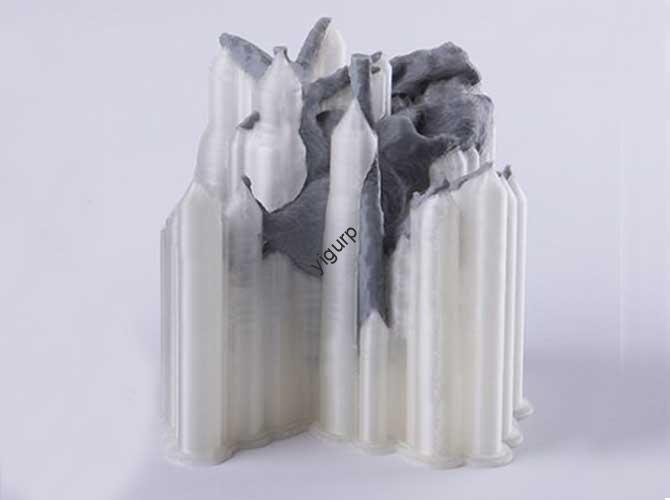
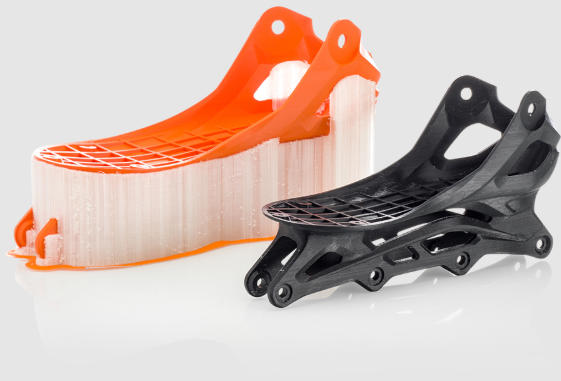
PVA 3D Printing (short for Polyvinyl Alcohol 3D Printing) is a specialized branch of additive manufacturing that uses PVA—a water-soluble, biodegradable thermoplastic—as the primary build material or support structure. Unlike non-soluble materials (like nylon or ABS), PVA dissolves completely in water, making it ideal for printing complex geometries that require temporary supports (e.g., overhangs, hollow structures) that would be hard to remove manually.
At its core, the PVA 3D Printing Concept revolves around leveraging PVA’s unique properties: it’s non-toxic, biocompatible, and easy to print with, making it a top choice for industries like healthcare and aerospace. When paired with compatible 3D printing technologies (such as FDM), it enables designs that push the boundaries of traditional manufacturing.
| Key Term | Definition |
| PVA 3D Printing Definition | An additive manufacturing process using Polyvinyl Alcohol (PVA) as a build material or soluble support. |
| Polyvinyl Alcohol 3D Printing | The full name for PVA 3D printing, emphasizing the water-soluble thermoplastic core material. |
| PVA 3D Printing Technology | The tools, software, and techniques used to print with PVA (e.g., FDM printers, water-soluble filaments). |
| PVA 3D Printing Concept | The core idea of using PVA’s solubility and biocompatibility to solve complex manufacturing challenges. |
The PVA 3D Printing Process
The PVA 3D Printing Process is a structured, step-by-step workflow that ensures consistency, accuracy, and efficiency. Unlike other 3D printing methods, it requires careful attention to water solubility and material compatibility to avoid issues like layer separation or incomplete support dissolution.
Step-by-Step Process Flow
| Step | Action | Key Details |
| 1. Design Preparation | Optimize 3D models for PVA printing (e.g., adding soluble supports for overhangs). | Use CAD software compatible with PVA’s properties (e.g., Fusion 360, SolidWorks). |
| 2. Material Selection | Choose the right PVA material (filament, resin, or composite) based on the project’s needs. | For example, use PVA resin for biocompatible parts; PVA composite for strength. |
| 3. Printer Setup | Calibrate FDM or resin printers for PVA: adjust temperature (190–220°C for filaments) and bed adhesion. | Ensure printer nozzles are clean to prevent clogs (common with PVA). |
| 4. Printing | Run the print job, monitoring layer adhesion and support structure integrity in real time. | Average print speed: 30–50mm/s for filaments; 5–10mm/s for resins. |
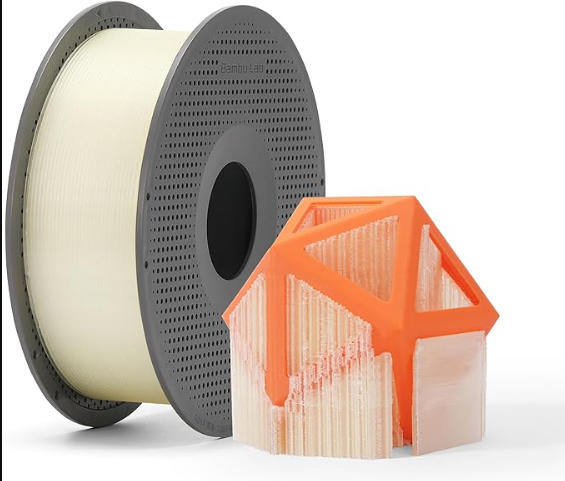
| 5. Support Removal | Submerge the printed part in water (20–40°C) to dissolve PVA supports—typically takes 2–8 hours. | Use a water bath with gentle agitation to speed up dissolution. |
| 6. Post-Processing | Dry the part and apply surface treatments (e.g., coating, smoothing) as needed. | Ensure parts are fully dry (24–48 hours) to prevent warping. |
| Process Term | Description |
| PVA 3D Printing Process Flow | The sequential steps (design to post-processing) that define PVA 3D printing. |
| PVA 3D Printing Steps | The individual actions within the process (e.g., material selection, support removal). |
| PVA 3D Printing Techniques | Specialized methods (e.g., dual-extrusion FDM for PVA supports + PLA parts). |
| PVA 3D Printing Methodology | The overarching approach to ensuring quality (e.g., real-time monitoring, standardized post-processing). |
Advantages of PVA 3D Printing
PVA 3D Printing offers unique benefits that set it apart from other 3D printing materials—from its water solubility to its biocompatibility. These advantages make it a valuable tool for industries looking to innovate, reduce costs, and solve complex manufacturing challenges.
Key Advantages & Value
| Advantage | How It Benefits You |
| PVA 3D Printing Benefits | Water-soluble supports eliminate manual removal, reducing labor costs by 30–40% and minimizing part damage. |
| PVA 3D Printing Advantages | Biocompatible options (e.g., medical-grade resins) meet healthcare standards, enabling safe use in surgical tools or implants. |
| PVA 3D Printing Strengths | PVA composites offer high tensile strength (up to 35MPa) and impact resistance, making them suitable for functional testing in automotive and aerospace. |
| PVA 3D Printing Value Proposition | Reduces lead times by 50% compared to traditional manufacturing (e.g., injection molding) for small batches (10–50 parts). |
A recent automotive client used our PVA 3D printing service to prototype a new fuel line component. They cut lead time from 4 weeks (with injection molding) to 5 days and reduced support removal labor costs by 35%.
PVA 3D Printing Case Studies
Our clients’ success stories highlight the real-world impact of PVA 3D printing. Below are three examples of how we’ve solved complex challenges using our expertise and technology.
Case Study 1: Healthcare Surgical Guides
- Client: A regional orthopedic hospital.
- Challenge: Need custom surgical guides for knee replacement surgeries—guides must be biocompatible, accurate, and easy to sterilize.
- Solution: Used medical-grade PVA resin (ISO 10993-compliant) and SLA printing to create guides tailored to each patient’s CT scans.
- Results: Reduced surgery time by 20% (from 2.5 hours to 2 hours) and improved implant alignment accuracy by 15%. The hospital now uses our service for 50+ surgeries monthly.
Case Study 2: Aerospace Engine Component Prototyping
- Client: A global aerospace manufacturer.
- Challenge: Prototype a turbine blade with internal cooling channels—traditional manufacturing couldn’t create the channels without breaking the part.
- Solution: Used dual-extrusion FDM (PVA supports + high-temperature ABS) to print the blade, then dissolved PVA supports in a 35°C water bath.
- Results: Delivered the prototype in 3 days (vs. 4 weeks with traditional methods) and validated the cooling channel design—saving the client $100,000 in tooling costs.
Case Study 3: Automotive Fixtures & Prototyping
- Client: A mid-sized automotive parts manufacturer.
- Challenge: Need durable, low-cost fixtures for assembling door panels and functional prototypes for a new sensor housing—with a 2-week deadline to test the prototype.
- Solution: Used PVA 3D Printing Composites (PVA + glass fiber) for the fixtures (to withstand repeated use) and standard PVA 3D Printing Filaments for the sensor housing prototype. We also used dual-extrusion FDM to add soluble supports for the prototype’s internal wiring channels.
- Results: Delivered both the fixtures and prototype in 10 days (beating the deadline by 4 days). The fixtures lasted 5,000+ assembly cycles (vs. 2,000 cycles for traditional plastic fixtures), and the prototype passed all functional tests—allowing the client to move to production 3 weeks earlier than planned.
Why Choose Us for PVA 3D Printing?
When it comes to PVA 3D Printing, not all providers are the same. We combine deep technical expertise, tailored solutions, and a customer-centric approach to ensure your project succeeds—whether you’re printing a single surgical guide or scaling to large-batch manufacturing.
What Sets Us Apart
| Factor | Our Offering |
|---|---|
| PVA 3D Printing Services | End-to-end support from design consultation to post-delivery follow-up. We help optimize your 3D models for PVA printing (e.g., adding efficient supports) and offer fast turnaround times (3–5 days for prototypes, 2–3 weeks for large batches). |
| PVA 3D Printing Solutions | Customized packages to fit your industry’s needs: healthcare clients get ISO 10993-compliant materials and sterilization guidance; aerospace clients get tight-tolerance printing and material traceability reports. |
| PVA 3D Printing Expertise | Our team includes engineers certified in additive manufacturing (AM) and PVA-specific techniques. We’ve worked on 500+ PVA projects across industries, solving unique challenges like moisture control for outdoor parts and biocompatibility for medical devices. |
| PVA 3D Printing Capabilities | We house state-of-the-art equipment: 20+ dual-extrusion FDM printers, 5 high-precision SLA resin printers, and temperature-controlled water baths for consistent support removal. We can print parts up to 600mm x 600mm x 600mm and achieve tolerances as tight as ±0.1mm. |
We also stand behind our work with a 100% satisfaction guarantee: if a part doesn’t meet your specifications, we’ll reprint it at no cost. For example, a healthcare client once received surgical guides with a minor surface imperfection—we reprinted and delivered replacement guides within 48 hours, ensuring their surgery schedule wasn’t disrupted.