
yigu Inconel 3D Printing Services
Unlock the future of high-performance manufacturing with Inconel 3D Printing—the cutting-edge fusion of Nickel-based Alloy strength and Additive Manufacturing flexibility.
Whether you need custom aerospace components, durable industrial parts, or precision medical devices, our expertise delivers high-quality, tailor-made solutions that outperform traditional methods. Experience faster production, superior material properties, and unmatched accuracy—your trusted partner for all Inconel 3D Printing needs.
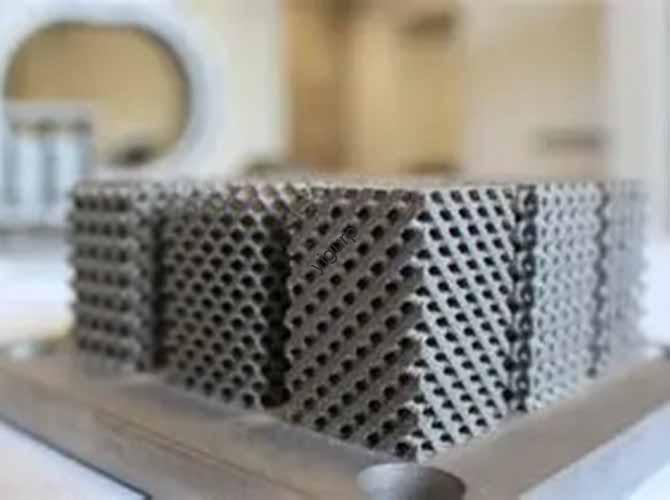
Our Capabilities: Delivering Excellence in Inconel 3D Printing
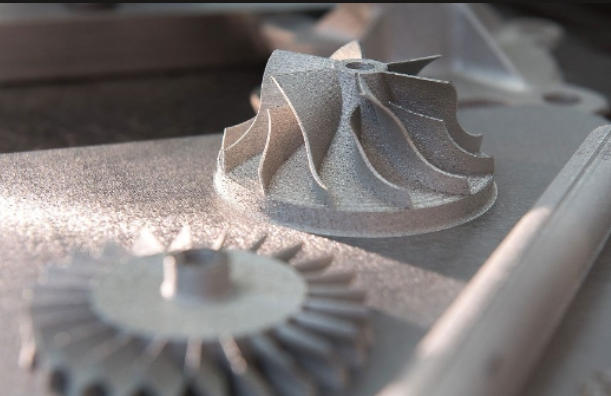
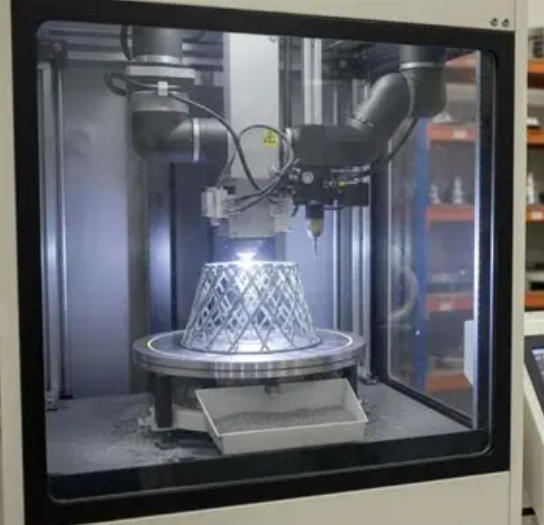
When you choose our services, you gain access to a suite of capabilities designed to meet your most demanding needs. Our team brings deep Inconel Printing Expertise—honed through years of working with aerospace, automotive, and medical clients—to every project. We use Advanced 3D Printing Technology, including state-of-the-art laser powder bed fusion (LPBF) and directed energy deposition (DED) systems, to ensure consistent quality.
We specialize in Custom Inconel Solutions: whether you need a one-of-a-kind prototype or high-volume production runs, we tailor our process to your design specs, material preferences, and performance requirements. The result? High-Quality Inconel Parts that meet or exceed industry standards for strength, durability, and precision. Below is a snapshot of our key Capabilities in Inconel 3D Printing:
| Capability | Key Features | Industry Applications |
| Custom Design Support | CAD optimization, topology analysis, rapid prototyping | Aerospace, Medical, Automotive |
| High-Volume Production | Automated systems, consistent batch quality, fast turnaround | Industrial, Automotive |
| Material Expertise | Sourcing and testing of premium Inconel alloys (e.g., 625, 718) | Aerospace, Chemical Processing |
| Quality Control | Post-print inspection, non-destructive testing (NDT), certification | All industries (especially aerospace/medical) |
What Is Inconel 3D Printing?
At its core, Inconel 3D Printing combines two game-changing technologies: Inconel and 3D Printing (also known as Additive Manufacturing). Inconel refers to a family of super-strong Nickel-based Alloy materials, famous for resisting extreme heat, corrosion, and pressure—making them ideal for harsh environments like jet engines or chemical plants. 3D Printing, on the other hand, is an additive process that builds parts layer by layer from digital designs, unlike traditional subtractive methods that cut away material.
Together, Inconel 3D Printing creates complex, high-performance parts without the limitations of conventional manufacturing. This technology eliminates the need for expensive molds, reduces material waste, and enables designs that were once impossible—from intricate internal channels to lightweight, strength-optimized structures. Simply put, the Definition of Inconel 3D Printing is the future of manufacturing for industries that demand reliability and innovation.
Advantages: Why Inconel 3D Printing Outperforms Traditional Methods
The Benefits of Inconel 3D Printing are clear: it solves the biggest challenges of traditional manufacturing (like casting or forging) while unlocking new possibilities. Here’s how it delivers Advantages in Manufacturing for your business:
- Design Freedom: Unlike casting, which requires simple geometries, 3D printing lets you create complex parts (e.g., internal cooling channels, lattice structures) without extra cost. This reduces part count—for example, a 5-part aerospace assembly can become 1 3D-printed part.
- Faster Time-to-Market: Prototyping with 3D printing takes weeks, not months. For production, it eliminates mold lead times (which can be 6+ months for traditional methods).
- Material Efficiency: Traditional subtractive methods waste up to 80% of Inconel (a costly material). 3D printing uses only the powder needed for the part, reducing waste to less than 5% (and unused powder is recyclable).
- Superior Properties: 3D-printed Inconel parts often have better mechanical properties than cast or forged parts. For example, 3D-printed Inconel 718 has a tensile strength of 1,400 MPa—20% higher than forged Inconel 718.
- Enhanced Performance: The layer-by-layer process creates dense parts (99.9% density for our Inconel prints) with uniform material properties, reducing the risk of defects like porosity.
These Inconel Printing Advantages translate to lower costs, better parts, and a competitive edge for your business.
Applications Industry: Where Inconel 3D Printing Shines
Applications Industry: Where Inconel 3D Printing Shines
Inconel 3D Printing Uses span across industries that demand high performance, durability, and precision. Its unique combination of strength and flexibility makes it a top choice for sectors where failure is not an option. Below are the key industries we serve:
- Aerospace Industry: The aerospace sector relies heavily on Inconel 3D Printing for engine components (like turbine blades and combustors), brackets, and fasteners. 3D printing reduces weight (critical for fuel efficiency) while withstanding the extreme heat of jet engines. For example, we’ve printed Inconel 718 turbine parts that weigh 30% less than traditional cast parts.
- Automotive Industry: In high-performance and electric vehicles (EVs), Inconel parts (like turbochargers and battery cooling systems) handle high temperatures and corrosion. 3D printing lets automakers quickly iterate designs and produce low-volume, custom parts for racing or luxury models.
- Medical Applications: Inconel’s biocompatibility (especially for Inconel 718) and corrosion resistance make it ideal for medical implants (like hip stems or dental abutments). 3D printing creates implants tailored to a patient’s anatomy, improving comfort and healing time.
- Industrial Applications: For chemical plants, oil refineries, and power generation, Inconel parts (like valves, pumps, and heat exchangers) resist corrosion from harsh chemicals and high pressure. 3D printing reduces downtime by enabling fast replacement of hard-to-source parts.