
yigu Brass 3D Printing Services
Elevate your projects with Brass 3D Printing—the perfect blend of brass’s timeless appeal, durability, and advanced 3D printing technology.
From intricate decorative parts to functional industrial components, our solutions deliver exceptional precision, seamless customization, and faster production. Experience cost-effective innovation that turns your designs into high-quality brass parts—redefining excellence in consumer goods, automotive, and beyond.
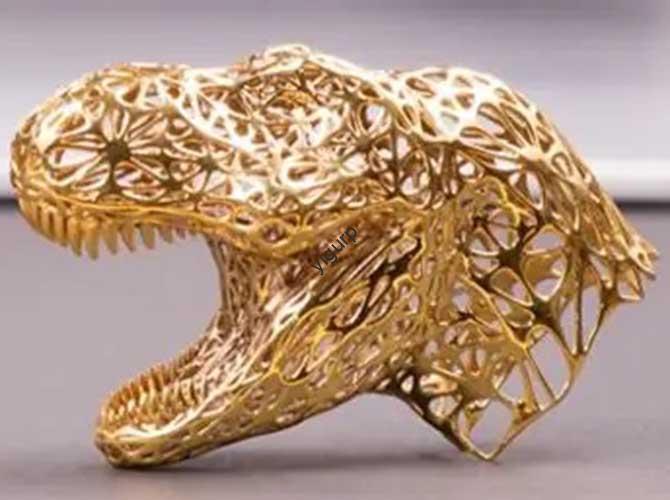
Our Capabilities: Delivering Brass 3D Printing Excellence
At Yigu Technology, our Brass 3D Printing capabilities are engineered to meet the diverse demands of consumer, industrial, and decorative industries. We combine cutting-edge equipment with deep expertise to deliver exceptional results:
- Technical Ability: Our engineers have 4+ years of specialized experience in brass additive manufacturing, understanding how to handle brass’s unique properties (e.g., melting point: 900–940°C) to minimize defects and maximize precision.
- Skill Mastery: We excel in brass-specific processes—from optimizing print parameters for minimal porosity to achieving mirror-like polishing finishes—critical for both decorative appeal and functional performance.
- Customization Expertise: Whether you need a one-of-a-kind brass decorative piece, a custom automotive component, or a high-volume consumer goods part, we tailor every step (material selection, post-processing) to your unique design.
- Scalable Capacity: We handle projects of all sizes—from 1-off prototypes (ready in 3–5 days) to 10,000+ high-volume parts—with consistent quality across every batch.
Table: Our Brass 3D Printing Capabilities vs. Industry Averages
| Capability | Yigu Technology Performance | Industry Average |
| Max Build Volume | 400mm × 400mm × 500mm | 300mm × 300mm × 400mm |
| Prototyping Lead Time | 3–5 days | 7–10 days |
| Production Capacity | Up to 8,000 parts/week | Up to 3,000 parts/week |
| Part Density (Standard Brass) | 99.2–99.5% | 95–98% |
| Material Waste | <8% | 15–20% |
What Is Brass 3D Printing?
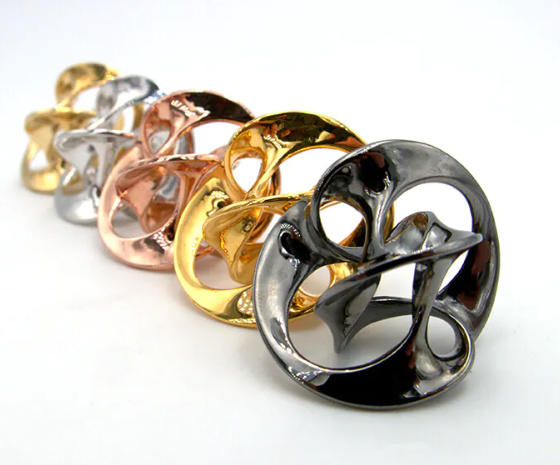
The definition of Brass 3D Printing centers on an advanced additive manufacturing process that transforms brass feedstock (primarily powder or filament) into functional or decorative parts through layer-by-layer fabrication. Rooted in the basic principles of additive manufacturing, it differs from traditional brassworking (e.g., casting, machining) by using digital designs to guide machines that melt or bind brass into precise, three-dimensional objects.
At its core, this technology leverages brass’s unique properties—including its warm golden hue, corrosion resistance, and machinability—to solve challenges in industries ranging from consumer goods to automotive. The overview of Brass 3D Printing includes various brass alloys, each tailored to specific needs (e.g., higher zinc content for improved castability, higher copper content for enhanced conductivity).
Key fundamentals of Brass 3D Printing:
| Term | Description | Role in the Process |
| Brass Alloys | Copper-zinc blends (typically 55–70% Cu, 30–45% Zn) with optional additives (e.g., lead for machinability) | Deliver balanced strength, aesthetics, and functionality for different applications |
| Layer-by-Layer Fabrication | Building parts one thin layer (0.05–0.2mm) at a time | Enables intricate geometries (e.g., filigree designs, internal channels) impossible with traditional methods |
| Additive vs. Subtractive | Adds material only where needed (vs. removing material in machining) | Reduces brass waste (from 60–70% in machining to <10% in 3D printing) |
Process: The Step-by-Step Workflow for Brass 3D Printing
Our Brass 3D Printing process follows a structured, meticulous procedure that accounts for brass’s properties to ensure efficiency and quality:
- Design & Preparation:
- Collaborate with our team to finalize your CAD model, optimizing it for brass—e.g., minimizing support structures (to reduce waste) and ensuring fine details (e.g., decorative engravings) are print-ready.
- Convert the model to an STL file, compatible with advanced slicing software (e.g., Cura, Magics).
- Printing Workflow:
- The most common techniques are Selective Laser Melting (SLM) (for dense, high-strength parts like automotive components) and Binder Jetting (for cost-effective, detailed decorative parts). SLM uses a high-power laser (300–500W) to melt brass powder layer by layer; binder jetting uses a liquid binder to form “green parts” (sintered later).
- During printing, the build chamber is maintained in an inert gas (argon) environment to prevent brass oxidation.
- Post-Processing Steps:
- Sintering (for binder jetting): Green parts are heated to 850–900°C to fuse brass particles, increasing density and strength.
- Support Removal: Carefully remove soluble or breakaway supports (using ultrasonic cleaning or manual tools) to avoid damaging delicate brass parts.
- Finishing: Perform polishing, coating, or texturing to achieve the desired aesthetic (e.g., mirror polish for decor, matte finish for industrial parts).
- Quality Inspection Methodology:
Every part undergoes rigorous checks:
- Laser scanners to verify dimensional accuracy (tolerances as tight as ±0.05mm).
- Density testing (via Archimedes’ principle) to ensure part integrity.
Visual inspection to confirm surface quality and aesthetic standards.
Advantages: Why Brass 3D Printing Outperforms Traditional Methods
Brass 3D Printing offers a range of advantages that make it superior to traditional brassworking (e.g., casting, machining):
- Design Freedom: Print intricate geometries (e.g., filigree decorative parts, internal channels in industrial components) that are impossible to handcraft or cast—unlocking new creative possibilities for designers.
- Cost-Effectiveness: Reduce brass waste to <8% (vs. 60–70% in machining) and eliminate tooling costs—critical for high-value brass materials. For small batches (1–100 parts), 3D printing is 30–40% cheaper than traditional methods.
- Speed: Prototypes are ready in 3–5 days (vs. 2–3 weeks for traditional casting), and production lead times are cut by 50%—ideal for time-sensitive projects (e.g., holiday decorative collections, automotive prototype launches).
- Aesthetic Versatility: Achieve diverse finishes (polished, antiqued, plated) without extra tooling—traditional methods require separate processes for each finish, increasing costs and lead times.
- Durability: 3D-printed brass parts have uniform grain structure, making them 15–20% more resistant to wear and corrosion than cast brass parts—extending part lifespan.
- Sustainability: Recycle 90% of unused brass powder, reducing environmental impact and lowering material costs—traditional casting generates non-recyclable brass scrap.
Applications Industry: Where Brass 3D Printing Shines
Brass’s unique blend of aesthetics, durability, and functionality makes it versatile across industries. Here’s how we’re using Brass 3D Printing to solve real-world challenges:
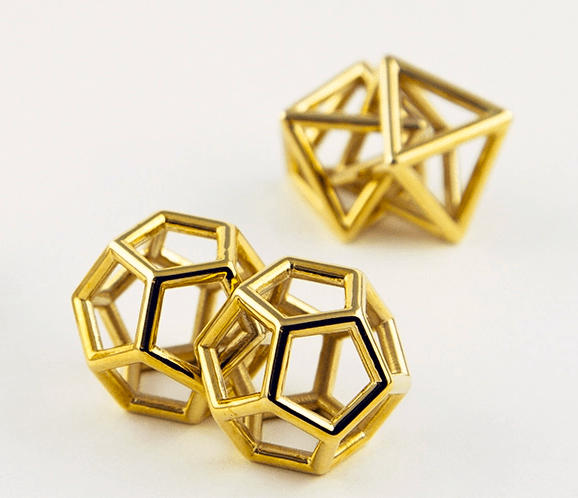
| Industry | Key Applications | Why Brass? |
| Consumer Goods | Decorative hardware (door handles, cabinet knobs), lamp bases, kitchenware, jewelry | Warm golden hue, corrosion resistance, aesthetic versatility |
| Automotive | Interior trim (dashboard accents, gear knobs), sensors, small gears, connector housings | Durability, wear resistance, aesthetic appeal |
| Industrial | Gears, valves, pump components, tool handles | Strength, machinability, corrosion resistance to oils and chemicals |
| Architecture & Design | Decorative facades, railings, sculptures, custom light fixtures | Aesthetic appeal, weather resistance (with coating) |
| Electronics | Low-current connectors, heat sinks, decorative casings | Moderate electrical conductivity, aesthetic value |
| Arts & Crafts | Custom sculptures, limited-edition art pieces, vintage-style decor | Malleability, ability to achieve intricate details, patina potential |