
Our PA6+GF Vacuum Casting Services
Elevate your product performance with PA6 + GF Vacuum Casting—a cutting-edge solution that blends the strength of glass fiber-reinforced polyamide 6 with the precision of vacuum casting.
At Yigu Technology, we deliver custom-manufactured components for industries like automotive and aerospace, ensuring lightweight design, tight tolerances, and rapid production without compromising on quality. Whether you need prototyping or high-volume production, our expertise turns your ideas into durable, cost-effective reality.
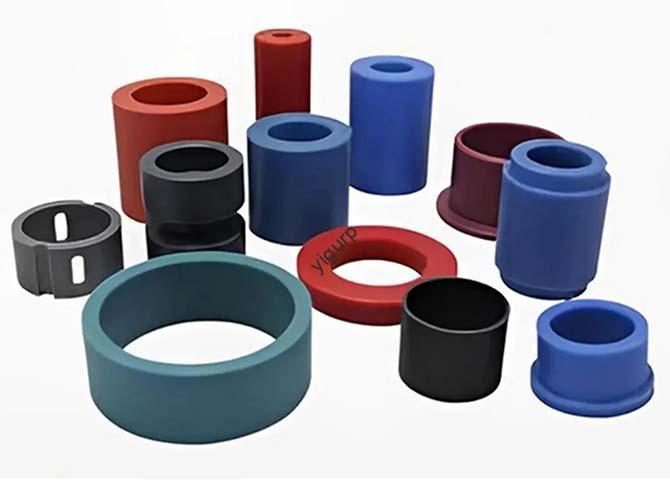
Our Capabilities: Delivering Customized Vacuum Casting Solutions
At Yigu Technology, we combine advanced equipment with engineering expertise to meet your unique needs. Our key capabilities include:
| Capability | Key Benefits |
| Vacuum Casting Services | Produces complex geometries with consistent quality across batches. |
| Custom Manufacturing | Tailors components to your exact specifications (size, shape, material mix). |
| Precision Engineering | Ensures parts meet tight dimensional tolerances (down to ±0.1mm). |
| Rapid Prototyping | Delivers functional prototypes in 5–10 days for fast design validation. |
| High-Quality Production | Implements strict quality control to maintain consistency in large-volume runs. |
Whether you’re developing a new automotive part or a medical device, our team works closely with you to optimize every step—from design to delivery.
What Is PA6 + GF Vacuum Casting?
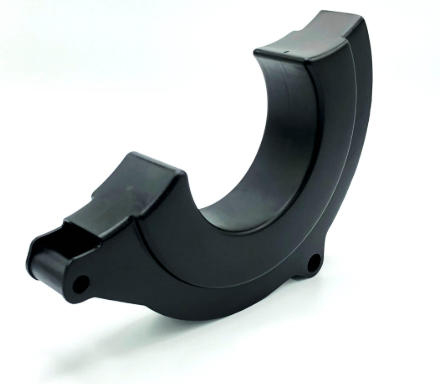
To understand PA6 + GF Vacuum Casting, let’s break down its core components and process:
- PA6 (Polyamide 6): A thermoplastic polymer known for its excellent mechanical strength, chemical resistance, and flexibility—ideal for parts needing durability.
- GF (Glass Fiber): A reinforcement material added to PA6 to boost tensile strength, stiffness, and heat resistance, addressing PA6’s limitations in high-stress applications.
- Vacuum Casting: A manufacturing process that uses a vacuum to eliminate air bubbles during resin pouring, ensuring uniform material distribution and high-quality surface finishes.
Together, these elements create a composite material that outperforms standard plastics, making it a top choice for demanding industrial applications.
Process: How PA6 + GF Vacuum Casting Works
The vacuum casting process for PA6 + GF involves six key stages, each critical to achieving high-performance components:
- Tooling Preparation: Create a master mold (often using 3D printing or CNC machining) that matches the part’s design. We use durable materials like silicone for molds to ensure 20–50 production cycles.
- Material Mixing: Combine PA6 resin, glass fiber reinforcement, and optional additives (e.g., UV stabilizers, flame retardants) to create the composite formulation.
- Resin Pouring: Pour the mixed material into the mold under vacuum pressure—this removes air bubbles that could weaken the part or ruin its surface.
- Curing: Heat the mold to 80–120°C to harden the resin. Curing time varies (2–6 hours) based on part thickness and material additives.
- Demolding: Carefully remove the cured part from the mold to avoid damage.
- Post-Processing: Refine the part with surface finishing (e.g., trimming, sanding) or additional treatments like painting to meet your aesthetic and functional requirements.
Materials: The Building Blocks of PA6 + GF Composites
The performance of PA6 + GF parts depends on the quality of their materials. Below is a breakdown of the key materials we use:
| Material Category | Examples & Roles |
| PA6 (Polyamide 6) | Base polymer providing flexibility, chemical resistance, and impact strength. |
| Glass Fiber Reinforcement | Chopped or continuous glass fibers (5–30% volume) to enhance strength and stiffness. |
| Resins | Thermosetting or thermoplastic resins (e.g., epoxy) to bind PA6 and GF. |
| Additives | UV stabilizers (for outdoor use), flame retardants (for electronics), and colorants (for branding). |
| Composite Formulations | Custom blends (e.g., 70% PA6 + 30% GF) tailored to specific needs (e.g., high heat resistance for aerospace). |
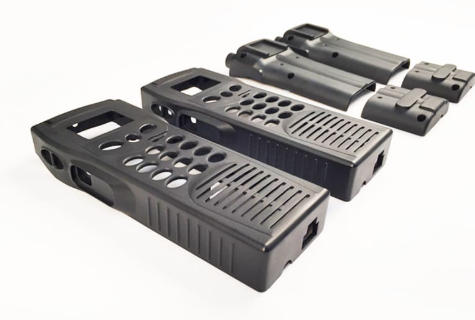
We source materials from certified suppliers to ensure consistency and compliance with industry standards (e.g., RoHS for electronics).
Advantages: Why Choose PA6 + GF Vacuum Casting?
PA6 + GF Vacuum Casting offers a range of benefits that make it superior to other manufacturing methods (e.g., injection molding for small batches). Here’s how it adds value:
- Lightweight: PA6 + GF parts are 30–50% lighter than metal alternatives, improving fuel efficiency in automotive and aerospace applications.
- High Strength: The glass fiber reinforcement boosts tensile strength by up to 80% compared to pure PA6, making parts suitable for high-load environments.
- Durability: Resists chemicals, heat (up to 150°C), and wear, ensuring a long service life (5–10 years for most industrial parts).
- Cost-Effective: Lower tooling costs than injection molding (silicone molds cost 70% less than metal molds) and fast production times reduce overall project costs.
- Rapid Production: Prototypes are ready in days, and production runs can start within 2 weeks—ideal for time-sensitive projects.
Applications Industry: Where PA6 + GF Vacuum Casting Shines
The versatility of PA6 + GF Vacuum Casting makes it suitable for a wide range of industries. Below are its most common applications:
| Industry | Application Examples | Key Benefits Utilized |
| Automotive | Engine covers, sensor housings, interior trim | Lightweight, high strength, heat resistance |
| Aerospace | Cabin components, structural brackets, wire harnesses | Precision, durability, chemical resistance |
| Electronics | Connector housings, heat sinks, device enclosures | Tight tolerances, electrical insulation |
| Medical Devices | Surgical instrument handles, diagnostic equipment casings | Biocompatibility, easy sterilization |
| Consumer Goods | Power tool housings, sports equipment parts (e.g., bike frames) | Impact resistance, aesthetic finishes |
Case Studies: Success Stories with PA6 + GF Vacuum Casting
Our clients trust us to solve their most challenging manufacturing problems. Here are two notable case studies:
Case Study 1: Automotive Sensor Housing
- Client: A leading automotive supplier.
- Challenge: Need a lightweight, heat-resistant housing for a engine sensor (operating temperature: 120°C).
- Solution: Used 25% GF-reinforced PA6 with vacuum casting. Added a heat-resistant coating.
- Results: Part weight reduced by 40% vs. metal; met all dimensional tolerances (±0.08mm); passed 1,000-hour heat testing.
Case Study 2: Medical Device Handle
- Client: A medical equipment manufacturer.
- Challenge: Require a biocompatible, easy-to-grip handle for a surgical tool.
- Solution: Used 15% GF-reinforced PA6 (USP Class VI certified) with a textured surface finish.
- Results: Handle passed biocompatibility testing; 95% of surgeons rated grip as “excellent”; production cost reduced by 25% vs. injection molding.