
Our ABS Vacuum Casting Services
Unlock unparalleled precision in your manufacturing projects with ABS Vacuum Casting—a cutting-edge technology that combines the durability of ABS material with the flexibility of custom casting.
Whether you need large-scale production runs or intricate, high-tolerance components, our expertise ensures cost-effectiveness, short lead times, and uncompromising quality. From automotive parts to medical devices, trust Yigu Technology to turn your designs into reality.
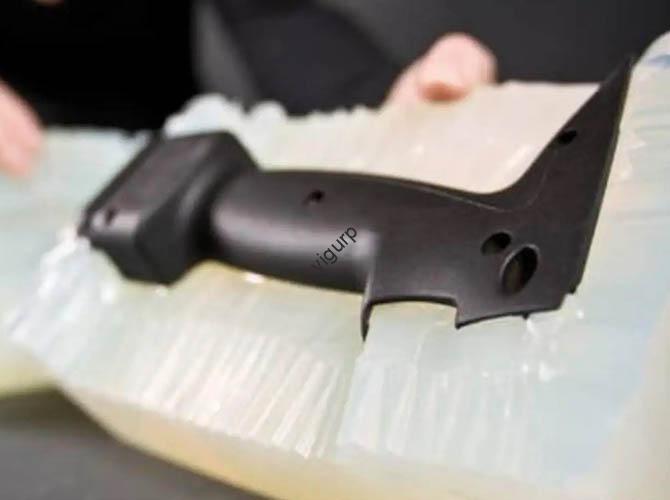
Our Capabilities: Delivering Customized Excellence
At Yigu Technology, we specialize in Custom Vacuum Casting solutions tailored to your unique project requirements. Our team’s ABS casting expertise spans industries, from consumer electronics to aerospace, and we pride ourselves on three core strengths: precision, scalability, and quality.
Our Core Capabilities
- Precision casting: We achieve dimensional tolerances as tight as ±0.1mm, ensuring parts align with your exact specifications.
- Large-scale production: Our facilities can handle runs from 10 to 10,000 units, with consistent quality across every batch.
- Quality control: Every component undergoes rigorous testing—including dimensional measurement, impact resistance checks, and surface finish inspections—to meet ISO 9001 and ASTM standards.
| Capability | Specification |
| Custom Vacuum Casting | Tailored mold designs for unique part geometries (e.g., complex undercuts, thin walls). |
| Large-scale production | Monthly capacity of 50,000+ units, with lead times as short as 3–5 days. |
| Quality control | 100% inspection rate for critical components; 99.8% defect-free rate in 2024. |
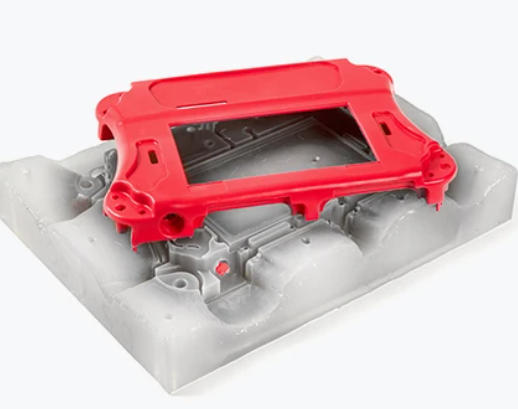
Process: Step-by-Step Workflow of ABS Vacuum Casting
The ABS Vacuum Casting process is a streamlined, repeatable workflow designed to maximize efficiency and minimize defects. Below is a detailed breakdown of each stage:
Step 1: Mold Preparation
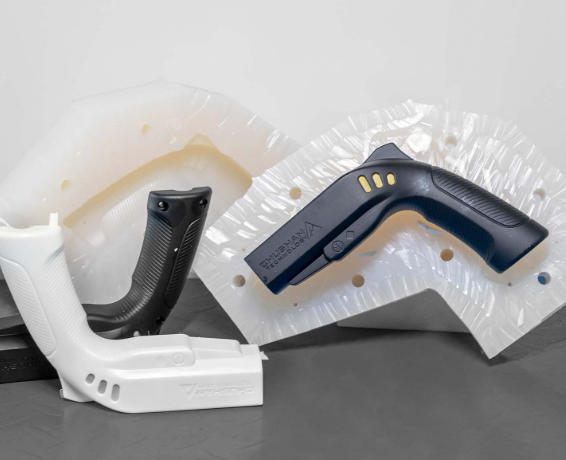
First, we create a master mold (typically from silicone or aluminum) using your 3D model or physical prototype. The mold is engineered to capture every detail—from surface textures to intricate features—and is treated to ensure easy demolding.
Step 2: Resin Mixing
We blend ABS resin with specialized additives (for enhanced flexibility or heat resistance) and catalysts (to control curing time). The mixture is stirred under vacuum to remove air bubbles, a critical step for preventing voids in the final part.
Step 3: Vacuum Chamber Infusion
The mixed resin is poured into the mold, which is then placed in a vacuum chamber. The chamber is sealed, and vacuum pressure (typically -0.95 bar) is applied to draw the resin into every corner of the mold, ensuring complete filling.
Step 4: Curing Process
The mold is heated to 60–80°C to accelerate resin curing. Cure time varies by part thickness (1–4 hours for most components) and is monitored to avoid over-hardening, which can cause brittleness.
Step 5: Demolding & Post-Processing
Once cured, the mold is opened, and the part is removed. Post-processing steps (e.g., trimming excess resin, polishing) are performed to achieve the desired finish.
Materials: Choosing the Right ABS Resin & Additives
The success of ABS Vacuum Casting depends on selecting high-quality materials that align with your part’s performance needs. We source premium ABS resin from trusted resin suppliers and offer a range of additives to enhance functionality.
| Material Type | Purpose |
| ABS resin | Base material providing durability, impact resistance, and machinability. |
| Additives | Improve UV resistance, flame retardancy, or flexibility (e.g., plasticizers). |
| Fillers | Reduce cost or enhance strength (e.g., glass fiber, talc). |
| Catalysts | Control curing speed to ensure uniform hardening. |
Our preferred resin suppliers include Sabic, LG Chem, and Chi Mei Corporation—brands known for consistent quality and compliance with global safety standards (e.g., RoHS, REACH).
Surface Treatment: Enhancing Aesthetics & Performance
After casting, parts can undergo surface treatment to improve appearance, durability, or functionality. We offer a range of finishing options to match your project’s needs:
- Painting: Custom color matching (using Pantone or RAL codes) for parts requiring brand alignment.
- Coating: Protective layers (e.g., clear coat for scratch resistance, anti-static coating for electronics).
- Polishing: Achieve glossy or matte finishes, with surface roughness (Ra) as low as 0.2μm.
- Texture application: Add tactile textures (e.g., leather grain, ribbing) for grip or aesthetic appeal.
| Surface Treatment | Benefit | Example Application |
| Painting | Brand consistency, UV protection | Automotive interior parts |
| Coating | Scratch resistance, chemical resistance | Medical device housings |
| Polishing | High-gloss finish, improved light reflection | Consumer electronics casings |
| Texture application | Enhanced grip, reduced fingerprint visibility | Tool handles, remote controls |
Tolerances: Ensuring Dimensional Accuracy
Dimensional accuracy is critical for parts that need to fit or function with other components. Our ABS Vacuum Casting process achieves industry-leading tolerance levels, supported by advanced measurement tools and strict quality control.
Key Tolerance Specifications
- Linear tolerance: ±0.1mm for parts up to 100mm; ±0.15mm for parts 100–300mm.
- Geometric tolerance: Flatness ≤0.05mm/m, parallelism ≤0.1mm/m.
- Precision measurement: We use coordinate measuring machines (CMMs) and laser scanners to verify dimensions, ensuring compliance with ISO 8015 (geometric tolerancing) and ASME Y14.5 standards.
| Part Size (Length) | Linear Tolerance | Measurement Tool |
| <100mm | ±0.1mm | CMM (accuracy: ±0.005mm) |
| 100–300mm | ±0.15mm | Laser scanner (resolution: 0.02mm) |
| >300mm | ±0.2mm | Optical comparator |
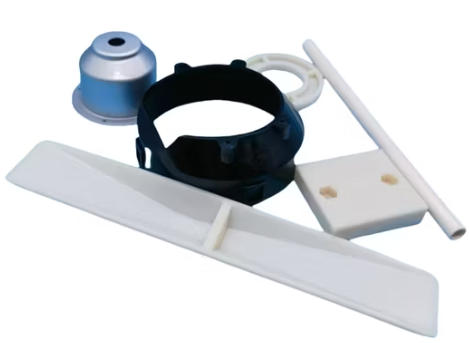
Advantages: Why Choose ABS Vacuum Casting?
ABS Vacuum Casting offers a unique blend of benefits that make it ideal for prototyping and low-to-medium volume production. Here’s how it outperforms other manufacturing methods:
- Cost-effectiveness: No expensive metal tooling—silicone molds cost 70–80% less than aluminum molds, making it ideal for small runs.
- High precision: Captures fine details (down to 0.1mm) and achieves tight tolerances, reducing the need for post-processing.
- Short lead times: Molds can be ready in 2–3 days, and production runs are completed in 3–7 days (vs. 4–6 weeks for injection molding).
- Customization: Easy to adjust resin properties (e.g., color, flexibility) or mold designs for iterative prototyping.
- Durability: ABS parts resist impact, heat, and chemicals, making them suitable for end-use applications (not just prototypes).
| Advantage | ABS Vacuum Casting | Traditional Injection Molding |
| Tooling cost | Low (500–5,000) | High (10,000–100,000+) |
| Lead time | 3–7 days | 4–6 weeks |
| Volume flexibility | 10–10,000 units | 10,000+ units |
| Customization ease | High (quick resin/mold adjustments) | Low (expensive tooling changes) |
Applications Industry: Where ABS Vacuum Casting Shines
The versatility of ABS Vacuum Casting makes it a top choice across diverse industries. Below are key sectors and their common applications:
- Automotive industry: Interior components (e.g., dashboard trim, door handles), under-hood parts (e.g., sensor housings), and prototyping for new vehicle models.
- Consumer electronics: Phone cases, laptop bezels, speaker enclosures, and charging dock housings—all requiring high aesthetics and dimensional precision.
- Medical devices: Disposable tool housings, diagnostic equipment casings, and orthopedic prototypes—compliant with biocompatibility standards (e.g., ISO 10993).
- Aerospace: Prototypes for cabin interiors, satellite components, and drone parts—where lightweight and high precision are critical.
- Industrial components: Gear housings, pump parts, and conveyor system components—benefiting from ABS’s impact resistance and durability.
Case Studies: Success Stories with Yigu Technology
Our ABS Vacuum Casting solutions have helped clients across industries overcome manufacturing challenges. Here are two standout examples:
Case Study 1: Automotive Prototyping for a Global OEM
A leading automotive manufacturer needed 500 prototype dashboard trim parts for user testing—with a tight 10-day deadline. Using Custom Vacuum Casting, we:
- Created a silicone mold in 3 days.
- Produced 500 parts with a matte black finish (matching the OEM’s color code).
- Achieved dimensional accuracy of ±0.1mm, ensuring compatibility with existing components.
- Result: The client launched user testing on schedule, and the prototype design was approved for mass production—saving 4 weeks of development time.
Case Study 2: Medical Device Housing for a Startup
A medical startup required 200 biocompatible housings for a new diagnostic tool. We:
- Used FDA-compliant ABS resin with an anti-microbial additive.
- Applied a clear protective coating to resist chemical cleaning agents.
- Conducted 100% dimensional testing and biocompatibility checks (ISO 10993).
- Result: The client received parts in 7 days, enabling them to meet their regulatory submission deadline and secure $2M in funding.