
Our Transparent Vacuum Casting Services
Need high-quality, crystal-clear parts for your project? Yigu Technology’s Transparent Vacuum Casting services deliver exceptional transparency and precision—perfect for industries like automotive, electronics, and lighting.
Using advanced vacuum casting technology and top-tier transparent resin, we create custom parts with tight tolerances, smooth finishes, and cost-effective solutions for small to medium batches. Whether you need prototypes or production parts, our expertise ensures your vision becomes a clear reality.
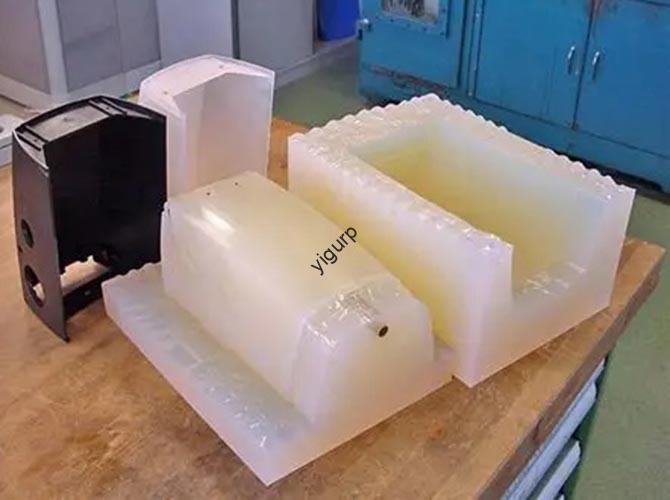
Yigu Technology’s Transparent Vacuum Casting Capabilities
At Yigu Technology, our transparent vacuum casting capabilities are tailored to meet the strict demands of clear-part production. We combine years of precision casting experience with specialized equipment to deliver parts that exceed industry standards for clarity and accuracy.
Our core capabilities include:
- Custom Casting Solutions: We adapt to your design needs—from small, intricate components (e.g., electronics lenses) to large, curved parts (e.g., lighting diffusers).
- High-Quality Casting: Every part undergoes rigorous quality checks to ensure transparency (measured by light transmittance) and structural strength.
- Material Versatility: We work with a range of transparent casting materials, including rigid, flexible, and heat-resistant resins (see Section 4 for details).
- Tight Tolerance Control: Our process achieves precision tolerances (down to ±0.1mm for small parts) to ensure parts fit perfectly in your assembly.
The table below compares our capabilities to industry averages, showcasing our competitive edge:
| Capability Metric | Our Performance | Industry Average |
|---|---|---|
| Light Transmittance (for Clear Resin) | 92–95% (matches glass) | 85–90% |
| Minimum Part Thickness | 0.5mm (without clouding) | 1.0mm |
| Tolerance for Small Parts (≤50mm) | ±0.1mm | ±0.2mm |
| Maximum Part Size | 800mm × 600mm × 300mm (clear part) | 600mm × 400mm × 200mm |
| Lead Time for 20-Part Batch | 4–6 business days | 8–12 business days |
What Is Transparent Vacuum Casting?
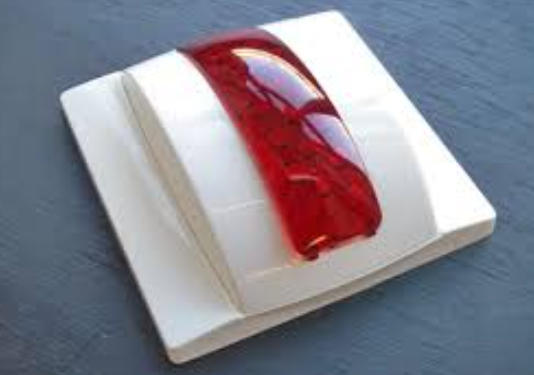
Transparent Vacuum Casting is a specialized vacuum casting technology that focuses on creating clear, defect-free parts using transparent casting materials. Unlike standard vacuum casting, this method prioritizes transparency—eliminating even the smallest air bubbles, impurities, or surface blemishes that could cloud the final part. It’s ideal for applications where visual clarity (e.g., light diffusion, product visibility) is as critical as structural integrity.
Below is a simplified process overview of how transparent vacuum casting works, highlighting key steps that ensure clarity:
| Step of Process | Purpose | Key Tool/Material |
|---|---|---|
| Master Pattern Design | Create a smooth, bubble-free prototype (often 3D-printed with high-resolution resin) | Transparent 3D Resin, CNC-Machined Acrylic |
| Silicone Mold Preparation | Make a reusable mold with ultra-smooth cavities to preserve transparency | High-Clear Silicone Rubber |
| Material Mixing & Degassing | Blend transparent resin and remove air bubbles (critical for clarity) | Vacuum Degassing Chamber, Transparent Casting Resin |
| Vacuum Casting | Inject degassed resin into the mold under vacuum to avoid trapped air | Industrial Vacuum Chamber |
| Curing & Demolding | Cure resin at controlled temperatures to maintain clarity; demold carefully to avoid scratches | Temperature-Controlled Oven, Non-Stick Mold Release |
| Precision Finishing | Polish surfaces to enhance transparency and remove any minor imperfections | Micro-Polishing Tools, Clear Coating |
The Transparent Vacuum Casting Process (Step-by-Step)
Creating clear parts with transparent vacuum casting requires careful attention to detail at every stage. Here’s a detailed breakdown of our process, optimized for transparency and precision:
Demolding & Finishing: The part is gently demolded to prevent scratches. We then polish the surface with micro-abrasives to enhance transparency and apply a clear protective coating if needed (e.g., for scratch resistance).
Master Pattern Creation: We start with a high-precision master pattern—usually 3D-printed with a transparent resin or machined from acrylic. The pattern must be completely smooth (no scratches or layers) to ensure the mold captures every detail without imperfections.
Silicone Mold Making: We pour high-clear silicone rubber over the master pattern and cure it in a controlled environment. The silicone is chosen for its ability to replicate fine details and maintain a smooth surface—key for preserving transparency in the final part.
Resin Preparation: We select the right transparent casting resin (based on your needs: flexibility, heat resistance) and mix it with hardeners. The mixture is then placed in a vacuum degassing chamber for 15–20 minutes to remove all air bubbles—even tiny bubbles would ruin clarity.
Vacuum Casting: The degassed resin is injected into the silicone mold, which is inside a vacuum chamber. The vacuum ensures the resin flows into every corner of the mold without trapping air, creating a bubble-free part.
Controlled Curing: The mold is placed in a temperature-controlled oven to cure the resin. Curing time (1–3 hours) and temperature (50–80°C) are adjusted based on the resin type to avoid warping or clouding.
Materials Used in Transparent Vacuum Casting
Choosing the right transparent casting materials is critical for achieving the desired transparency, strength, and performance. Yigu Technology offers a range of resins tailored to different industry needs:
| Material Type | Key Properties | Light Transmittance | Ideal Applications |
|---|---|---|---|
| General-Purpose Transparent Resin | Low cost, good clarity, easy to process | 90–92% | Prototypes, consumer goods (e.g., display cases) |
| High-Clarity Polyurethane (PU) Resin | Excellent transparency, impact-resistant, flexible options | 93–95% | Automotive lenses, electronics enclosures |
| Heat-Resistant Transparent Resin | Withstands high temperatures (120–180°C), clarity at heat | 88–91% | Lighting components (e.g., LED diffusers), industrial parts |
| Chemical-Resistant Transparent Resin | Resists oils, solvents, and chemicals; maintains clarity | 90–92% | Medical devices (e.g., fluid reservoirs), lab equipment |
| UV-Resistant Transparent Resin | Prevents yellowing from sunlight; long-term clarity | 91–93% | Outdoor lighting, automotive exterior parts |
Our team helps you select the best material based on your project’s requirements—whether you need transparency for light diffusion or chemical resistance for medical use.
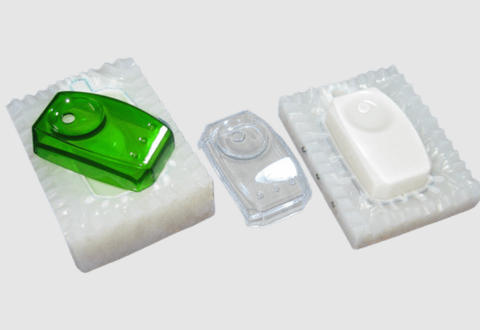
Advantages of Transparent Vacuum Casting
Transparent Vacuum Casting offers unique benefits over other manufacturing methods for clear parts—making it a top choice for prototypes and small-batch production:
Consistent Quality: Every part has the same transparency and dimensions, thanks to our controlled process and quality checks. This consistency is critical for industries like medical and electronics.
Superior Transparency: The vacuum degassing and casting process eliminates air bubbles and impurities, resulting in parts with 92–95% light transmittance—comparable to glass but lighter and more impact-resistant.
Cost-Effective: Unlike injection molding (which requires expensive metal tooling), transparent vacuum casting uses affordable silicone molds (reusable up to 30–50 times), reducing upfront costs for small batches (10–500 parts).
Fast Lead Times: Silicone molds are ready in 2–3 days, and parts can be produced in as little as 24 hours after mold creation—ideal for rapid prototyping or urgent projects.
Design Flexibility: We can create complex shapes (e.g., curved lenses, intricate enclosures) that are hard to achieve with machining. Adjusting designs between batches is easy—no need to retool.
Applications by Industry
Transparent Vacuum Casting is used across industries where transparency and precision are essential. Below are key applications by sector:
| Industry | Common Applications | Key Requirements Met |
|---|---|---|
| Automotive | Interior lighting diffusers, instrument cluster lenses, sensor covers | Heat resistance, impact resistance, clarity |
| Electronics | Display enclosures, LED light guides, camera lenses | Precision fit, scratch resistance, transparency |
| Medical | Fluid reservoirs, diagnostic device windows, surgical tool handles | Biocompatibility, chemical resistance, clarity for visibility |
| Lighting | LED bulb covers, decorative light diffusers, industrial lighting lenses | Light transmittance, UV resistance, durability |
| Consumer Goods | Cosmetic packaging, toy parts, clear display cases | Aesthetic appeal, affordability, impact resistance |
Yigu Technology understands industry-specific standards (e.g., ISO 13485 for medical, IATF 16949 for automotive) and ensures all parts comply with regulations—including biocompatibility testing for medical applications.
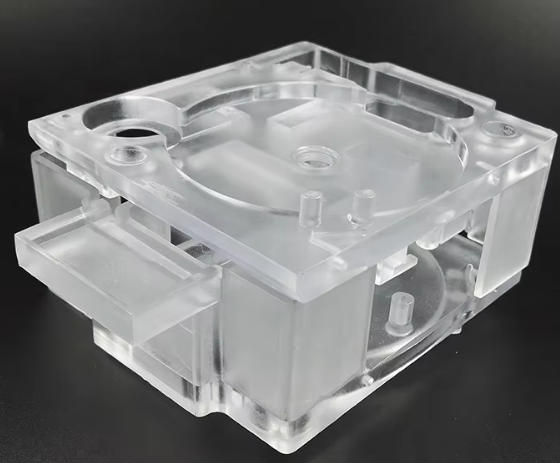
Case Studies: Yigu Technology’s Success Stories
Our transparent vacuum casting services have helped clients solve unique challenges in clear-part production. Here are two standout examples:
Case Study 1: Automotive Lighting Component
A leading automotive supplier needed 50 clear LED diffusers for a new interior lighting system. Requirements included:
- 93%+ light transmittance
- Heat resistance (up to 120°C)
- Lead time: 1 week
Solution: We used a heat-resistant transparent PU resin and degassed it for 20 minutes to ensure clarity. The silicone mold was designed with smooth cavities to avoid surface imperfections. We applied a UV-resistant coating to prevent yellowing.
Result: Parts delivered in 5 days, with 94% light transmittance and no bubbles. The client tested the diffusers in high-temperature environments—they maintained clarity and shape, leading to a 500-part follow-up order.
Case Study 2: Medical Fluid Reservoir
A medical device company needed 30 biocompatible clear reservoirs for a diagnostic machine. Requirements included:
- Biocompatibility (ISO 10993-5)
- Chemical resistance to saline solutions
- Tolerance: ±0.15mm
Solution: We selected a biocompatible transparent resin and used a micro-polishing process to achieve 92% transmittance. Every part underwent dimensional checks with a CMM and biocompatibility testing.
Result: All 30 parts passed biocompatibility tests and met tolerance requirements. The client integrated the reservoirs into their diagnostic machine, which received FDA approval—they now order 100 reservoirs quarterly.