
Our Low Pressure Die Casting (LPDC) Services
Elevate your manufacturing with Low Pressure Die Casting (LPDC) — the go-to casting technology for high-precision, cost-efficient parts.
Whether you’re in automotive, aerospace, or electronics, our LPDC solutions deliver superior strength, reduced porosity, and tight tolerance levels, backed by decades of technical expertise and top-tier equipment. Transform your projects with reliable, high-quality castings tailored to your industry needs.
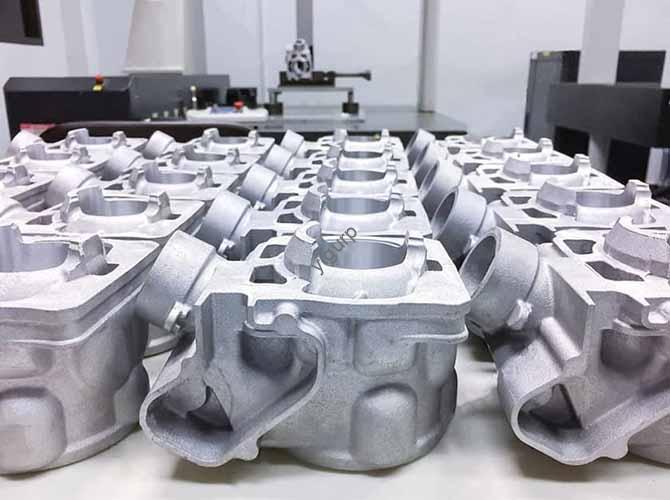
Our Capabilities: Delivering Excellence in LPDC
At Yigu Technology, our capabilities in LPDC are built on three pillars: technical expertise, advanced equipment, and proven experience. We don’t just offer casting services — we provide end-to-end solutions that align with your production goals.
| Capability Area | Details |
| Technical Expertise | Team of 20+ engineers with 10+ years in LPDC; certified in alloy science and die design. |
| Equipment | 15 state-of-the-art LPDC machines (5–500 ton clamping force); automated quality inspection tools. |
| Capacity | Monthly production of 50,000+ parts; ability to scale for high-volume orders (up to 200,000 units/month). |
| Quality Control | 6-step inspection process (from material testing to final dimensional checks); 99.8% defect-free rate. |
Our experience spans 15+ industries, from automotive to medical devices, and our quality control protocols ensure every part meets or exceeds your specifications. Whether you need a prototype or mass-produced components, we have the tools and knowledge to deliver.
Definition: Understanding LPDC Basics
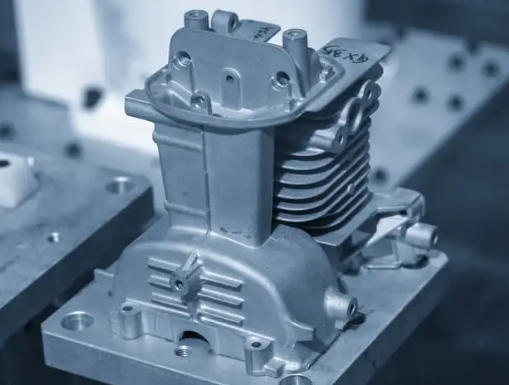
At its core, Low Pressure Die Casting (LPDC) is a specialized casting technology designed to produce high-quality metal parts with minimal defects. Unlike high-pressure methods, LPDC uses low air or gas pressure (typically 0.5–5 bar) to push molten metal into a reusable die, ensuring even filling and solidification.
This process overview highlights why LPDC stands out: it eliminates turbulence, reducing porosity and improving structural integrity. For those new to the term, LPDC meaning boils down to a controlled, efficient way to create complex parts that meet strict industry standards. Whether you’re manufacturing small electronic components or large automotive parts, LPDC’s focus on precision makes it a versatile choice.
Process: Step-by-Step Breakdown of LPDC
The casting process for LPDC is straightforward yet highly controlled, ensuring consistency and precision at every stage. Below is a detailed procedure of the key steps, along with typical cycle time for common part sizes:
- Die Preparation: The reusable die is preheated to 200–400°C and coated with a release agent to prevent metal sticking.
- Molten Metal Preparation: Materials used (e.g., aluminum alloys) are melted in a furnace at 650–750°C and tested for purity.
- Pressure Application: Low pressure (0.5–5 bar) is applied to push molten metal from the holding furnace into the die cavity.
- Solidification: The metal cools and solidifies in the die (1–15 minutes, depending on part size).
- Die Opening & Part Removal: The die opens, and the finished part is removed using automated tools.
- Secondary Operations: Trimming, deburring, or surface treatment is performed to meet final specs.
| Part Size | Typical Cycle Time |
| Small (≤100g) | 1–3 minutes |
| Medium (100g–1kg) | 3–8 minutes |
| Large (>1kg) | 8–15 minutes |
This low pressure technique ensures minimal waste and consistent part quality, making it ideal for high-production runs.
Materials: Choosing the Right Alloys for LPDC
The success of an LPDC project depends heavily on material selection — the right alloy can enhance strength, reduce weight, and improve corrosion resistance. At Yigu Technology, we work with three primary materials used in LPDC, each with unique alloy properties:
| Alloy Type | Common Grades | Key Properties | Ideal Applications |
| Aluminum Alloys | A356, A380, 6061 | Lightweight (2.7 g/cm³), high strength, good corrosion resistance. | Automotive parts (wheels, engine components), aerospace components. |
| Magnesium Alloys | AZ91D, AM60B | Ultra-lightweight (1.8 g/cm³), high stiffness, good machinability. | Electronics (laptop casings), medical devices. |
| Copper Alloys | C36000, C17200 | Excellent conductivity (electrical/thermal), high ductility. | Electrical connectors, heat sinks. |
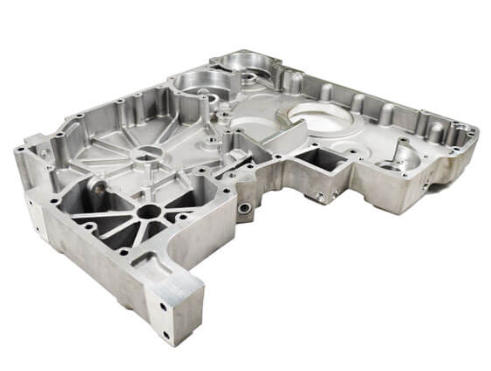
Our team helps you select the best alloy based on your project’s needs — whether you prioritize weight reduction (magnesium alloys) or strength (aluminum alloys).
Advantages: Why LPDC Outperforms Other Casting Methods
LPDC offers a range of advantages that make it a top choice for manufacturers across industries. Below is a comparison of LPDC with other common casting methods, highlighting its key benefits:
| Advantage | LPDC Performance | High-Pressure Die Casting (HPDC) | Sand Casting |
| Reduced Porosity | <1% porosity (ideal for leak-tight parts) | 2–5% porosity | 5–10% porosity |
| Strength | 10–15% higher tensile strength than HPDC | Good strength but lower than LPDC | Lower strength |
| Weight Reduction | Enables thin-walled parts (1–3mm) | Limited to 2–5mm walls | Thick walls (5+mm) |
| Cost Efficiency | 15–20% lower material waste than HPDC | Higher waste (5–10%) | High waste (15–20%) |
| High Production Rate | Up to 60 parts/hour (medium-sized parts) | Up to 120 parts/hour | 10–20 parts/hour |
Additional benefits of LPDC include better material flow (reducing defects) and compatibility with a wide range of alloys — making it a versatile, cost-effective solution.
Applications Industry: Where LPDC Shines
LPDC’s versatility makes it suitable for a diverse set of industries served, from automotive to medical devices. Below are key sectors where our LPDC parts make a difference:
| Industry | Common LPDC Applications | Key Requirements Met |
| Automotive | Wheels, engine blocks, transmission housings, suspension components. | High strength, tight tolerances, weight reduction. |
| Aerospace | Structural components, fuel system parts, landing gear components. | High strength-to-weight ratio, corrosion resistance. |
| Electronics | Heat sinks, connector housings, laptop casings. | Lightweight, good thermal conductivity, precision. |
| Telecommunications | Antenna parts, router housings. | Dimensional stability, durability. |
| Medical Devices | Surgical instruments, implant components (magnesium alloys). | Biocompatibility, precision, corrosion resistance. |
| Consumer Goods | Furniture hardware, kitchen appliances, tool casings. | Aesthetics, durability, cost efficiency. |
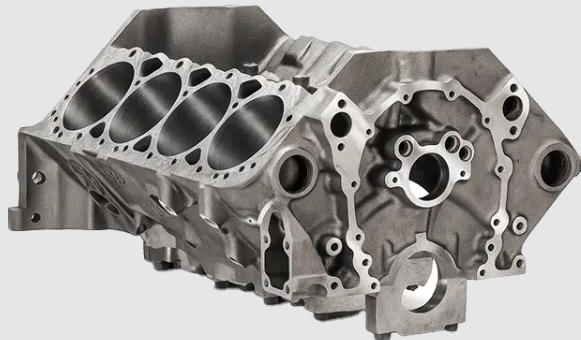
Our team has deep experience in each industry, ensuring your parts meet sector-specific standards (e.g., FDA for medical devices, AS9100 for aerospace).
Case Studies: Real-World Success with LPDC
Our case studies demonstrate how LPDC solves real manufacturing challenges. Below are two examples of successful projects:
Case Study 1: Automotive Wheel Production for a Global OEM
- Client: Leading automotive manufacturer.
- Challenge: Need for lightweight, high-strength wheels with <1% porosity (to prevent leaks).
- Solution: Used aluminum alloy A356 in LPDC; implemented automated solidification control and anodizing for corrosion resistance.
- Results: 15% weight reduction vs. previous HPDC wheels; 99.9% defect-free rate; monthly production of 10,000 units.
Case Study 2: Medical Device Housing for a Healthcare Company
- Client: Medical equipment manufacturer.
- Challenge: Require biocompatible, ultra-lightweight housings for portable diagnostic tools.
- Solution: Selected magnesium alloy AZ91D; applied powder coating for durability; maintained ±0.05mm tolerance levels.
- Results: 30% weight reduction vs. plastic housings; meets FDA biocompatibility standards; 6-week production lead time.