
Our Squeeze Die Casting Services
At Yigu Technology, our Squeeze Die Casting expertise delivers unmatched precision, strength, and efficiency for your most demanding projects.
By combining advanced casting technology, rigorous quality control, and custom solutions tailored to your industry, we transform high-performance alloys into lightweight, low-porosity components—ideal for automotive, aerospace, and medical applications. Whether you need tight tolerances or fast production cycles, our team turns technical challenges into competitive advantages.
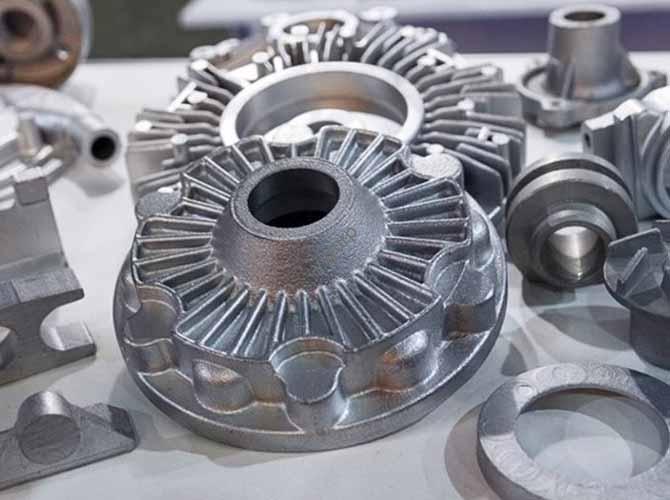
Yigu Technology’s Squeeze Die Casting Capabilities
Our capabilities are built on three pillars: technical expertise, state-of-the-art equipment, and decades of experience in serving global industries. We don’t just meet standards—we set them with our commitment to quality and flexibility.
Key Capabilities at a Glance
| Capability Category | Details |
| Production Capacity | 50,000–500,000 units/month (scalable for high-volume orders) |
| Quality Control | ISO 9001 & IATF 16949 certified; 100% dimensional inspection pre-shipment |
| Custom Solutions | Tailored dies, alloy blends, and surface treatments for unique project needs |
| Equipment | 20+ automated squeeze casting machines (100–800 tons clamping force) |
What Is Squeeze Die Casting?
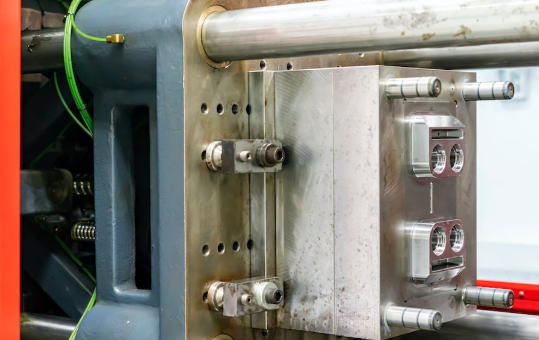
Squeeze Die Casting (also known as Squeeze Casting) is a advanced casting technology that bridges the gap between High-Pressure Die Casting and Low-Pressure Die Casting. Unlike traditional methods, it uses controlled pressure during the solidification process to eliminate porosity and improve material density.
A quick process overview reveals its core value: molten metal is injected into a die, then a mechanical squeeze force (ranging from 10 to 150 MPa) is applied as the metal cools. This extra pressure ensures the metal fills every detail of the die, resulting in components with superior strength and dimensional accuracy. Table 1 compares it to other casting methods:
| Casting Method | Pressure Range | Porosity Level | Strength (Al Alloy) | Ideal Use Cases |
| Squeeze Die Casting | 10–150 MPa | Very Low (<1%) | 300–450 MPa | Structural parts, medical devices |
| High-Pressure Die Casting | 50–150 MPa | Medium (2–5%) | 250–350 MPa | Consumer electronics, small components |
| Low-Pressure Die Casting | 0.1–1 MPa | Low (1–2%) | 280–380 MPa | Large automotive parts (e.g., wheels) |
The Squeeze Die Casting Process: Step-by-Step
The Squeeze Die Casting Process follows a streamlined process flow designed for consistency and efficiency. Each step is optimized to minimize cycle time (typically 60–180 seconds per part) while maximizing quality.
- Injection: Molten alloy (heated to 600–750°C for aluminum) is injected into a preheated die (150–250°C) at low speed (0.5–2 m/s).
- Squeeze: Once the die is filled, a hydraulic press applies pressure (20–120 MPa) to the molten metal. This step eliminates air bubbles and ensures full die cavity filling.
- Cooling: The metal solidifies under pressure for 10–30 seconds. Coolant channels in the die speed up this process while preventing warping.
- Ejection: The die opens, and robotic arms (for automation) remove the finished part. Post-ejection, excess material (flash) is trimmed for precision.
Materials Used in Squeeze Die Casting
Choosing the right materials is critical to achieving optimal part performance. At Yigu Technology, we work with a range of high-performance alloys, each selected for its unique properties.
Alloy Selection Guide
| Alloy Type | Common Grades | Key Properties | Typical Applications |
| Aluminum Alloys | A356, A380, 6061 | Lightweight (2.7 g/cm³), high strength, corrosion-resistant | Automotive parts, aerospace components |
| Magnesium Alloys | AZ91D, AM60B | Ultra-light (1.8 g/cm³), good damping | Electronics housings, sporting goods |
| Zinc Alloys | Zamak 3, Zamak 5 | Low melting point (380°C), high ductility | Consumer goods, hardware |
| Copper Alloys | Brass C36000 | High thermal conductivity, wear-resistant | Industrial valves, medical devices |
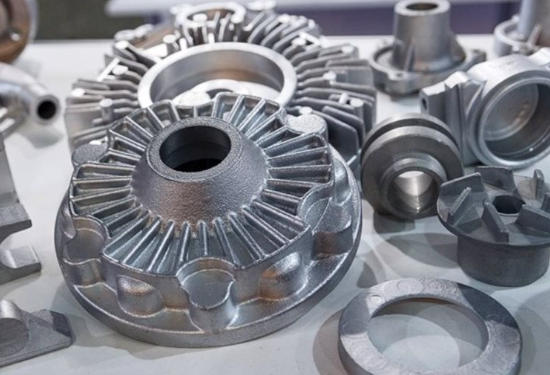
We also offer custom alloys blended to meet specific requirements (e.g., higher heat resistance for engine parts).
Advantages of Squeeze Die Casting
The advantages of Squeeze Die Casting make it a top choice for industries where performance and cost matter.
- High Strength: Parts have 15–30% higher tensile strength than high-pressure die cast components (e.g., aluminum parts reach 400+ MPa).
- Lightweight: Alloys like aluminum and magnesium reduce part weight by 30–50% compared to steel, improving fuel efficiency in vehicles.
- Reduced Porosity: Pressure during solidification lowers porosity to <1%, eliminating the need for secondary sealing processes.
- Cost-Effective: Automated processes and minimal waste cut production costs by 10–20% versus other precision casting methods.
Faster Production: Short cycle times (60–180 seconds) enable high-volume output without sacrificing quality.
Industry Applications of Squeeze Die Casting
Squeeze Die Casting serves a wide range of industries and applications, thanks to its versatility and performance.
| Industry | Key Applications | Material of Choice | Why Squeeze Die Casting? |
| Automotive | Engine brackets, transmission housings, EV parts | Aluminum Alloys | Lightweight, high strength, cost-effective |
| Aerospace | Structural brackets, sensor housings | Aluminum/Magnesium | Precision, corrosion resistance |
| Electronics | Heat sinks, laptop frames, 5G components | Magnesium/Zinc | Thermal conductivity, ultra-light |
| Medical Devices | Surgical instruments, implant components | Titanium-Copper Alloys | Biocompatibility, tight tolerances |
| Consumer Goods | Power tool housings, camera bodies | Zinc/Aluminum | Dimensional accuracy, aesthetic finish |
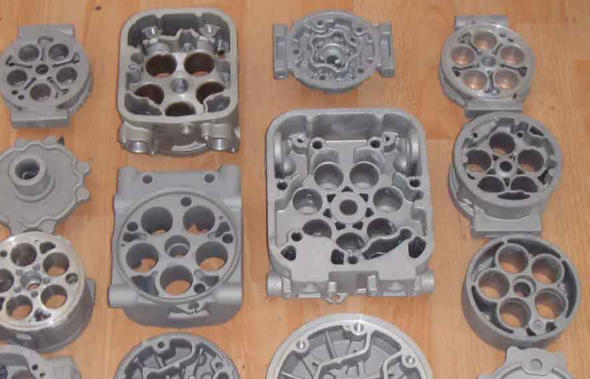
Case Studies: Yigu Technology’s Success Stories
Our case studies demonstrate how we solve complex challenges for clients across industries.
Case Study 1: Automotive EV Battery Housing
- Challenge: A leading EV manufacturer needed a lightweight, high-strength battery housing with <0.1mm tolerance and corrosion resistance.
- Solution: Used A356 aluminum alloy with squeeze die casting (80 MPa pressure) and anodizing surface treatment.
- Result: 30% weight reduction vs. steel housings; 100,000+ units produced monthly with 0.08mm dimensional accuracy.
Case Study 2: Medical Surgical Instrument
- Challenge: A medical client required a biocompatible, wear-resistant instrument handle with a smooth surface.
- Solution: Utilized brass C36000 alloy and polishing + plating (nickel) for biocompatibility.
- Result: Meets ISO 10993 biocompatibility standards; 99.9% defect-free rate over 50,000 units.