
Our Metal CNC Machining Services
At Yigu Technology, we deliver top-tier Metal CNC Machining Services that blend Precision Engineering with advanced Computer Numerical Control technology. Whether you need custom parts via CNC Milling or high-volume production through Multi-axis Machining, our expertise in Metal Fabrication and strict adherence to Tight Tolerances ensures consistent, high-quality results.
From Aluminum to Exotic Metals, we optimize every Machining Process to meet your industry’s unique needs—backed by years of experience in serving Automotive, Aerospace, and Medical sectors. Choose us for reliability, efficiency, and solutions that turn your designs into reality.
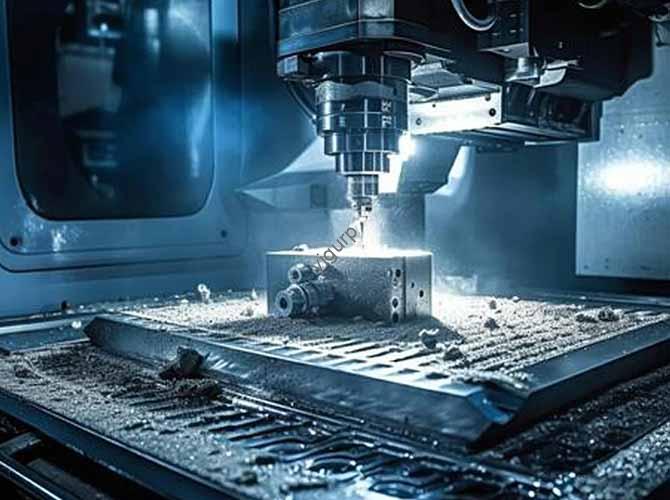
Our Metal CNC Machining Capabilities
At Yigu Technology, our CNC Machining Services cover a wide range of capabilities to meet diverse industry needs. We specialize in:
- CNC Milling: Ideal for creating 3D parts by removing material from a metal block. We handle both simple slots and complex contours.
- CNC Turning: Perfect for cylindrical parts (e.g., bolts, shafts) by rotating the metal while a tool cuts into it.
- Multi-axis Machining: Uses 4-axis or 5-axis machines to access hard-to-reach areas, reducing setup time for complex parts.
- High Precision Machining: Achieves Tight Tolerances (as low as ±0.0005mm) for critical components in sectors like Aerospace and Medical.
Our production capacity and tolerance capabilities are outlined below:
| Capability | Range/Details | Industry Application |
| Large Scale Production | Up to 100,000 parts/month | Automotive, Electronics |
| Custom Machining | One-off prototypes to small batches | Industrial, R&D |
| Tolerances | Standard: ±0.005mm; Tight: ±0.0005mm | Medical Devices, Aerospace Components |
| Precision Capabilities | ISO 8015 standard compliance | All high-precision sectors |
What Is Metal CNC Machining?
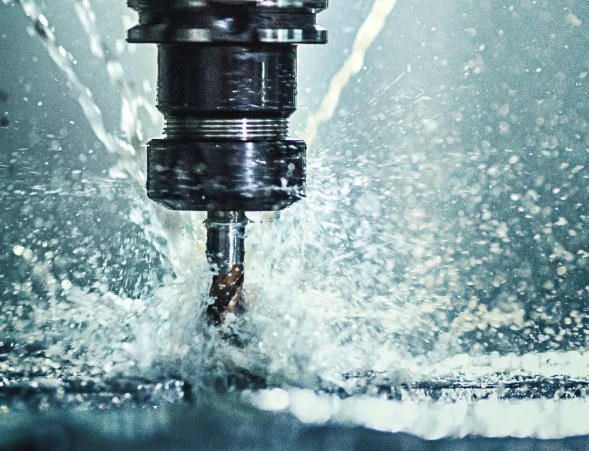
CNC Machining (Computer Numerical Control Machining) is a core Metalworking technique that uses computer programs to control machine tools for Metal Cutting, shaping, and finishing. Unlike manual machining, it eliminates human error, ensuring uniform results across every part. This process is a cornerstone of modern Metal Fabrication and Precision Engineering, as it can handle complex designs with minimal oversight.
Key terms in CNC Machining include:
- Machining Process: The step-by-step sequence of cutting, drilling, or turning metal.
- Tooling: The tools (e.g., drills, end mills) used to shape the metal.
- CNC Definition: The use of computer code to automate machine movements for precision.
Below is a comparison of CNC Machining vs. traditional manual machining:
| Feature | CNC Machining | Manual Machining |
| Precision | High (down to ±0.001mm) | Low (depends on operator skill) |
| Consistency | Uniform across all parts | Varies by operator |
| Speed | Fast (ideal for large production) | Slow (best for small batches) |
| Complexity | Handles intricate designs easily | Limited to simple shapes |
The Metal CNC Machining Process
Our CNC Machining Process follows a structured workflow to ensure accuracy and efficiency. Here’s a step-by-step breakdown:
- Design for Machining: Engineers create 3D models (using CAD software) optimized for manufacturability—avoiding features that are hard to machine.
- CAD/CAM Conversion: The CAD model is converted into machine-readable code (G-code) via CAM software, which defines tool paths and speeds.
- Setup: The metal material is secured in the machine, and tools are loaded according to the CAM program.
- Machining Operations: The machine executes the code—performing tasks like milling, turning, or drilling—to shape the part.
- Inspection: The finished part is checked for dimensional accuracy using tools like calipers or CMMs (Coordinate Measuring Machines).
- Process Optimization: Feedback from inspections is used to refine the process, reducing waste and improving speed.
The table below shows typical cycle times for common machining operations:
| Machining Operation | Material (Steel) | Cycle Time (per part) |
| Simple Milling (slot) | Stainless Steel | 2–3 minutes |
| CNC Turning (shaft) | Carbon Steel | 1–2 minutes |
| Complex Multi-axis | Titanium | 5–8 minutes |
Materials Used in Metal CNC Machining Services
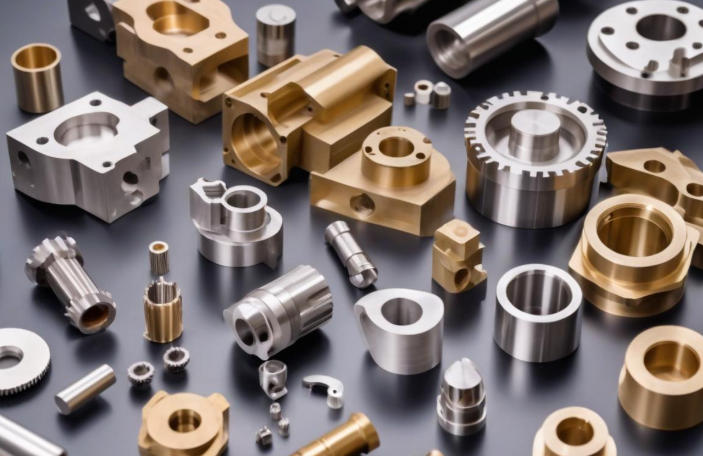
We work with a wide range of Metals to suit different application requirements. Our material selection is guided by factors like strength, corrosion resistance, and cost. Below are the most common materials we use:
| Material | Key Properties | Common Applications |
| Aluminum | Lightweight, high thermal conductivity | Automotive parts, Electronic enclosures |
| Steel (Carbon/Alloy) | Strong, durable | Industrial equipment, Structural parts |
| Stainless Steel | Corrosion-resistant | Medical devices, Food processing tools |
| Titanium | High strength-to-weight ratio | Aerospace components, Dental implants |
| Brass/Copper | Excellent electrical conductivity | Electrical parts, Plumbing fittings |
| Exotic Metals (e.g., Inconel) | Heat-resistant | Jet engine parts, Oil and gas components |
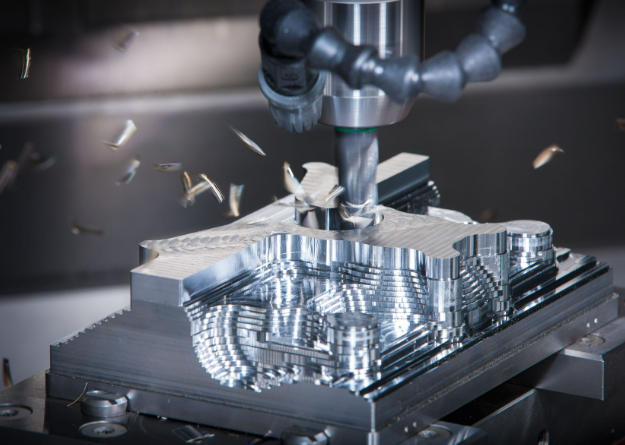
Our Material Selection team helps clients choose the right metal for their project—balancing performance and cost-effectiveness. We only source high-quality materials from certified suppliers to ensure part reliability.
Surface Treatment for Metal CNC Parts
After machining, Surface Treatment is often applied to enhance the part’s appearance, durability, or functionality. We offer a variety of Surface Finishing options:
- Anodizing: Creates a protective oxide layer on aluminum parts—available in different colors.
- Plating: Adds a thin layer of metal (e.g., chrome, nickel) to improve corrosion resistance or conductivity.
- Painting: Applies a decorative or protective coating (e.g., powder coating) for outdoor use.
- Polishing: Creates a smooth, shiny surface for aesthetic purposes (common in consumer goods).
- Blasting: Uses abrasive materials to remove burrs or create a matte finish.
- Heat Treatment: Hardens the metal (e.g., annealing, quenching) to improve strength.
The table below compares popular surface treatments:
| Surface Treatment | Advantages | Best For |
| Anodizing | Scratch-resistant, colorable | Aluminum automotive parts |
| Plating (Nickel) | Corrosion-resistant, conductive | Electrical connectors |
| Powder Coating | Durable, weather-resistant | Outdoor industrial equipment |
| Heat Treatment | Increases hardness | High-stress parts (e.g., gears) |
Metal CNC Machining Tolerances: Ensuring Precision in Every Part
Tolerances are critical in CNC Machining—they define the acceptable variation in a part’s dimensions. We adhere to strict Tolerance Standards (e.g., ISO, ANSI) to meet even the most demanding requirements.
Key types of tolerances we manage:
- Dimensional Tolerances: Variation in length, width, or height (e.g., ±0.005mm).
- Geometric Tolerances: Variation in shape or position (e.g., straightness, parallelism).
- Precision Tolerances: Ultra-tight tolerances (down to ±0.0005mm) for critical parts.
Our Machining Accuracy is verified using advanced inspection tools:
| Inspection Tool | Accuracy Level | Used For |
| Digital Caliper | ±0.01mm | Basic dimensional checks |
| Micrometer | ±0.001mm | Small part measurements |
| CMM (Coordinate Measuring Machine) | ±0.0005mm | Complex 3D part inspections |
Advantages of Choosing Metal CNC Machining
CNC Machining offers numerous benefits over traditional manufacturing methods—making it the preferred choice for many industries. Here are the key Advantages of CNC Machining:
- Precision & Accuracy: Computer control eliminates human error, ensuring parts meet exact specifications every time.
- Consistency: All parts in a batch are identical—critical for industries like Automotive and Electronics.
- Efficiency & Speed: Automated processes reduce cycle times, even for complex parts.
- Cost-effectiveness: Lower labor costs and less waste make it affordable for both small and large production runs.
- Customization: Easily adapts to unique designs, from prototypes to custom parts.
- Reliability: Minimal downtime and consistent performance mean on-time delivery.
A recent client study found that switching to our CNC Machining Services reduced their production costs by 20% and improved part quality by 35%.
Industry Applications of Metal CNC Machining
Our CNC Machining Services serve a wide range of Industry Sectors, each with unique requirements. Below are the key industries we support:
- Automotive: Produces engine parts, brackets, and transmission components with strict tolerances.
- Aerospace: Manufactures lightweight, high-strength parts (e.g., turbine blades) using Titanium and Exotic Metals.
- Medical: Creates precision Medical Devices (e.g., surgical tools, implants) that meet FDA standards.
- Electronics: Makes small, intricate parts (e.g., connectors, heat sinks) from Aluminum and Copper.
- Industrial: Builds heavy-duty components for machinery and equipment using Steel and Stainless Steel.
The table below shows the volume of parts we produce for each industry annually:
| Industry | Annual Part Volume | Key Parts Produced |
| Automotive | 500,000+ | Engine brackets, sensor housings |
| Aerospace | 50,000+ | Turbine components, Fasteners |
| Medical | 100,000+ | Surgical instruments, Implant bases |
| Electronics | 1,000,000+ | Connector pins, Heat sinks |