
Our Thermoset Injection Molding Services
Unlock unmatched durability, heat resistance, and precision for your components with thermoset injection molding from Yigu Technology.
Our expertise in custom tooling, high-volume production, and advanced resin systems delivers cost-effective, high-performance solutions tailored to automotive, aerospace, electronics, and medical industries. Partner with us to turn complex designs into reliable, consistent parts—every time.
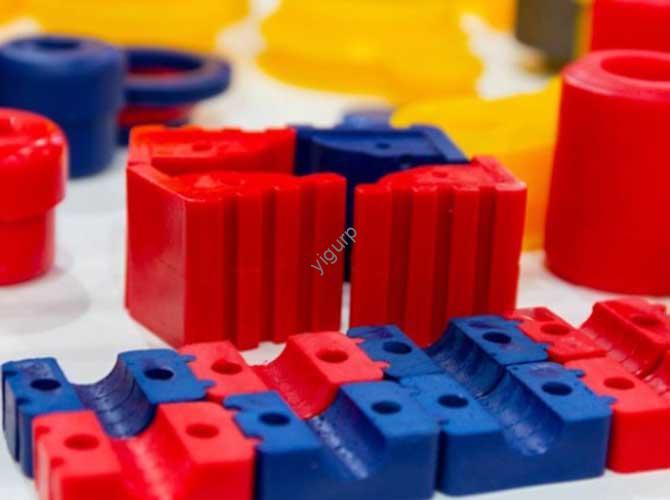
Our Capabilities: Delivering Precision and Reliability
At Yigu Technology, we combine decades of injection molding expertise with state-of-the-art equipment to meet your unique needs. Our thermoset molding capabilities cover every step from design to delivery, ensuring quality and efficiency.
Table 2: Core Capabilities Overview
| Capability | Details |
| Precision Molding | Achieve tight tolerances (±0.001 in) for critical components. |
| Custom Tooling | Design and manufacture molds for complex geometries (lead time: 2–4 weeks). |
| High-Volume Production | Capacity to produce 100,000+ parts monthly with consistent quality. |
| Quality Control | In-line inspection using laser measurement and automated testing. |
| Material Selection | Partner with leading suppliers to source thermoset resins (phenolic, epoxy) and additives. |
| Process Optimization | Use AI-driven software to reduce cycle times by 15–20%. |
| Part Design Support | Offer DFM (Design for Manufacturability) advice to minimize costs. |
| Secondary Operations | Provide assembly, coating, and packaging for turnkey solutions. |
What Is Thermoset Injection Molding?
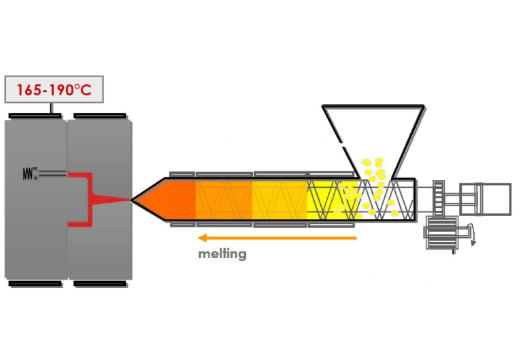
Thermoset injection molding is a manufacturing process that shapes thermoset materials into durable components using heat and pressure. Unlike thermoplastics, which soften when reheated, thermoset plastics undergo irreversible cross-linking during curing, creating rigid, heat-resistant parts. This process relies on polymer chemistry and specialized resin systems to achieve properties like chemical resistance and dimensional stability.
Key stages of the reaction include:
- Hardening: Triggered by heat or catalysts, turning liquid resin into solid parts.
- Curing: The cross-linking phase that locks in the material’s final properties.
- Thermosetting compounds: Pre-mixed resins with fillers or reinforcements to enhance performance.
Table 1: Thermoset vs. Thermoplastic Materials
| Feature | Thermoset Materials | Thermoplastic Materials |
| Reheat Behavior | Do not soften (irreversible cross-linking) | Soften and reflow (reversible) |
| Heat Resistance | High (withstand 150–300°C) | Moderate (typically <150°C) |
| Chemical Resistance | Excellent (resist oils, solvents) | Good (varies by material) |
| Dimensional Stability | Superior (minimal shrinkage after curing) | Lower (prone to warping when heated) |
| Common Uses | Electrical components, automotive parts | Packaging, toys, consumer goods |
Process: How Thermoset Injection Molding Works
The thermoset processing cycle is a structured sequence of steps, each critical to producing high-quality parts. Unlike thermoplastic molding, curing happens during the process, not after.
Step-by-Step Process Breakdown:
- Material Feeding: Thermoset compounds (resin + fillers) are loaded into a hopper and fed into a heated barrel.
- Heating and Mixing: The barrel heats the material to a viscous state (not melted) while screws mix in additives or reinforcements.
- Injection: High pressure (1,000–5,000 psi) forces the material into a custom mold cavity.
- Curing: The mold is heated (120–180°C) to trigger cross-linking—this takes 30 seconds to 5 minutes, depending on part size.
- Ejection: Once cured, the mold opens, and ejector pins remove the solid part.
- Post-processing: Trimming excess material, surface finishing, or quality checks (e.g., dimensional measurement).
- Process Automation: Robotic arms handle material feeding and part ejection, reducing labor errors by 25%.
Figure 1: Typical Thermoset Injection Molding Cycle Time
| Part Size (in³) | Feeding Time (s) | Heating Time (s) | Injection Time (s) | Curing Time (s) | Ejection Time (s) | Total Cycle Time (s) |
| <1 | 5 | 10 | 8 | 30 | 5 | 58 |
| 1–5 | 8 | 15 | 12 | 60 | 8 | 103 |
| >5 | 12 | 20 | 18 | 120 | 12 | 182 |
Materials: Choosing the Right Thermoset Resin
Selecting the right thermoset resins is key to part performance. Yigu Technology works with a range of materials, each optimized for specific applications.
Table 3: Common Thermoset Resins and Their Properties
| Resin Type | Key Properties | Typical Applications |
| Phenolic Resins | High heat resistance, low cost, good electrical insulation | Electrical switches, automotive brake pads |
| Epoxy Resins | Excellent adhesion, chemical resistance, high strength | Aerospace components, medical devices |
| Polyester Resins | Lightweight, corrosion-resistant, low viscosity | Boat hulls, industrial tanks |
| Vinyl Ester Resins | Superior impact resistance, heat resistance | Chemical storage containers, wind turbine blades |
| Silicone Resins | Flexibility, extreme temperature resistance (-60–250°C) | O-rings, electrical connectors |
We also enhance resins with:
- Fillers: Talc or calcium carbonate to reduce cost and improve rigidity.
- Reinforcements: Glass fibers or carbon fibers to boost strength (increases tensile strength by 30–50%).
- Additives: Flame retardants, UV stabilizers, or colorants for custom needs.
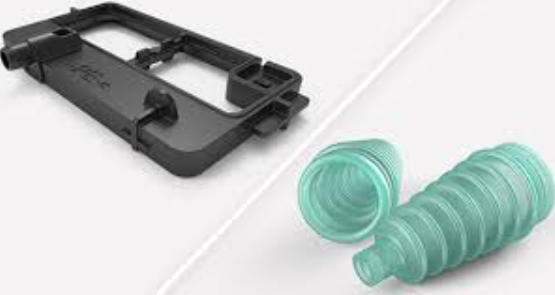
Advantages: Why Choose Thermoset Injection Molding?
Thermoset injection molding offers unique benefits that make it ideal for demanding applications:
- Durability: Parts resist wear, impact, and aging—last up to 10x longer than thermoplastic alternatives in harsh environments.
- Heat resistance: Withstand temperatures up to 300°C, making them suitable for engine components or electrical systems.
- Chemical resistance: Resist oils, solvents, and acids—used in chemical processing or automotive fuel systems.
- Dimensional stability: Minimal shrinkage (0.1–0.5%) after curing, ensuring parts fit consistently.
- High strength: Reinforced resins (e.g., glass-filled epoxy) have tensile strength up to 10,000 psi.
- Cost-effectiveness: High-volume production reduces per-unit costs by 15–20% compared to machining.
- Customizability: Complex geometries (e.g., undercuts, thin walls) are easy to produce with custom tooling.
- Part consolidation: Replace multiple assembled parts with one molded component, cutting assembly time by 50%.
Applications Industry: Where Thermoset Parts Excel
Our thermoset injection molding solutions serve a wide range of industries, each with unique requirements:
Table 5: Industry Applications and Material Choices
| Industry | Common Applications | Preferred Resins | Key Benefits |
| Automotive | Brake pads, sensor housings, engine gaskets | Phenolic, epoxy | Heat resistance, durability |
| Aerospace | Structural components, electrical connectors | Epoxy, silicone | High strength, lightweight |
| Electronics | Circuit boards, switch housings | Phenolic, epoxy | Electrical insulation, flame resistance |
| Medical Devices | Surgical instruments, implant components | Epoxy, silicone | Biocompatibility, chemical resistance |
| Consumer Goods | Handle grips, appliance parts | Polyester, vinyl ester | Aesthetics, cost-effectiveness |
| Industrial | Pump parts, valve seats | Phenolic, epoxy | Wear resistance, chemical resistance |
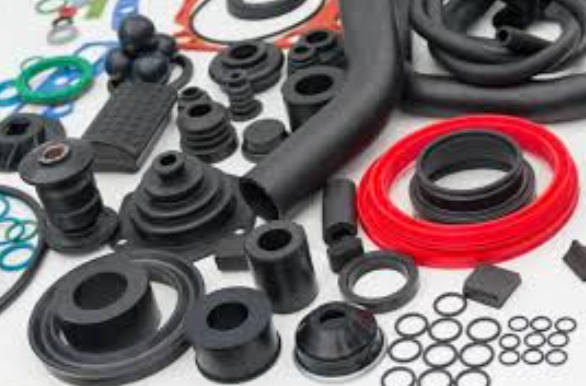
Case Studies: Success Stories from Our Clients
Case Study 1: Automotive Brake Pad Manufacturer
- Challenge: The client needed a high-volume supplier for brake pads with tight tolerances (±0.003 in) and heat resistance up to 250°C.
- Solution: We used phenolic resins with glass fiber reinforcements and custom tooling. Our process optimization reduced cycle time from 2 minutes to 1 minute 30 seconds.
- Results: 20% lower production costs, 99.9% part consistency, and a 3-year supply contract renewal.
Case Study 2: Medical Device Company
- Challenge: The client required biocompatible epoxy resin parts for a surgical tool, with strict surface finish (Ra <0.8 μm) and dimensional accuracy (±0.001 in).
- Solution: We implemented precision molding with in-line CMM inspection and polishing as a secondary operation. We also provided material certification for biocompatibility.
- Results: Parts passed FDA testing, lead time reduced by 2 weeks, and the client expanded their order by 50%.