
Our Hot Runner Injection Molding Services
Elevate your plastic manufacturing with Hot Runner Injection Molding from Yigu Technology. Our advanced Hot Runner System delivers exceptional precision, reduces waste by up to 30%, and cuts cycle times—all while supporting high-volume production of top-quality parts.
Whether you need custom tooling for automotive components or biodegradable plastic solutions for packaging, we combine expertise in Thermoplastic Materials with lean manufacturing practices to turn your ideas into reality.
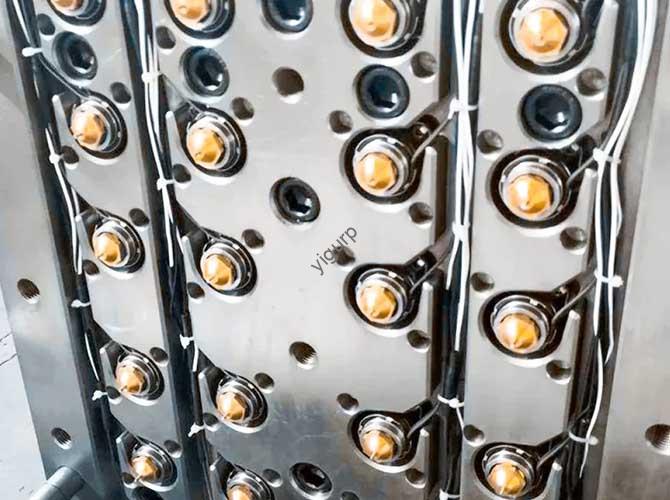
Yigu Technology’s Hot Runner Injection Molding Capabilities
At Yigu Technology, we leverage decades of experience to offer end-to-end solutions for hot runner injection molding. Our capabilities are tailored to meet the unique needs of high-volume, precision-driven industries.
| Capability | Key Benefits | Application Example |
| Precision Molding | Dimensional accuracy within ±0.005mm | Medical device components (e.g., syringes) |
| High Volume Production | Capacity to produce 100,000+ parts/month | Consumer goods (e.g., smartphone cases) |
| Custom Tooling | Tailored mold designs for unique part geometries | Automotive interior trim pieces |
| Multi-Cavity Molds | Up to 64 cavities for simultaneous part production | Packaging lids or small electronic components |
| Rapid Prototyping | 3–5 day turnaround for functional prototypes | New product development for aerospace parts |
| Advanced Simulation | Predict and resolve flow or cooling issues pre-production | Complex engineering plastic parts (e.g., PEEK gears) |
| Quality Control | 100% inspection using SPC and GD&T standards | Critical automotive safety components |
| Lean Manufacturing | 20% reduction in production lead times | High-demand household appliances |
| Value-Added Services | Post-processing (e.g., assembly, coating) under one roof | Telecommunications equipment |
| Turnkey Solutions | From design to delivery, no third-party involvement | Industrial equipment housings |
Our team combines these capabilities to ensure every project meets the highest standards of quality and efficiency.
What Is Hot Runner Injection Molding?
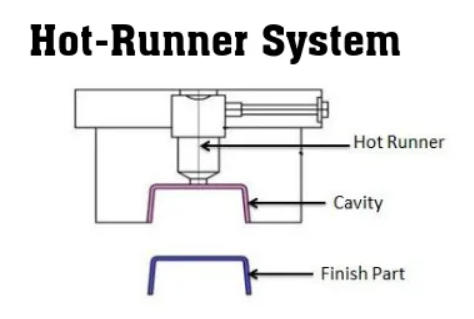
At its core, Hot Runner Injection Molding is an advanced Injection Molding Process designed to keep molten plastic (resin) in a liquid state as it travels from the machine’s barrel to the mold cavity. Unlike traditional cold runner systems, this method eliminates the need to trim and reuse solidified runner material—saving time, reducing waste, and improving consistency.
Key components of a typical Hot Runner System include:
- Nozzle Design: Ensures precise melt delivery to each cavity, preventing cold spots or material degradation.
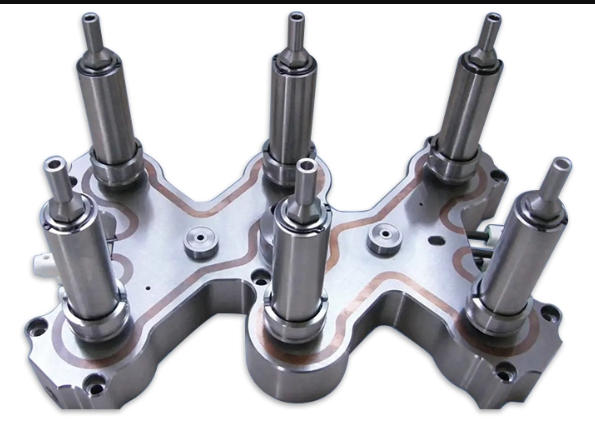
- Manifold Configuration: Distributes molten resin evenly across multi-cavity molds, guaranteeing uniform part quality.
- Temperature Control Units: Maintain consistent heat to keep Polymer Flow smooth and predictable.
This Hot Runner Technology is ideal for processing a wide range of Thermoplastic Materials, making it a go-to choice for modern Plastic Molding operations.
The Hot Runner Injection Molding Process: Step-by-Step
The success of hot runner molding relies on a well-orchestrated process, from material selection to final ejection. Below is a breakdown of the key stages, along with critical parameters we optimize for each step.
| Process Stage | Key Activities | Critical Parameters | Optimization Goals |
| Material Selection | Choose appropriate Thermoplastics or Engineering Plastics based on part requirements | Resin grade, melt flow rate, heat resistance | Ensure material compatibility with hot runner system |
| Mold Preparation | Clean mold surfaces, check cavity alignment, install hot runner components | Mold temperature (40–80°C) | Prevent part sticking or defects |
| Machine Setup | Adjust injection pressure, speed, and barrel temperature | Injection pressure (500–2000 bar), speed (50–200 mm/s) | Achieve full cavity filling without overpacking |
| Temperature Control | Monitor and adjust hot runner manifold and nozzle temperatures | Manifold temp (180–320°C), nozzle temp (190–330°C) | Maintain consistent Polymer Flow; avoid material burn |
| Injection & Holding | Inject molten resin into cavities, apply holding pressure to compensate for shrinkage | Holding pressure (30–70% of injection pressure) | Ensure part density and dimensional stability |
| Cooling Time | Allow part to solidify in the mold | Cooling time (5–60 seconds, depending on part thickness) | Reduce cycle time without compromising part strength |
| Ejection Mechanism | Use pins or sleeves to remove parts from the mold | Ejection force (10–50 kN) | Prevent part damage during removal |
| Process Optimization | Analyze cycle time, defect rates, and part quality | Cycle time reduction (5–15%), defect rate (<0.1%) | Maximize efficiency and minimize waste |
| Automation Integration | Use robots for part handling and inspection | Automation rate (up to 95% for high-volume runs) | Improve consistency and reduce labor costs |
By fine-tuning each stage, we achieve Cycle Time Reduction of up to 25% compared to traditional cold runner systems.
Materials Used in Hot Runner Injection Molding
Yigu Technology works with a diverse range of materials to meet the needs of different industries. Our expertise in material selection ensures parts perform as expected in their end applications.
| Material Category | Common Types | Key Properties | Typical Applications |
| Thermoplastics | ABS, Polypropylene (PP) | Impact resistance, low cost, easy processing | Consumer goods (toys, household appliances) |
| Engineering Plastics | Polycarbonate (PC), Nylon | High strength, heat resistance, dimensional stability | Automotive components (light housings), electronics (circuit boards) |
| High-Performance Polymers | PEEK, PPS | Extreme heat resistance, chemical stability | Aerospace parts, medical devices (surgical instruments) |
| Biodegradable Plastics | PLA, PBAT | Eco-friendly, compostable | Packaging (food containers), disposable products |
We also offer Material Testing services to verify properties like tensile strength, impact resistance, and thermal stability. Additionally, we can incorporate Additives (e.g., UV stabilizers, colorants) to enhance material performance.
Advantages of Hot Runner Injection Molding
Compared to traditional cold runner systems, hot runner injection molding offers numerous benefits that drive efficiency, quality, and cost savings.
| Advantage | Description | Quantifiable Benefit |
| Reduced Waste | Eliminates solidified runner material, which typically accounts for 15–30% of material use | 20–30% reduction in material waste; saves 5,000–50,000/year for high-volume runs |
| Energy Efficiency | Requires less energy to reprocess runner material | 10–15% lower energy consumption compared to cold runner systems |
| Consistency | Uniform heat distribution ensures consistent part quality | Defect rates reduced to <0.1% for most applications |
| High-Quality Parts | Prevents material degradation and cold spots | Improved part strength (up to 10% higher tensile strength) and surface finish |
| Cost Savings | Less material waste, shorter cycle times, and lower labor costs | 15–25% lower total production costs |
| Faster Production | Shorter cooling times (no need to cool runners) | 10–25% reduction in cycle time; increases output by 15–20% |
| Design Flexibility | Supports complex part geometries and multi-cavity molds | Enables production of parts with thin walls, intricate details, or multiple components |
| Reduced Maintenance | Fewer moving parts and less material buildup | 30% reduction in mold maintenance time |
| Improved Part Performance | Consistent material flow reduces internal stresses | Parts have better dimensional stability and longer lifespan |
| Enhanced Aesthetics | No runner marks on parts; better surface finish | Reduces post-processing needs (e.g., trimming, polishing) |
Hot Runner Injection Molding Applications by Industry
Hot runner injection molding is versatile and widely used across various industries. Yigu Technology has extensive experience serving the following sectors:
| Industry | Common Applications | Materials Used | Key Requirements |
| Automotive | Interior trim, sensor housings, connector pins | PC, Nylon, ABS | High heat resistance, dimensional stability |
| Electronics | Circuit board components, smartphone cases, charger housings | ABS, PC, Polypropylene | Precision tolerances, flame retardancy |
| Medical Devices | Syringes, surgical instruments, implant components | PEEK, Medical-grade PP | Biocompatibility, sterilizability |
| Consumer Goods | Toys, household appliances (e.g., blender parts), cosmetic packaging | PP, ABS, Biodegradable plastics | Aesthetics, durability |
| Packaging | Bottle caps, food containers, blister packs | PP, PET, Biodegradable plastics | Lightweight, recyclability |
| Aerospace | Interior panels, sensor components, fasteners | PEEK, High-performance polymers | Extreme temperature resistance, strength |
| Telecommunications | Router housings, cable connectors | PC, ABS | Impact resistance, weatherability |
| Industrial Equipment | Gear housings, pump components | Nylon, PPS | Chemical resistance, high load capacity |
| Toys | Action figures, building blocks | PP, ABS | Non-toxicity, durability |
| Household Appliances | Washing machine parts, refrigerator shelves | PP, PC | Heat resistance, stain resistance |
Case Studies: Real-World Success Stories
At Yigu Technology, we take pride in delivering results for our customers. Below are a few examples of how we’ve used hot runner injection molding to solve complex challenges.
Case Study 1: Automotive Sensor Housing Production
- Challenge: A leading automotive manufacturer needed 500,000 sensor housings/month with tight tolerances (±0.005mm) and high heat resistance.
- Solution: We designed a 32-cavity hot runner mold using Polycarbonate and implemented Advanced Simulation to optimize flow. We also used SPC for real-time quality control.
- Results:
- Cycle time reduced by 20% (from 45s to 36s).
- Defect rate dropped to 0.05%.
- Material waste reduced by 25%, saving the customer $30,000/year.
Case Study 2: Medical Syringe Manufacturing
- Challenge: A medical device company required sterile, biocompatible syringes with a smooth surface finish.
- Solution: We used Medical-grade PP and a custom hot runner system with precision Nozzle Design. We also added a Coating for anti-microbial protection and implemented 100% Inspection Methods (CMM testing).
- Results:
- Met ISO 13485 standards for biocompatibility.
- Surface finish improved by 30%, reducing friction during use.
- Production capacity increased to 1 million syringes/month.