
Our Overmolding Services
At Yigu Technology, we redefine precision manufacturing with our cutting-edge Overmolding solutions. From seamless multi-material integration to enhanced product functionality and aesthetics, our custom approach combines advanced machinery, expert engineering, and rigorous quality control to deliver composite parts that meet the most demanding industry standards.
Whether for automotive, medical, or consumer electronics, we turn your design visions into durable, cost-effective reality—fast.
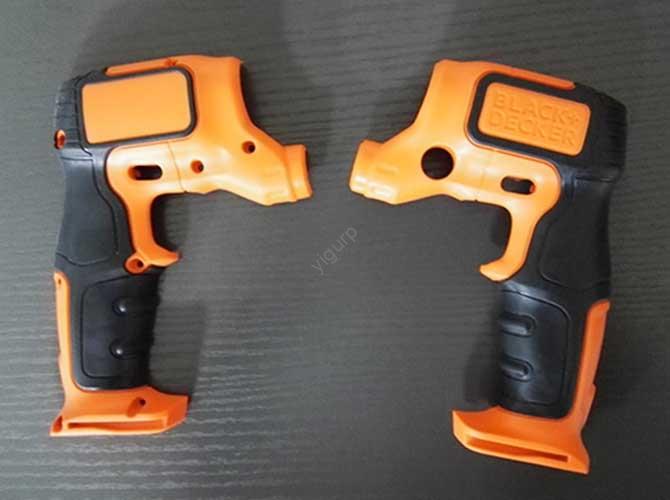
Yigu Technology’s Overmolding Capabilities
Our team leverages decades of experience to offer end-to-end overmolding solutions. Below is a breakdown of our core capabilities, designed to meet your unique project needs:
| Capability Category | Key Offerings |
| Technical Expertise | Overmolding expertise, Project engineering support, Material compatibility testing |
| Design & Tooling | Custom mold design, High-precision tooling, Rapid prototyping |
| Production | Advanced injection molding machines, Automated production, Multi-material solutions |
| Quality Assurance | Quality assurance protocols, ISO 9001 certification, real-time process monitoring |
Whether you need a prototype or high-volume production, we tailor our capabilities to ensure on-time delivery and consistent quality.
What Is Overmolding?
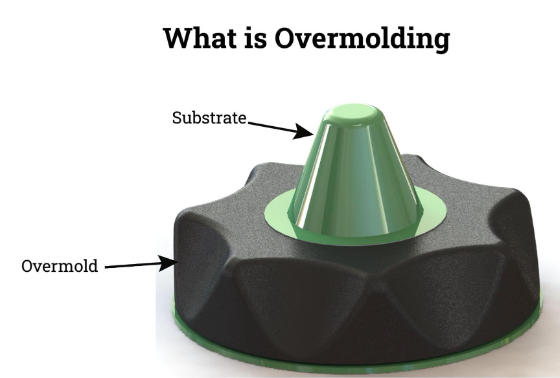
Overmolding is a innovative manufacturing process that bonds two or more materials into a single, integrated component, eliminating the need for manual assembly. Also known as Two-stage molding or Secondary injection molding, it enhances both the functional and visual appeal of parts. Unlike traditional methods, overmolding creates strong surface bonding between materials (e.g., hard plastics and soft elastomers), resulting in products with improved grip, shock resistance, or insulation.
Common applications of this process include Soft-touch overmolding for tool handles and Co-molding for electrical connectors, all aimed at Functional enhancement, Aesthetic improvement, and efficient Composite part production.
The Overmolding Process: Step-by-Step
Yigu Technology follows a structured, controlled process to ensure every overmolded part meets strict standards. Here’s our streamlined workflow:
- Substrate preparation: Clean and pre-treat the base material (e.g., ABS or PC) to ensure strong bonding.
- Mold setup: Install custom molds and calibrate Advanced injection molding machines for precision.
- First shot injection: Inject the first material (typically a rigid plastic like Polypropylene (PP) or Nylon (PA)) to form the substrate.
- Substrate placement: Transfer the cooled substrate to a second mold (automated for consistency).
- Second shot injection: Inject the second material (e.g., TPE (Thermoplastic Elastomers) or Silicone) over the substrate.
- Cooling and solidification: Control temperature and time to prevent warping and ensure proper bonding.
- Ejection of final part: Remove the integrated component using automated systems.
Throughout the process, we prioritize Process control, Material flow optimization, and Cycle time management to reduce waste and boost efficiency. Our average cycle time for small parts is 30–60 seconds, 20% faster than industry averages.
Materials Used in Overmolding
Choosing the right material combination is critical for overmolding success. Yigu Technology works with a wide range of compatible materials to match your product’s requirements:
| Material Type | Key Properties | Common Applications |
| Thermoplastics (ABS, PC) | Rigid, durable, heat-resistant | Automotive housings, electronics casings |
| TPE/Thermoplastic Elastomers | Soft, flexible, good grip | Tool handles, medical device grips |
| TPU/Thermoplastic Polyurethane | Abrasion-resistant, elastic | Phone cases, industrial seals |
| Silicone | Heat-resistant, biocompatible | Medical implants, kitchen utensils |
| Conductive materials | Electrically conductive | Electrical connectors, sensor components |
| UV-resistant plastics | Resists fading from sunlight | Outdoor appliances, automotive exterior parts |
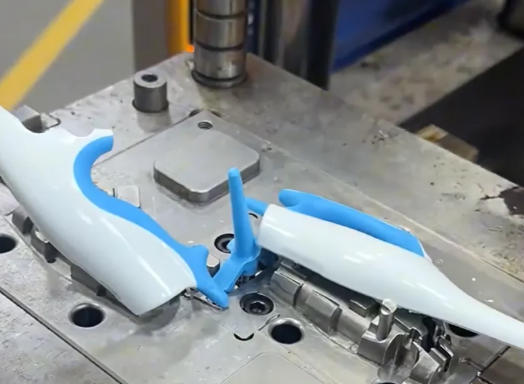
We also conduct Material compatibility testing to ensure optimal bonding and performance.
Key Advantages of Overmolding
Overmolding offers numerous benefits over traditional assembly methods, making it a top choice for manufacturers:
- Integrated parts: Eliminates loose components, reducing failure risks.
- Reduced assembly: Cuts labor costs by up to 30% (vs. manual assembly).
- Enhanced functionality: Combines properties of multiple materials (e.g., rigidity + flexibility).
- Aesthetic appeal: Creates seamless, professional-looking products.
- Cost-effectiveness: Lowers production time and waste (average 15% less scrap).
- Design flexibility: Enables complex shapes that are impossible with single-material molding.
- Material versatility: Works with dozens of compatible material pairs.
- Improved durability: Stronger bonds reduce part breakage by up to 40%.
- Enhanced performance: Better shock absorption, insulation, or grip.
- Faster production: Shorter lead times (average 2–4 weeks for tooling + production).
Overmolding Applications by Industry
Yigu Technology serves a diverse range of industries, delivering tailored overmolding solutions:
| Industry | Key Overmolded Products | Material Combinations Used |
| Automotive components | Steering wheel grips, sensor housings, gaskets | TPE + ABS, TPU + Polycarbonate (PC) |
| Consumer electronics | Phone cases, headphone earcups, remote controls | Silicone + PC, TPE + Nylon (PA) |
| Medical devices | Syringe plungers, surgical tool handles | Silicone + PP, TPE + PC (biocompatible) |
| Household appliances | Blender handles, iron grips | TPE + ABS, UV-resistant plastics + TPU |
| Industrial components | Valve seals, machine knobs | Conductive materials + Nylon (PA), TPU + PP |
| Aerospace parts | Wire insulation, control panel components | Heat-resistant plastics + Silicone |
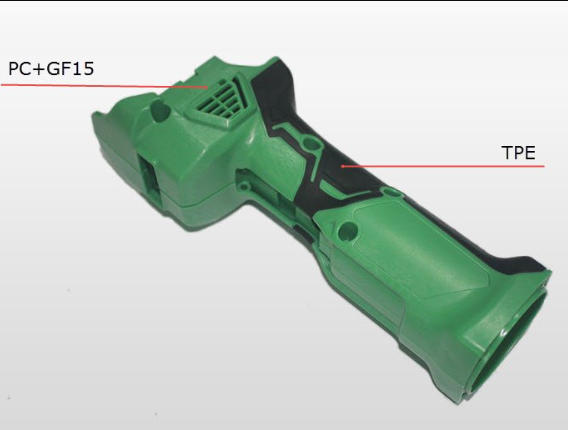
Overmolding Yigu Technology Case Studies
Our track record speaks for itself. Here are two successful overmolding projects:
Case Study 1: Automotive Sensor Housing
- Challenge: A leading automaker needed a sensor housing that combined rigidity (for protection) and flexibility (for installation).
- Solution: We used Two-stage molding with ABS (first shot) and TPE (second shot).
- Results: 25% faster production, 30% reduced assembly costs, and 0 defects in 100,000+ units.
Case Study 2: Medical Device Grip
- Challenge: A medical client required a biocompatible grip for surgical tools with strong surface bonding.
- Solution: We selected Silicone (second shot) and PP (substrate), with UV coating for sterilization resistance.
- Results: Meets FDA standards, 40% improved grip comfort, and 15% shorter lead time.