
Our Insert Injection Molding Services
At Yigu Technology, we redefine manufacturing excellence with Insert Injection Molding—a game-changing process that fuses multiple materials into integrated, high-performance parts.
From automotive components to medical devices, our custom solutions reduce assembly time by up to 40%, enhance durability, and unlock unmatched design flexibility. Leverage our expertise in high-precision tooling, multi-material solutions, and automated production to turn your ideas into reliable, cost-effective products.
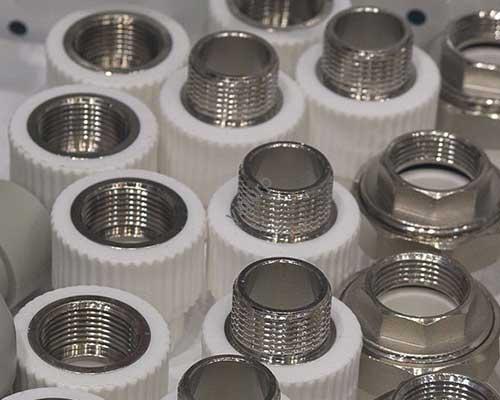
Yigu Technology’s Insert Molding Capabilities
Our team blends decades of experience with cutting-edge technology to deliver tailored insert molding solutions. Whether you need a prototype or mass production, we cover every step—from design to delivery.
| Capability | Details | Benefit to You |
| Insert molding expertise | 15+ years in serving automotive, electronics, and medical industries | Reduced project risks; proven track record |
| Custom mold design | CAD/CAM-driven molds tailored to your part’s specs | Perfect fit for unique part requirements |
| High-precision tooling | Molds with tolerances as tight as ±0.005mm | Consistent, accurate parts every time |
| Multi-material solutions | Combine thermoplastics, metals, rubbers, and composites | Parts that balance strength, flexibility, and cost |
| Advanced injection molding machines | 50+ machines (10-500 tons) with real-time process monitoring | Fast, reliable production; minimal waste |
| Automated production | Robot-led insert placement and part handling | 30% faster cycle times; lower labor costs |
| Quality assurance | ISO 9001 & IATF 16949 certified; 100% inspection for critical parts | Zero-defect parts; compliance with industry standards |
| Rapid prototyping | Turn designs into prototypes in 5-7 days | Test and refine ideas fast; speed up time-to-market |
| Material compatibility testing | Lab tests to ensure inserts and plastics bond well | Durable parts that resist wear, heat, and chemicals |
| Project engineering support | Dedicated engineers for design reviews and problem-solving | Smooth project execution; expert guidance |
What Is Insert Injection Molding?
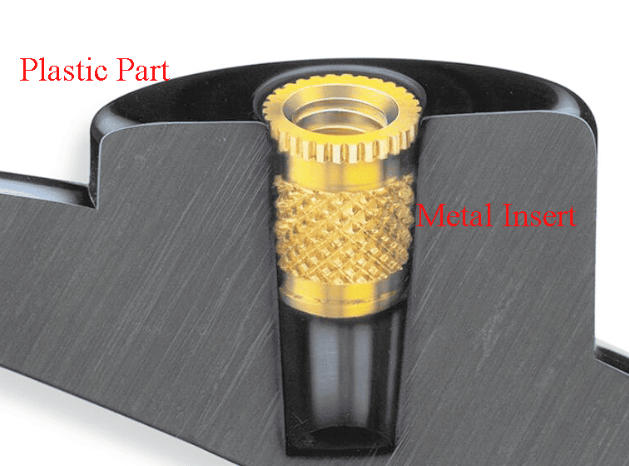
Insert Injection Molding is a specialized manufacturing method that embeds pre-formed components (called inserts) into plastic during the injection molding process. This eliminates the need for post-assembly, creating stronger, more integrated parts. Unlike traditional assembly, it combines materials in a single or two-stage process to boost functionality and reduce errors.
Key terms in this field include:
- Insert molding process: The core workflow of embedding inserts into plastic.
- Metal insert molding: Using metal inserts (e.g., steel, aluminum) for strength.
- Plastic over-molding: Covering inserts with plastic for protection or aesthetics.
- Integrated assembly: Combining parts into one unit, cutting labor costs.
- Two-stage molding: First forming the insert, then over-molding it with plastic.
- Embedding components: Securing inserts (like wires or fasteners) within the plastic.
- Composite part manufacturing: Making parts with mixed materials (e.g., plastic + metal).
- Functional integration: Adding features (e.g., conductivity) via inserts.
- Precision assembly: Ensuring inserts are placed with tight tolerances.
- Multi-material part production: Using two or more materials for balanced performance.
The Insert Injection Molding Process
Our process is streamlined to ensure efficiency, precision, and consistency. Each step is controlled to meet your part’s quality standards.
- Insert preparation: Clean and pre-treat inserts (e.g., deburring metal) to ensure good bonding with plastic.
- Mold setup: Install the mold in the injection machine and calibrate settings (temperature, pressure).
- First shot injection (for two-stage molding): Inject plastic to form a base, then cool briefly.
- Insert placement: Use robots or manual labor to position inserts in the mold—critical for precision alignment.
- Second shot injection: Inject a second plastic material over the inserts to secure them.
- Cooling and solidification: Let the part cool until the plastic hardens (controlled by mold temperature).
- Ejection of final part: Remove the finished part from the mold; trim excess plastic if needed.
- Process control: Use sensors to monitor temperature, pressure, and cycle time—ensuring every part is the same.
- Material flow optimization: Adjust gate locations to avoid air bubbles or uneven plastic distribution.
- Cycle time management: Optimize each step to reduce production time (typical cycle: 30-90 seconds per part).
Materials Used in Insert Injection Molding
Choosing the right materials is key to part performance. We offer a wide range of options to match your needs—from strength to heat resistance.
| Material Type | Examples | Common Uses | Key Benefits |
| Thermoplastics | PP, ABS, PC, PA (Nylon) | Housings, connectors | Lightweight, easy to mold, recyclable |
| Metal inserts | Steel, aluminum, brass | Fasteners, conductive pins | High strength, conductivity, durability |
| Plastic inserts | PEEK, PPS | High-temperature parts | Heat resistance, chemical stability |
| Composite materials | Carbon fiber-reinforced plastic (CFRP) | Aerospace components | Strong yet lightweight |
| Rubber inserts | Silicone, EPDM | Seals, gaskets | Flexibility, water resistance |
| Conductive materials | Metal-filled plastics | Electrical contacts | Transmits electricity without wires |
| Magnetic materials | Ferrite-filled plastics | Sensors, switches | Built-in magnetism; no separate magnets |
| Flame-retardant plastics | FR-ABS, FR-PC | Electronics, appliances | Meets fire safety standards (e.g., UL 94 V0) |
| UV-resistant plastics | UV-stabilized PP | Outdoor parts | Resists sun damage; long service life |
| High-temperature plastics | PEEK, PI | Engine parts, medical tools | Withstands temperatures up to 300°C |
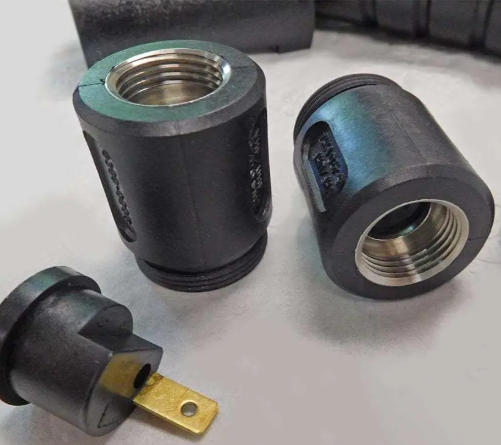
Advantages of Insert Injection Molding
This process offers unmatched benefits for manufacturers across industries:
- Integrated parts: No loose components—reduces failure risk by 50%.
- Reduced assembly: Cut labor costs by 30-40% (no drilling, screwing, or gluing).
- Enhanced functionality: Add features (e.g., conductivity, strength) in one step.
- Aesthetic appeal: Seamless design with no visible joints.
- Cost-effectiveness: Lower material waste (10-15% less than traditional assembly).
- Design flexibility: Create complex shapes that aren’t possible with separate parts.
- Material versatility: Mix plastics, metals, and rubbers for balanced performance.
- Improved durability: Inserts are embedded, not attached—resist vibration and wear.
- Enhanced performance: Better part consistency (99.5% defect-free rate).
- Faster production: Shorter lead times (2-4 weeks vs. 6-8 weeks for assembly).
Insert Injection Molding Applications by Industry
Insert molding is used in nearly every sector—here are our most common projects:
| Industry | Applications | Key Materials |
| Automotive components | Sensor housings, connector pins, gear knobs | ABS, steel, brass |
| Consumer electronics | Phone chargers, laptop hinges, headphone parts | PC, aluminum, conductive plastics |
| Medical devices | Syringe plungers, surgical tool handles, implant components | PP, PEEK, stainless steel |
| Household appliances | Blender knobs, dishwasher parts, vacuum components | PP, rubber, glass-filled plastics |
| Industrial components | Valve bodies, pump parts, conveyor components | PA, steel, composite materials |
| Electrical connectors | Wire terminals, socket parts, circuit board components | PVC, brass, conductive plastics |
| Mechanical assemblies | Gear assemblies, bearing holders, lever parts | POM, steel, aluminum |
| Aerospace parts | Lightweight brackets, sensor casings | CFRP, aluminum, high-temperature plastics |
| Telecommunications | Router parts, cable connectors, antenna components | PC, copper, UV-resistant plastics |
| Sporting goods | Bike handles, golf club grips, helmet parts | EVA foam, ABS, rubber |
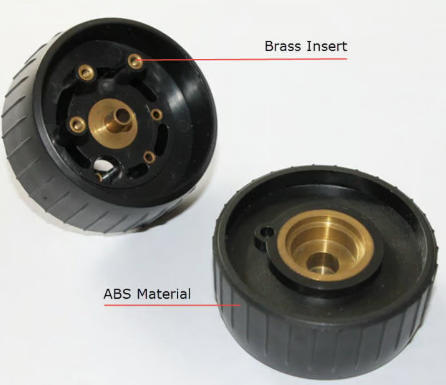
Insert Injection Molding Case Studies
Our work speaks for itself—here are three projects that showcase our expertise:
Case Study 1: Automotive Sensor Housing
- Challenge: A client needed a sensor housing that combined metal conductivity with plastic insulation.
- Solution: Used metal insert molding (brass pins) with FR-ABS plastic. Added UV coating for outdoor resistance.
- Results: 40% faster production, 35% lower cost, and 0 defects in 100,000+ parts.
Case Study 2: Medical Syringe Plunger
- Challenge: A medical client needed a plunger with a rubber seal (for tightness) and plastic body (for strength).
- Solution: Applied plastic over-molding (PP body) with silicone inserts. Used precision assembly (tolerances ±0.02mm).
- Results: Met ISO 13485 standards, 50% faster than assembly, and improved patient safety.