
Our Two-Shot Injection Molding Services
Yigu Technology’s Two-Shot Injection Molding expertise turns complex multi-material designs into reality—think seamless hard-soft combinations, reduced assembly time, and precision-engineered parts for automotive, electronics, and medical sectors.
With custom mold design, advanced machines, and strict quality assurance, we deliver cost-effective, high-performance solutions that boost your product’s functionality and aesthetic appeal.
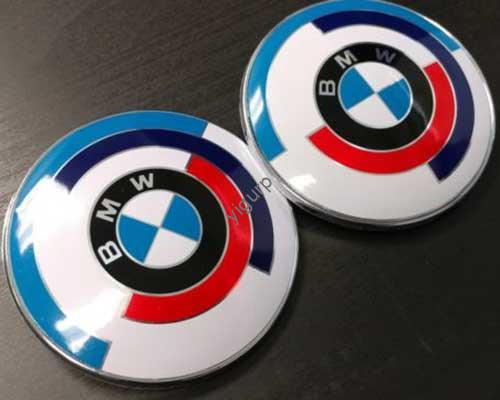
Yigu Technology’s Two-Shot Molding Capabilities
At Yigu Technology, we combine technical expertise with cutting-edge tools to meet your unique multi-material needs. Our core capabilities are designed to deliver reliability, precision, and speed:
| Capability Category | Key Offerings |
| Technical Expertise | Two-shot molding expertise, Project engineering support, material compatibility testing |
| Mold & Tooling | Custom mold design, High-precision tooling, rapid prototyping for mold validation |
| Production & Quality | Advanced injection molding machines, Automated production, Quality assurance systems |
| Solution Design | Multi-material solutions, tailored processes for hard-soft or color combinations |
Our team works closely with clients to test material compatibility early in the design phase, ensuring no delays and optimal part performance.
What Is Two-Shot Injection Molding?
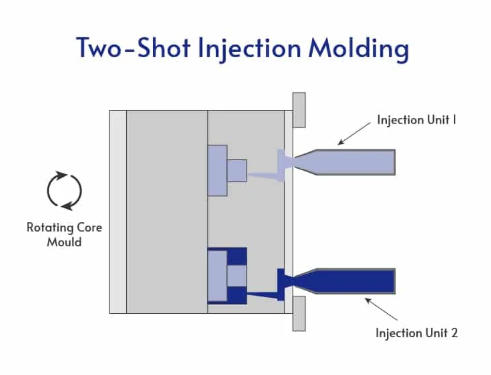
Two-Shot Injection Molding (also called Dual material molding, Co-molding, or Sequential injection molding) is an advanced manufacturing process that produces parts with two distinct materials in a single production cycle. Unlike traditional methods that require post-assembly, this Two-step injection process uses a specialized mold and machine to inject two materials sequentially—creating integrated, high-performance components.
Common variations include Two-color molding (for visual contrast) and Overmolding (where a soft material like TPE covers a hard substrate like ABS). This Bi-material molding technique eliminates bonding issues and ensures consistent Integrated molding of parts that need both flexibility and rigidity.
The Two-Shot Injection Molding Process
The Two-stage molding process is a streamlined sequence that requires precise coordination between machine, mold, and materials. Below is a step-by-step breakdown:
- First shot injection: The first material (e.g., rigid ABS) is injected into one cavity of the mold.
- Mold rotation: The mold rotates (or shifts) to align the partially formed part with a second cavity.
- Second shot injection: The second material (e.g., soft TPE) is injected around or onto the first material.
- Cooling and solidification: Both materials cool together to form a bonded, integrated part.
- Ejection of final part: The completed component is removed, ready for use (no post-assembly needed).
Critical to success are Material synchronization (matching flow rates) and Process control (monitoring temperature and pressure). Our team optimizes Material flow and manages Cycle time to reduce waste—typically cutting production time by 20–30% compared to traditional assembly.
Materials Used in Two-Shot Molding
Choosing compatible materials is key to two-shot molding success. Yigu Technology works with a wide range of Thermoplastics and elastomers, focusing on pairs that bond strongly and meet industry-specific requirements.
| Material Type | Examples | Common Applications |
| Rigid Thermoplastics | ABS, Polycarbonate (PC), Polypropylene (PP), Nylon (PA) | Structural parts (electronics housings, automotive brackets) |
| Soft Elastomers | TPE (Thermoplastic Elastomers), TPU (Thermoplastic Polyurethane) | Grips, seals, soft-touch surfaces (toys, medical devices) |
| Specialty Materials | Flame-retardant materials, food-grade plastics | Electrical components, kitchen appliances |
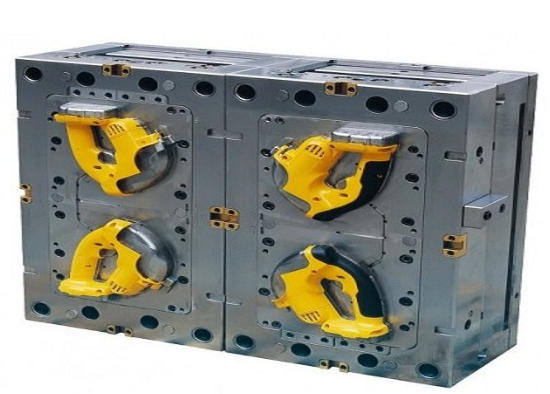
We conduct rigorous material compatibility testing to ensure bonds are durable—even in harsh environments (e.g., high temperatures, chemicals).
Key Advantages of Two-Shot Injection Molding
Compared to traditional single-material molding or assembly, two-shot molding offers transformative benefits:
| Advantage | Description |
| Reduced assembly | Eliminates 2–5 assembly steps (e.g., gluing or screwing parts together), cutting labor costs by 15–40%. |
| Enhanced functionality | Combine properties (rigidity + flexibility, heat resistance + softness) in one part. |
| Cost-effectiveness | Lower waste (fewer production steps) and faster cycle times reduce total costs by 10–25%. |
| Design flexibility | Create complex shapes (e.g., overmolded hinges) that are impossible with single-shot methods. |
| Improved durability | Chemical bonding between materials is stronger than mechanical fasteners—extending part life by 30% or more. |
Industry Applications of Two-Shot Molding
Yigu Technology’s two-shot molding solutions serve a diverse range of industries, each with unique needs:
| Industry | Common Two-Shot Parts |
| Automotive Interiors | Steering wheel grips (TPU over ABS), dashboard buttons (TPE over PC) |
| Consumer Electronics | Phone cases (soft TPE edges + hard PC back), headphone earcups |
| Medical Devices | Syringe plungers (TPE seals + PP bodies), surgical tool handles |
| Household Appliances | Blender grips, iron handles (soft TPE for comfort + heat-resistant plastics) |
| Toys | Action figure joints (rigid PA + flexible TPE), teething toys |
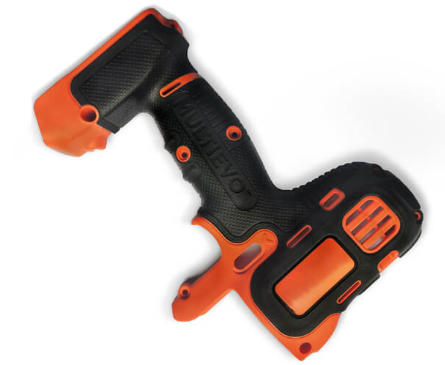
Yigu Technology Case Studies
Our two-shot molding expertise has solved complex challenges for clients worldwide. Here are two standout examples:
Case Study 1: Automotive Interior Component
- Challenge: A leading automaker needed a dashboard button with a soft-touch surface (for comfort) and rigid base (for durability)—with zero assembly.
- Solution: We used Two-shot molding (TPE for the surface, ABS for the base) and optimized the mold to reduce cycle time by 22%.
- Results: 35% lower production costs, 100% bond strength (tested to 10,000 presses), and compliance with automotive safety standards.
Case Study 2: Medical Syringe Plunger
- Challenge: A medical device company needed a plunger with a leak-proof TPE seal and food-grade PP body—with strict dimensional accuracy (±0.03mm).
- Solution: We conducted material compatibility testing (TPE + PP) and used precision measurement techniques (3D scanning) to ensure tolerances.
- Results: 0 defects in 100,000+ parts, compliance with FDA standards, and 28% faster delivery than the client’s previous supplier.