
Our CNC Shaping Services
Our CNC Shaping services redefine precision in metal and composite fabrication—blending advanced CNC Technology with refined Shaping Process expertise.
Whether you need complex part geometries, tight Machining Tolerances, or scalable production for custom components, we turn raw materials into high-performance parts. Trust our proven Shaping Capabilities to meet your industry’s strictest standards, on time and within budget.
Our Capabilities: What We Can Do for You
We’ve invested in state-of-the-art CNC machining shaping equipment and trained our team to handle diverse project needs—from small-batch prototypes to high-volume production. Below is a detailed breakdown of our core Shaping Capabilities:
| Capability Category | Details | Specifications |
| CNC Shaping Services | Custom shaping for flat, curved, and irregular profiles; supports 2D and simple 3D geometries | Max workpiece size: 1500mm (L) × 800mm (W) × 600mm (H) |
| Precision Machining | Tight control over profile accuracy, edge sharpness, and surface smoothness | Profile tolerance: ±0.01mm; Edge straightness: ±0.005mm per 100mm |
| Machining Capacity | 24/7 production with quick tool changeovers (under 15 minutes) for different part designs | Up to 300 parts processed per 8-hour shift (varies by complexity) |
| Material Versatility | Specialized setups for hard metals, soft alloys, and composites | See “Materials” section for full compatibility list |
| Custom Profile Support | In-house design teams help translate CAD files into shapable geometries | Accepts all major CAD formats (STEP, IGES, DWG, SolidWorks) |
Whether you need 10 prototype brackets or 10,000 production-ready gears, our capabilities scale to match your timeline and quality goals.
What Is CNC Shaping?
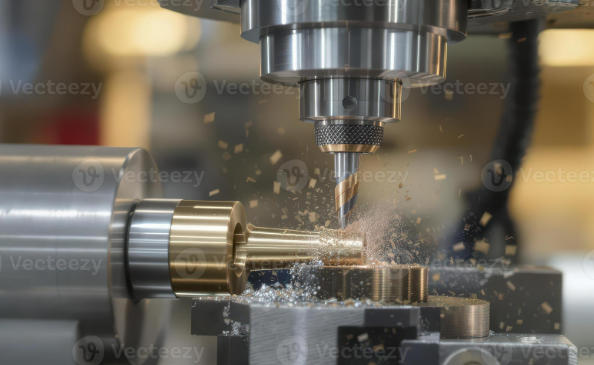
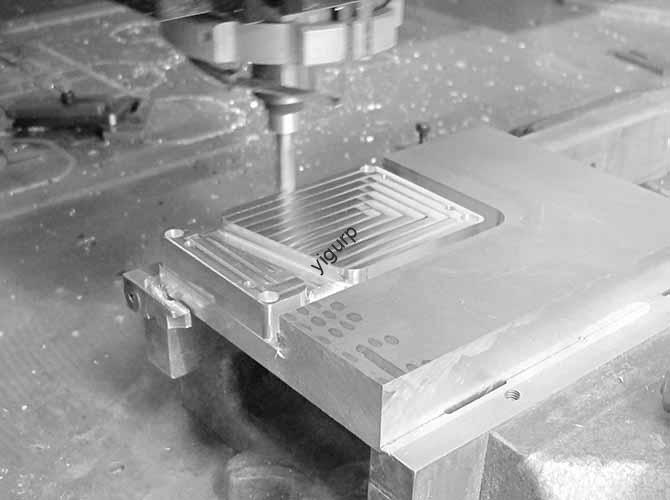
CNC Shaping is a precision subtractive manufacturing process that creates flat, curved, or irregular external (and sometimes internal) part profiles. Unlike manual shaping—where a operator guides a cutting tool by hand—it uses CNC Technology (Computer Numerical Control) to automate tool movement, depth, and speed. This automation eliminates human error, ensuring consistent, repeatable results across every part.
At its core, the Shaping Process relies on a reciprocating cutting tool (e.g., a single-point cutter) that moves back and forth over a stationary workpiece. The tool removes material in controlled increments to carve the desired shape—whether it’s a simple flat surface, a grooves, or a complex contour.
In short, Precision Shaping (powered by CNC) transforms generic raw materials into custom parts that fit seamlessly into larger assemblies—critical for industries where form and function go hand in hand.
The CNC Shaping Process: Step-by-Step
Our CNC Process follows a structured, quality-focused workflow to ensure every part meets your exact specifications. Each step is automated but monitored by our engineers to catch inconsistencies early:
- Design & Programming: Convert your CAD file into a CNC-compatible program. Our team optimizes the tool path to minimize material waste and maximize speed—critical for cost efficiency.
- Workpiece Preparation: Clean and secure the raw material in a CNC fixture (e.g., a vice or clamp) to prevent movement during machining. We also pre-measure the material to confirm it meets size requirements.
- Tool Setup: Select the right cutting tool (e.g., high-speed steel for soft metals, carbide for hard alloys) and attach it to the machine’s reciprocating spindle. The tool is calibrated to ensure precise depth control.
- Material Removal Process: The CNC machine executes the program: the cutting tool moves back and forth over the workpiece, removing material in thin chips. For complex profiles, the workpiece may rotate or shift slightly between tool passes.
- Quality Inspection: Use digital calipers, micrometers, and coordinate measuring machines (CMMs) to check the part’s profile, dimensions, and surface quality. If it meets standards, it moves to Surface Treatment (if needed).
Surface Treatment: Enhancing Post-Machining Quality
After shaping, Surface Treatment improves a part’s durability, appearance, and performance. We offer five core Treatment Methods, tailored to your industry’s needs:
| Surface Treatment | Purpose | Process Details | Industry Use Case |
| Sandblasting | Creates a rough, matte finish to improve paint/adhesive adhesion | High-pressure air propels abrasive particles (e.g., aluminum oxide) at the surface | Automotive body panels, outdoor equipment |
| Anodizing | Adds a protective, decorative oxide layer (for aluminum/alloys) | Immerse part in electrolytic solution; apply electric current to form oxide coating | Electronics enclosures, architectural parts |
| Powder Coating | Provides a thick, chip-resistant finish (available in multiple colors) | Electrostatically apply dry powder; cure in oven at 180–220°C | Industrial machinery, furniture frames |
| Heat Treatment | Hardens the surface to resist wear (for metals) | Heat part to 800–1000°C; quench in oil/water; temper to reduce brittleness | Gear teeth, tool bits, hydraulic components |
| Polishing | Creates a smooth, reflective finish (reduces friction) | Buff surface with fine abrasive pads (e.g., diamond grit) | Food processing equipment, decorative parts |
Each treatment is tested to ensure it meets Surface Quality standards—no shortcuts, just long-lasting results.
Tolerances: How We Control Precision
Machining Tolerances are the small allowable deviations from a part’s designed dimensions (e.g., a 20mm flat surface might have a tolerance of ±0.02mm). For CNC shaping, tight tolerances are critical—especially for parts that must fit with other components (e.g., gears, brackets).
Our Tolerance Control system uses three layers of precision to meet even the strictest requirements:
- Pre-Machining Calibration: We calibrate our CNC machines daily using certified reference parts (accuracy: ±0.001mm) to ensure tool paths are precise.
- In-Process Monitoring: Sensors on the cutting tool measure material removal in real time, adjusting speed or depth if deviations occur.
- Post-Machining Inspection: Our quality team uses CMMs to verify every part meets Tolerance Levels—we reject any part that falls outside your specified range.
Below are our standard Shaping Tolerances for common applications:
| Application | Profile Tolerance | Edge Straightness | Surface Roughness (Ra) |
| General Industrial | ±0.02mm | ±0.01mm per 100mm | 1.6–3.2 μm |
| Automotive | ±0.01mm | ±0.005mm per 100mm | 0.8–1.6 μm |
| Aerospace/Medical | ±0.005mm | ±0.002mm per 100mm | 0.4–0.8 μm |
Advantages of CNC Shaping: Why It’s Better Than Other Methods
Compared to alternative shaping processes (e.g., milling, routing), CNC Shaping offers unique benefits that save time, reduce costs, and improve quality. Here are the top Advantages of CNC Shaping:
- Precision Advantages: CNC automation ensures every part matches the CAD design exactly—no more inconsistencies from manual operation. This is critical for industries like aerospace, where even 0.01mm deviations can cause assembly issues.
- Cost Advantages: For simple to moderately complex profiles (e.g., flat surfaces, grooves), CNC shaping is faster and more cost-effective than milling. It uses fewer tools (reducing setup time) and generates less waste—cutting costs by 15–25% for high-volume runs.
- Quality Advantages: The reciprocating cutting tool creates a smoother surface finish than many other processes (e.g., manual shaping). This reduces the need for secondary finishing steps (e.g., polishing), saving time and money.
- Flexibility: CNC programs are easy to modify—we can switch between part designs in under 30 minutes (no need for new fixtures). This is perfect for small-batch projects or rapid prototyping.
Applications Industry: Where CNC Shaping Makes a Difference
CNC Shaping Uses span nearly every manufacturing sector—anywhere custom, precise part profiles are needed. Below are the top Industry Sectors we serve, with real-world examples:
| Industry | Application Fields | Specific Parts We Shape |
| Automotive | Chassis components, engine brackets, interior trim | Control arm blanks, gear shift levers, dashboard frames |
| Aerospace | Airframe parts, landing gear components, avionics enclosures | Wing ribs, landing gear brackets, instrument panel frames |
| Medical | Surgical tool handles, diagnostic equipment frames, implant accessories | Scalpel handles, MRI machine bases, dental tool holders |
| Industrial | Machine frames, conveyor components, valve bodies | Lathe beds, conveyor rollers, gate valve housings |
| Construction | Structural brackets, hardware, tooling | Beam connectors, scaffolding clips, concrete formwork parts |
In each sector, our shaping services ensure parts perform under harsh conditions—from extreme temperatures (aerospace) to heavy loads (construction).