
Our Polyarylethersulfone PAS CNC Machining Services
Elevate your critical applications with Polyarylethersulfone (PAS) CNC Machining from Yigu Technology. As a premium engineering polymer, PAS delivers exceptional thermal stability, chemical resistance, and dimensional accuracy—and our expert precision machining turns this high-performance thermoplastic into custom parts that excel in aerospace, medical, and automotive industries.
From rapid prototyping to large-scale production, we combine cutting-edge technology with decades of expertise to deliver reliable, cost-effective solutions tailored to your needs.
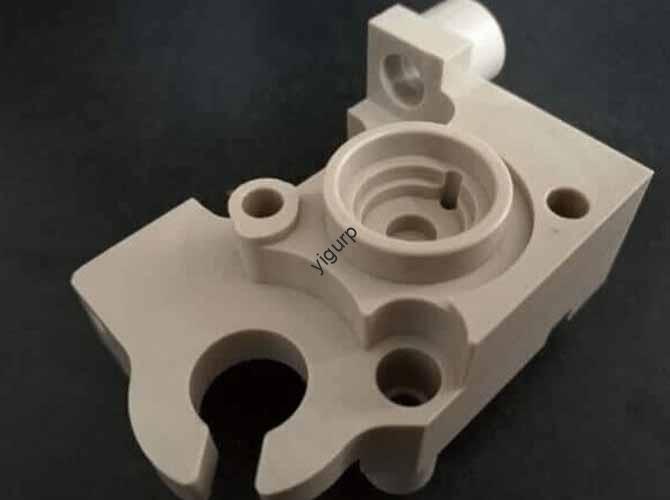
Our Capabilities: Precision That Meets Your Needs
At Yigu Technology, we’ve honed our PAS CNC Machining capabilities to handle projects of all sizes and complexities—from one-off prototypes to mass-produced parts. Our team combines state-of-the-art equipment with deep material expertise to deliver results you can trust.
| Capability | Details | Benefits for You |
| Precision Machining | Achieves tolerances as tight as ±0.003mm for critical components | Meets the strictest dimensional requirements for high-stakes applications |
| Custom Machined Parts | Adapts to unique geometries, including undercuts and thin walls | Perfect for low-volume or one-of-a-kind projects that demand customization |
| High-Tolerance Machining | Complies with ISO 9001 and AS9100 quality standards | Ensures consistency across every batch, reducing rework and waste |
| Complex Part Production | Uses 5-axis CNC milling and multi-spindle CNC turning | Creates intricate, multi-feature parts without assembly gaps or weak points |
| Rapid Prototyping | Delivers functional PAS prototypes in 2–4 days | Accelerates your product development cycle, getting you to market faster |
| Production Machining | Scales to 15,000+ parts per month with consistent quality | Supports your growth from prototype to full-scale production |
| Quality Assurance | Employs in-line inspections with CMM (Coordinate Measuring Machines) and laser scanners | Catches defects early, ensuring every part meets your specifications |
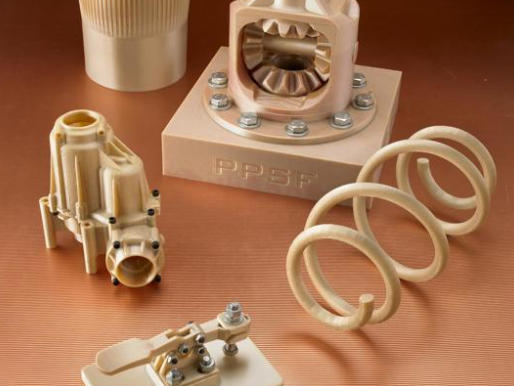
Process: The Step-by-Step of PAS CNC Machining
Our PAS CNC Machining process is optimized to handle PAS’s unique properties—including its high melting point and rigidity—ensuring efficiency, quality, and consistency at every stage.
- Design & Programming: Our engineers convert your 3D models into CNC code, selecting optimal cutting techniques and tool selection (e.g., carbide tools for PAS’s abrasiveness) to minimize tool wear and maximize precision.
- Machine Setup: We calibrate CNC mills, lathes, and drills to match your part’s specs—adjusting spindle speeds (1,500–10,000 RPM) and feed rates (50–500 mm/min) to avoid overheating PAS.
- Material Loading: We use high-quality PAS resin (or reinforced grades like glass-filled PAS) cut into precise blocks to reduce waste and ensure uniform part density.
- Machining Operations: We perform CNC milling (for complex shapes), CNC turning (for cylindrical parts), and drilling operations (for holes as small as 0.5mm) with real-time torque monitoring to prevent tool breakage.
- Grinding Processes: For parts needing ultra-smooth surfaces, we use precision grinding to achieve Ra values as low as 0.15μm—critical for medical or optical applications.
- Inspection: Every part undergoes dimensional checks using digital calipers and optical comparators to verify tolerance standards—we discard any parts that fall outside your required range.
Materials: Choosing the Right PAS Grade
Not all PAS materials are identical—each grade offers unique properties to match your application’s demands. At Yigu Technology, we stock a full range of PAS variants to ensure optimal performance.
| PAS Grade | Key Properties | Ideal Applications |
| Standard PAS Resin | High impact resistance, good flowability | Electronic enclosures, consumer goods housings |
| Glass-Filled PAS (30% glass) | 40% higher stiffness than standard PAS, low creep | Automotive structural brackets, industrial pump components |
| Carbon-Filled PAS (20% carbon) | Enhanced thermal conductivity, superior wear resistance | Aerospace engine parts, high-speed bearings |
| Flame-Retardant PAS | UL94 V-0 rating, low smoke and toxic gas emission | Electrical components in aircraft, trains, and EVs |
| Reinforced PAS (hybrid glass/carbon) | Balanced strength, weight, and corrosion resistance | Offshore oil equipment, chemical processing valves |
| Recycled PAS | 80% of the strength of virgin PAS, lower environmental impact | Non-critical industrial parts, consumer goods prototypes |
| Specialty PAS Grades | Customized for biocompatibility (ISO 10993) or low outgassing | Medical implants, space exploration components |
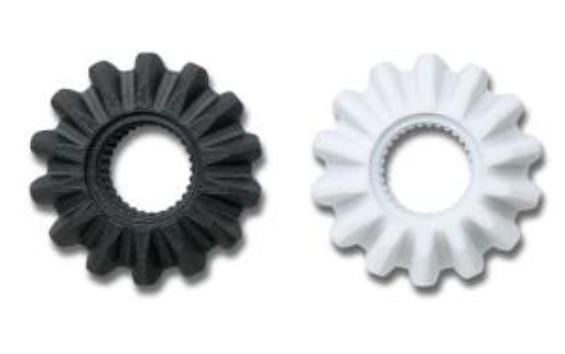
Tolerances: Achieving Precision You Can Rely On
In PAS CNC Machining, tolerances are make-or-break—especially for parts used in aerospace, medical, or electronics. We prioritize dimensional accuracy and use advanced techniques to meet even the tightest requirements.
| Tolerance Type | Typical Range for PAS Parts | Measurement Techniques | Inspection Methods |
| Precision Tolerances | ±0.005mm to ±0.02mm | Laser interferometry, CMM | 100% batch inspection (critical parts) |
| Tight Tolerances | ±0.001mm to ±0.005mm | Atomic force microscopy (AFM), optical comparators | Sampling at every production stage + final validation |
| General Tolerances | ±0.05mm to ±0.2mm | Digital calipers, micrometers | Random batch checks (10% of parts) |
Note: PAS’s low thermal expansion coefficient (16–18 μm/m·K) ensures tolerance stability even when exposed to temperature fluctuations.
Advantages: Why PAS CNC Machining Stands Out
PAS CNC Machining offers unique benefits that make it the top choice for high-performance parts—outperforming methods like injection molding or 3D printing in key areas:
- High Strength-to-Weight Ratio: PAS parts are lighter than metal (60% vs. aluminum) but just as strong—reducing fuel consumption in automotive/aerospace and easing handling in medical devices.
- Chemical Resistance: Withstands exposure to harsh substances (e.g., sulfuric acid, hydraulic oil) without degradation—ideal for chemical processing or oil/gas applications.
- Thermal Stability: Functions reliably at 220°C (428°F) continuous use—outperforming many plastics (e.g., ABS, nylon) in high-temperature environments.
- Electrical Insulation: Maintains dielectric properties even at high temperatures—perfect for circuit boards, transformers, or high-voltage components.
- Dimensional Stability: Low creep (less than 1% deformation under load) ensures parts retain their shape over time—critical for medical implants or aerospace fasteners.
- Cost-Effective Production: CNC machining eliminates the need for expensive molds (unlike injection molding), making it 30% more cost-efficient for small-to-medium batches (10–10,000 parts).
- Design Flexibility: Creates complex geometries (e.g., internal channels, thin walls) that are hard to achieve with other methods—supporting innovative product designs.
- High-Temperature Performance: Resists melting and oxidation at high temperatures—suitable for engine components, industrial ovens, or LED heat sinks.
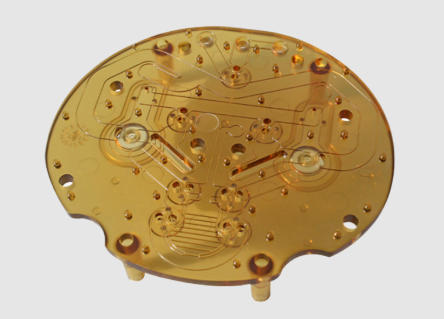
Applications Industry: Where PAS CNC Machined Parts Excel
PAS’s versatility makes it a staple in diverse industries. Our PAS CNC Machining services cater to the following sectors, delivering parts that meet industry-specific standards:
| Industry | Common Applications | Key PAS Benefits Used |
| Automotive | EV battery housings, engine sensors, fuel system components | Thermal stability, chemical resistance |
| Aerospace | Cabin interior parts, avionics enclosures, hydraulic valves | High strength-to-weight ratio, flame retardancy |
| Electronics | Circuit board carriers, connector housings, LED heat sinks | Electrical insulation, dimensional stability |
| Medical | Surgical instruments, diagnostic device components, implantable parts | Biocompatibility, corrosion resistance |
| Industrial Equipment | Pump housings, valve seats, conveyor system parts | Wear resistance, low maintenance |
| Consumer Goods | High-end kitchen appliances, sports equipment handles, electronic device casings | Durability, aesthetic flexibility |
| Sporting Goods | Ski bindings, golf club heads, cycling components | Lightweight, high impact resistance |
Case Studies: Real-World Success with PAS CNC Machining
At Yigu Technology, we’ve helped clients solve complex challenges with PAS CNC Machining. Here are three standout examples:
Case Study 1: Aerospace Avionics Enclosure
- Client: A global aerospace manufacturer
- Challenge: Need a lightweight, flame-retardant enclosure for avionics that could withstand -55°C to 125°C (-67°F to 257°F) and resist jet fuel.
- Solution: We used flame-retardant PAS and 5-axis CNC milling to create a one-piece enclosure with tight tolerances (±0.01mm). We added a ceramic coating for extra heat resistance.
- Result: The enclosure passed FAR 25.853 flame tests, reduced weight by 35% vs. aluminum, and is now used in 20,000+ commercial aircraft.
Case Study 2: Medical Surgical Scalpel Handle
- Client: A leading medical device company
- Challenge: Develop a biocompatible scalpel handle that could be sterilized (autoclaved) 500+ times without degrading.
- Solution: We machined specialty PAS (ISO 10993-certified) using high-tolerance machining and polished the surface to Ra 0.08μm for easy cleaning.
- Result: The handle met FDA standards, showed no wear after 600 sterilization cycles, and is now used in hospitals worldwide.